
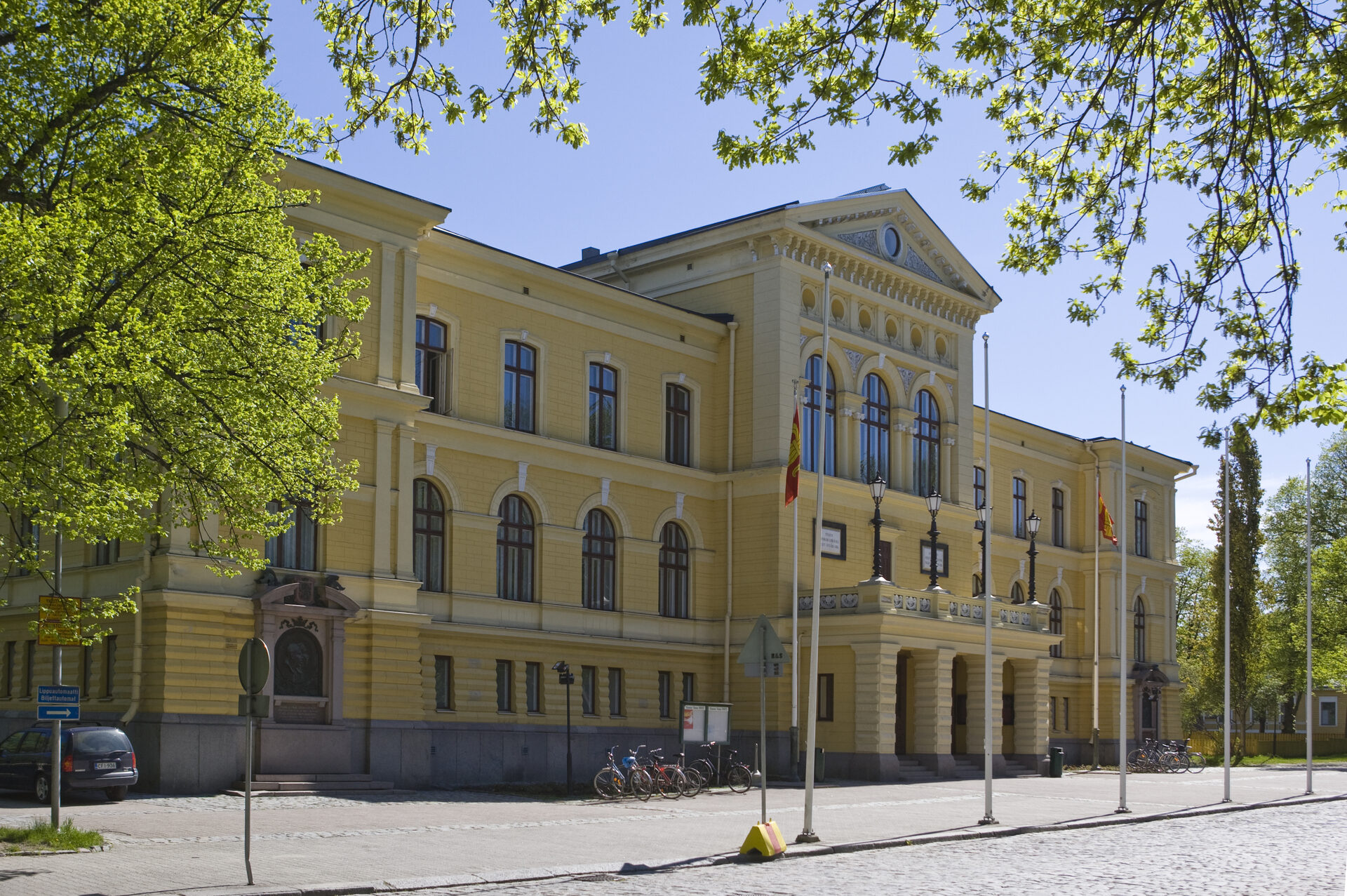
The city hall, which was taken into use in 1883, is rented for concerts, performances, meetings and fairs. The premises are available to associations, organisations and companies, but they are not rented for private events such as weddings.
The building has several rentable premises:
- Banquet Hall
- Mirror Hall
- Chamber Music Hall
- Large meeting room
Other spaces:
- Balcony
- Lobby of the ceremonial floor
Accessibility:
- The building has an accessible entrance on the Vaasanpuistikko side of the building
- An elevator provides access to all floors
- An accessible WC is located on the third floor
GENERAL RULES FOR THE USE OF PUBLIC PREMISES AND RENTAL PRINCIPLES
1. GENERAL
In the city hall the Banquet Hall, Mirror Hall, Chamber Music Hall and the Large Meeting Room are available to book. Office premises used by city units or other operators located in the city hall are not made available for external use.
Premises are reserved using the booking form found on the city hall website. If several different hirers need to rent the same hall at the same time, priority is decided based on the hall-specific priority order for users and the reservation situation presented below. These rules of use may be specified for different user groups by a separate decision of the Director of Culture and Library Services or the Board of Culture and Sports or by an official.
The city hall host and the caretaker are responsible for maintaining order in the premises, but the hirer must provide the necessary number of stewards to assist them. The hirer is responsible for applying for any permits required for the event.
The hirer is responsible for any damage caused to the property and its movable property and for other damage they may cause.
2. PREMISES AND RENTAL PRINCIPLES
The Board of Culture and Sports decides annually on the fees charged for the premises. The currently valid fees are available on the city hall website.
The rent includes the reserved premises with their furniture, ordinary cleaning, electricity and the services of the host and the caretaker. There are no shower facilities for performers in the building. The hirer is responsible for moving furniture (chairs, benches, choir risers, tables, etc.) according to the instructions given by the city hall host and the caretaker. Any costs possibly involved in the moving are the responsibility of the hirer. If the event generates an unusually large amount of waste or cleaning needs, the event organiser must arrange for the removal of the waste and cover any costs exceeding ordinary cleaning expenses.
No rent is charged for:
– activities of Culture and Library Services and the Vaasa City Orchestra
– representation and celebratory events and receptions of the city central administration
– events for war veterans
Rental principles:
– The rent is charged afterwards
– If the hirer has received a grant from the Board of Culture and Sports during the same calendar year, an official may, on the basis of a written application submitted in advance by the hirer, grant a discount of up to 20% on the normal fee for the event in question.
– By decision of the Head of Culture Services, a case-specific discount of 20% may be granted on the basis of the hirer’s written application submitted in advance in the following cases:
- Events that are significant for the City of Vaasa as well as regionally and nationally
- Promotion of children’s and youth cultural activities
- Charity events (depending on the beneficiary)
- Anniversary and artist celebration years of communities and performing artists
– The Director of Culture and Library Services may, on the basis of a written application submitted before the event and only for very weighty reasons, decide on an exemption from rent on a case-by-case basis
Overtime compensation for the host and the caretaker outside their normal working hours under the collective agreement (KVTES) is charged to all hirers based on actual costs, including all those who have received a rent exemption or discount, with the exception of war veterans.
If the booker does not use the space and has not cancelled the reservation eight (8) days before the start of the reservation, or if the space is used without a reservation/agreement, the full rent will be charged to the booker/user. This applies to all users of the premises.
All premises must always be left in the same condition as before the event. If the user neglects the obligation to restore public premises, Cultural Services will charge the user for caretaker services and/or additional cleaning costs in accordance with the price list.
All organisations or persons who have received a rent reduction or exemption must mention the City of Vaasa as a supporter in their marketing materials.
3. BANQUET HALL
Priority order of user groups
1. The Vaasa City Orchestra, whose reservations are binding after the orchestra season programme has been approved
2. City units, with priority given to various cultural events and official celebrations
3. Paid and free events and organisers of significant regional, national and international events
4. Wasa Sinfonietta and Vaasa Chamber Musicians
The Wasa Sinfonietta, maintained by the Vaasa Orchestra Association, cooperates with the Vaasa City Orchestra, for example by lending scores for the orchestra’s use, and supports and complements the city’s music offerings. Wasa Sinfonietta may use the premises free of charge for rehearsals once a week and for concert activities up to 4 times per year and for one preparatory rehearsal per concert.
The Vaasa Chamber Musicians association largely consists of musicians from the Vaasa City Orchestra and teachers from the Kuula Institute. The association organises approximately 10–15 concerts a year; chamber music concerts and visiting concerts by other Finnish groups in Vaasa. The activity supports and complements the city’s music offering. The Vaasa Chamber Musicians may use the premises free of charge for concert activities up to 6 times per year and for one preparatory rehearsal per concert.
In cases other than those mentioned above, all other bookings by Wasa Sinfonietta and the Vaasa Chamber Musicians are treated on an equal basis with other bookings and the use of the premises is charged according to the fee schedule.
The Banquet Hall rental includes the warming rooms behind the hall, sound system for speeches, a speaker’s podium and a piano. Other equipment must be negotiated separately when making the reservation. Use of the Banquet Hall grand piano is always agreed separately with the Vaasa City Orchestra.
If guarded cloakroom service or catering is required for the event, it must be ordered separately from the Steinerpedagogiikan kannatusyhdistys ry, with which the City of Vaasa has a contract for the restaurant services and cloakroom of the city hall.
4. MIRROR HALL
Priority order of user groups
1. Those who have rented the Banquet Hall at the same time
2. City units, with priority given to official events
3. Other users
The Mirror Hall is generally reserved in connection with a Banquet Hall booking. The Mirror Hall may be booked on its own only when there is no concert or similar activity in the Banquet Hall.
If guarded cloakroom service or catering is required for the event, it must be ordered separately from the Steinerpedagogiikan kannatusyhdistys ry, with which the City of Vaasa has a contract for the restaurant services and cloakroom of the city hall.
5. CHAMBER MUSIC HALL
Priority order of user groups
1. City units, with priority given to various cultural events and official celebrations
2. Vaasa City Orchestra
3. Paid and free events and organisers of significant regional, national and international events
4. Vaasa Opera Association (Vaasan Ooppera ry)
Vaasa Opera Association may book the premises for its activities once reservations by higher-priority users have been made.
The rental of the Chamber Music Hall does not include the use of the grand piano. The usage fee is according to the fee schedule. Cultural Services arranges for the piano to be tuned once a year; other users are responsible for tuning according to usage and need.
The Chamber Music Hall is rented for loud events only when there are no other events taking place in the city hall at the same time.
The premises must be left in the same condition as they were before the event.
6. LARGE MEETING ROOM
During office hours the Large Meeting Room is available for meetings and similar purposes as determined by the Board of Culture and Sports. For events causing noise that would disturb normal office work, the meeting room is rented only outside office hours and when there are no other events on the 3rd floor of the city hall at the same time.
The Vaasa Opera Association may reserve the room for its activities.
Each user of the meeting rooms must ensure
– that furniture is arranged back in place
– that aids and equipment are put back in place
– that catering equipment is removed
– that any extra materials and equipment used in the meeting are removed
The Large Meeting Room may be used and rented for loud events only when there are no other events taking place in the city hall at the same time.
The premises must be left in the same condition as they were before the event.
7. USE OF THE CITY ORCHESTRA STAFF COFFEE ROOM AS A WARMING ROOM
Outside office hours the second-floor coffee room may be included as a warming room in the rental of the Chamber Music Hall under the conditions given below, and the piano in the coffee room may likewise be used outside office hours by separate agreement. During office hours (8:00–16:00) the coffee room is reserved as a break room for the Vaasa City Orchestra personnel.
Each user who uses the coffee room as a warming room must ensure that
– the coffee room furniture is put back in place after the event
– used catering equipment is washed
– the event organiser removes large amounts of waste from the coffee room
– staff’s own food and drinks stored in the coffee room cupboards and refrigerator must not be used
– newspapers ordered for the office and incoming notices remain in the coffee room
The premises must be left in the same condition as they were before the event.
Event rescue plan:
If 200 or more people attend your event simultaneously, a rescue plan for a public event must be drawn up, taking into account the special features of the event. The rescue plan must be submitted for assessment to the rescue department. Instructions and a template for preparing the plan can be found here. Preparing and submitting the rescue plan for a public event is the responsibility of the event organiser.
Notification to the police:
In addition to the rescue plan, a notification of a public event must be made to the police. You can make the notification here. The event organiser must make the notification at least five days before the start of the event.
Vaasa City Hall was built in 1879–1883 according to drawings by the Swedish architect Magnus Isaeus (1841–1890). The town hall completed in 1864 to the west of the church, designed by architect Carl Axel Setterberg, was sold to the state in 1872 as a school building.
The city was obliged to build a new town hall within five years. A plot reserved for the school east of the church was designated for the site in the town plan. Construction drawings were delayed twice and extensions of the deadline had to be requested.
The city council’s decision to build dates from 1875. Building work could not begin until 1879, as the project was delayed by an appeal opposing the decision by the townspeople: “The task of municipal administration is to handle matters concerning the city’s order and finances, which does not include acquiring a ceremonial hall.” However, the Senate approved the city council’s building plans including the ceremonial halls.
Building materials
The building was constructed of bricks manufactured in Gerby and Tölby. The roof and intermediate floors are made of wood, with beams up to 60 cm thick. The cornice of the façade is decorated with 26 pressed zinc leaf ornaments. Door frames, bows and rosettes as well as lion heads are bronze-plated zinc. The main staircase is made of cast iron and the steps of Bornholm limestone. The staircase is supported by four cast-iron pillars. Four ornate lights purchased from Joseph Leja’s firm in Stockholm are mounted on top of the columns in the staircase. The original kerosene lighting was converted to electricity in 1893.
Heating system
Even when the drawings were commissioned, the importance of an efficient heating system was emphasised. The city hall was equipped with steam tile stoves. The banquet hall and the largest rooms were heated with warm air.
Warm air from two warm-air rooms in the cellar circulated through grilles in the banquet hall walls. Air returned to be reheated via openings at the edge of the floor. Exhaust air left via grilles in the ceiling and through ventilated light openings to sheet-metal drums rising above the roof.
For this reason the parquet floor of the banquet hall is half a foot (1 foot = 0.296 m) lower than the floor level of the other rooms. The exhaust vents and drums were under this edge. The heating has been converted to ordinary central heating, but when the banquet hall parquet floor was repaired in 1953 the raised edge was nevertheless retained.
Interior of the ceremonial floor
The interior of the ceremonial floor was ordered from Joseph Leja’s firm in Stockholm. The large chandelier, with 60 bulbs, is gilded bronze and crystal. The smaller chandeliers have 42 bulbs and the 12 wall lights have 8 bulbs each. The ladies’ parlours at the north end of the ceremonial floor (now the artists’ warming rooms) were furnished with period furniture, of which only a few individual pieces remain. The furnishings aimed at restrained simplicity and economy, especially in the office areas.
Painting works
The first painting work was carried out by Vaasa master painter Daniel Pettersson using distemper paints and stencils. The building was decorated in blue-green and grey.
A new decorative plan was commissioned in 1896 from the country’s most capable professional, Helsinki’s Salomo Wuorio. Within two months his skilled painters decorated the ceremonial floor. The decorative paintings were restored in 1956–57. The work was carried out by Lahti master painter A. Lyytikäinen and journeyman Martti Björnström.
The sense of height in the stairwell has been increased with a perspective illusion. The ceiling of the banquet hall is surrounded by 14 allegorical female figures. The attributes of some of the maidens representing the arts and sciences differ from the traditional ones. On the front wall on the left are Song, Crowned Vaasa and Instrumental Music. On the window wall are Terpsichore, muse of dance, Fertile Province, Peace or Pax and, lastly, Thalia, muse of comedy. On the back wall on the window side are Trade and Shipping, in the centre Science or Light and Industry.
On the door wall are, from the front, Literature or the muse of history Clio, Sculpture and the Painting Arts. But perhaps the beautiful woman who folded the red rose was the artist’s muse herself? The restaurant or Pompeian room was named after the style of its wall decoration. Bacchus greets the visitor sitting on his wine barrel. On the opposite wall two charming women are painted, one raising a glass of wine, the other holding a bunch of grapes to her lips.
Commissioning of the ceremonial floor
The ceremonial floor of the city hall was taken into use even before the final inspection of the building. The inauguration ceremonies of the Vaasa railway were held in the new city hall on 29 September 1883. 160 guests arrived from Helsinki by special train under the leadership of Governor-General Count Feodor Heiden. The guests and hosts experienced during the evening the excellent acoustics of the banquet hall. Conductor’s praise this to this day. The banquet hall of Vaasa City Hall and the ceremonial hall of the Old Academy of Turku are among the best-sounding small concert halls in the country.
Offices, institutions and bodies that have operated in the city hall
Many different institutions, offices and bodies have operated in the premises of the city hall over the years. With a few very short exceptions, only the banquet hall has served its original purpose. In 1918 the banquet hall briefly served as accommodation for soldiers. In the winter of 1939–1940, while a German military hospital was housed on the ceremonial floor, the banquet hall was also used for a time as a dormitory.
The city council met in the current Mirror Hall until 1930, when it moved to the present Administrative Building. Between sessions the premises were used by the Vaasa press and the club. The club, with its restaurant, formed the city’s spiritual centre and meeting place in connection with concerts and various celebrations. In 1936 a small ceremonial hall was built in the premises now occupied by the Mirror Hall. In 1939–1953 these premises housed the income and property tax board and rationing administration.
In the north-west corner of the ceremonial floor, at the current cloakroom location, the magistrate and the district court operated. They moved to the south end of the building on the second floor in 1922. In the early years the rooms were used by the maritime school and in 1897–1922 as the meeting rooms of the city council. The city’s economic office operated in the same premises in 1997–2003 and from the turn of 2004 the city’s environmental department has been located there.
The current Chamber Music Hall on the second floor of the city hall was originally intended for a museum. For a while Boden-Stenbäck’s bird collection (now the collection of Ostrobotnia Australis) was stored there. Adult education institutes have also operated in these premises, not to mention the countless associations, choirs, sewing circles and popular lecture series.
The rooms at the north end of the Chamber Music Hall belonged in the early years to the auction chamber. Vaasa Savings Bank operated in the auction chamber’s back room until 1901.
Yleisradio (the Finnish Broadcasting Company) operated from 1966 to 1984 in two floors at the north end of the building. These ground-floor premises served as a police station until 1915. The studio and technical premises on the second floor were originally used by the city treasury office until 1911, when the treasury moved to Kirkkopuistikko 23 (since 1930 after completion of the extension, the Administrative Building). The lending premises of the city library were in the second floor north end from 1911 until the library building was completed in 1936.
When Yleisradio moved to its own premises in Palosaari, the Kuula Institute moved into the premises vacated in the city hall for the years 1985–1997. After the Kuula Institute moved to the Opisto building (Sepänkyläntie 4), the north end of the second floor of the city hall became the home of the cultural office. Practice rooms for the Vaasa City Orchestra were located on both the first and second floors.
The ground floor has housed the city art gallery since 1966 in the former fire station premises. During renovation work the brick-vaulted ceiling was sandblasted clean. The premises that have also served as the city’s tourism office once belonged to the fire department, which moved to new premises on Sepänkyläntie in 1964. The wooden coach house on the east side of the city hall was demolished in 1928 when the fire department’s last horse was sold.
The Senate
From 30 January 1918 the Senate, which had been meeting in the governor’s house, moved on 16 March 1918 to the city hall to the city council chamber. The chancellery was in the museum hall and typists worked in the city library lending hall. The library was temporarily closed. Senators Juhani Arajärvi, Jalmar Castrén, Alexander Frey, E.Y. Pehkonen and Heikki Renvall served in the Senate with Pehr Evind Svinhufvud as chairman. Some 26 other officials were also under the Senate. Practically the entire middle floor was at the Senate’s disposal. The city council held its meetings at the maritime school premises at Kirkkopuistikko 23 at that time.
The city club in the city hall was the centre of events throughout the spring of 1918. Foreign diplomats and journalists, members of the government and officials of agencies that had moved to Vaasa, officers and civilians who had arrived in the city gathered at the club both formally and informally, with restaurateur Hugo Boijn acting as the host.
The Senate moved to Helsinki on 3 May 1918. As a token of thanks to the city, the Senate authorised by proclamation at its last session held in the city hall the attachment of the Cross of Liberty to Vaasa’s coat of arms.
The Cross of Liberty, the oldest decoration of independent Finland, was established on the proposal of Marshal Mannerheim by the proclamation of the Vaasa Senate on 4 March 1918. The medal was designed by the artist Akseli Gallen-Kallela.
Renovations
The largest repairs to the building were carried out in the early 1960s. At that time premises were renovated for the art gallery and Yleisradio. The magistrate received additional premises, the Chamber Music Hall took its present form and the foyer areas of the Banquet Hall were enlarged. Decorative paintings were revealed in the Mirror Hall and a kitchen was built adjacent to the Banquet Hall.
Façade
No portrait sculptures of the city’s prominent figures, as designed by the architect, were acquired for the six circular niches on the western façade. At the time no consensus could be reached on suitable persons. The marble plates on the balcony wall also received their inscriptions only after twenty committee years in 1903.
On the southern end of the western façade of the city hall is a high-relief of Charles IX, made by Johan (John) Munsterhjelm (1879–1925). It was donated by the art committee of Vaasan Höyrymyllä Osakeyhtiö on its 75th anniversary on 12 November 1924. The high-relief bears the text: Carolus IX Rex Urbis Wasa Condita MDCXI.
On the northern end of the façade is a high-relief of the regents. The high-relief by Johan Munsterhjelm was donated by the Vaasa Art Association on 6 December 1924. The high-relief bears the text: Pehr Evind Svinhufvud 18.5.1918–12.12.1918 and Carl Gustaf Mannerheim 12.12.1918–25.7.1919. The dates indicate the periods during which Svinhufvud and Mannerheim served as regents of Finland.
On both sides of the main entrance there are two flagpoles decorated with Vaasa emblems. They were donated by Professor Karl Hedman and his wife Elin Hedman.
Sources:
Häggkvist, Eira (1983): Vaasan kaupungintalo 100 vuotta
Lehtikanto, Mirjam (1981): Rakennettiin uusi Vaasa. Kirjoituksia Vaasan asemakaavasta, kaupunkikuvasta ja rakennuksista sekä rakentajista ja suunnittelijoista
The contract catering restaurant Café Maestro was founded in 1989 by the Vaasa Steiner Pedagogy Support Association and operates in Vaasa City Hall. Its profits are used to support the activities of the Vaasa Rudolf Steiner School. The restaurant staff include parents of the school’s children in addition to professionals.
Café Maestro mainly operates on the third floor of the city hall, where it provides tailored services for all kinds of events in the building from coffee breaks for meetings to seated dinners. Café Maestro also provides lobby services and can set up a bar with an A licence. If necessary, Café Maestro can be ordered to other parts of the building and outside the building.
More information about restaurant services:
Restaurant Manager Tuija Kaski-Kuula, tel. 040 836 2616, tuija.kaski-kuula@vaasa.fi
Contact
-
Vaasa City Hall

Phone

Email
City Hall Host Jari Suomela: jari.suomela@vaasa.fiCustodian Kenneth Salmensuo: kenneth.salmensuo@vaasa.fi

Address
Senaatinkatu 1, 65100 Vaasa
Wheelchairs
Wheelchair users can access City Hall from the south end of the building on the Vaasanpuistikko side, via the playground. The Festival Hall has designated wheelchair spaces as well as seats for assistants. These can be inquired about when purchasing tickets. The café and the Mirror Hall (Peilisali) on the third floor are also accessible.Accessible Toilet
An accessible toilet is located on the third floor, adjacent to the women’s restroom.Hearing Loop
The Festival Hall is equipped with a hearing loop system.Lift
A lift located at the south end of the building on the Vaasanpuistikko side provides direct access to the third floor. The south entrance and lift are open on concert days. Use of this access route at other times must be arranged separately with the City Hall caretaker or building attendant.