
All attractions
There’s plenty to see in the Vaasa region! Discover the region’s attractions, places to visit and unique locations – from the vibrant city to peaceful countryside landscapes and the Kvarken Archipelago. Find your favourites and start exploring the Vaasa region!
-
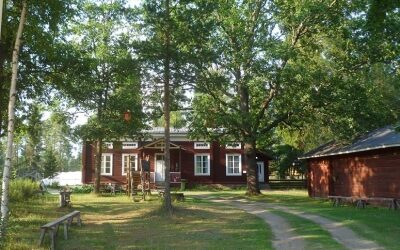
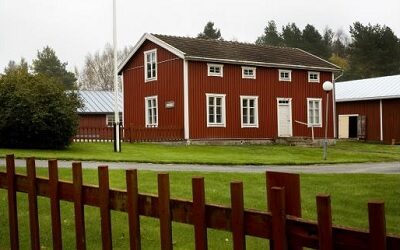
In the Myrbergsgården museum the visitor can get acquainted with the peasant way of life in the old times as well as with one of the finest garment and textile collections in the municipality. In one of the houses across the yard can be seen a unique gathering of beautifully painted church sleighs, which the people of the house used in order to get to the church on Sundays.
The Myrbergsgården museum area in Vörå nowadays consists of around 17 buildings, which have been relocated on the region from different villages in Vörå. In addition to the agrarian house here can be found for instance a functioning smithy and a windmill. To the museum also belongs a loan grain magazine from the year 1753, which is among the three first ones in Ostrobothnia.
The museum’s textile collection is one of the finest in the municipality and it comprises of approximately 6 000 various textiles.
-
Nature trails and hiking routs in the Vaasa Region
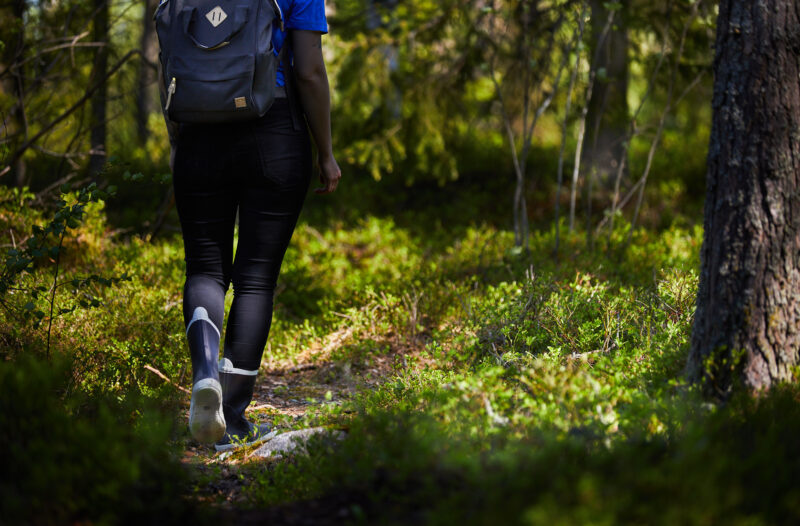
There are many nature trails and hiking routs in the Vasa region. There are paths and routes of different lengths, so everyone will surely find a nice route to hike!
-
Old Vaasa

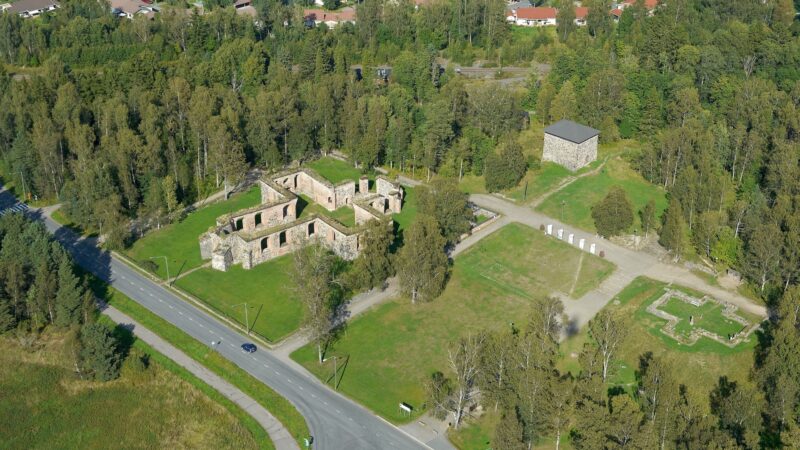
Old Vaasa (Finnish Vanha Vaasa, Swedish Gamla Vasa), is situated approximately 7 km southeast of Vaasa city centre and is classified as a valuable landscape area of national significance. Vanha Vaasa is an area with much to offer, embodying sights and attractions reflecting culture, ancient history, settlement and natural beauty.
The history of Vaasa can be traced to the early 14th century when sailors from Norrland landed on a forested island at the site of Old Vaasa. In the 1370’s Korsholm Castle was already being built on the spot. After the last ice age the land has been continuously rising in these parts of Finland. At the time Korsholm Castle was built, the area between Old Vaasa and the present town was under water and the coastline was further inland compared to the current one. Even as late as about 200 years ago ships sailed to Vaasa along the channel that now, almost filled in, meanders across fields.
On a hot August morning in 1852 a disastrous fire broke out in Vaasa. The houses had either thatch or bark roofs and buildings were separated only by narrow gaps. By nightfall the flourishing town had turned into smoking ruins.
Vaasa was rebuilt some seven kilometers closer to the coast. The relocation provided better prospects for trade and a better harbour as well as a safer and more modern town plan. The legal town status of Vaasa was moved to new Vaasa in 1862. By the 1880’s, the construction of the Vaasa railroad had begun and a station building was erected in Old Vaasa. However, the area did not begin repopulating until the 1920’s.
Read more about the history of Old Vaasa.
-
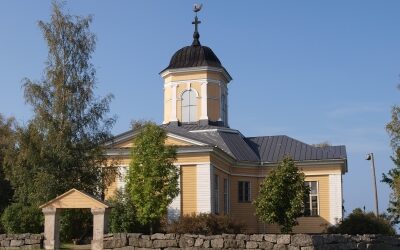
The church of Oravais was built in 1796–1797. The church plans were based on the initiative of the renowned church builder Jacob Rijf from Nykarleby. The church was last renovated in 1961–1962, and the interior painting was renewed in 1992. The organ, built by B.A. Thulén, was taken into use in September 1879.
-
Orisberg is located in Isokyrö in Southern Ostrobothnia at Kotilammi-lake’s beach. Here you can arrange diverse programs, different theme weekends and other programme for groups.
-
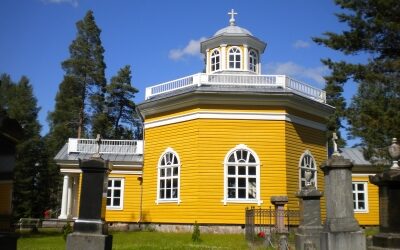
Orisberg church is one of the few private churches in Finland. The Church, designed by architect Carl Ludvig Engel, was inaugurated in 1831.
-
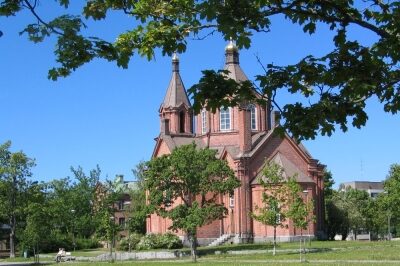
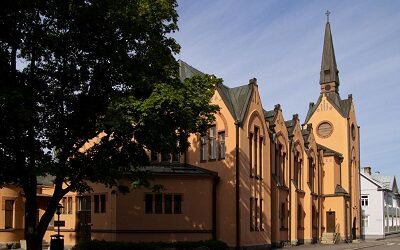
The Ortodox Church of Vaasa was built in 1862 and consecrated 21.9.1866. The church is built as a Byzantine Gothic cruciform church.
-
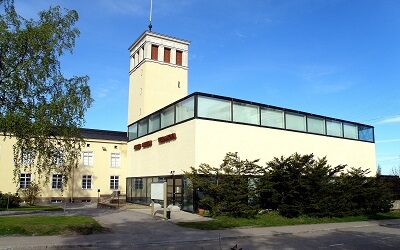
The museum is located in Marianpuisto Park, which is under a 15-minute walk from Vaasa Market Square. The museum was established in 1895 and it functions as the historical museum of the City of Vaasa and as a museum of natural science for Ostrobothnia. The museum focuses mainly on cultural history, art and natural science.
Between three and five changing exhibitions are held annually. In addition to the temporary exhibitions, there are three permanent collection exhibitions corresponding to the museum’s main areas of focus. The Hedman Floor houses antiques and works of art, Vaasa 400 – which is a city history exhibition – and the Terranova exhibition, which informs the visitor about the natural environment in the Kvarken region and the World Heritage Site. The museum offers enjoyable experiences for visitors of all ages as well as information and ideas for teaching cultural history, local history, natural science and art.
-
The Jugend-style Palosaari Church, designed by A.W. Stenfors, was built in 1910. The church interior was thoroughly renovated in 1988, and the facades were restored in 2001.
-
Vaasa has more than 150 hectares of parks
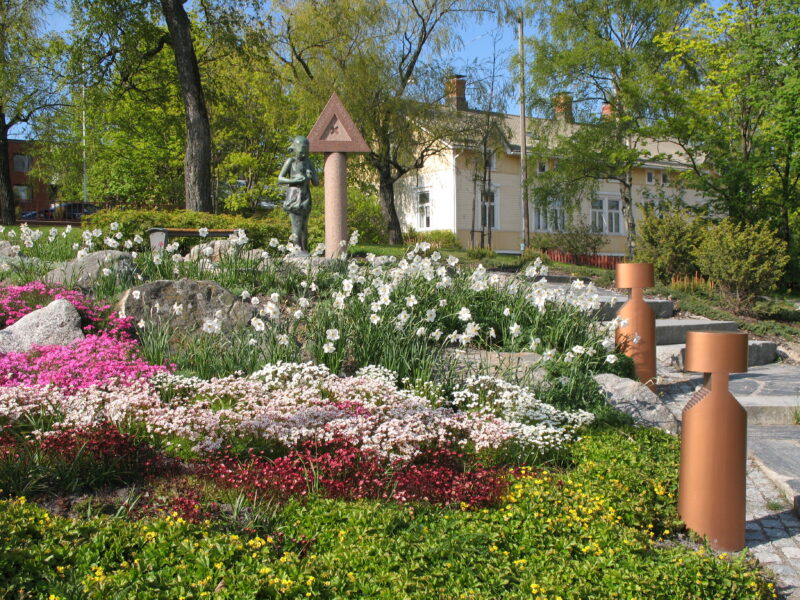
Parks are a central part of the cityscape in Vaasa. New and old, small or large – you will certainly find the places that are right for you among our parks. Enjoy a well-kept environment and admire the wide variety of vegetation growing there.
For example, the historic, lush and well-kept parks create interesting routes for visits and recreation by the city waterfront area. The proximity to the sea gives the landscape its unique appearance and forms a strong picture of life in Vaasa.
Parks provide visitors with opportunities for recreation, well-being, mobility, social gatherings and events – while at the same time allowing visitors to simply sit still and enjoy the nature if they choose. Parks are great meeting places, where you can do things alone or with others.
-
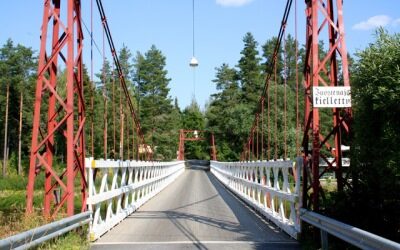
Perttilä’s bridge is Finland’s oldest steel suspension bridge open to traffic. It was built according to a Norwegian model between the years 1909-1910. The wooden deck of the bridge has a total length of 86 meters.
The suspension bridge crosses the Kyrönjoki River at the Perttilä rapids. The suspension bridge is located near the Napue memorial and is still in use.
-
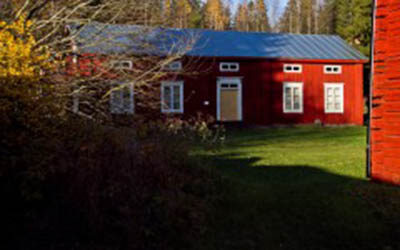
Petalax museum is situated just across from the church of Petalax. The museum is an important part of the traditional buildings that the local historical society owns in the church square. The lower floor of the museum is decorated like an old peasant’s cottage. On the upper floor there are collections of various objects.

Vaasa Region Tourism Ltd.
Tourist information
Visit Vaasa’s office
Vaasanpuistikko 12, Vaasa
Open Mon-Fri: 10 am to 3 pm
Special hours:
24.-25.12.2026 closed
+358 40 123 8977 |
visit.vaasa@visitvaasa.fi