
History and planning situation
The Ravilaakso area is former seabed that, due to land uplift, has formed a low-lying valley. The area has been used as a versatile sports and park area, which has included, among other things, an ice track and a motor track. In the 1950s a race track was built in the area. The construction of the race track did not end the area’s other recreational uses; it continued to be used for a variety of activities.
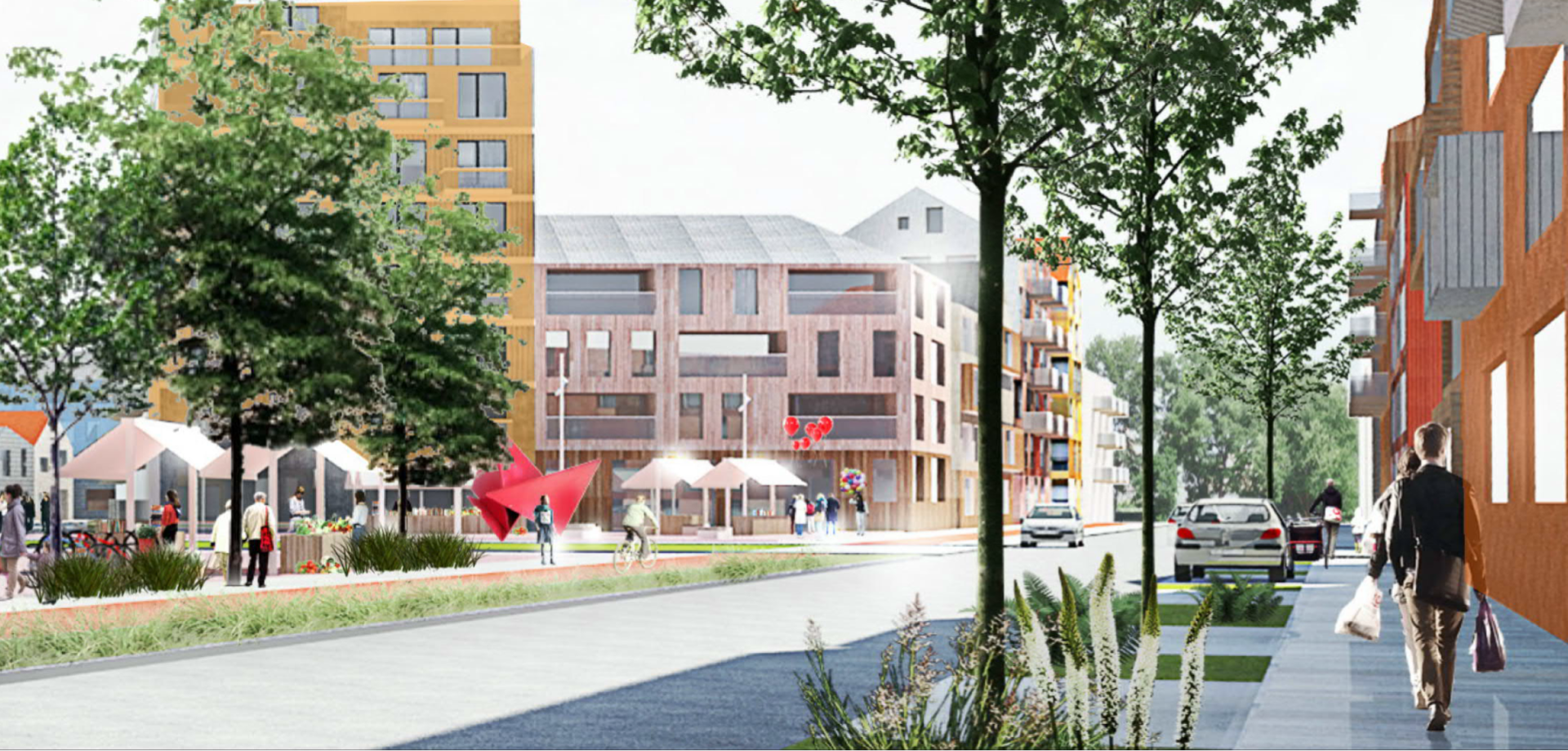
In 2008 a master plan was prepared for the area as part of Vaasa’s master plan work, and the area was designated for multi-storey residential apartment buildings. In 2013 a design competition was held for the land use of the area. The detailed plan solution currently being prepared is based on the 2013 general architectural competition and the subsequent master plan prepared in 2016.
A completely new land use development process has been created for the area’s detailed plan. Under the Ravilaakso land use development project nine separate sub-projects have been assembled that support the creation of an urban environment in line with the objectives and provide additional information for the plan solution and for the implementation of the plan.
Implementation of construction
Various competitive procurement procedures for blocks and plots will be used in the construction of Ravilaakso, aiming to produce solutions that are high-quality both functionally and architecturally. Proper procurement enables the achievement of the development objectives set for the area. The Ravilaakso area will mainly be completed with privately financed owned and rental apartments. The aim is also to include ARA rental apartments, service housing for special groups, and new forms of housing, such as group construction and communal living. Private construction companies will mainly be responsible for building the dwellings.
Construction schedule
Construction in Ravilaakso has begun with preliminary earthworks. These works will continue over the next 2–3 years. Construction has been possible since 2023. Building will continue in phases over the next 10–15 years so that the annual number of completed dwellings (approx. 100 units) will cover about 20–25% of the annual need.