
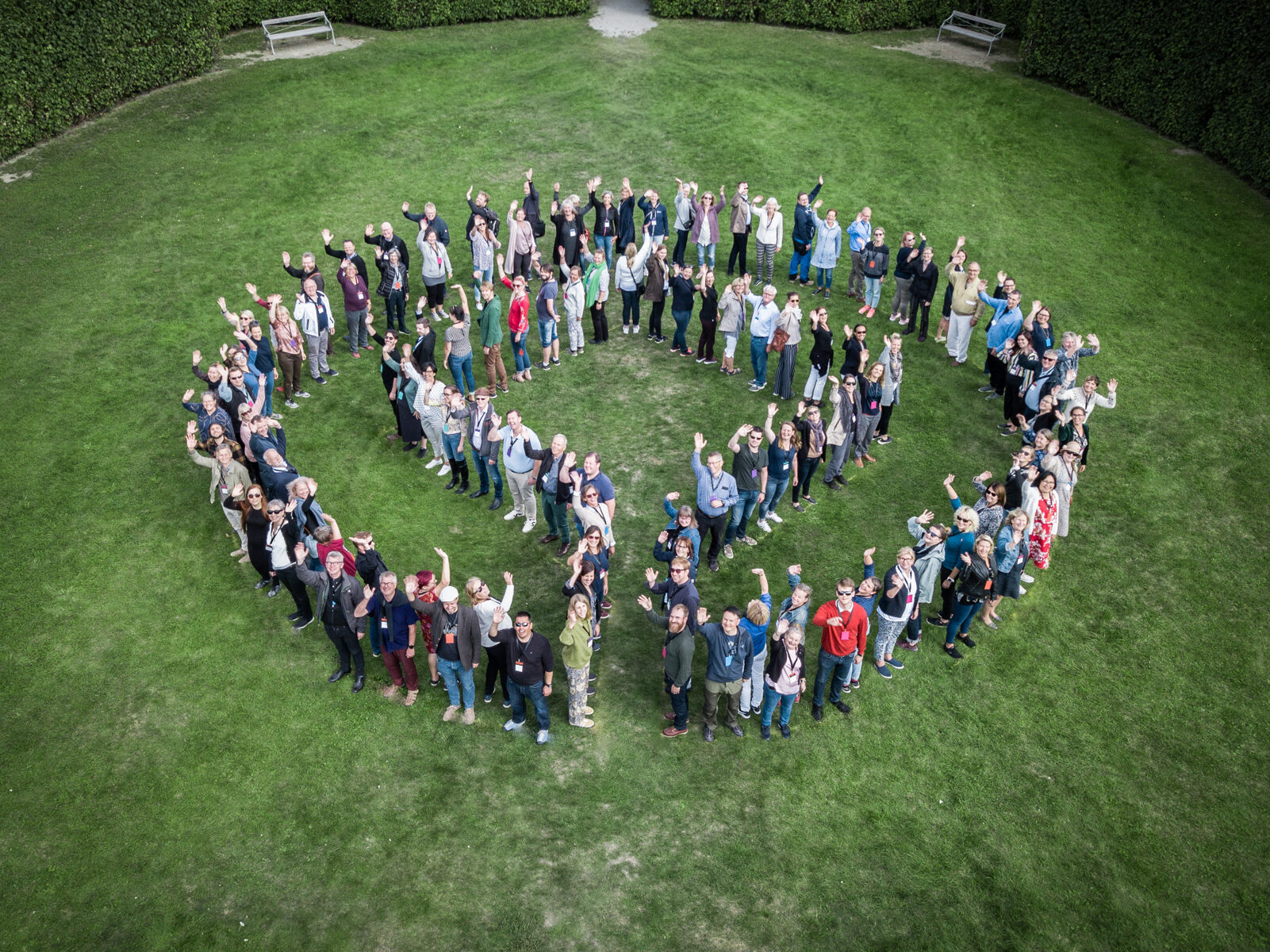
The Kvarken Archipelago World Heritage Site publishes 3–4 newsletters each year.
Here you can read the latest newsletters.
Welcome to read our summer newsletter!
The Kvarken Archipelago World Heritage Site was inscribed on the UNESCO World Heritage List on 16 July 2006. Welcome to join the celebrations for the 20th anniversary in 2026.
Nominate the Land Uplifter of the Year!
We are now looking for your nominations for the 2026 Land Uplifter of the Year in the High Coast and Kvarken Archipelago World Heritage Site.
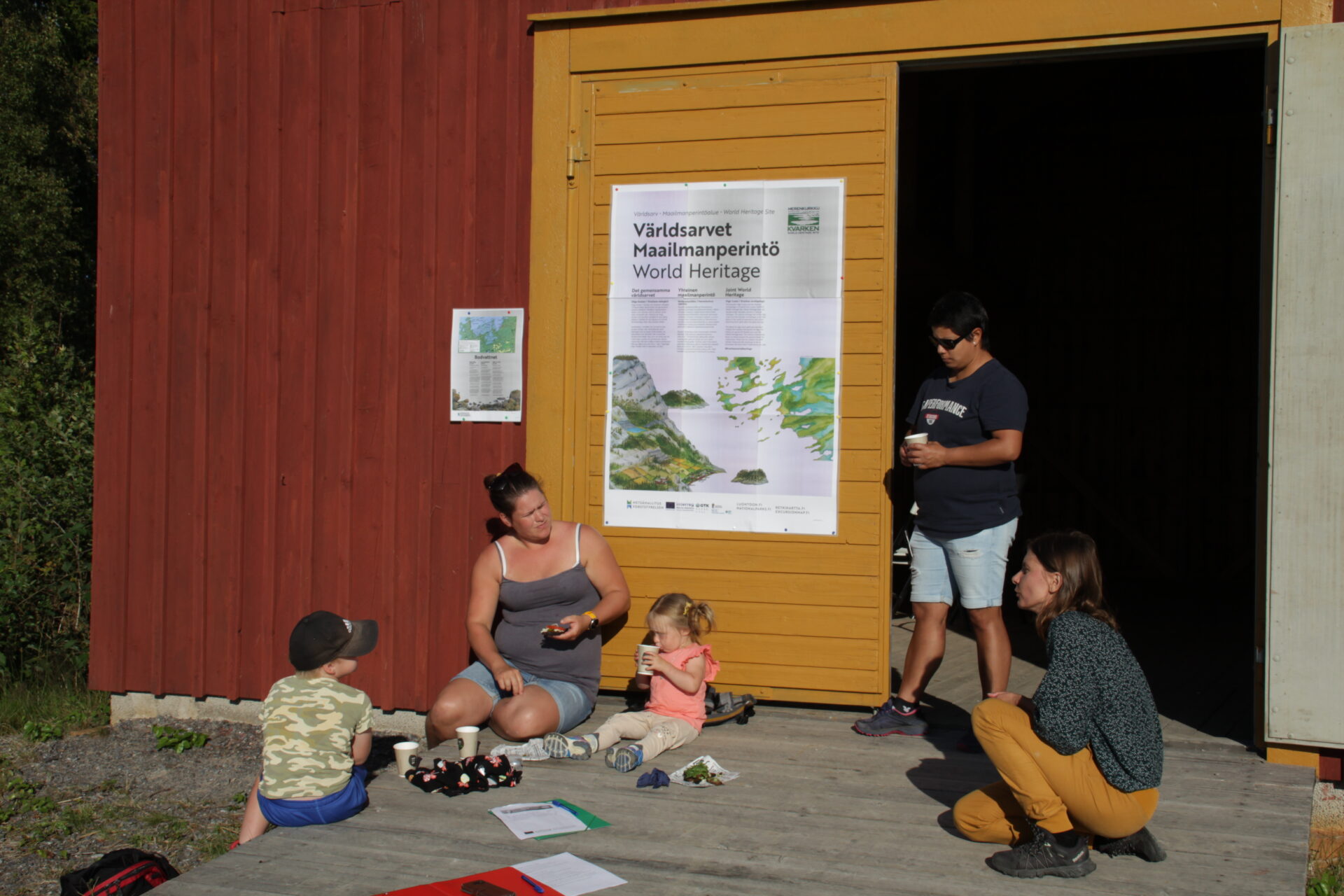
The Land Uplifter of the Year in the High Coast and Kvarken Archipelago World Heritage Site is a person or organisation that has promoted the World Heritage in a positive way. The recipient may have contributed to the conservation or development of the World Heritage, communicated information in an inspiring way, or created experiences that have remained especially memorable for residents or visitors. In 2025 the award was given for the first time to the association Världsarvsledens vänner on the High Coast.
The recognition is an honorary award that acknowledges the recipient’s long-term work for the World Heritage. The Land Uplifter of the Year is chosen by the cooperation group for the High Coast and Kvarken Archipelago World Heritage Site.
The Land Uplifter of the Year will be selected in 2026 in the Kvarken Archipelago. The deadline for nominations is 31 August. Nominate your favourite online World Heritage Site honorary award
Take part in the World Heritage anniversary photo competition!
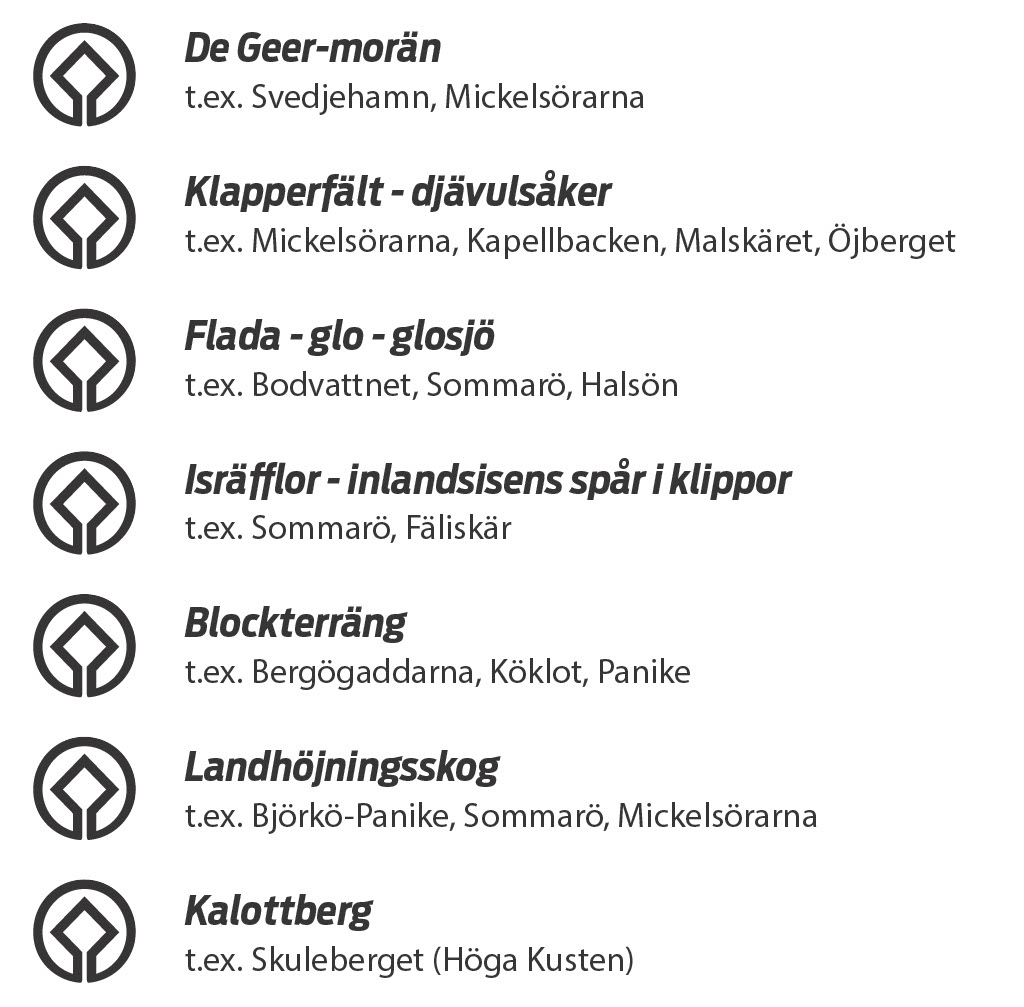
Search for traces of the World Heritage: De Geer moraine, devil’s field, flada–gloe lake, glacial grooves, blockfield, land-uplift forest, cap rock – take a photo that shows you and a trace, and send it by 31 Aug 2026 to info@merenkurkku.fi
Everyone who has photographed at least four traces will receive a prize. From all entrants a winner will be drawn and notified separately.
You can find more information about the competition here!
World Heritage Site’s birthday 16 July 2026
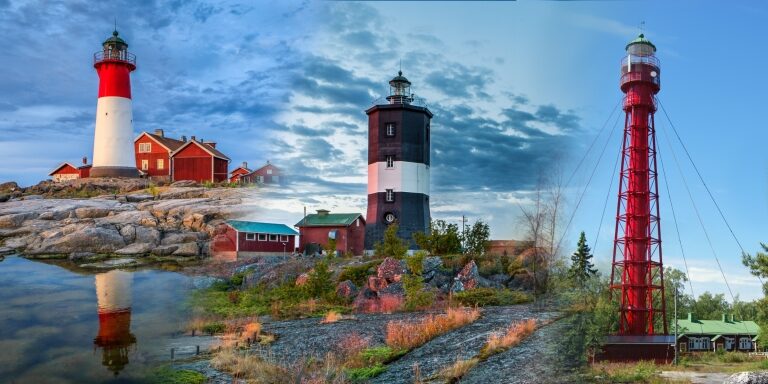
Because the Kvarken Archipelago was inscribed on the UNESCO World Heritage List on 16 July 2006, we will celebrate our site’s birthday at the World Heritage Gate by offering a 20% discount on all products in the shop – the offer applies to all items in stock! Take the opportunity to buy World Heritage products for yourself or your loved ones!
Municipal celebration weeks
We have already celebrated the World Heritage area’s celebration weeks in Vaasa, Mustasaari and Vöyri. In autumn the celebrations continue with a celebration week in Korsnäs on 3–9 Aug and in Maalahti on 14–20 Sep.
The joint anniversary celebration together with the High Coast will be held on 24–25 Sep 2026.
The full anniversary programme can be found here: Kvarken 20
The biological station of the Valsörarna Islands – 60 years of natural science research in the middle of the Kvarken World Heritage area
The activity of the Valsörarna biological station has continued for six decades. The natural science association Ostrobothnia Australis purchased the station building from the Finnish Maritime Rescue Society in 1964. It was taken into research use in 1966, but bird research on the Valsörarna has a long tradition going back to the 1930s. Since then the station has been renovated and it now provides accommodation and functional workspaces for researchers. Today the activities on Valsörarna include migratory bird counting, bird ringing and research related to bats and spiders.
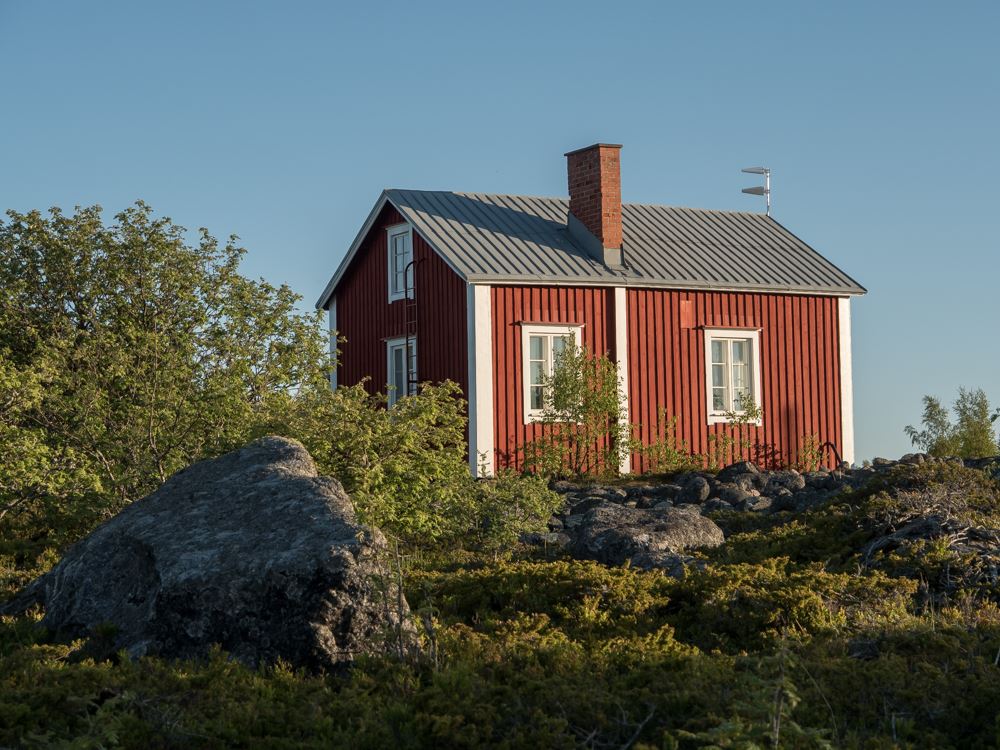
The Valsörarna biological station (https://www.oa.fi/valsorarna/) operates in the Kvarken Archipelago World Heritage Site, which is celebrating its 20th anniversary this year. In Sweden the Ottenby bird station is located in the World Heritage site of the agricultural landscape of southern Öland and in Denmark the Blåvand bird station is located in the Wadden Sea World Heritage Site.
Welcome to see the station’s anniversary exhibition, on display at the Ostrobothnian Museum / Terranova until Sunday 4 Oct 2026.
The museum is open Wednesday–Sunday 10–17 https://www.vaasa.fi/koe-ja-nae/kulttuuria-vaasassa-ja-seudulla/vaasan-museot/pohjanmaan-museo/
At the same time on the High Coast
The World Heritage cooperation group met on Högbonden
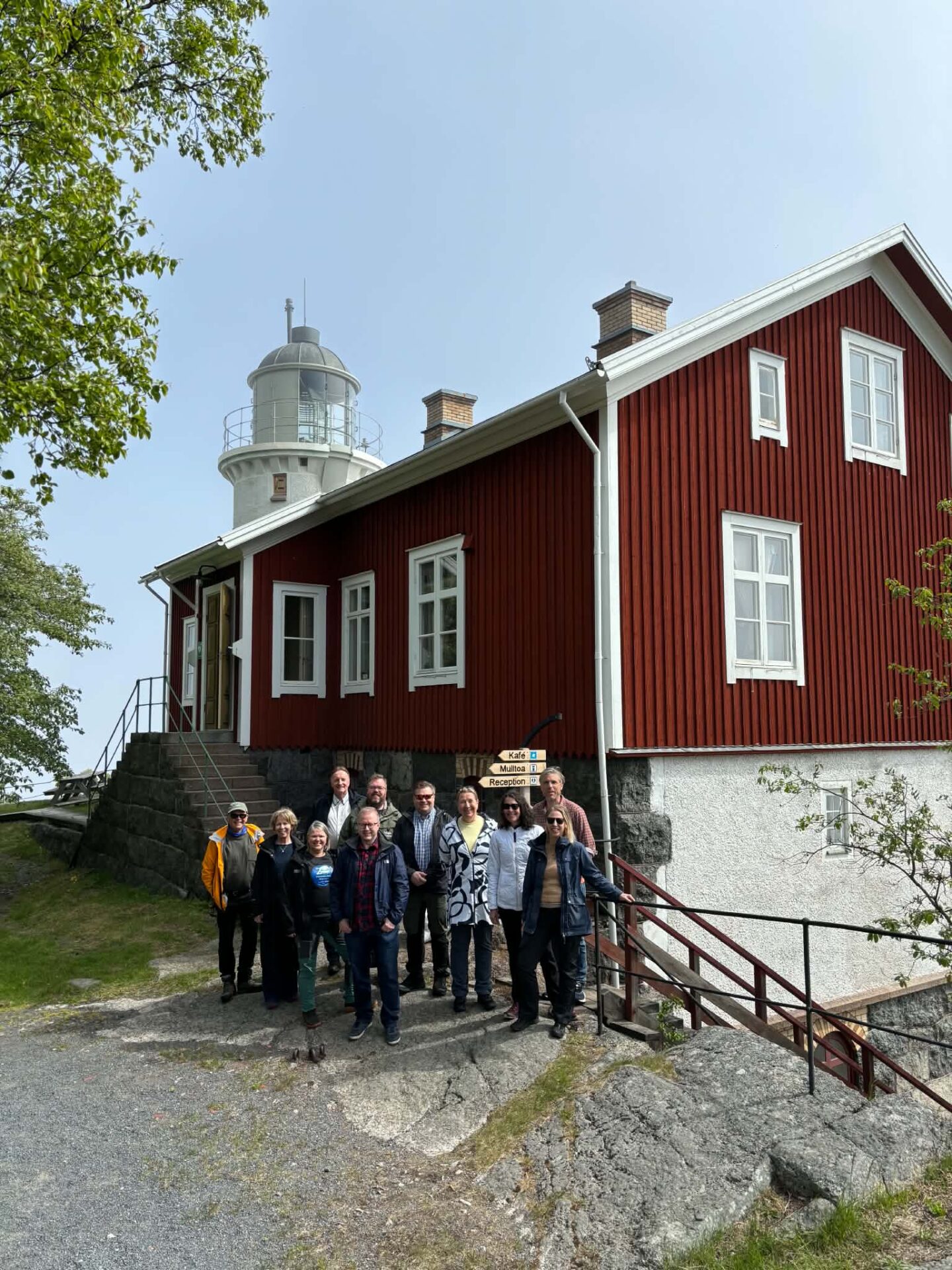
At the beginning of the summer the cooperation group for the Kvarken Archipelago and the High Coast World Heritage sites met on Högbonden on the High Coast. Högbonden is Sweden’s second-highest lighthouse location, and a visit there is warmly recommended to anyone travelling on the High Coast.
The cooperation group includes the World Heritage municipalities, the Regional Council of Ostrobothnia, the Centre for Vitality, Metsähallitus and the County Administrative Board of Västernorrland. The group usually meets twice a year. At the Högbonden meeting topics discussed included possible joint cross-border projects. Most project ideas focus on the vitality of local communities and strengthening the operating conditions of associations, entrepreneurs and the tourism industry. Next the World Heritage coordinators will continue discussions with tourism organisations and other potential project actors.
The Kvarken Archipelago newsletter is compiled by Metsähallitus’ Natural Heritage Services, which manages the World Heritage area, and by Kvarken World Heritage Association, which is responsible for the site’s information services and customer service.
Facebook : Kvarkens skärgård – Merenkurkun saaristo
Kvarken Archipelago – World Heritage Site
Instagram : @kvarkenworldheritage
Welcome to read the first newsletter of the anniversary year!
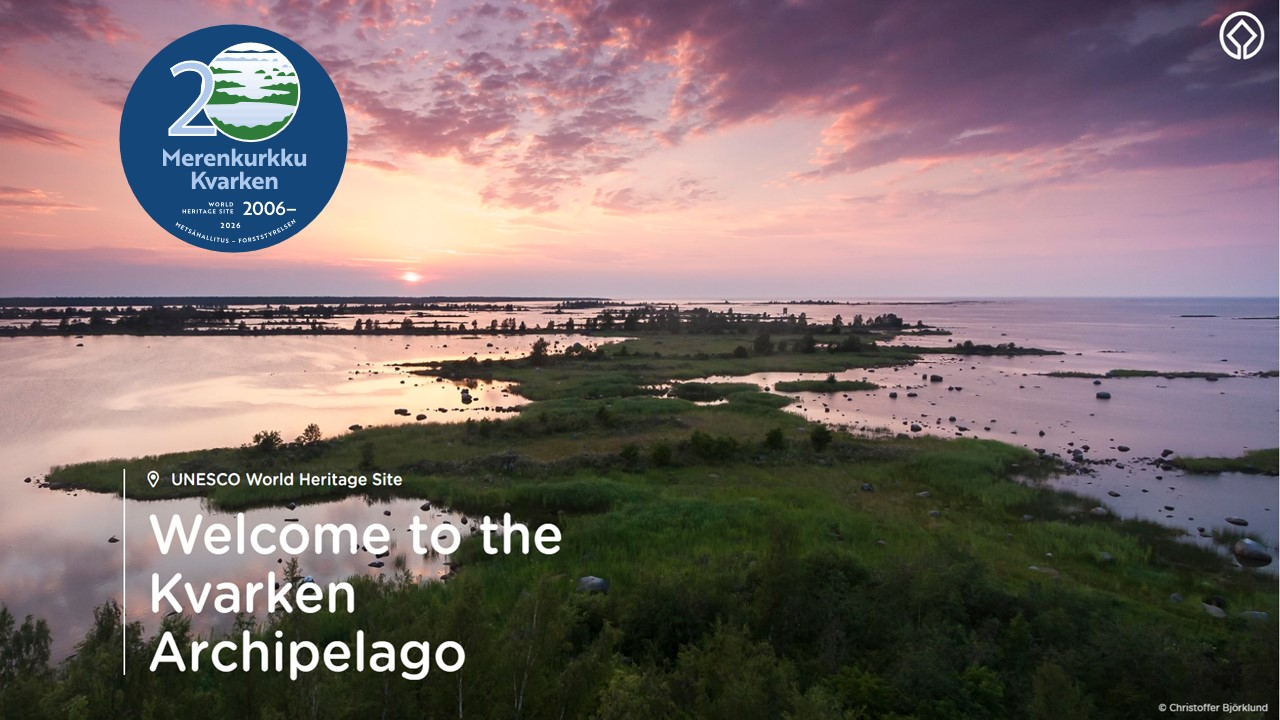
The Kvarken Archipelago World Heritage Site was inscribed on the UNESCO World Heritage List on 16 July 2006. As a result of this decision, the High Coast / Kvarken Archipelago is now a transboundary World Heritage Site. The High Coast celebrated its 25th anniversary as a World Heritage Site last year, while we in the Kvarken Archipelago will celebrate our 20th anniversary in 2026.
Being included on the UNESCO World Heritage List is a recognition that highlights the unique nature of the area and its great importance for future generations. Together with Sweden’s High Coast, Kvarken forms a shared World Heritage Site where land uplift is more visible than in almost anywhere else in the world.
The Kvarken World Heritage Association organises, together with Metsähallitus, the World Heritage municipalities and local organisations, a programme throughout the anniversary year. There will be competitions, activities, guided tours, boat trips, exhibitions and much more. The official anniversary celebration will be held in early autumn 2026.
Each World Heritage municipality will hold a World Heritage week.
The first World Heritage week of the anniversary year will be held in Vaasa on 21–26 Apr with the following programme:
- Photographer Jaakko Salo presents decades of photos taken of the World Heritage site at the Vaasa Maritime Museum on Tuesday 21 Apr 2026 at 18:00. Free entry. Organizer: Vaasa Maritime Museum
- The Finnish World Heritage Association organises its annual meeting and a seminar at Svenska Hanken on Wednesday 22 Apr 2026 at 13:00–16:00 (pre-registration)
- The Ministry of the Environment’s World Heritage Forum at Vaasa Citizen Institute Alma’s assembly hall on Thursday 23 Apr 2026 at 10–16 (pre-registration). Reception at the Ostrobothnian Museum / Terranova on Wednesday 22 Apr 2026 at 18:00. Organisers: Ministry of the Environment, Ministry of Education and Culture, Finnish World Heritage Sites Association and Kvarken World Heritage Association.
- “Join the Finnish coastal routes” – book launch and lecture with Harri Ahonen at Scandic Vasa hotel on Thursday 23 Apr 2026 at 18:00. Organizer: Visit Vaasa
- Hike in land-uplift landscape on the Öjberget nature trail on Saturday 25 Apr at 11:00–about 12:30 in cooperation with Sundom village association’s Meteoria section
- All week 22–26 Apr you can play Terranova’s World Heritage bingo at the Ostrobothnian Museum 10–17.
Later this year World Heritage weeks will be held in Korsholm (week 26), Vörå (week 27), Korsnäs (week 32) and Malax (week 38).
More information about events and registration links can be found on our anniversary page
Anniversary events and logo
On behalf of the World Heritage site we are happy to cooperate with municipalities and other actors during the anniversary year. If you have plans for events to celebrate the Kvarken Archipelago’s 20 years as a World Heritage Site, please contact us. You are free to use the anniversary logo in different anniversary events. World Heritage coordinator Malin Henriksson can send the logo in different formats upon request.
For more information contact
Malin Henriksson, World Heritage Coordinator, Metsähallitus / Natural Heritage Services, malin.henriksson@metsa.fi , tel. 040 193 5775
Kenth Nedergård, Managing Director, Kvarken World Heritage Association, kenth.nedergard@kvarken.fi , tel. 050 5222 644
Our shared heritage – World Heritage education
The Kvarken Archipelago World Heritage Site turns 20. What has the World Heritage site meant and what significance does it have today in education? We asked these questions to Anne-Carine Kaján, headmistress of Vallgrund School. The school is located in the heart of the Kvarken archipelago village of Norra Vallgrund.
– It is the foundation for everything. We try to teach pupils the area’s history, biology, geography and the living conditions in the past and today. A solid foundation to build on, to cherish and develop. If they so wish, the world is open to them. Together we must ensure that the area and its special characteristics are preserved and developed.
The future and development of World Heritage education – what might it look like?
– Our current aim is to broaden our horizons and connect World Heritage site to World Heritage site. This gives us the opportunity to share our knowledge of our own environment with others and at the same time learn more about their unique environments. Fundamentally that is what it is about. This is not only teaching related to World Heritage sites, but something we all should pass on to children and young people: protecting the world. All environments are valuable, and we must see the planet as a whole.
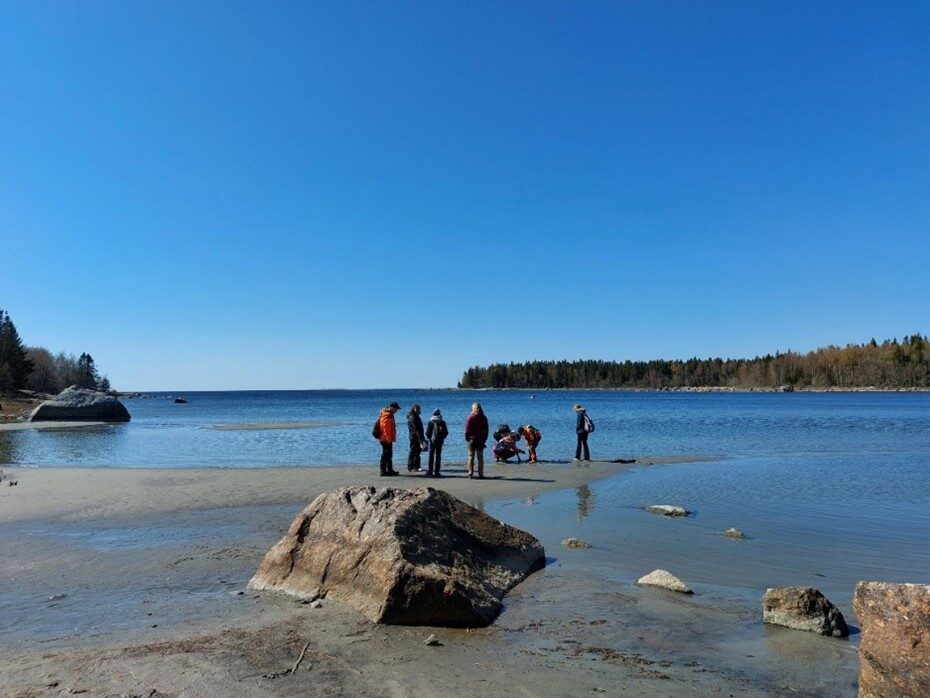
This is how Mika Jokiaho, lecturer of history, social studies and entrepreneurship education, and UNESCO coordinator at Vaasa Lyceum Upper Secondary School, answers. The upper secondary school is located in the centre of Vaasa and is a UNESCO school.
– At Vaasa Lyceum World Heritage is an important part of the school’s UNESCO ASPnet activities. The UNESCO Kvarken Archipelago World Heritage Site has provided us with a unique learning environment where students have been able to observe land uplift and its effects on cultural heritage and ecosystems, biodiversity and the characteristics of the Baltic Sea and especially the Kvarken area. The site has helped to understand how the interaction between nature and culture is visible in our own environment and how it can be preserved for future generations.
– At the same time the site has supported the learning of global citizenship skills: students have considered the human role as a protector of natural and cultural heritage, promoter of sustainable development and an active actor in their own local environment. As a natural heritage site the Kvarken Archipelago reminds us that understanding and protecting nature are part of our shared future.
– The Kvarken Archipelago has also served as an excellent excursion destination and a bridge to international cooperation. We have brought Erasmus+ partners as well as teachers and students from UNESCO Baltic Sea Project schools from Estonia, France, Italy, Germany, Denmark and Poland and even Japan to the area. Each visit has strengthened the understanding that World Heritage connects people across borders and provides a great learning environment for learning together.
The future and development of World Heritage education – what might it look like?
– This May Vaasa Lyceum will receive visiting UNESCO schools from around Finland, with whom we will make a joint day trip to the Kvarken Archipelago World Heritage Site. The meeting is the first gathering of the new UNESCO schools’ cultural heritage network. At the Kvarken Archipelago World Heritage Site the aim is to learn sea literacy, grow as sea citizens and explore how World Heritage can be used even more diversely in teaching. At the same time the meeting offers an opportunity to learn from each other and share best practices.
– In the future the goal is for UNESCO schools to meet every spring in different parts of Finland and visit World Heritage sites located nearby. This way World Heritage can become more firmly embedded in schools’ cultures and study modules.
– The Kvarken Archipelago World Heritage Site will surely continue to offer Vaasa Lyceum a unique learning environment and a place for international cooperation. On final exam and assessment days the site could be used more as an excursion destination and learning environment across different subjects. In addition, building a dedicated study module around the World Heritage Site would be a natural next step. A Kvarken Archipelago World Heritage course could gather the accumulated expertise and collaboration with the World Heritage Gate’s heritage educator.
Congratulations to the 20-year-old UNESCO Kvarken Archipelago World Heritage Site! Warm thanks to the staff of the World Heritage Gate for good cooperation over the years.
At the same time on the High Coast
For Easter, on 2 April, the visitor centre naturum Höga Kusten opened for the season. We started the year with family-oriented Easter egg-themed activities.
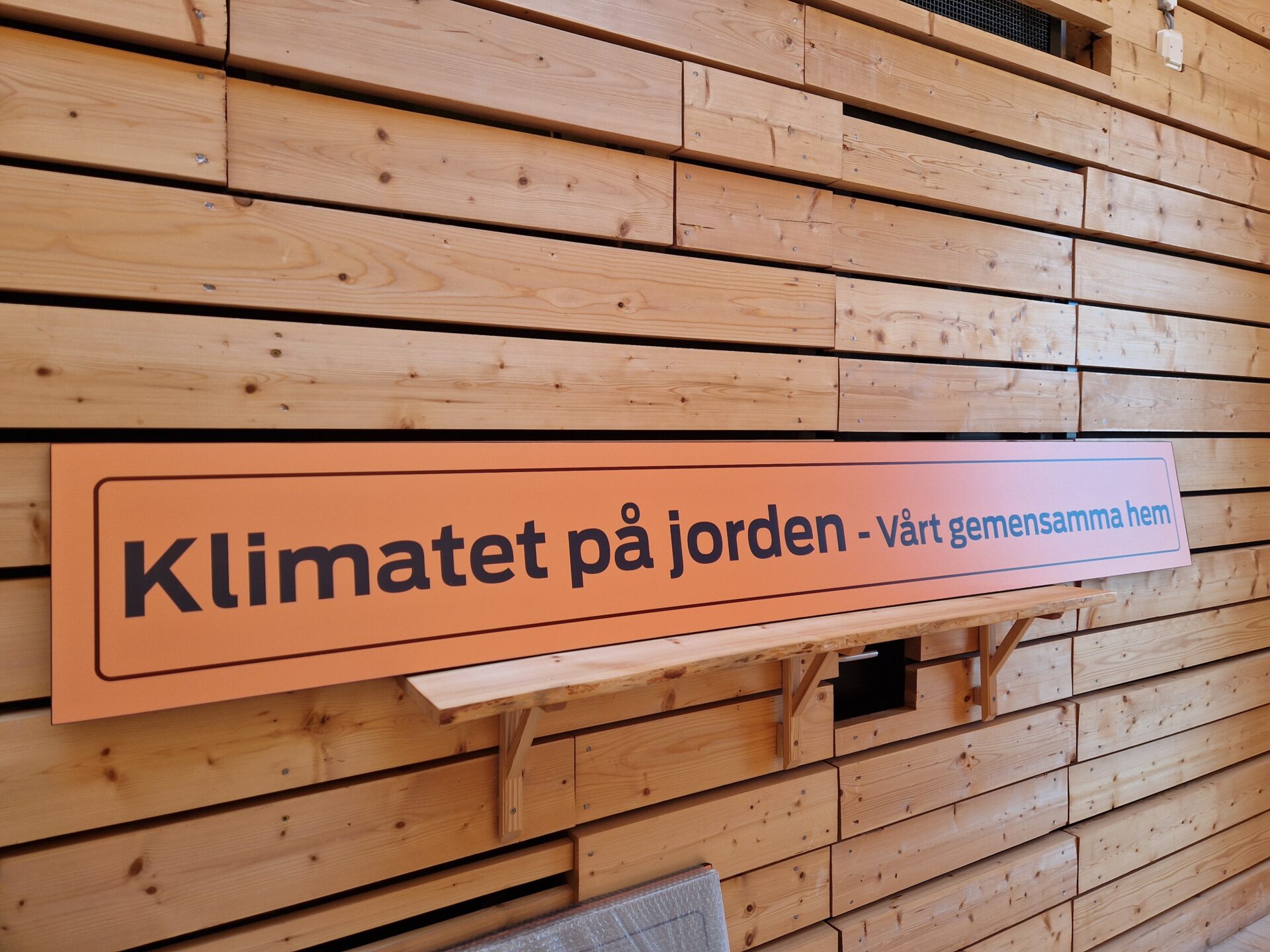
This year’s theme is climate change, which is present throughout the season in a temporary exhibition. The exhibition addresses the long-term perspective of Earth’s climate changes and relates it to the current very rapid warming. World Heritage is also known to be based on major climate change: first the freezing and then the melting of the areas and the subsequent land uplift. We deepen the theme in the permanent exhibitions, where we explain why the High Coast is a World Heritage Site and the world’s highest area of land uplift. Welcome to take a look!
The Kvarken Archipelago newsletter is compiled by Metsähallitus’ Natural Heritage Services, which manages the World Heritage area, and by Kvarken World Heritage Association, which is responsible for the site’s information services and customer service.
Follow our channels on social media
Facebook : Kvarkens skärgård – Kvarken Archipelago
Kvarken Archipelago – World Heritage Site
Instagram : @kvarkenworldheritage
The Kvarken Archipelago World Heritage Site wishes you a Merry Christmas and a Happy New Year!
The Kvarken Archipelago World Heritage Site turns 20 in 2026
The Kvarken Archipelago World Heritage Site was inscribed on the UNESCO World Heritage List on 16 July 2006. As a result of this decision, the High Coast – Kvarken Archipelago is now a transboundary World Heritage Site. The High Coast is celebrating 25 years as a World Heritage Site this year, while in the Kvarken Archipelago we are planning to celebrate our 20-year history next year in 2026.
The Kvarken World Heritage Association and the World Heritage Council’s working group are planning next year’s anniversary events. The idea is to hold events throughout the year that draw attention to the anniversary across the whole World Heritage area, although the main celebrations will take place in autumn 2026.
On the World Heritage side we are happy to collaborate with municipalities and other actors for the anniversary year. Let us think about how you would like to celebrate our World Heritage site’s 20 years locally.
The planning of the anniversary year is led by World Heritage Coordinator Malin Henriksson and Executive Director Kenth Nedergård. Our contact details are below and you can contact us if you have questions or want to participate.
Together we will highlight our unique World Heritage Site during the anniversary year!
Malin Henriksson Kenth Nedergård
World Heritage Coordinator Executive Director
Metsähallitus / Natural Heritage Services Kvarken World Heritage Association
malin.henriksson@metsa.fi kenth.nedergard@kvarken.fi
phone 040 193 5775 phone 050 5222 644
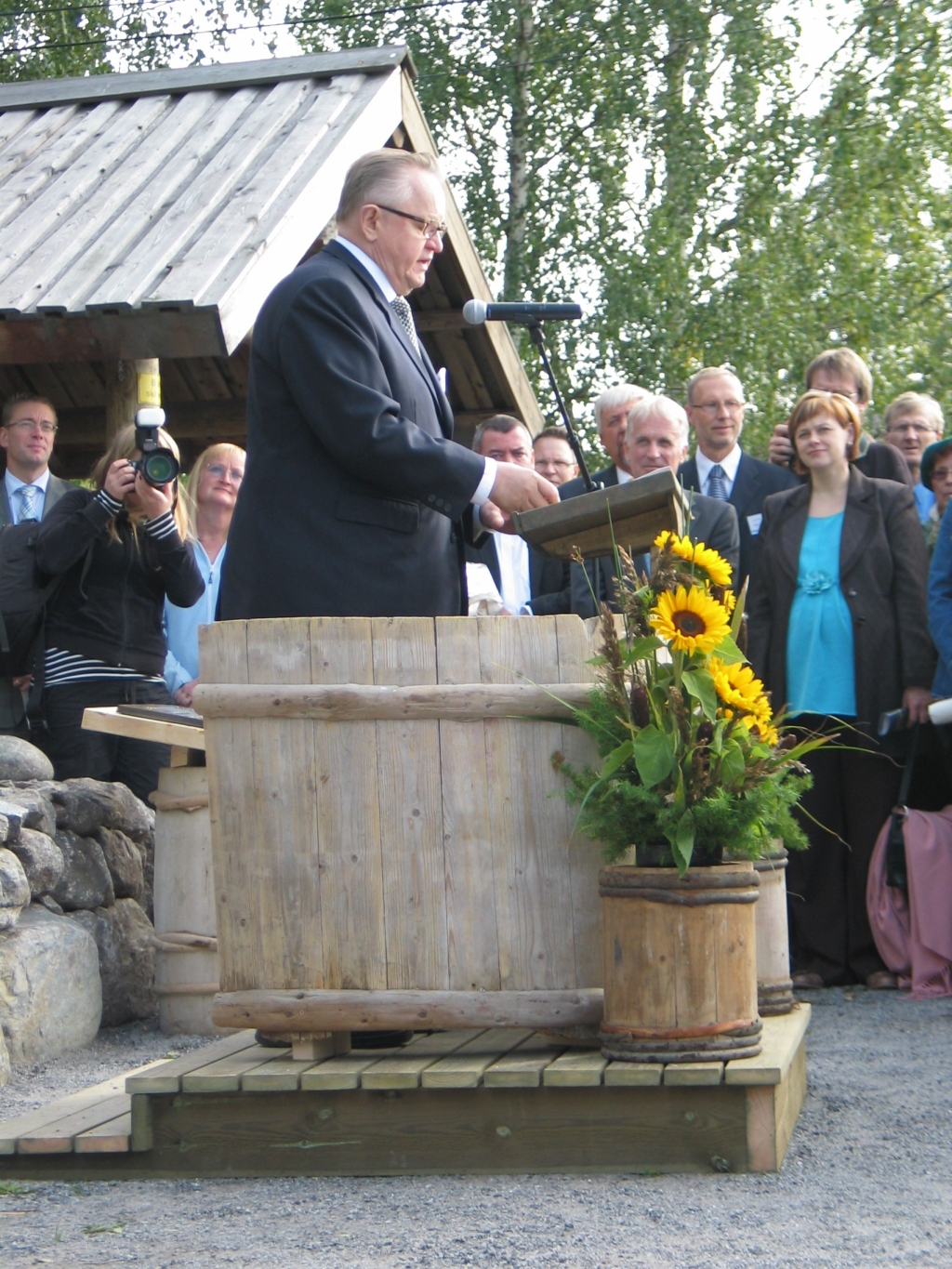
The formal opening ceremony of the World Heritage site took place on 8 Sep 2007 in Svedjehamn, where the guest of honour was President Martti Ahtisaari.
Restoration work at Västra Norrskär harbour progressing
In 2022 Parliament granted “Christmas gift funds” for the restoration of Västra Norrskär harbour. Investigations were carried out for planning purposes, which we have reported in previous newsletters. Now the project has progressed, and the attached photo was taken in November this year.
“The ends of the breakwaters have already been demolished, and next new breakwaters made of natural stone will be built. As finishing touches the stones from the demolished wall will be placed on top of the breakwaters. The harbour will be dredged once the breakwaters are completed,” says Metsähallitus’ Teemu Rauhala.
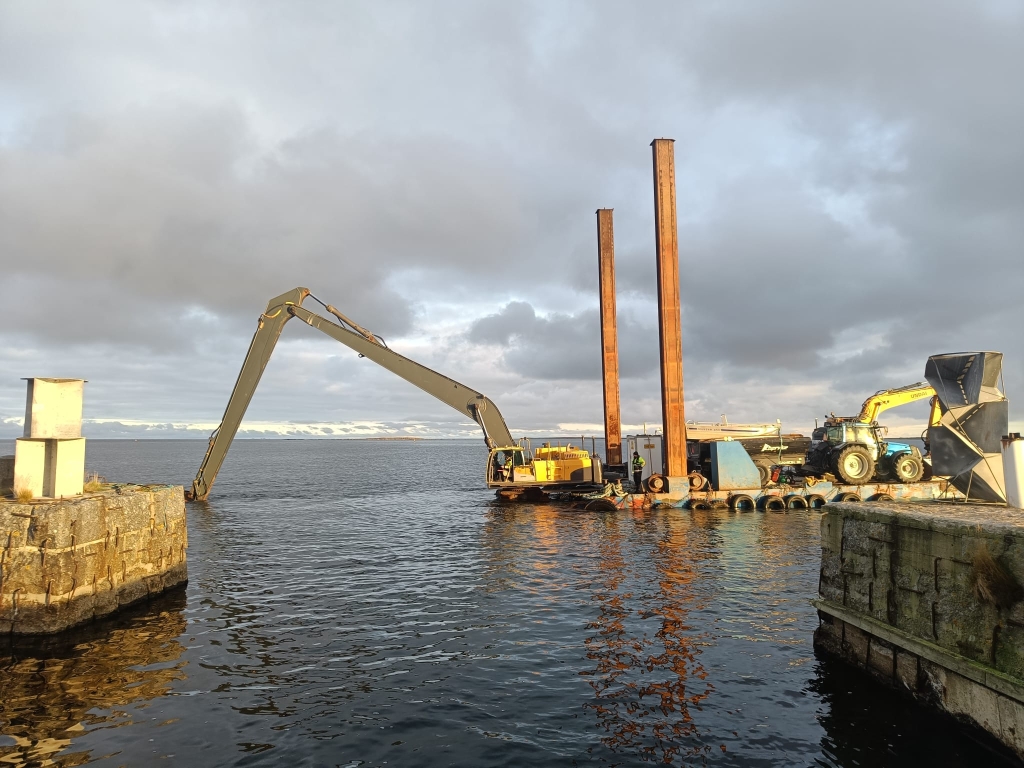
Dredging in progress at Norrskär harbour
World Heritage education III in the Kvarken Archipelago

The World Heritage education project in the Kvarken Archipelago will be implemented during the 2025–2026 school year. The project allows us to offer World Heritage education in local schools, at the Kvarken World Heritage Gateway visitor centre or in the Kvarken Archipelago.
Children of our World Heritage
We all need our World Heritage. It reminds us of the fundamental purpose of our existence: to leave the world to future generations as we have inherited it – or preferably in a somewhat better condition. Right now I feel this thought more strongly than ever before. Hopefully it will also come across in our upcoming film.
Schools and their pupils are the torchbearers of the future in environmental matters as well. Therefore the World Heritage educator must be able to continue cooperation with all the municipalities where activities are currently carried out. Metsähallitus must be guaranteed sufficient resources to maintain and keep up the hiking routes and sites throughout the Kvarken World Heritage area. And the municipalities should be able to support at least Saturday bus services to the area. Our greatest attraction in the future nationally and internationally is our unique nature. It is worth investing in.
Jukka Rautio, class teacher, Vaasa Central School
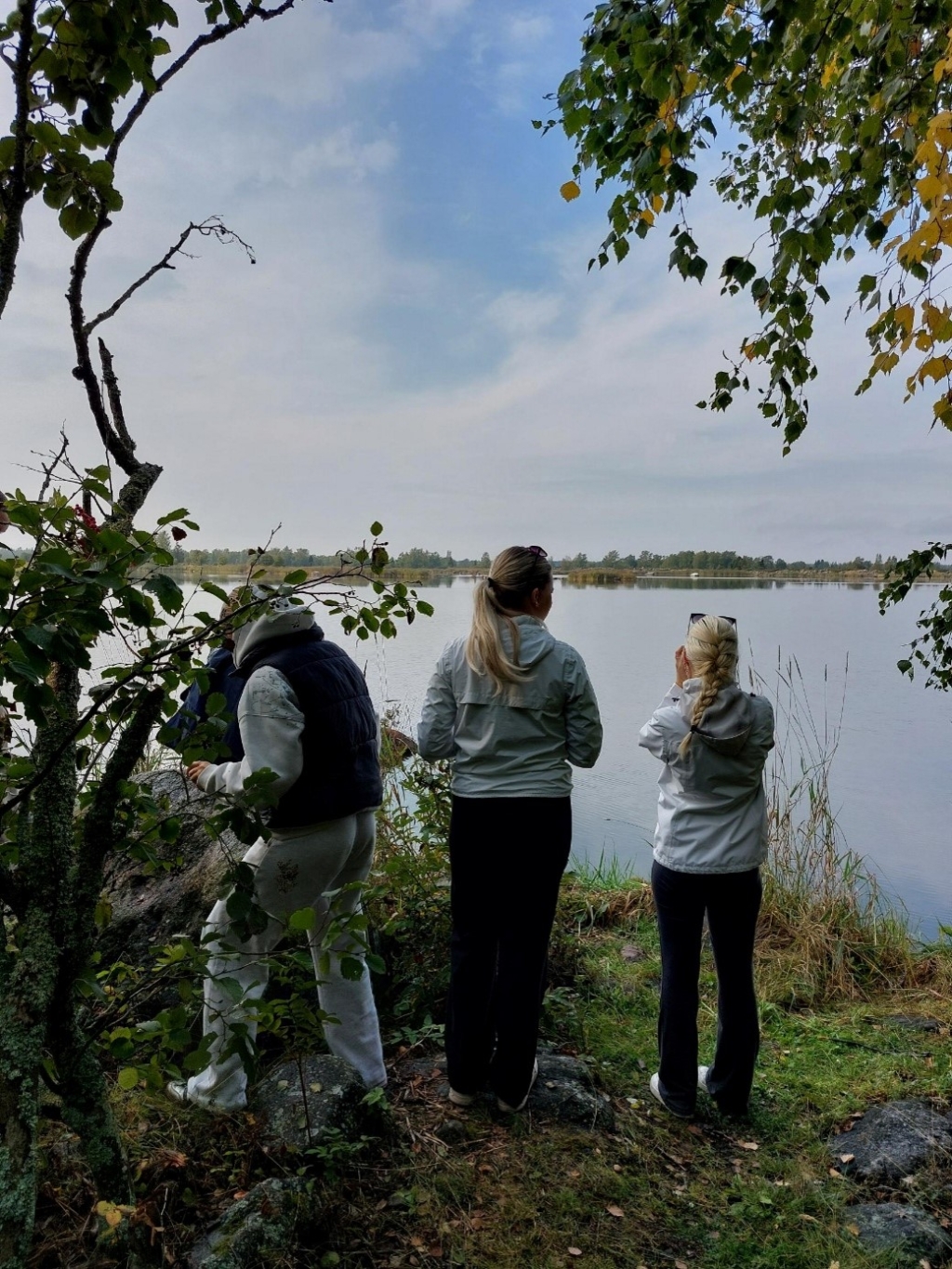
Students and teachers from Vaasa Lyceum Upper Secondary School and Pärnu Sutevaka Humanitarian Gymnasium – Erasmus+ cooperation and visit to Björköby Svedjehamn.
At the same time on the High Coast
19–21 Nov the High Coast World Heritage Coordinator Patrik Bylund took part in the annual network conference of the Swedish World Heritage Sites Association. This time the conference was organised by the Grimeton radio station as part of the station’s centenary celebration of its broadcasting history. The Grimeton radio station near Varberg is a unique place to explore the history of wireless communication. Development began there with a long-wave transmitter that is still in operation today.
In addition to World Heritage Sites, the conference was attended by Sweden’s National Historical Museums authority (Riksantikvarieämbetet) and the Swedish Environmental Protection Agency (Naturvårdsverket). The theme of the year was the development of a place or site, and participants heard from researchers and experts in the field and discussed their own strengths and weaknesses in place development workshops. The conference was held at Grimeton’s new visitor centre.
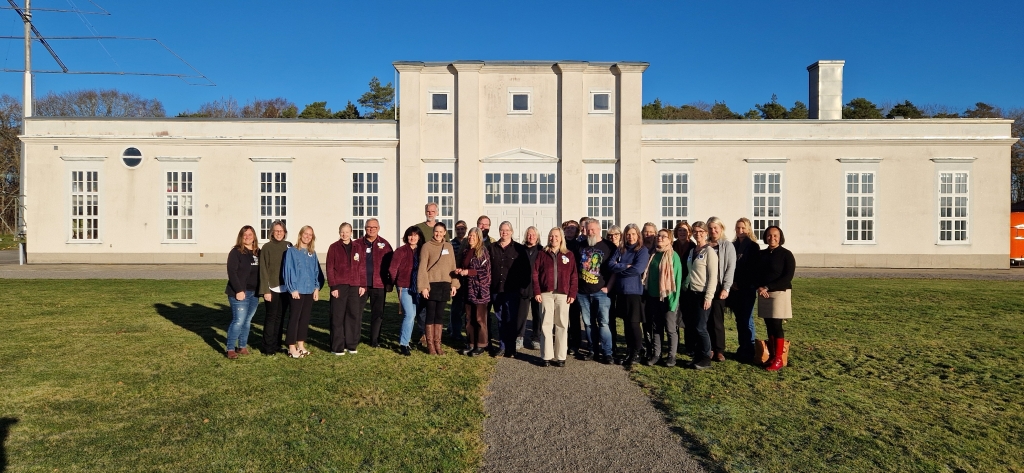
Photo: Grimeton
The Kvarken Archipelago newsletter is compiled by Metsähallitus’ Natural Heritage Services, which manages the World Heritage area, and by Kvarken World Heritage Association, which is responsible for the site’s information services and customer service.
Follow our channels on social media
Facebook : Kvarkens skärgård – Kvarken Archipelago
Kvarken Archipelago – World Heritage Site
Instagram : @kvarkenworldheritage
Welcome to read the Kvarken newsletter 3-2025!
The World Heritage Council began a new term
The Kvarken Archipelago World Heritage Council is a cooperation forum where regional actors meet to discuss current World Heritage related issues. The council promotes the broad rooting of World Heritage work in the area. Both local interest groups and authorities participate in the World Heritage Council. A new four-year term began in September.
In the council’s first meeting a new chair and deputy chair were elected for the term. Ann-Sofi Backgren, representing Molpe bys samfälligheter, was elected chair. Ralf Nybond from Björkö delägarlag was elected deputy chair. The council is in good hands: both Backgren and Nybond have been involved in World Heritage matters for years.
During the winter the council will prepare a new strategy for the Kvarken Archipelago and in 2026 we will celebrate 20 years as a World Heritage Site.
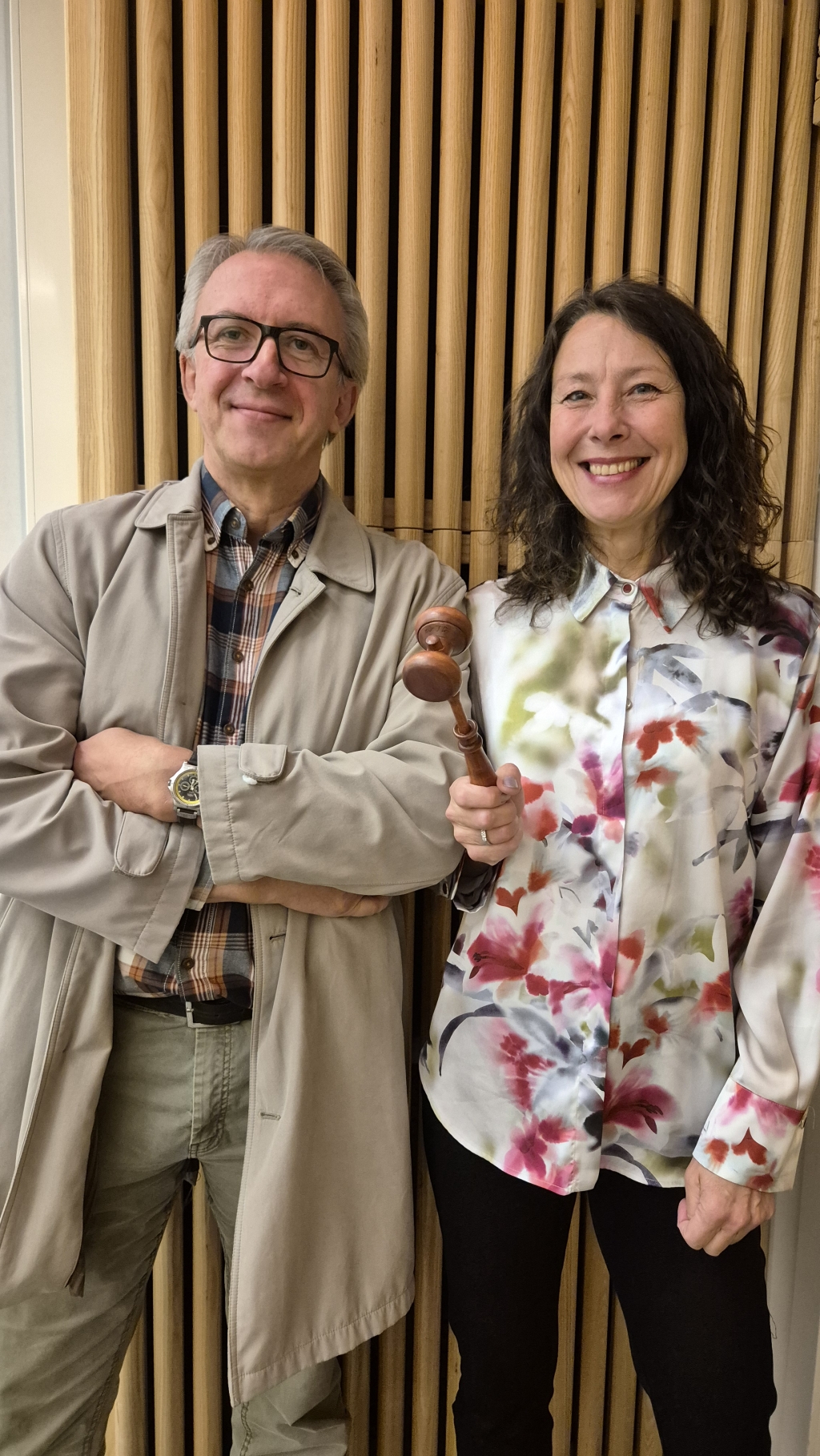
A new video of the High Coast and the Kvarken Archipelago
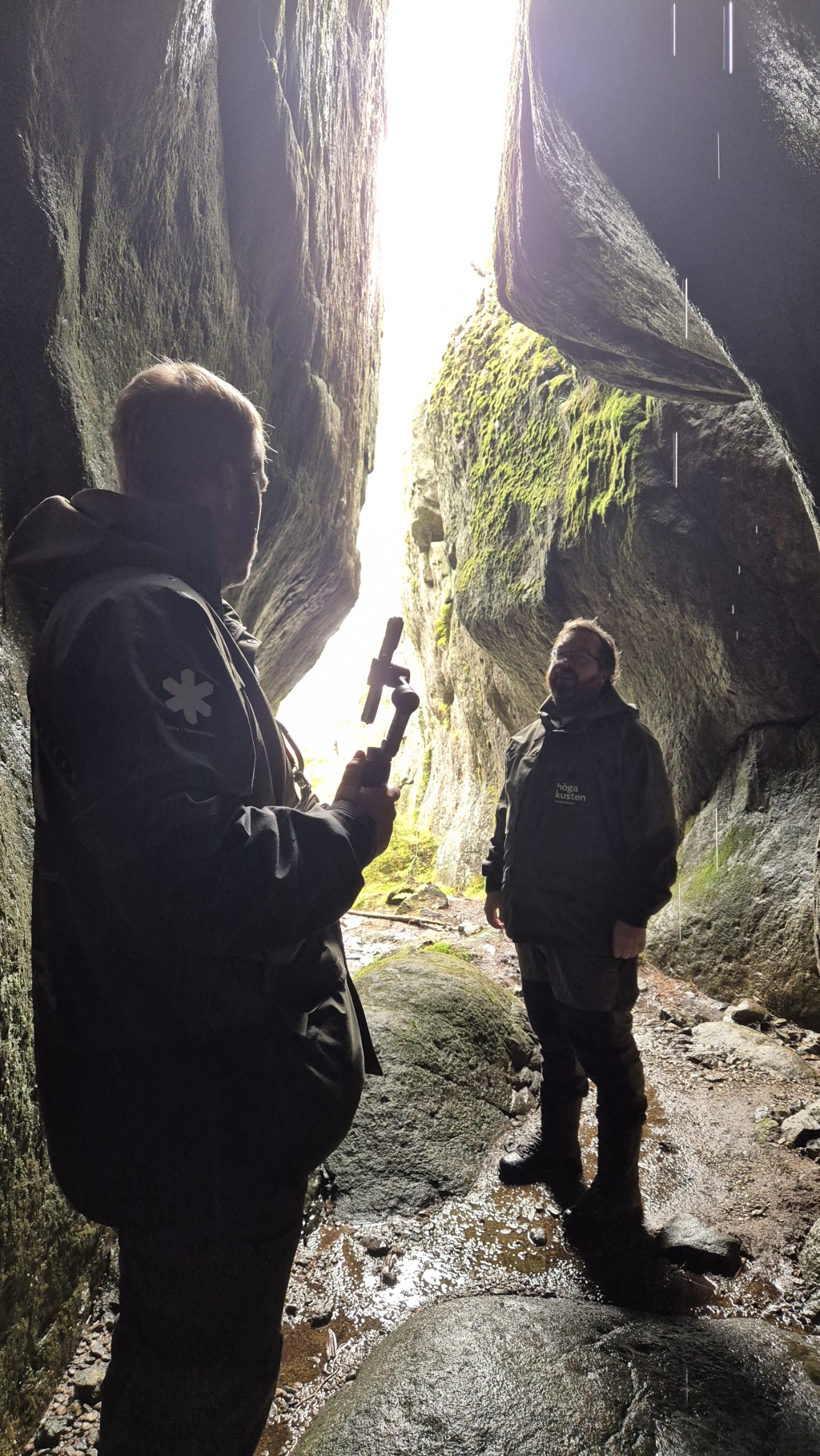
The County Administrative Board of Västernorrland and Metsähallitus’ Natural Heritage Services are currently producing a new joint video about the World Heritage site. The previous video, which told about nature and World Heritage at both the High Coast and the Kvarken Archipelago, was made 13 years ago.
“We want to show and tell about the traces left by the Ice Age and land uplift that can be seen in the World Heritage site, and how land uplift affects both nature and culture,” says High Coast World Heritage Coordinator Patrik Bylund from the County Administrative Board.
During the summer and autumn Bylund has been filming on the High Coast and in the Kvarken Archipelago together with the county’s communications specialist Erik Engelro and Kvarken World Heritage Coordinator Malin Henriksson. “There have been excellent working days in the World Heritage site and now it is time to create a whole from the footage shot in different locations,” says Engelro, who has filmed and edited the film.
The video will be published during the High Coast World Heritage week at the end of October, when the High Coast celebrates 25 years as a World Heritage Site.
Sea-spawning whitefish in the sea at risk of disappearing from the Kvarken, can spawning gravel sites help?
In autumn 2021 an eight-year Biodiversea LIFE-IP project was launched, a large collaborative project to improve the biodiversity of the Baltic Sea. The project is led by Metsähallitus. Eight partners are involved, including the Natural Resources Institute Finland (LUKE). The aim is to protect endangered species and restore habitats important to their survival – such as spawning areas for sea-spawning whitefish.
Sea-spawning whitefish used to be common in the Bothnian Bay, but its population has declined significantly in recent decades. The suspected causes of the decline are climate change, eutrophication, coastal construction and fishing. The species needs barren, shallow, stony and open shores for spawning, but these habitats have significantly deteriorated.
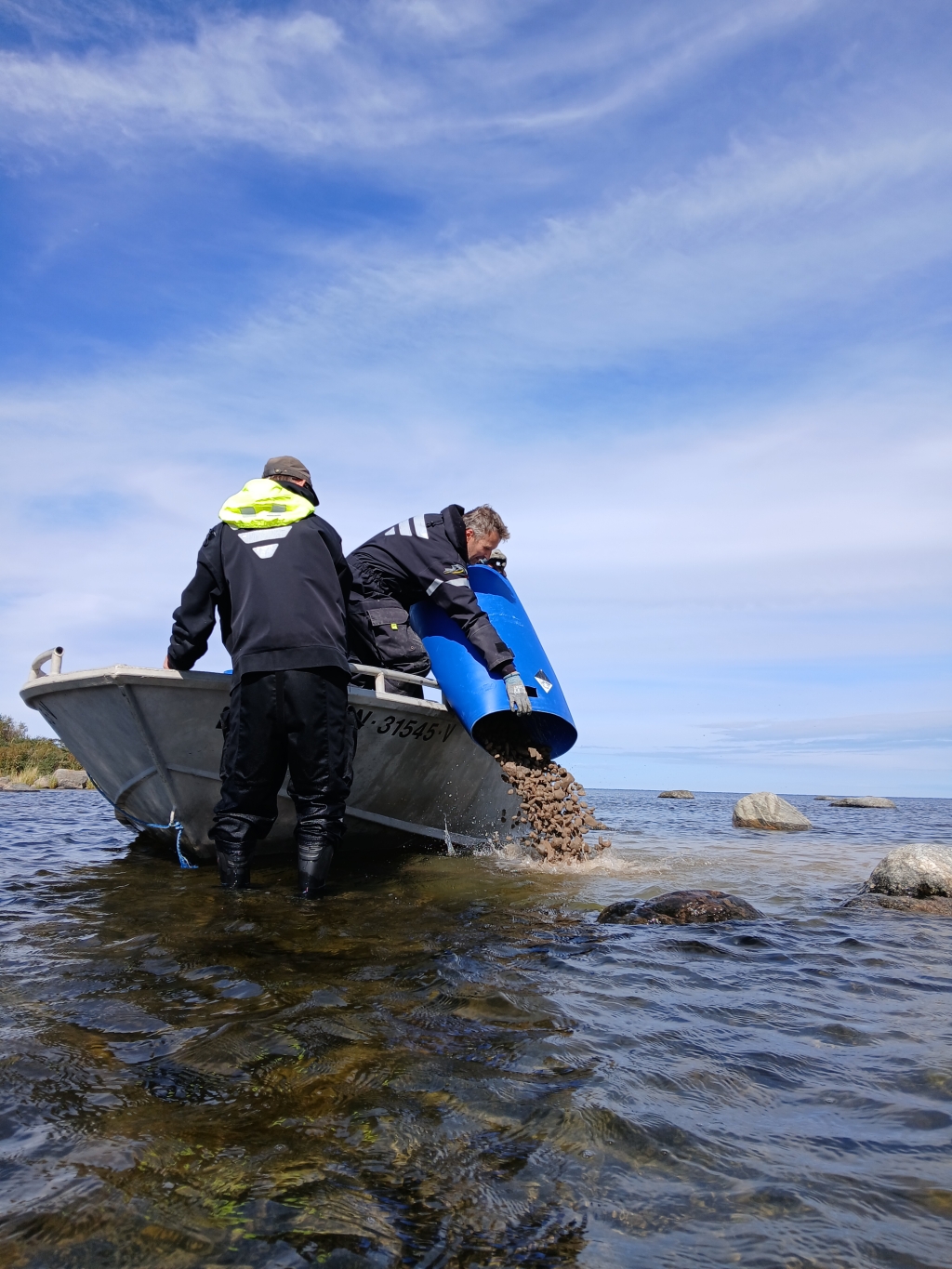
In the Biodiversea project LUKE and Metsähallitus collaborate to restore the whitefish. LUKE has, among other things, mapped former spawning areas, studied egg development in different sea areas, reared whitefish fry and monitored whitefish movements by tagging individuals in the Bothnian Bay. Metsähallitus has tested different methods to restore spawning areas. At Valassaaret, where whitefish used to be common, spawning activity seems to have disappeared completely according to LUKE’s studies. In 2023 Metsähallitus carried out initial experiments to restore spawning areas by mechanically removing filamentous algae from the seabed. This method is difficult to apply widely, but it may serve as supporting measures in particularly important sites. The experiments showed that the results were very short-lived and the areas quickly became overgrown again.
In 2025 Metsähallitus is now testing a new method, so-called spawning gravel sites. LUKE researchers have noticed from drone images that gravel surfaces often stay clean thanks to wave action, unlike stationary rocks that easily become overgrown. In autumn 2025 a total of 13.5 tonnes of natural gravel was spread in 27 shallow locations on the skerries of Valassaaret. The gravel surfaces have been marked with coloured stones and photographed by drone to monitor their development. The sites are located in different exposure zones, which allows comparison of how well the gravel stays in place over time and in what kinds of areas the method could work.
In spring 2026 the sites will be examined again. If the gravel has remained in place, the plan is to plant whitefish eggs directly onto these areas – an attempt to restore the natural spawning grounds of a species that was previously a common part of our waters. This is the first time this method is being tested for a sea-spawning whitefish. If the method proves effective, we may have a concrete tool to strengthen the species in the Kvarken.
Read more about the project on the website: Biodiversea LIFE-IP – for marine nature | Metsähallitus
A new landmark in Bergö
In summer 2025 a new artistic landmark – Bergön pooki – was created in Bergö in the municipality of Malax. The work was designed by the artist Ulf Mejergren in cooperation with the residents of Bergö and the Bergö village association. The work was inaugurated on 20 Sep 2025.
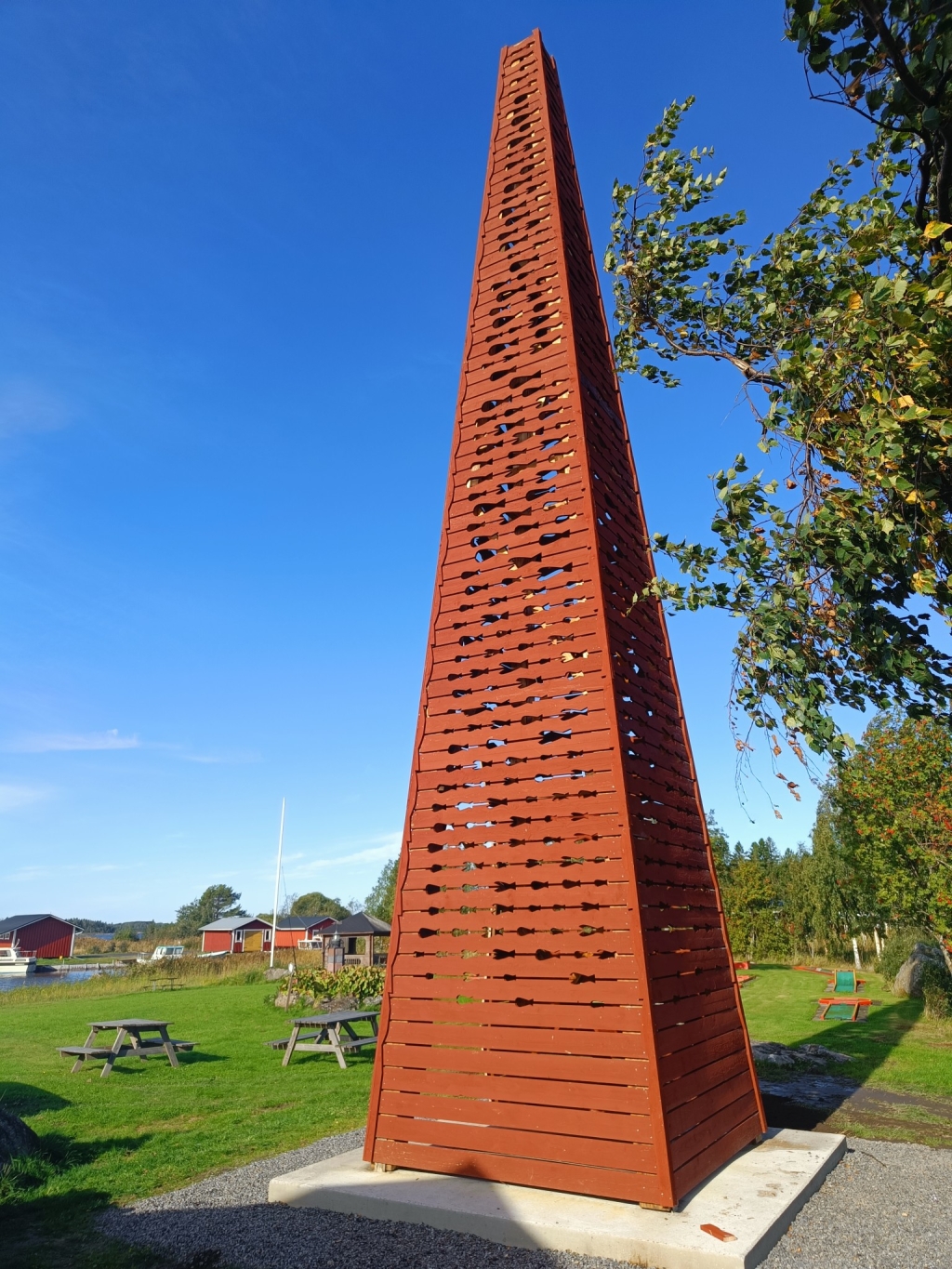
The local environment has been taken into account: Mejergren drew inspiration from the pooki beacons located in the Kvarken Archipelago. Bergön pooki is a 12-metre-high pyramid-shaped tower that can be entered to observe the play of light created by the gaps between the boards and the fish-patterned panel.
The artwork is located in the Bredhällan beach area. The new landmark will be a meeting place on the island that enriches the surroundings and offers artistic experiences. The project was carried out by Art in Malakta association, Bergö Öråd association and Maalahti municipality. Kvarken World Heritage Association has also supported the project.
Bergö archipelago is part of the Kvarken World Heritage area and Bergö island itself is a special place – an island surrounded by the sea, reachable only by ferry, where nature is an important part of residents’ lives.
Kvarken -Be my guest project gaining inspiration from the Öland World Heritage site
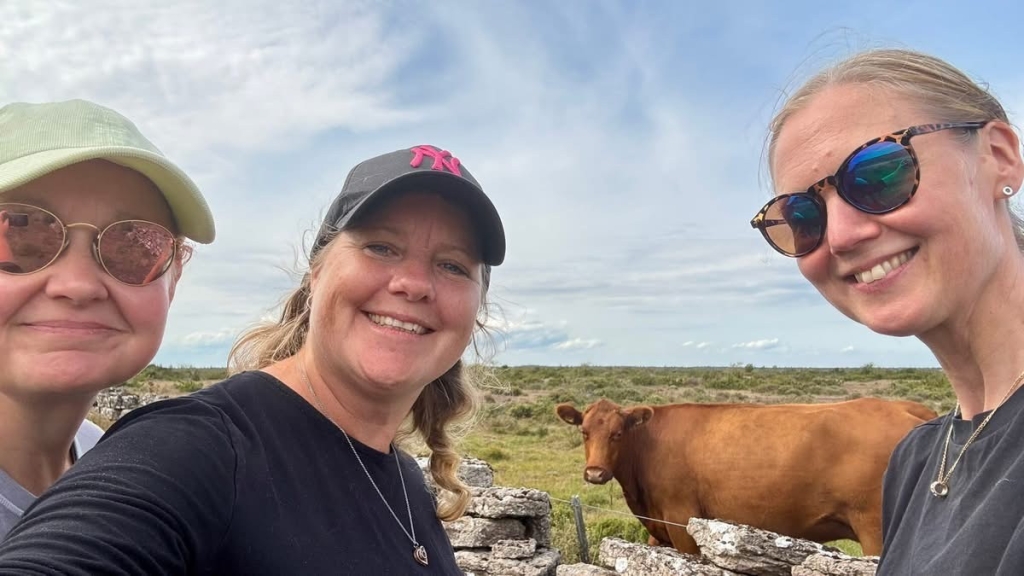
The Kvarken -Be my guest! project team Annika Pollari and Camilla Stenbäck visited Öland in Sweden, where the cultural World Heritage site of the agricultural landscape of southern Öland, celebrating its 25th anniversary on the UNESCO List this year, is located.
A unique cultural landscape
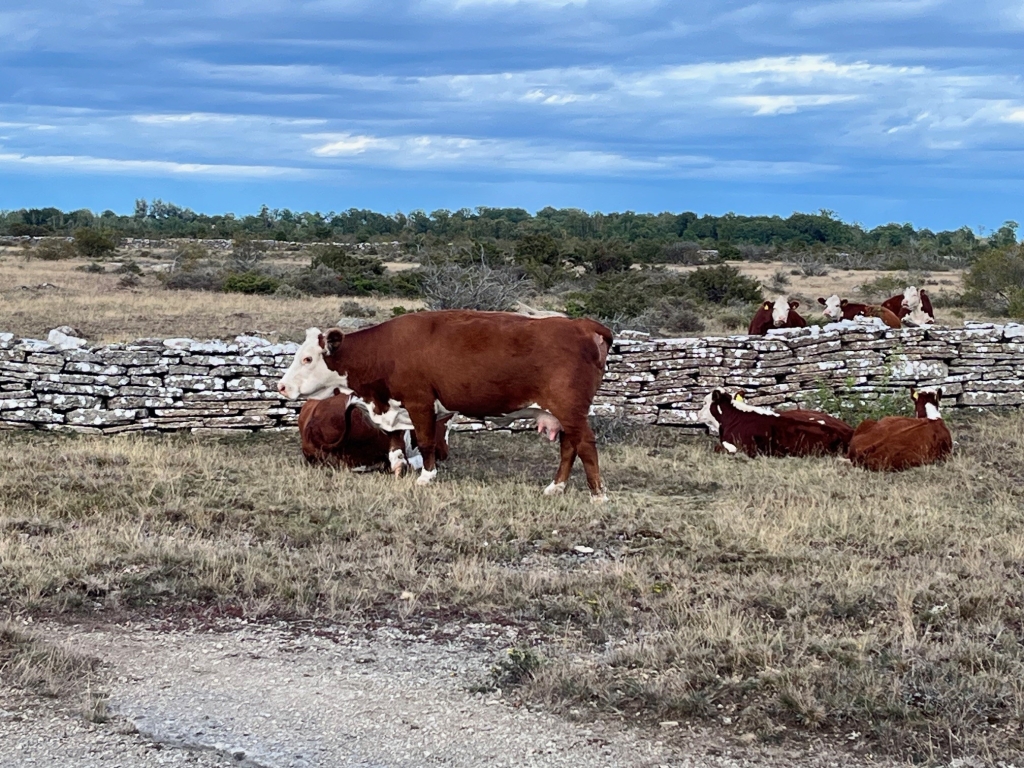
Our visit destination was a unique cultural landscape whose preservation requires continued farming in the area. The agricultural landscape of southern Öland has been formed through the interaction between humans and nature over millennia, where people have cultivated the land and grazed animals on a limestone-based soil in a mild climate. The result is a landscape whose heart is Stora Alvaret. The name derives from the old word “alv” for nutrient-poor mineral soil. Öland’s vegetation is almost desert-like, with a mixture of tundra and Mediterranean plants on the grazing lands. These pasture areas, bordered by stone walls, are not only a UNESCO attraction but also home to about 120 farm entrepreneurs whose livelihood involves farming and keeping cattle and sheep. Continued grazing is a prerequisite for the preservation of the landscape and certain vegetation for future generations.
Different types of World Heritage sites
The UNESCO World Heritage List includes both cultural and natural heritage sites, and our Kvarken Archipelago is a natural heritage site. Our host Emma Rydnér noted several times that it is a different matter to manage a World Heritage site where land uplift happens naturally in nature than to coordinate a living cultural site where farmers play the central role by practising modern agriculture in a heritage landscape.
Sharing experiences and inspiration
Although the Kvarken Archipelago and the agricultural landscape of southern Öland are different, it is useful to learn from each other, for example how these UNESCO sites can be developed as tourism destinations. During the trip we visited local tourism entrepreneurs, farm shops, hiking trails, visitor information boards and signs, local engagement initiatives, farmers, the naval city World Heritage site Karlskrona (“Örlogsstaden Karlskrona”) and university and educational institution collaboration. We returned home with many ideas and new contacts. Perhaps future collaborative projects will emerge from this trip with Swedish World Heritage sites. At least we will use the inspiration and lessons in the workshops organised by our project this autumn. The study trip was made possible by Aktiastiftelsen i Vasa, Svenska kulturfonden and EU rural funding from the ELY Centre.
What happens next in the project?
- During autumn 2025 we will publish a summary of the responses to the “Tourism in the Kvarken World Heritage area” survey carried out in spring
- We will ideate and test community-driven tourism experiences in cooperation with universities
- We will organise two multidisciplinary workshops and discussion events on tourism in the World Heritage area
Project contact information:
If you want more information about the project and its activities, please contact project manager annika.pollari@hanken.fi
You can watch the project presentation video here: https://www.youtube.com/watch?v=qXi7L8Mpxl4
Project information on Hanken’s website
At the same time on the High Coast The World Heritage week 25 Oct–2 Nov 2025
The High Coast will celebrate 25 years as a World Heritage Site with a World Heritage week held at the turn of October and November. During the week, among other things, the 2025 “Land Uplifter of the Year” will be selected – a new recognition for a person or community that has positively promoted World Heritage.
During the World Heritage week there will also be other activities. During the week there will be guided tours, sausage grilling, coffee and other activities at Köpmanholmens havsbad beach on Sunday 26 Oct and at Rotsidan on 2 Nov. The High Coast visitor centre will be open and will offer cake, a treasure hunt, the premiere of a film and much more on Tuesday 28 Oct. Earlier this year the 25th anniversary has already been marked with guided hikes, lectures and a photo competition.
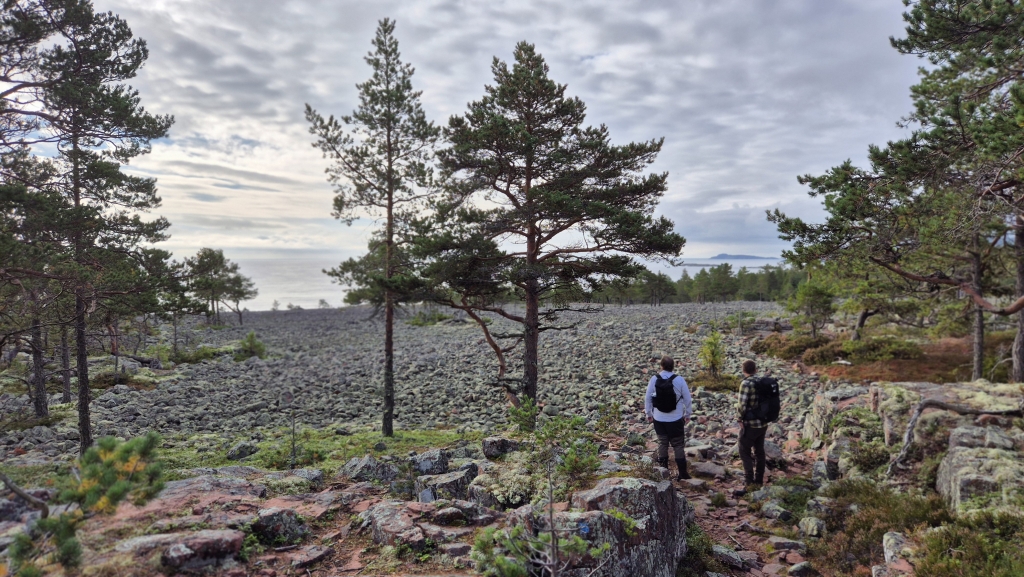
The Kvarken Archipelago newsletter is compiled by Metsähallitus’ Natural Heritage Services, which manages the World Heritage area, and by Kvarken World Heritage Association, which is responsible for the site’s information services and customer service.
Follow our channels on social media
Facebook: Kvarkens skärgård – Kvarken Archipelago, Kvarken Archipelago – World Heritage Site
Instagram:@kvarkenworldheritage
Welcome to read our summer newsletter!
In the summer newsletter we tell you how to use the new electric ferry across Korsbådafjärden, about the work of the World Heritage educator, burning of heaths (controlled burning), invasive species control and volunteer work in the archipelago, the SeaMoreEco project and news from the High Coast.
With the summer newsletter we wish you all a long and warm summer on behalf of Metsähallitus and the Kvarken World Heritage Association!
The World Heritage Gateway Visitor Centre
The World Heritage Gateway visitor centre is located in Replot by the bridge and is open for the summer from 1 Jun to 30 Aug 2025 10–18 every day. Our summer guides Lotta, Jenny, Amanda and Fia will help and give tips on places to visit in the Kvarken Archipelago. Maps and brochures are available at our info point.
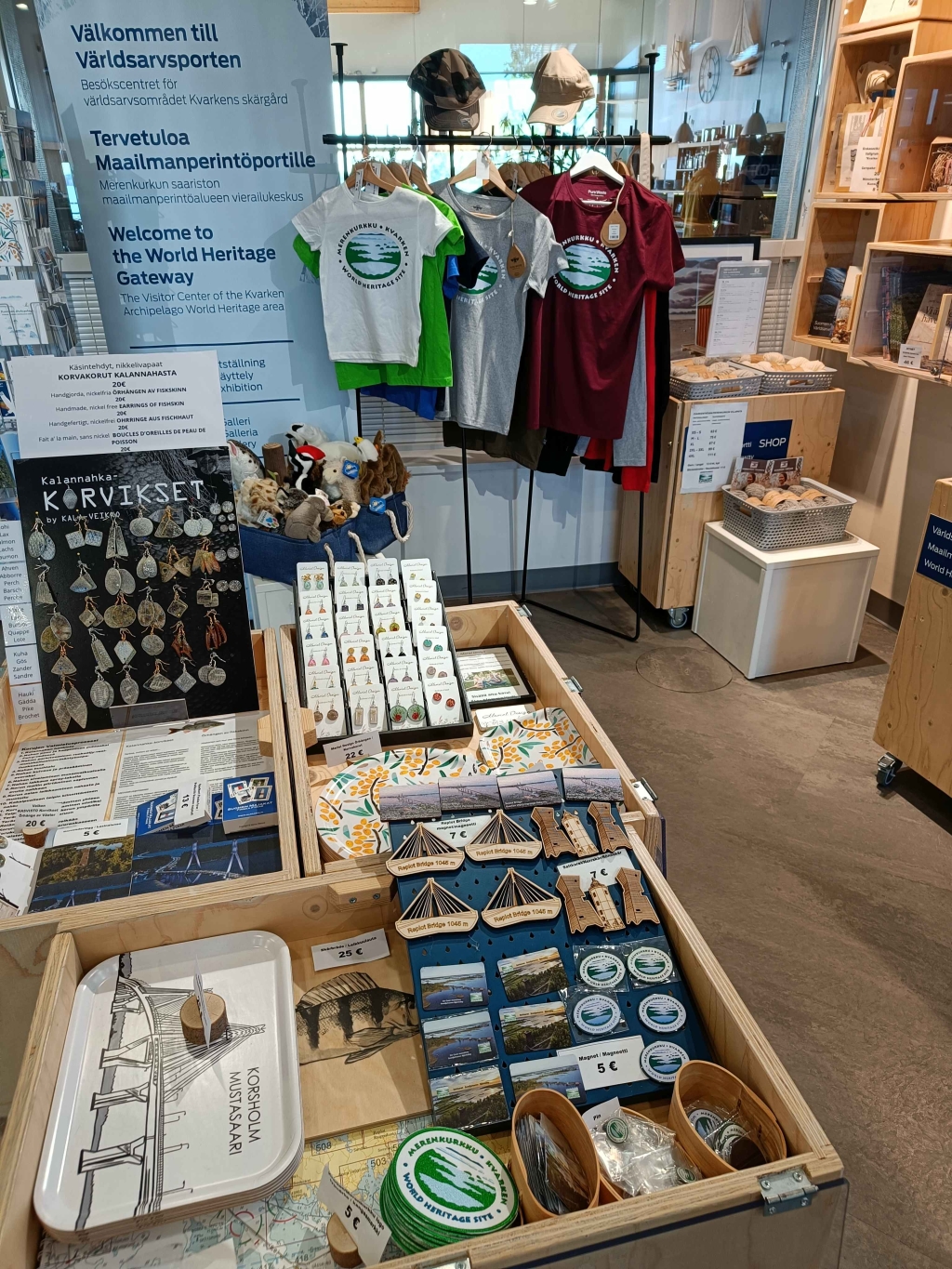
The World Heritage Gateway offers information about the Kvarken Archipelago as well as events, activities and visitor sites in the World Heritage area. The Weichsel exhibition is open daily for individual visitors and groups. The escape game Kvarken Sea Monster is a fun and challenging way to discover our World Heritage site. Both the escape game and admission tickets can be purchased on site or booked in advance online via VisitVaasa.
New products are available in our shop. Kvarken T-shirts are available in new colours. New souvenirs and gifts as well as our best-selling products from recent years are on our shelves. The new book “Vi ärvde våra öar – tidsresor i Kvarkens världsarvsområde” (We inherited our islands – time travels in the Kvarken World Heritage area) is on sale. Craft enthusiasts can find patterns and yarns for the Kvarken sweater and Vallgrund “Krokasockan” socks. Our own sea buckthorn soap returns to sale for Midsummer! Remember your loved ones with a present from the World Heritage area!
Björkö-Panike electric ferry, reservations and codes

The electric ferry in the Kvarken World Heritage area is running again. The Korsbådafjärden ferry, which is part of the Björkö–Panike hiking route, is available in summer in good weather according to the following schedule:
- 10 May–15 Jun 2025: Sat–Sun 10–18
- 16 Jun–15 Aug 2025: Mon–Sun 10–18
- 16 Aug–30 Sep 2025: Sat–Sun 10–18
On days when water level is low or winds are strong the ferry will not operate.
The ferry is always operated by a responsible person. Operating the ferry requires you to be at least 15 years old and to provide strong identification. Instructions for authentication can be found at the Korsbådafjärden ferry dock, at neilos.fi/kirjaudu and at the World Heritage Gate visitor centre.
New opportunities for World Heritage education
The World Heritage education project in the Kvarken Archipelago continues in autumn 2025. Schools in the World Heritage municipalities can now reserve teaching sessions on Tuesdays, Wednesdays and Thursdays 18 Aug–18 Dec 2025.
We offer World Heritage themed teaching in school localities, at the World Heritage Gate in Raippaluoto or outdoors in the Kvarken Archipelago.
The teaching programme is well suited to lessons, theme days or excursions. Themes include the Ice Age and land uplift, and the significance of nature and culture in the High Coast and Kvarken Archipelago World Heritage site.
World Heritage education emphasises sustainable development and aims to awaken pupils’ understanding, enthusiasm and a positive attitude towards protecting our natural and cultural heritage.
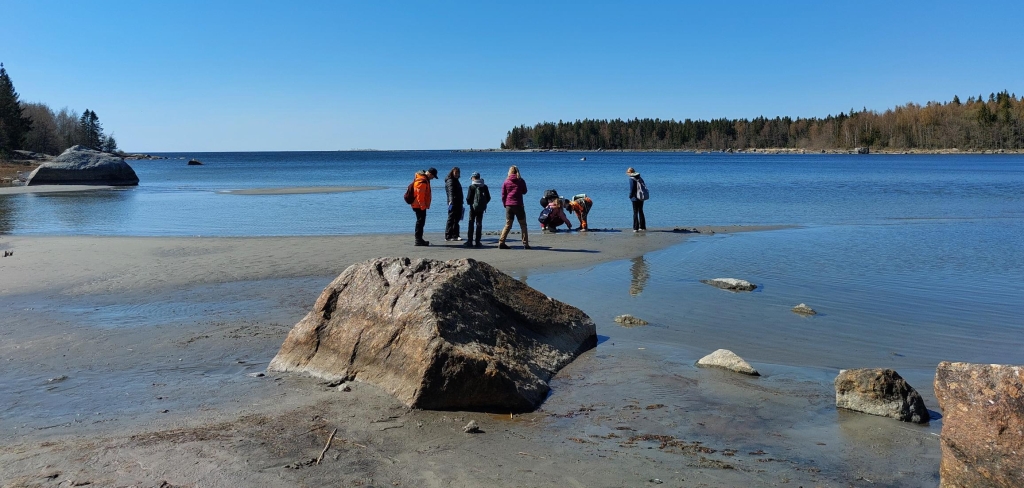
Incorporate the World Heritage anniversary years into teaching
We hope that the World Heritage site anniversary years (High Coast in 2025 and the Kvarken Archipelago in 2026) will be taken into account in the 2025–2026 school year. We are happy to help!
Do you have questions or ideas for World Heritage education in the Kvarken Archipelago? Do you want more information or to reserve a teaching slot? Contact: fia.antus@kvarken.fi
Controlled burning, invasive species control and volunteer work – how the archipelago’s nature will be managed in 2025
Metsähallitus will implement habitat management measures in several areas of the World Heritage area in 2025. In April we carried out controlled burning on heathland at Valsörarna. The aim is to preserve the open heathland habitat, which is important for many species, for example many insects and spiders. Although the burned, approximately 3-hectare area now looks black and dead, heathland vegetation will return to the area in just a couple of years. On the other hand, succession and afforestation have been kept in check for a longer period. Metsähallitus has prepared a management plan for about a quarter of Valsörarna’s approximately 100 hectares of heathland. The aim is to burn two-hectare patches in different parts of the heaths each year to preserve the most valuable heaths as habitats for species that depend on them.
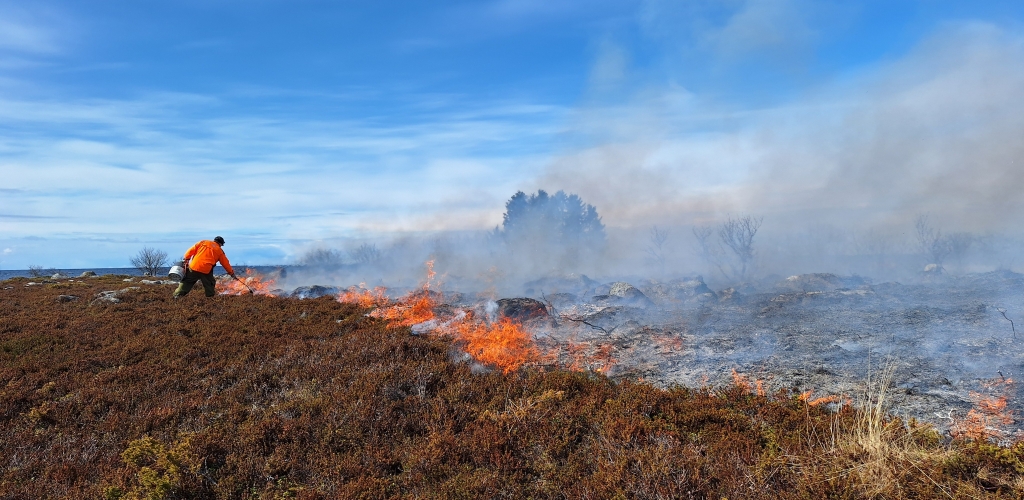
Burning on Valsörarna
When the invasive species Rosa rugosa (Japanese rose) begins to sprout in the archipelago, a Metsähallitus team sets out to fight it at hundreds of archipelago sites. It is not possible for a single persistent species to be eradicated from the archipelago by one team alone, but the summer workforce focuses on the most valuable protected areas.
This summer anyone can contribute to nature by taking part in restoration work on Mikkelinsaar islands. At the Bässreveln headland clear-cutting was done previously and now there is a dense, uniform planted pine stand. By creating small openings and ring-barking some pines the forest will be transformed closer to natural state, where forests contain trees of several ages and there is enough deadwood. More information about the camp can be found here www.oa.fi (in Swedish).
In autumn young people will also be invited to participate in habitat management work in the archipelago on either the Lappörarna or Slåttskäret islands. It is common for juniper to start growing densely on archipelago pasture areas. By clearing dense juniper thickets open and semi-open meadows can be restored to their former splendour. Sheep grazing keeps the meadows short but sheep do not eat juniper. A couple of small meadows that cannot be grazed will be mown again this year.
SeaMoreEco – shallow seabeds in the northern part of the Gulf of Bothnia
The third field season in the Interreg Aurora project SeaMoreEco, a Finnish–Swedish project mapping and restoring shallow seabeds in the northern Gulf of Bothnia, will soon begin. From Finland the South and North Ostrobothnia ELY Centres and GTK are involved, while the Swedish partners are the County Administrative Boards of Västerbotten and Norrbotten and SGU.
The South Ostrobothnia ELY Centre operates across the Rannikko–Pohjanmaa area. In previous seasons we have mapped seabeds in areas where data gaps existed, tested aerial orthophoto creation with drones and investigated potential restoration sites. In the forthcoming season we will focus primarily on developing methods for plant surveys with drones and implementing restoration measures.
When mapping with drones, a large number of aerial photos are taken, combined into orthophotos and the locations of vegetation communities are identified in these images. We then return to the field to survey the species present in those communities. Together with Metsähallitus we aim to develop a method that can efficiently delimit endangered bladderwrack meadows.
The ELY Centre will also carry out various restoration measures. We plan to carry out threshold restoration in a flada at Monäs, restore an access route at a stream site in Närpiö, plant seagrasses in Korsnäs and Nykarleby and test control of the invasive waterweed in the Luton water area. In addition, we will prepare two restoration plans to improve access routes in Kristinestad and Luoto.
There is a lot going on, and our aim is to continue the work in the HIDDEN follow-up project starting in 2026. If you want more information about our activities, you can contact project manager Claes Lönnblad-Björkholm by email claes.lonnblad-bjorkholm@ely-keskus.fi or by phone +358 295 027 010
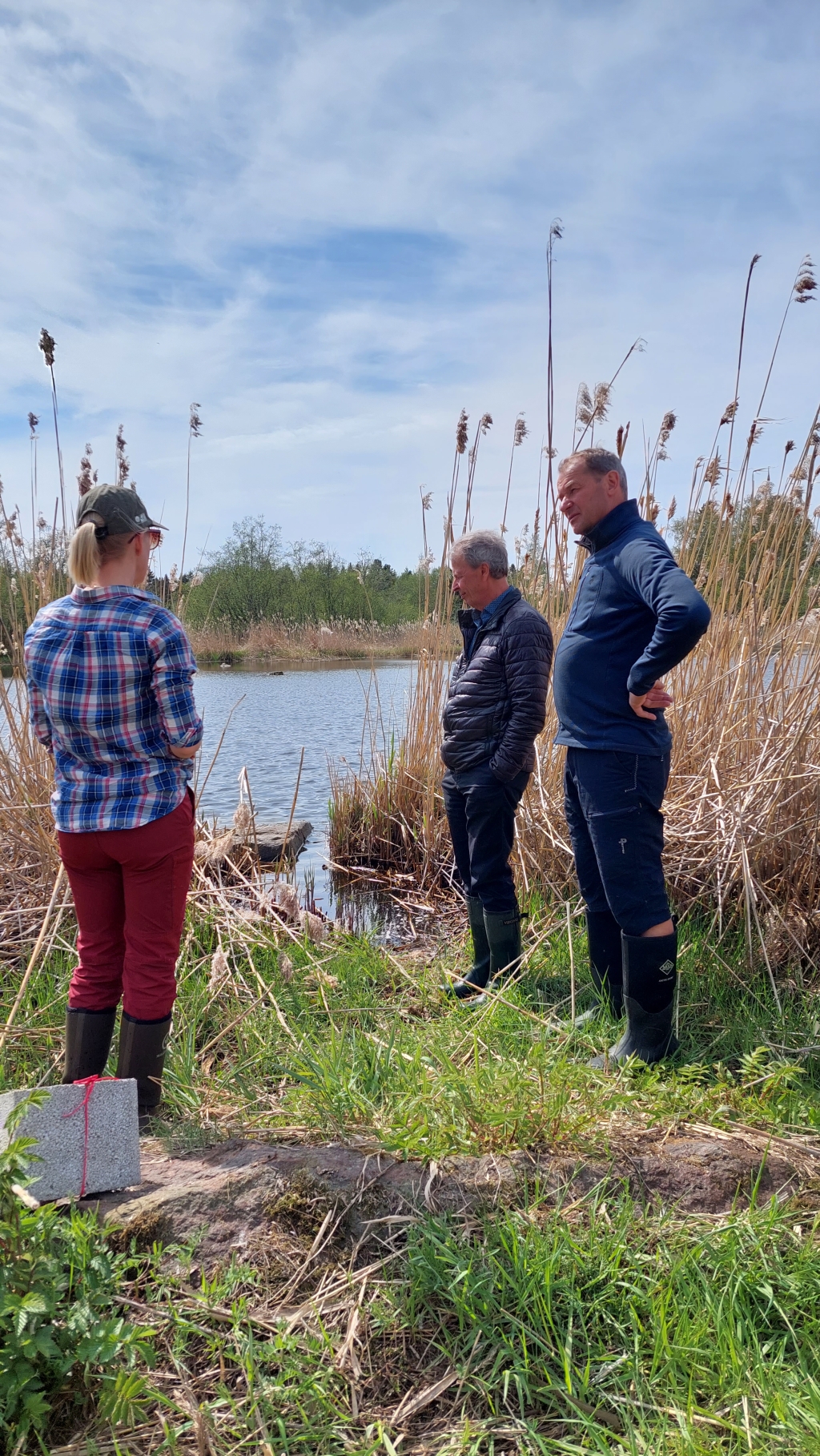
Join the World Heritage Council!
The Kvarken Archipelago World Heritage Council is the most important cooperation forum in our World Heritage area. The council meets four times a year and works to promote the development and management of the area. Over 30 organisations are involved, and you can also participate as an individual member. A new four-year term begins in the autumn, so keep an eye out for the opportunity to apply as an individual member in August! More information coming at merenkurkku.fi.
Are you involved in an organisation that is not yet part of the World Heritage Council? Interested? Contact Malin: malin.henriksson@metsa.fi
The High Coast World Heritage site turns 25
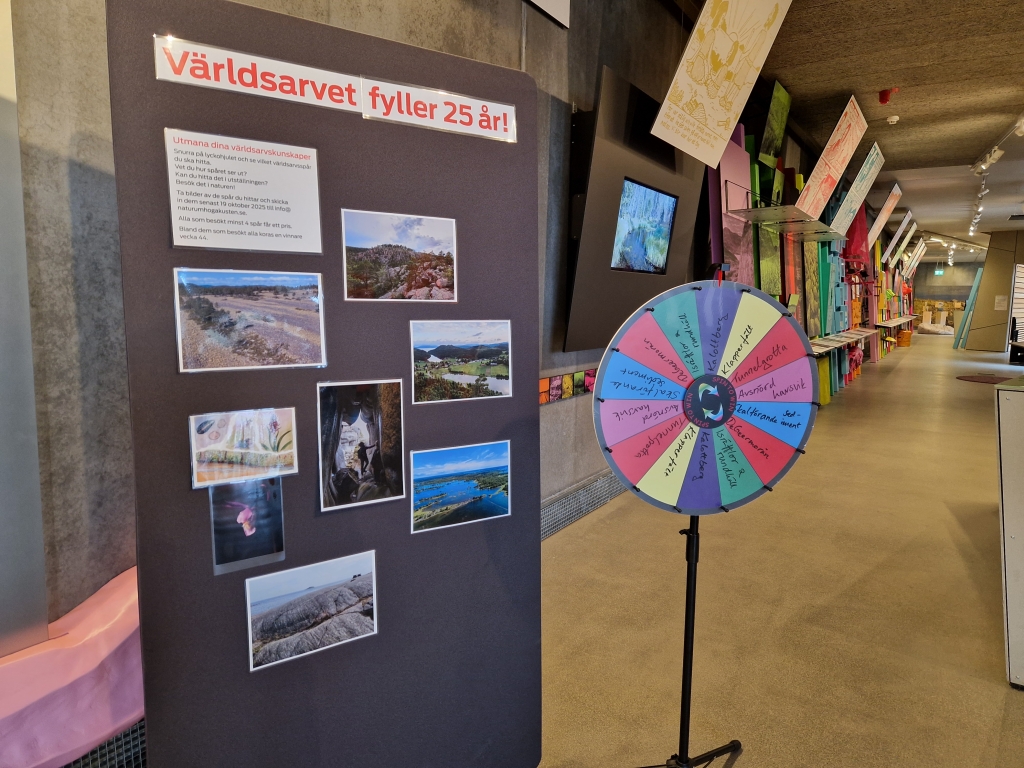
To mark the anniversary year we have set a challenge at the nature hut/visitor centre: find seven traces of the Ice Age and land uplift!
The easiest way is to look for the traces in the High Coast visitor centre’s exhibition. If you spot the traces in the exhibition, you will receive a diploma!
You can also find the traces in nature and send photos of your findings to us at info@naturumhogakusten.se by 19 Oct 2025. If you find four traces or more you will receive a prize! If you find all seven you will be entered into a draw to win a special prize. The draw will be held at the visitor centre in week 44.
Find these seven traces of the Ice Age and land uplift:
- Cap rock – e.g. Skuleberget, Dalsberget or the Nyland route
- Tunnel cave – e.g. Smitingen, Ramberget or Räckebergakyrkan
- Closed bay – e.g. Baggviken, Vågsfjärden or Vikbotten
- Devil’s field – e.g. Norrfällsviken, Högklinten or Skuleskogen
- Glacial grooves and smoothed bedrock – e.g. Tärnättholmarna, Storviken (Trysunda) or Skags Udde
- De Geer moraine – e.g. Svedjehamn (FI), the coast off Umeå or between Hållin and Dal
- Shell-sand layer sediments – e.g. certain calciferous soils where indicator plant species occur (these point to shell-sand layer occurrences)
High Coast visitor centre opening hours
The visitor centre is open every day until 5 Oct 2025.
- 2–22 Jun 2025: Mon–Sun 10–16
- 23 Jun–17 Aug 2025: Mon–Sun 9–18
- 18 Aug–5 Oct 2025: Mon–Sun 10–16
Welcome to the High Coast!
Current information
Facebook: Kvarkens skärgård – Kvarken Archipelago, Kvarken Archipelago – World Heritage Site
Instagram:@kvarkenworldheritage
Heritage Talks lectures and World Heritage education
At the time of the spring migration of swans and geese we are organising a Heritage Talks in Kvarken event. On Tuesday 8 April we will broadcast a webinar from the World Heritage Gateway in Replot with the theme of the World Heritage educator’s map.
The maps show coasts, meadows and forests in the Kvarken Archipelago containing traces of the Ice Age, in the local environments of schools. The maps have been designed for the following schools: Vallgrund skola, Maxmo kyrkoby skola and Högstadiet i Petalax.
This year the High Coast World Heritage Site celebrates 25 years as a World Heritage Site. The High Coast is celebrating its anniversary year with guided tours, discussions and other events throughout the year. We will celebrate the High Coast anniversary and organise Heritage Talks in Kvarken with World Heritage Coordinator Patrik Bylund on 10 April 2025.
It is still possible during the spring term to reserve a World Heritage education slot for schools in the World Heritage municipalities. Programmes can be organised either at the World Heritage Gateway in Replot or outdoors in the Kvarken Archipelago. The programme is well suited to school lessons, theme days or field trips.
Do you have questions or suggestions about World Heritage education in the Kvarken Archipelago? Contact Fia by email: fia.antus@kvarken.fi
The World Heritage educator project in the Kvarken Archipelago 2 is funded by Aktiastiftelsen in Korsholm, Aktiastiftelsen in Malax, Aktiastiftelsen in Vasa, Aktiastiftelsen in Vallgrund, Vörå Sparbanksstiftelse and William Thuring’s foundation.
Visit highcoastkvarken.org
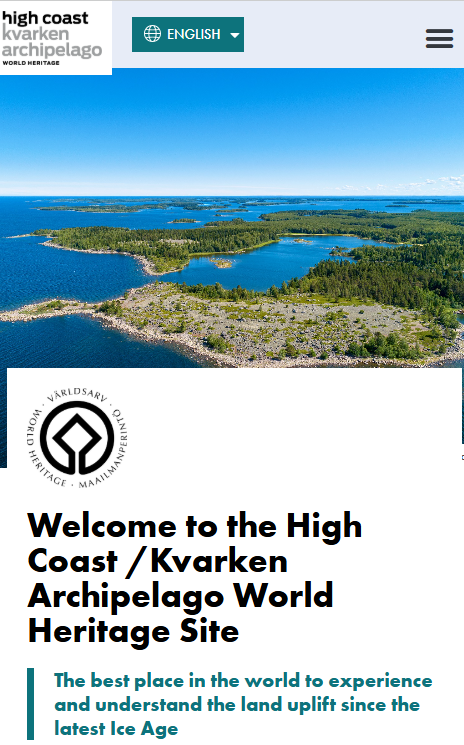
Did you know that the Kvarken Archipelago and the High Coast have a joint website? It has now been renewed, so do take a look!
The site contains a lot of information about what makes the High Coast / Kvarken Archipelago World Heritage Site so unique. Also explore the geology animations and the interactive map!
Pedagogical material for the World Heritage site can be found at highcoastkvarken.org. The site is also the right place to visit if you are looking for the management plan, nature interpretation plan or other documents!
Lectures in Vöyri
The Kvarken World Heritage Association and Vöyri Adult Education Centre will organise two lectures in May on World Heritage in general and specifically about the Mikkelinsaar islands. The lectures will be held in Norrvalla and further information on content and registration can be found on Vöyri Adult Education Centre’s website. The lectures will be in Swedish and are free of charge. Vöyri Adult Education Centre is also planning a trip to Mikkelinsaar in May, but at the time of writing the plan is still open.

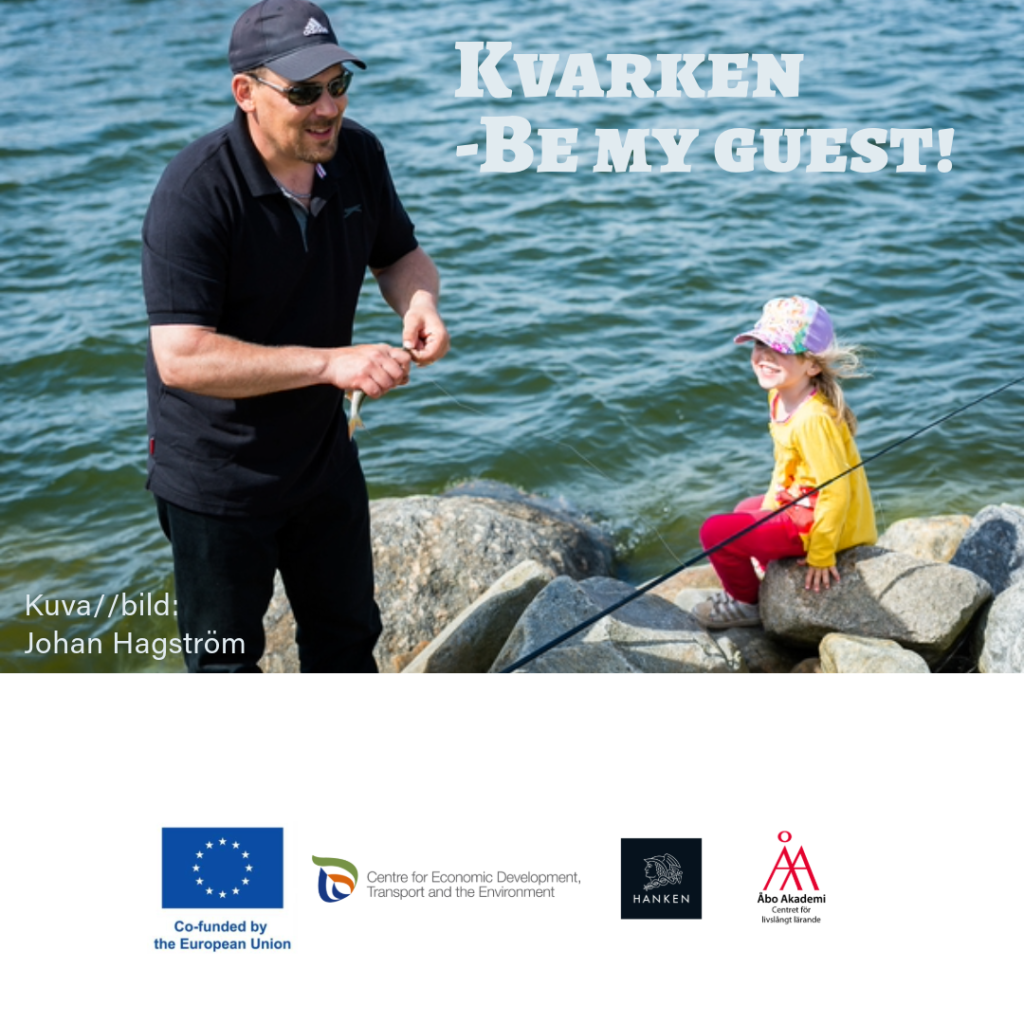
Kvarken-Be my Guest! project wants to hear from local people
Hanken / Svenska handelshögskolan launched the Kvarken-Be my guest! project in January 2025. The project aims to develop more sustainable, accessible and hospitable tourism in the Kvarken Archipelago World Heritage area.
Our World Heritage is not a destination for mass tourism and that is not the aim. However, UNESCO sites are attractions and the Kvarken Archipelago World Heritage is a unique destination for the region’s tourism. There are signs that visitor numbers in the Kvarken Archipelago are increasing and sustainable development of visits requires planning and cooperation. Often tourism development focuses on tourism businesses or visitors, but the Kvarken-Be my guest project focuses on local residents and associations.
This project focuses on developing hospitable, physical and digital accessibility. The key measure is promoting “hospitable accessibility”, i.e. hearing local people and including them in discussions about tourism in the World Heritage area. Accessibility also means how to reach the destination physically, how accessibility has been considered or how the site is communicated in digital channels. In addition to the social dimension, the project maps challenges in physical and digital accessibility in the World Heritage area.
What will happen next in the project?
- In March–April 2025 we will run an online survey in the World Heritage municipalities to find out local people’s views on tourism in the World Heritage area.
- During spring we will visit local associations and organise meetings where we discuss the current status and future of tourism in the World Heritage area
- In autumn we will organise two inspiring workshops to discuss tourism in the World Heritage area from a multidisciplinary perspective
Project contact information
If you want more information or want to arrange a discussion event in your association, please contact the project manager annika.pollari@hanken.fi
Project duration
1 Jan 2025–28 Feb 2026
The project has received EU rural funding from the ELY Centre.
Partners
The project is implemented in cooperation with project owner Svenska handelshögskolan (Hanken) and partner the Centre for Lifelong Learning at Åbo Akademi (CLL).
Read about the project (in English) on Hanken’s pages: https://www.hanken.fi/en/departments-centres/department-marketing/research-center-cers/research-projects/kvarken-be-my-guest
At the same time on the High Coast
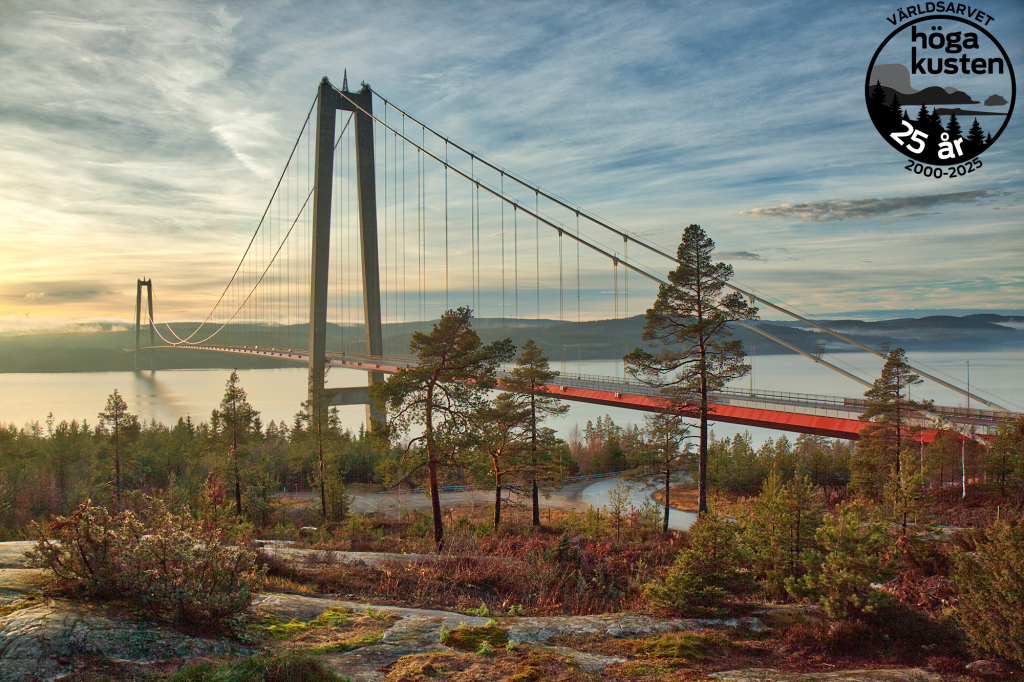
The High Coast celebrates 25 years as a World Heritage Site in 2025. To mark this we are providing World Heritage training with a number of guided tours focusing on different World Heritage values, as well as lectures and activities across the World Heritage site. Events are organised for most of the year, but we will especially focus on the World Heritage week during autumn break in week 44, when many events will take place. Follow us on social media or check current events at varldsarvethogakusten.se. First there is a series of online lectures about the High Coast in May, which can also be attended from Finland.
The Kvarken Archipelago newsletter is compiled by Metsähallitus’ Natural Heritage Services, which manages the World Heritage area, and by Kvarken World Heritage Association, which is responsible for the site’s information services and customer service.
Facebook: Kvarkens skärgård – Kvarken Archipelago, Kvarken Archipelago – World Heritage Site
Instagram:@kvarkenworldheritage