
All attractions
There’s plenty to see in the Vaasa region! Discover the region’s attractions, places to visit and unique locations – from the vibrant city to peaceful countryside landscapes and the Kvarken Archipelago. Find your favourites and start exploring the Vaasa region!
-
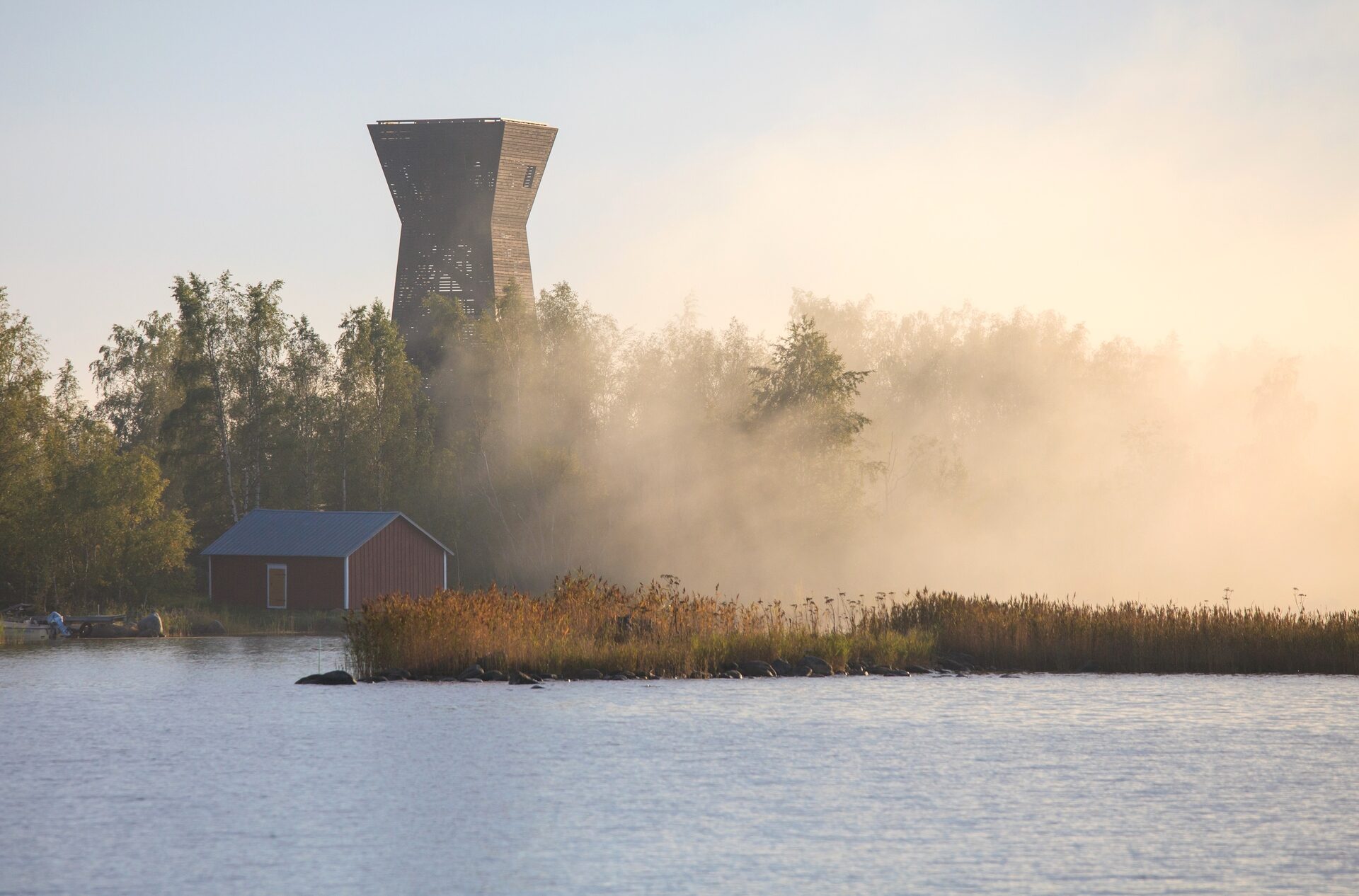
Welcome to a unique and scenic island in the Kvarken archipelago. On Bergö you get close to the nature, here you can swim, hike, bike, fish, and enjoy the magnificent scenery and the many picturesque boathouses. Everywhere you go, you are greeted by the large Gulf of Bothnia. The island’s total area is approximately 3.15 square kilometers and Bergö has about 480 inhabitants.
-
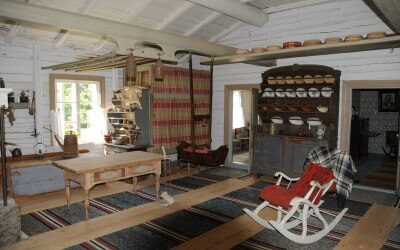
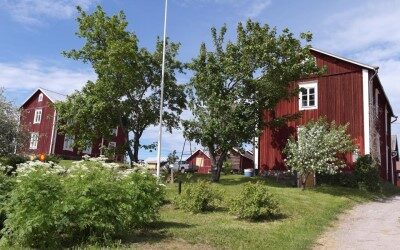
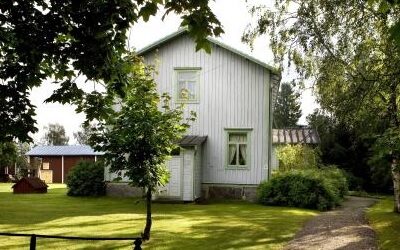
In the Isokyrö Museum can be seen peasant artefacts from the latter half of the 19th century. Everyday utensils are displayed as if the people of the house had just gone to their work outside and left the house for the day. The visitor rather steps into a genuine 19th century milieu than an exhibition.
The museum is characterized by two traditional 1½-storey Ostrobothnian houses. They are grouped with the outbuildings in a way typical for a traditional courtyard. The main building, the Piuhola house, dates back to 1768 and has been moved to the area from the Kuivila village. The buildings represent the building traditions of the 18th and 19th century. The artefacts in the museum also originate from that period.
-
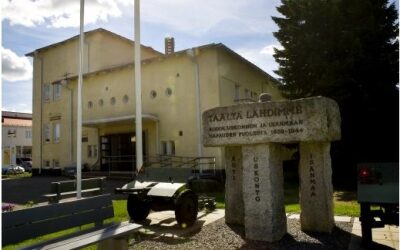
In the Isokyrö War Museum are displayed objects and stories from all the wars waged by Finland. The specialty of the museum is the cannon park, where there are nine different kinds of cannons on view.
In the War Museum one can with the help of items and guidance get acquainted with the Gudgel War (a peasant uprising in the kingdom of Sweden in the part that is now Finland), the Hakkapeliittas (Finnish light cavalryman), the Carolinians, the Finnish War in 1808-1809, the First World War, the Civil War in 1918, and the Second World War in 1939-1945. In the vitrines are exposed soldiers’ uniforms and helmets, rifles and other equipment. One can see in the museum men’s attires from the period of the Gudgel War, a file soldier with his wife, an ensign’s uniform from the year 1918, a festive uniform of a lieutenant colonel and the uniform belonging to a member of the Lotta Svärd organization during the Second World War.
One of the museum’s pearls is a park with nine different kinds of modern era cannons. Here you can see for example an infantry cannon dating back to 1936, a field cannon dating back to 1938 and other cannons from Russia, Finland, Switzerland and Sweden. A Russian horse-drawn field cannon from the year 1902 is one of the oldest weapons in the park. The cannons are no longer in working order, as they have been defused.
-
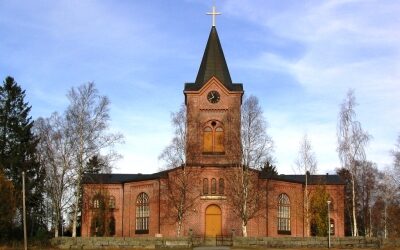
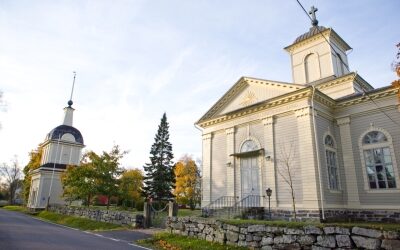
The red-brick main church of Isokyrö was completed in 1877 and can accommodate approximately one thousand people. The altarpiece is a copy of the painting “Christ on the Cross,” painted in Paris in 1878 by the artist Ida Silverberg after an original by the artist Van Dyck. The red-brick burial chapel, completed in 1878, is located next to the main church.
-
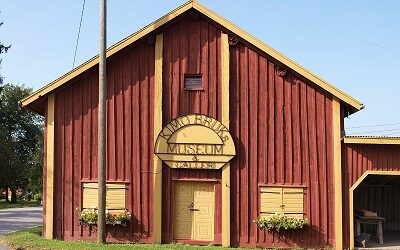
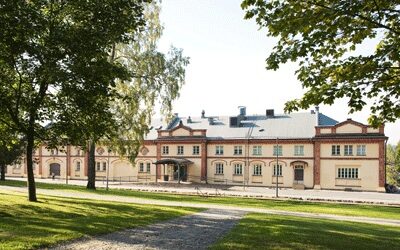
The Kimo Ironworks is the only ironworks museum in Ostrobothnia. The three hundred years old art of forgery is being taught here by one generation to the next with the help of courses and all-day presentations. In the beautiful leafy landscape of dams, rapids and bridges one can explore epochs in history among the 18th century buildings, such as an ironworks estate, a steeple and the ruins of a tilt smithy.
The museum is located in an iron magazine dating back to 1763. On display there are scale models of the 18th century Kimo ironworks and hammer smithy, atmospheric pictures depicting work on the ironworks, and diverse items and tools associated with processing of iron, such as a smith’s diploma from the Bergskollegiet school in Stockholm, and tomb crosses forged by smiths, including also their own ones.
-
The idyllic courtyard milieu of the Klemets Houses is in many ways unique. No other group of houses built in a similar way has survived in the county. Here can as well be found a versatile selection of exhibitions, such as a textile exhibition, a harmonium museum, a motorcycle exhibition and everyday items associated with peasant life. The atmosphere of the early 20th century can also be sensed in the café, which has been elegantly furnished with 1940s functionalism style furniture.
The idyllic courtyard milieu of the Klemets Houses is unique in a number of ways. No other group of houses built in a similar way has survived in the country. Here can as well be found a versatile selection of exhibitions, such as a textile exhibition, a harmonium museum, a Sunday school museum and everyday items associated with peasant life. The atmosphere of the early 20th century can also be sensed in the café, which has been elegantly furnished with 1940s functionalism style furniture.
-
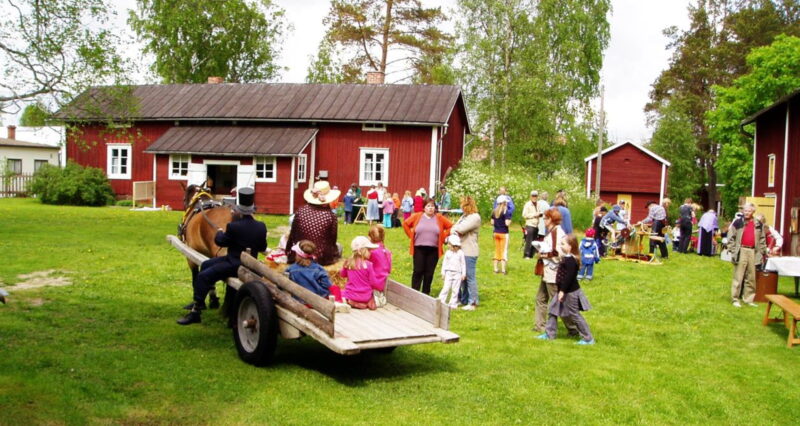
The Korsnäs Local Museum premises today include the old hired hand’s cottage, the windmill, the forge, three rooms in the loft building, and the parish granary across the road. The beautiful museum yard serves as a place for festivities, demonstrations of handicrafts, and games.
The Korsnäs sweater, a special kind of sweater made and used in Korsnäs during the late 19th and early 20th centuries, has experienced quite a renaissance in the last few decades. It is a unique piece of clothing, mainly because it has both crocheted and knitted sections in bright colors. The museum’s collection is comprised of several Korsnäs sweaters of earlier and later origin. The oldest is from 1864. -
The vicarage dating back to the 1830s has been preserved in the style of the early 20th century. The elegant rooms have been furnished with furniture typical for the period and for vicarages, and the garden creates a park-like atmosphere.
In the Vicarage Museum the visitor gets to see, how an Ostrobothnian ministerial family lived at the end of the 19th century. The Vicarage Museum is one of the two of this kind of special museums in Finland. The interior represents a ministerial home of the period with its original tile stoves from the 1890s. The walls have been papered with newly printed wallpapers modeled on the old Korsnäs patterns.
-
The present church of Korsnäs was built in 1831 and represents Neoclassical style. The bright and spacious church has harmonious proportions. The placement of the altar differs from the usual, as it is located almost in the center of the church.
-
From Vaasa market square, it is only a short walk to the Kuntsi Museum of Modern Art, which is in a beautiful spot by the sea in the Inner Harbour. The museum was named after art collector Consul Simo Kuntsi (1913–1984), and the art collection of the foundation established by him is considered one of the most important collections of modern and contemporary art in Finland. Donations and deposits, such as Lars Swanljung’s (b. 1944) collection of contemporary art, consolidate the importance of Vaasa in the art world.
The exhibition activities of the museum are based on changing exhibitions of modern and contemporary art as well as on displays of the museum’s own art collections. The exhibitions at the Kuntsi museum are in-depth analyses of phenomena in contemporary art and topical issues providing substance for identity building and understanding the phenomena of our time.
The facilities at Kuntsi offer excellent scope for organizing various events. Cross-disciplinary art performances and events, in particular, in collaboration with the third sector and special groups of the public, are frequently organised.
-
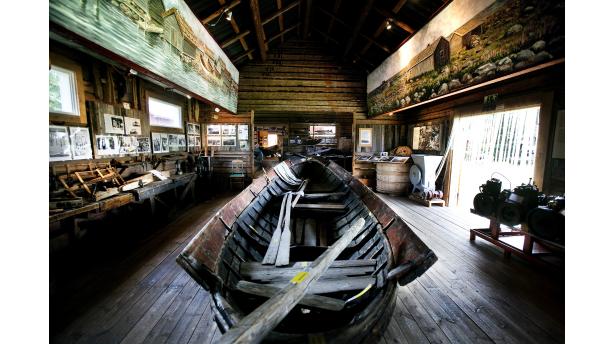
Kvarken Boat Museum is one of the largest boat museums in the Nordic countries. The collection contains 96 traditional (wooden) boats (1850-1993) of different types for varying uses. The boats originate from the province of Ostrobothnia. Besides the boats, exhibited are also tools and equipment used in the region for fishing and hunting. Fisherman’s cottage. Exhibitions.
The museum is situated in Åminne in a culture-historically valuable coastal surroundings in Malax. -
A Microbrewery located in the Kvarken World Heritage area, on the Replot-Island, Klobbskat harbour.
Started in 2017 with a simple vision of creating tasty beer with the clean water found in our World-Heritage “approved” archipelago. At end of 2018 we have created 6 base beers and 3 seasonals. Welcome to try a refreshing experience, hidden inside the bottle.
Why not come and try our beers in our Gastropub & pizzeria in Replot village in the Kvarken Archipelago.
Read more about the Gastropub here.


Vaasa Region Tourism Ltd.
Tourist information
Visit Vaasa’s office
Vaasanpuistikko 12, Vaasa
Open Mon-Fri: 10 am to 3 pm
Special hours:
24.-25.12.2026 closed
+358 40 123 8977 |
visit.vaasa@visitvaasa.fi