
At the City of Vaasa we have about 660 different job titles, so there are plenty of varied tasks! Would you like to know more about what it’s like to work with us? Explore the career stories below, where professionals from different fields tell about their work.
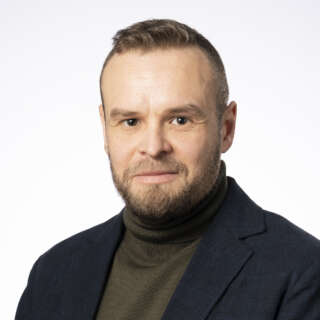
Although his childhood dream job of becoming a pilot still fascinates land plot manager Christoffer Rönnlund, he enjoys working closely with people as the leader of a pleasant and skilled team. The job requires coordination, negotiation and customer service skills and is especially rewarding when you see the city developing in a positive direction.
What do you do?
I lead the land plot team, which is responsible for the management of the city’s land and water areas. We represent the city as a landowner — we allocate plots by leasing or selling, buy land, make various agreements and negotiate with private persons and companies. For example, companies negotiate with us when they are looking for a site to invest in Vaasa. We are also involved in many urban development projects and zoning processes, and fishing matters fall under our remit as well.
What is a typical workday like?
Varied. I attend meetings, negotiate, respond to emails and phone calls, make official decisions and organize various projects as well as the team’s day-to-day work.
What is best about your job, and what is most challenging?
I enjoy my work: I like its variety and diversity. I like serving people and negotiating with them, and it is important to me that residents receive good service from us. I also appreciate being able to help develop our city in a positive direction.
The most challenging part is probably having to keep many balls in the air at the same time. Also, many projects require long-term commitment and their outcomes are only visible in the future, which adds a bit of difficulty to everyday work.
Is there something about your job that surprises people or that people don’t know?
That we administer as many as 3,900 land lease agreements and that we generate quite significant land lease revenues (approx. EUR 11 million in 2022).
How do you unwind from work?
Physical activity has always been important to me. After a busy workday I like to go for a run or a nature walk. In winter I enjoy cross-country skiing, and I also play floorball and football. Life in the archipelago at our cottage in my home village gives good balance to work, and I like to go fishing or boating when I have time.
What kind of person suits a job with you?
You need to be independent, but also able to work in a team. It’s also very important to be able to live with half-finished matters, because it usually takes time before everything is completed. Good social skills help a lot, because we talk a lot with many different people and parties. Land ownership issues can also be sensitive, so you must be able to respect others’ opinions in discussions and negotiations.
What is the workplace like?
We have a really good spirit both in the land plot team and across the whole property management unit. There are very nice and competent people working here. I can wholeheartedly recommend our work community!
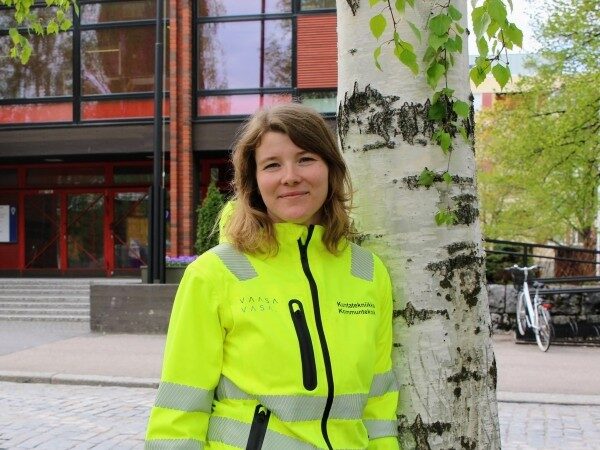
Susanna Helenelund, who works as a district horticulturist, originally planned to become a teacher, but her path led to horticultural studies. Having worked at the City of Vaasa since 2022, Susanna enjoys her work community and is happy when everyone can shine in their work.
What do you do?
I am a district horticulturist for the southern maintenance district — the supervisor for the green areas in the city centre, Hietalahti, Suvilahti and Sundom. I supervise, plan the work, instruct employees and ensure they have the necessary machines and tools.
What is a typical workday like?
There isn’t one. I answer emails and speak on the phone a lot with both residents and employees. I also try to meet all employees face-to-face a couple of times a day. Problems can arise during the day that need to be solved quickly. Especially in summer you never know what the working day will bring.
What is best about your job, and what is most challenging?
The best thing is being outdoors all the time and seeing the seasons. You also see the results of the work immediately. It’s nice to notice how the same employees want to come and do this work year after year. They do their jobs excellently because they can shine in what they’re good at.
The challenging part is that the season is short and many things should be completed during the summer — especially May–June are very busy. It is also challenging to find competent employees.
What is it like to work here?
I really enjoy it and I like coming to work. I get to develop my own work and express myself.
Is there something about your job that surprises people or that people don’t know?
People are surprised by how many green areas there are in Vaasa and how much work they entail. The work is not only mowing lawns, but also weeding, tree pruning, planning as well as repair and cleaning work due to vandalism. Winter is a quieter season when we clean up the previous season and prepare for the upcoming one.
Do you have opportunities to excel at work, and how?
When a work phase or project is completed according to my plans and the work runs smoothly, it brings a good feeling and a sense of accomplishment. Then I can be satisfied with my performance.
How do you unwind from work?
I work out, take photographs and spend time outdoors with my children.
What kind of person suits a job with you?
Someone lively, proactive and with good basic fitness. In this job you must also get along well with different kinds of people.
What is the workplace like?
We have a good work community that always provides peer support and help in everyday matters. There is also a lot of humor at our workplace.
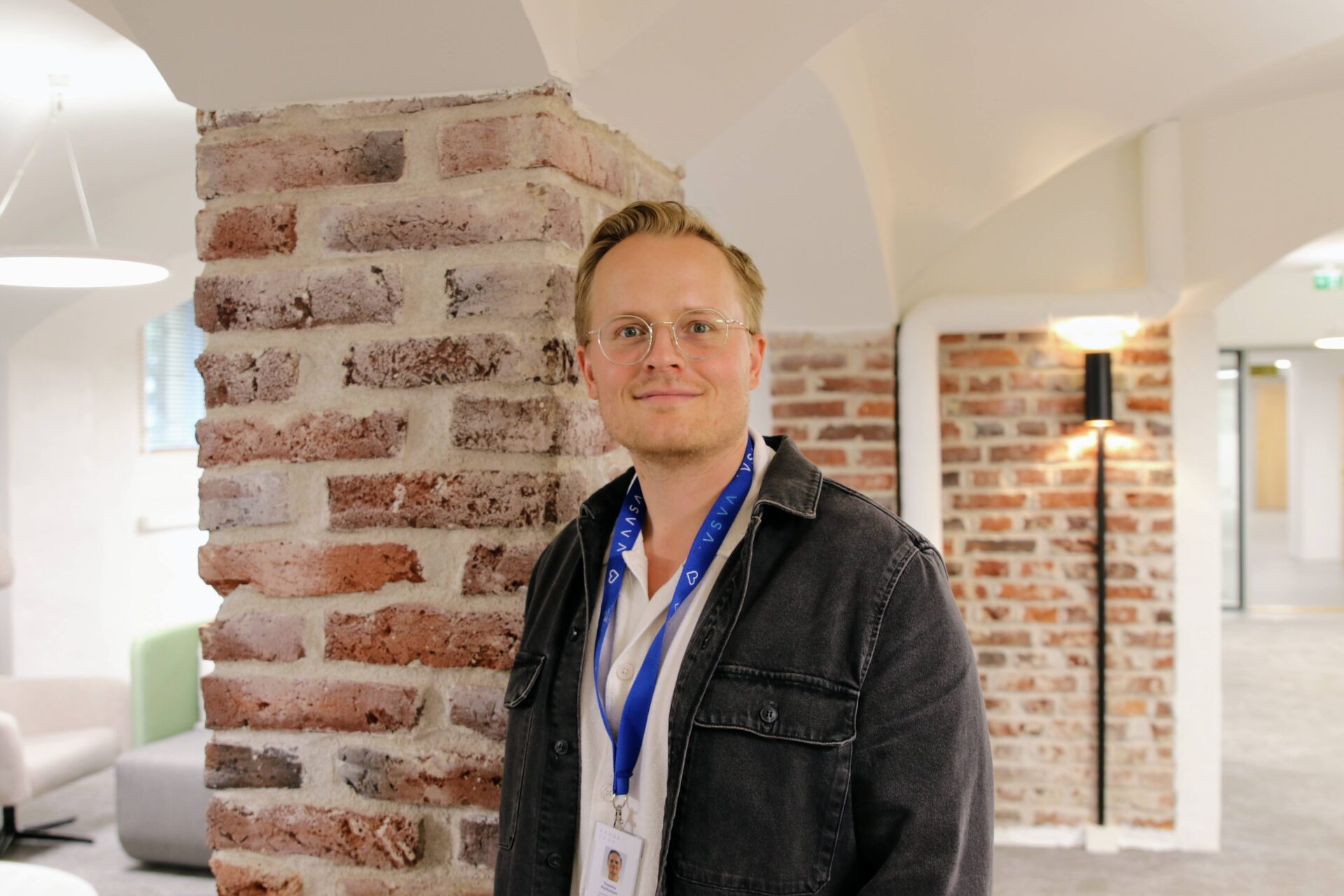
Teemu Peltonen, who once dreamed of a career in car sales as a child, now works as a housing advisor. The work is varied, instructive but challenging, and good colleagues support him. Teemu takes care of his wellbeing through gym workouts and supervision provided by the workplace. His broad work history and experience in mental health work also help in his role as a housing advisor.
What do you do?
I have worked as a housing advisor for the City of Vaasa since May 2022. The City’s housing advisory service was also launched at the same time. The service started quickly, and approximately 300 clients sought the service during the first year of operation.
What is a typical workday like?
Workdays are very varied. My workday usually includes client meetings either in my office or at the client’s or a partner’s premises. Client situations vary — sometimes I meet a client only once, while other situations may require ten meetings. In addition to meetings, I answer clients’ questions by phone or email; sometimes an issue can be resolved in just one call. We also regularly do preventive work, for example by giving talks about housing to school pupils, though these are not daily. At the end of the day I try to record the day’s client meetings.
What is best about your job, and what is most challenging?
The best thing is the varied job description. Client situations are very diverse and I learn something new each time. I also like that my work is not the most traditional social work, as I work with experts from many different fields.
The most challenging thing is the large number of clients. There are currently only two housing advisors. Hopefully we will have more in the future, because there are enough clients for more advisors.
What is it like to work here?
It’s good to work at the City of Vaasa. I have great colleagues who have always supported me. Wellbeing is also taken care of, for example through work supervision. The salary is also reasonable, which is not always a given in the social and health sector.
Is there something about your job that surprises people or that people don’t know?
I believe many are surprised by how much work I do with homeless people or those at risk of homelessness. This surprised me at first as well. Homelessness is less visible on the streets here than in bigger cities. Homelessness can take many forms — a person may be staying with friends or relatives, for example.
Do you have opportunities to excel at work, and how?
Yes. I have a broad work history that I can use daily in my work, for example my experience in mental health work.
What kind of person suits a job with you?
I believe that almost anyone can fit this job. The most important thing is a willingness to learn. One should be aware that the work can be demanding, so it’s good to have hobbies that help reset after a workday. Clients’ situations can be very complicated. You don’t have to be an expert in housing advisory from day one — the work teaches you.
What is the workplace like?
We have a small work community that is full of top professionals.
How do you unwind from work?
I go to the gym regularly. I also dream of starting a cycling hobby.
Niina Takala opens doors to her work in the City of Vaasa’s museums. The exhibition curator is a multi-talented person in museums who acts as a content producer, contact person and exhibition planner. In this varied work there is never a dull moment, and the common goal is important: preserving and presenting the cultural heritage and creating experiences for the public.
What did you dream of becoming when you grew up?
I never had a single absolute dream job. In early primary school I wrote that I wanted to be either a shop assistant or an actor. Those ideas soon faded and for a long time I didn’t know what I wanted to be. After high school I went to eastern Finland to study languages. I intended to become a translator, but after a year I realized it wasn’t my field. While browsing university course guides I found ethnology at the University of Jyväskylä as my major. When I added museology as a minor, my career choice fell into place and I wanted to work in a museum.
What do you do?
I work as an exhibition curator (amanuensis) at the City of Vaasa museums. Previously I worked with the museum’s cultural-historical collections. My job includes producing content for temporary exhibitions for the museum’s different venues. In addition to producing content, I act as a contact person to external partners and as a liaison between different teams and actors within the organization.
What is a typical workday like?
A typical workday is varied and includes many different tasks. In the exhibition team we work on several temporary exhibitions in parallel, so I usually have at least two exhibitions on my desk at once.
During an exhibition process I handle contacts with partners via email, phone and meetings. I plan exhibition content and decide which topics to present and how to present them. Much of the work involves writing, such as exhibition texts, material for communications or exhibition-related emails. I may proofread colleagues’ texts or translations. My work also involves meetings with various partners. The days include many small details that require attention and handling.
What is best about your job, and what is most challenging?
The best thing is the variety and that I get to explore topics and phenomena that might otherwise be overlooked. It’s also exciting to bring these interesting things to the public’s view.
The challenge is working slightly ahead in time, managing schedules and the whole exhibition process, and getting all the big and small things done by the exhibition opening date.
What is it like to work here?
I have worked at the City of Vaasa museums since 2015 and have enjoyed my work. Here I have been able to do diverse work that matches my education and expertise.
Is there something about your job that surprises people or that people don’t know?
I work in a small but feisty exhibition team consisting of an exhibition manager and two amanuenses. This team produces over 10 temporary exhibitions annually across the museum’s four venues, so the pace is quite fast. Exhibitions don’t create themselves — they require a lot of planning, background work and coordination before opening.
In the exhibition team we live both in the present and strongly in the future. Exhibition programmes are planned long-term, so we largely know what will be on our desks next year. Usually several exhibition projects are in progress simultaneously. When one exhibition opens to the public, your thoughts quickly move to preparing the next one.
Is your work meaningful? Why?
I believe both my work and museum work as a whole are meaningful. We serve as the memory of our community by recording and preserving material, producing experiences for the public and showcasing various cultural and art phenomena in exhibitions. This in turn contributes to the wellbeing of the community.
What kind of person suits a job with you?
I have worked in the museum in a couple of different teams, and my colleagues have been flexible, helpful and experts in their fields. Such a person suits our work.
What is the workplace like?
Our work community is multidisciplinary, with experts from many fields. We each contribute to the common goal of recording, preserving and presenting cultural heritage. There is humour in the workplace and colleagues are always ready to help when needed.
How do you unwind from work?
I refresh after the workday by driving a long commute and listening to audiobooks to switch my thoughts away from work. I also read a lot, spend time outdoors, enjoy the cottage and attend concerts, theatre and other cultural events — sometimes even a football match in the stands.
Lauri Leminen, who once dreamed of a snowboarding career, ended up studying education when reality set in. Lauri started his career with the City of Vaasa as a class teacher in 2013, became chief shop steward, then HR manager and later HR controller in the Education and Cultural Sector.
What did you dream of becoming when you grew up?
I remember dreaming of becoming a professional footballer and later switching to snowboarding. When reality dawned, I aimed to become a class teacher. I studied at the University of Helsinki and graduated with a Master of Education in the primary teacher training programme. Before moving into HR, I worked almost ten years as a teacher. I have worked at the City of Vaasa since 2013 — initially as a class teacher at Hietalahti School, then several years as chief shop steward and, before becoming HR controller, a little over a year as the City of Vaasa’s HR manager.
What do you do?
I work in the Education and Cultural Sector (Sivistystoimi) on various HR matters. I collaborate closely with the sector director, another controller, 13 result area managers within the sector, supervisors, experts from the personnel service area and employee representatives. I also work on city-wide HR issues such as various trainings and development matters.
What is a typical workday like?
A typical day includes communication with sector and result area management, supervisors and personnel services representatives. We usually seek solutions to a variety of more or less challenging practical questions. Themes can range across everything between recruitment and termination of employment. A significant portion of my time is also spent preparing and writing various guidelines, policies and decisions.
What is best about your job, and what is most challenging?
HR matters often require delving beyond the surface and sometimes involve issues with no ready-made answers. It is therefore both challenging and very rewarding to solve these situations. The best part is definitely supporting people in different work communities in finding joint solutions. It’s also a great joy when long-term development work begins to show in practice.
What is it like to work here?
I consider the City of Vaasa an excellent employer. Overall, we in Vaasa understand well that input is needed from both supervisors and employees. With good cooperation we achieve excellent working conditions for everyone. I can sincerely say that Vaasa is a great city and I am happy to be part of raising it toward the status of the world’s happiest city.
Is there something about your job that surprises people or that people don’t know?
My job title suggests control and oversight. However, the work is largely about interaction and finding common operating models. The work is about meeting people and is always done for another person.
Is your work meaningful? Why?
When we succeed in creating functional processes and supporting people in their work, we can affect the quality of services provided to residents. In the Education and Cultural Sector the work is directly visible in residents’ everyday lives, whether through quality basic education or diverse cultural experiences. I find my work truly meaningful.
What kind of person suits a job with you?
Key in our work is understanding human differences and the power of collaboration. When solutions to even challenging situations are sought through cooperation, everyone’s strengths can be utilized and everyone gets to shine.
What is the workplace like?
We have an excellent team in the Education and Cultural Sector leadership, and I feel privileged to work with seasoned professionals.
How do you unwind from work?
In my free time I spend time with loved ones and engage in various physical activities. Vaasa’s nature trails and running terrain are fantastic and the swimming hall is one of the best in Finland. Over the past year I’ve also discovered going to the theatre. This season I have seen about five different productions, each a wonderful experience, especially “Veljeni, Leijonamieli” at the city theatre made a strong impression. I find football nowadays a bit too dangerous, but I still go skiing occasionally and manage small jumps.
Laura Haakana did not become the florist she dreamed of as a child — instead she found her way into social services. These days she works at the Kyrönmaa workshop Arpeet as an individual coach. The job entails a bit of everything, but the best parts are client relationships and the successes that arise from long-term work and trustful collaboration, celebrated together with the client.
What did you dream of becoming when you grew up?
I dreamed of being a florist as a child. I didn’t become a florist, however, and social services drew me in.
What do you do?
I am trained as a social services professional (sosionomi, AMK) and work as an individual coach at the Kyrönmaa workshop Arpeet. Arpeet is a workshop in Tervajoki offering coaching services including work trials, supervised work placements and rehabilitative work activity. Participants are referred from Vaasa, Isokyrö and Laihia.
What is a typical workday like?
My workdays are very varied. I do a lot of multidisciplinary work with social services, outreach youth workers, the TE office, Kela and other authorities across the two-municipality area. At one moment I may be working closely with a participant at Arpeet and the next I could be in Laihia, Isokyrö or Vaasa for partnership meetings. The workshop’s own activities also structure the days. My role also includes administrative tasks.
What is best about your job, and what is most challenging?
The best part is the client work. It is rich but also appropriately challenging. Trust built in individual conversations carries the coaching forward toward the participant’s goals. It’s wonderful to see participants gain courage and self-esteem as issues are resolved — successes are celebrated together and new challenges are met with fresh solutions. The work is challenged by daily busyness which can make an otherwise well-planned day fragmented.
What is it like to work here?
I like that I can plan and develop my work. I can also be myself, which enables genuine encounters, listening and present interaction.
Is there something about your job that surprises people or that people don’t know?
The diversity of the work usually surprises people.
Is your work meaningful? Why?
Absolutely! I can concretely help people progress with their matters. The meaningfulness of the work is evident both at the individual and societal level.
What kind of person suits a job with you?
Someone sociable who meets people from various backgrounds openly. You also need flexibility and adaptability in rapidly changing situations. A generous dose of encouraging attitude and a sense of humour are good to have.
What is the workplace like?
At Arpeet I work with three other vocational coaches and assistant coaches as well as a workshop manager. Our work community is a pleasant mix of ages and everyone brings their own skills and experience.
How do you unwind from work?
I spend time with friends and family. As a music enthusiast I attend lots of concerts and festivals. The pandemic reduced concert experiences recently, so I miss them. Sometimes I also need solitude and peace to balance the social work.
Henna Nurmikoski once dreamed of being a doctor or a police officer. In a way the common thread of childhood dreams persisted, as people’s wellbeing remains Henna’s guiding star today. As workplace wellbeing coordinator and currently also acting occupational safety manager at the city, Henna ensures that staff have a safe workplace and a wellbeing-promoting work community where they can develop themselves and their skills.
What did you dream of becoming when you grew up?
My thoughts changed from doctor to police officer, but in the end I ended up in healthcare and from there into personnel administration.
What do you do?
I work in the Personnel Services area as a workplace wellbeing coordinator. My job includes planning measures to support staff work ability in cooperation with supervisors and occupational health services, designing various wellbeing-enhancing actions in multidisciplinary teams, as well as supervisory duties related to competence development, wellbeing and safety in the service unit. Since early 2022 I have also acted as the occupational safety manager.
What is a typical workday like?
Workdays vary a lot. A typical day includes meetings and calls with supervisors, employees, occupational safety representatives and occupational health service representatives. Sometimes I also speak at training events. As occupational safety manager I will be visiting workplaces more frequently in the future; our organization has many sites.
What is best about your job, and what is most challenging?
The best thing is cooperation with different parties — there’s power in that! Solutions aren’t always easy to find and they take time, but you never have to consider things alone.
What is it like to work here?
The City of Vaasa encourages developing your own work and tries to give everyone the opportunity to use their strengths. Trying new approaches through experiments is allowed!
Is there something about your job that surprises people or that people don’t know?
I work a lot with the pension insurer Keva and exchange best practices nationally with colleagues in other cities, so good practices are shared at the national level.
Is your work meaningful? Why?
I support supervisors in succeeding in their roles and in providing staff with healthy and safe working conditions in a wellbeing-promoting work community. It’s a great feeling to help find a new path with an employee when continuing in previous work is no longer possible for health reasons.
What kind of person suits a job with you?
Diversity is an asset in our work community! We suit an open-minded idea generator, a persistent doer who enjoys both their own and others’ successes.
What is the workplace like?
We have a warm and informal atmosphere where everyone can be themselves and help is always available. After a long period of remote work we miss the laughter and humour of coffee breaks.
How do you unwind from work?
In my free time I run, go to the gym and — hopefully again this summer — play football. I am also continuing my studies.
Eija Torkko is one of two service advisers working at the Vähäkyrö joint service point. The Vähäkyrö House joint service advises residents on all matters related to the city and the municipal organization, but also handles, for example, Kela matters, postal services and even voting under one roof. The building houses a versatile team of experts from different fields and Eija enjoys both her great team and the customers.
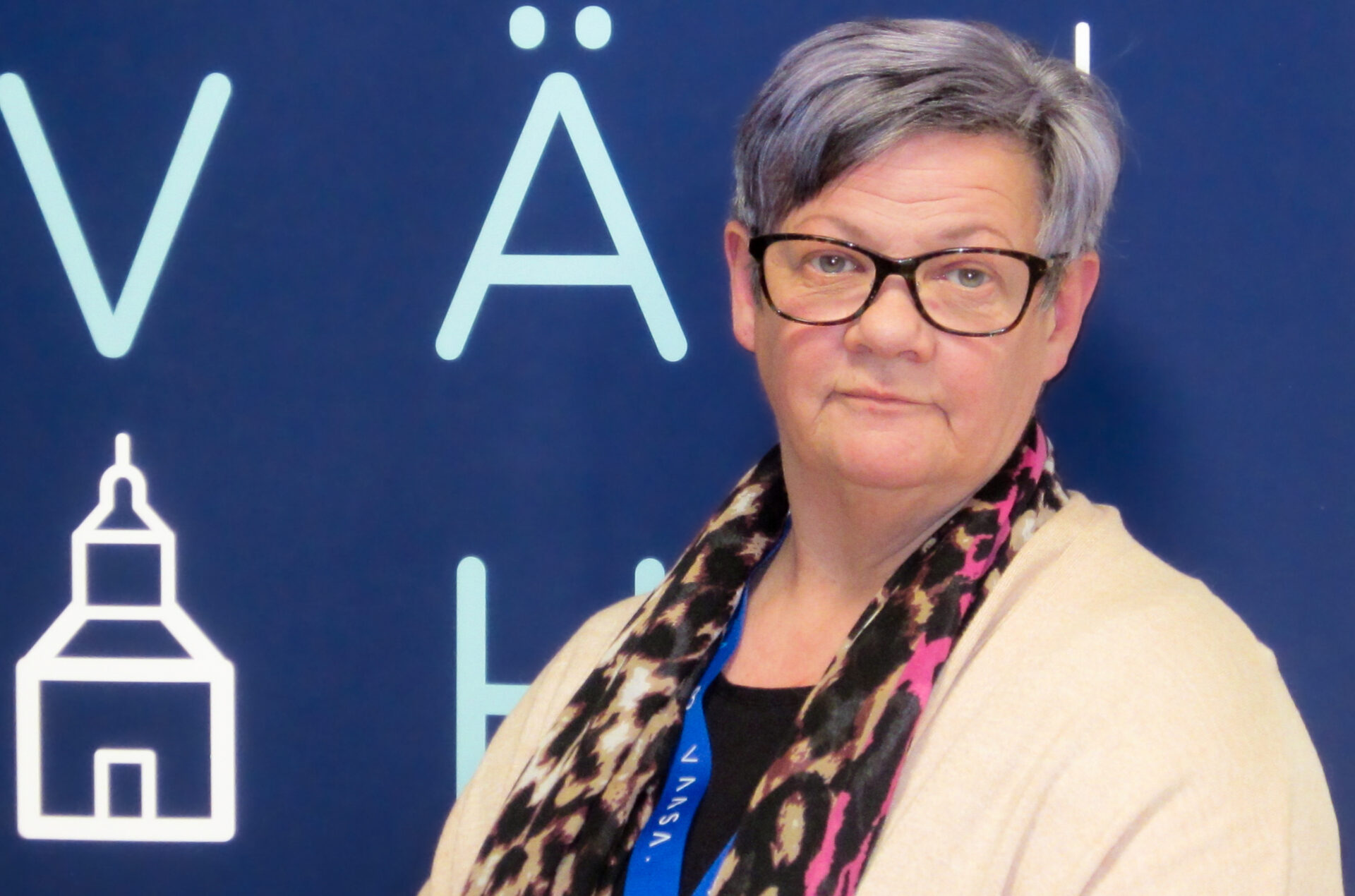
What did you dream of becoming when you grew up?
I have a vague childhood memory that I wanted to be a nurse.
What do you do?
I work as a service adviser at the Vähäkyrö joint service point.
What is a typical workday like?
A workday includes a variety of customer service tasks and support tasks for regional administration. We have many daily customers because our service point also provides postal services.
What is best about your job, and what is most challenging?
The best part is the variety and customer service — no two days are the same.
The most challenging part is staying on top of rapidly changing situations and being able to quickly provide customers with up-to-date and accurate information on a wide range of questions.
What is it like to work here?
It’s a pleasure to come to work every day and cooperation with various city organisations works very well despite the long distance. We do close cooperation, for example, with the Citizen Services desk in the city centre.
Is there something about your job that surprises people or that people don’t know?
I would say people are surprised by how versatile our work field really is. Sometimes my colleague and I feel like “jack-of-all-trades”.
Is your work meaningful? Why?
Absolutely! I feel my work is meaningful because we provide a local service point for the area’s residents, making it easy for them to ask for guidance on matters related to the city organisation and many other issues.
What kind of person suits a job with you?
Open, sociable, outgoing, customer service-oriented and adaptable to rapidly changing situations.
What is the workplace like?
Two service advisers work at the Vähäkyrö joint service. The Vähäkyrö House hosts employees from various city departments and Vähänkyrön Vuokratalot Ki Oy. We have a great group here that helps each other when needed.
How do you unwind from work?
Most of my free time is spent with our four Tibetan spaniels and activities related to them — daily walks, dog shows and similar events. They keep me busy. I also breed occasionally under my Fyrrykyrö kennel name, in a small-scale and thoughtful way.
The role of sports planner is varied and meaningful, as the aim is to bring exercise closer to everyone and make services easily accessible. Tatjana Asplund is responsible for exercise offerings for older people, immigrant girls and women, and for adapted exercise. Adapted exercise is aimed at those who, due to illness, injury or functional limitation, have difficulty engaging in sufficient physical activity or accessing general sports services.
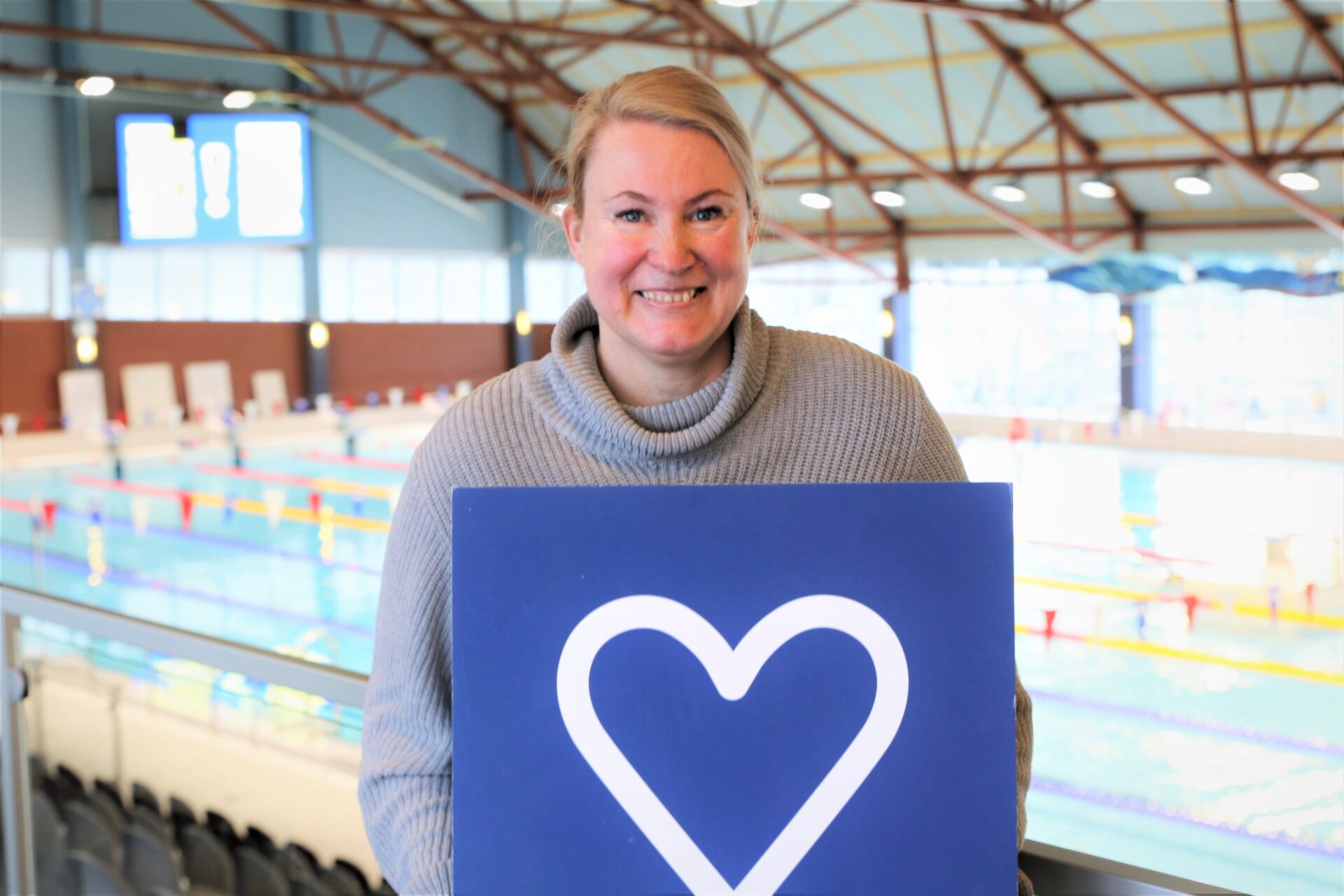
What did you dream of becoming when you grew up?
A police officer or a physical education teacher.
What do you do?
I work as a sports planner in Sports Services. I am responsible for exercise offerings for older people and for immigrant girls and women, as well as for adapted exercise.
What is a typical workday like?
Every workday is different. A day may include meetings, webinars, expert tasks or sport-focused visits to partners such as educational institutions, associations or the parish. Sometimes I lead chair-based exercise classes or give training on adapted sports equipment to students.
What is best about your job, and what is most challenging?
The best part is cooperation with different parties: associations, educational institutions and the city’s various administrative departments (and hopefully also with the future Wellbeing Services County). Currently, the most challenging aspect is the restrictions brought by the coronavirus pandemic.
What is it like to work here?
I enjoy my work and the opportunity to plan and develop it. The bilingual nature of my work and of Vaasa in general is a great asset.
Is there something about your job that surprises people or that people don’t know?
The breadth and diversity of my work area sometimes surprise people.
Is your work meaningful? Why?
Yes. I try to guarantee equal, barrier-free and accessible sports services for all residents regardless of age, size, gender or functional capacity. Everyone has the right to exercise and enjoy its health benefits. I consider my work important because it helps people experience the joy and health benefits of physical activity.
What kind of person suits a job with you?
Someone energetic, proactive, interested in personal wellbeing and who loves the joy of movement.
What is the workplace like?
A group with a good sense of humour who enjoy the joy of movement.
How do you unwind from work?
I study, read, listen to music and walk our dogs.
Special effects, prosthetics, fake beards and sideburns are part of Maija Hauta-aho‘s everyday work as a hair and make-up artist at the City Theatre. Seeing her own handiwork at work and the great people around her inspire her year after year in a workplace where she can express herself and create wonderful experiences for people.
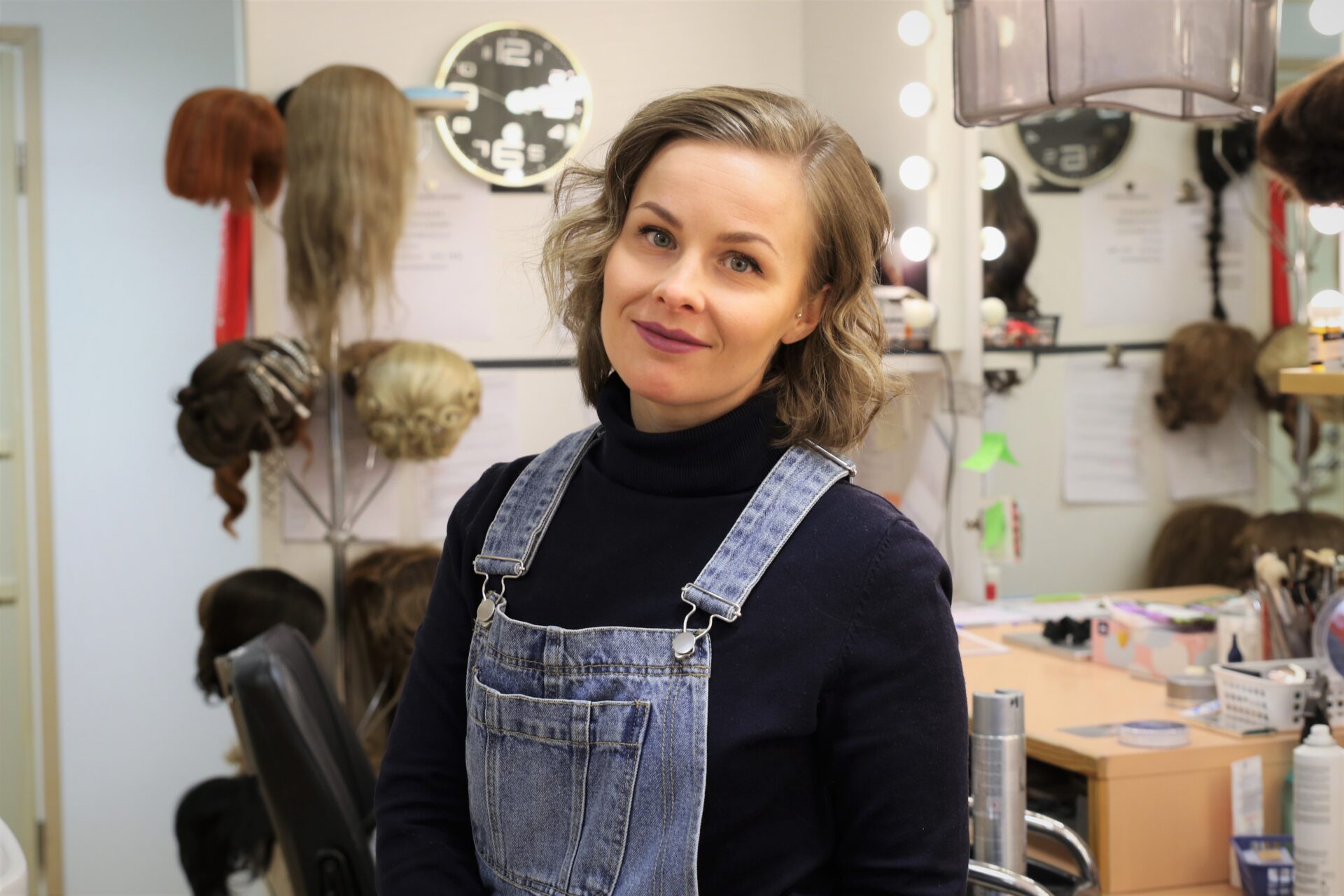
What did you dream of becoming when you grew up?
I dreamed of being a primary school teacher, and later a vocational school teacher.
What do you do?
I work as a hair and make-up artist in the costume and make-up department of the Vaasa City Theatre.
What is a typical workday like?
The first days of the week are usually maintenance and preparation days. I prepare special effects and prosthetic pieces for upcoming productions. We also make moustaches, beards, sideburns and wigs ourselves — everything a new play requires. I’m in charge of the salon’s material supplies, and I also cut and colour actors’ own hair. Later in the week, workdays are filled with performances, including hair styling and make-up and quick changes during the shows.
What is best about your job, and what is most challenging?
The best thing is definitely the people around me and seeing my own handiwork. Each season is different, which keeps inspiration alive even after many years. The hardest part is coordinating schedules and planning durable hairstyles as well as performing quick changes. After long practice, they always work out.
What is it like to work here?
I find the Vaasa City Theatre a pleasant workplace where I can express myself and feel comfortable.
Is there something about your job that surprises people or that people don’t know?
I often hear people wonder what I do when there are no performances. They often imagine my job is just doing actors’ make-up and hair, but that’s only part of it.
Is your work meaningful? Why?
I believe every job is meaningful. When the theatre lights go out, the audience is given a chance to forget the present and be immersed in the story — to experience various emotions and reflect on cause-and-effect relationships.
What kind of person suits a job with you?
For my department, a skilled, proactive person who can work under pressure as a team player.
What is the workplace like?
I find the work community at the theatre great and somewhat relaxed.
How do you unwind from work?
I spend time with my family and, when possible, go to yoga, swim in the sea or walk in the forest. I need calm and personal time around the hectic life at the theatre.
Elena Luoma works as a class teacher with great heart. Children are very dear to her, and she dreams of writing and illustrating a children’s book someday when she has time away from the busy teaching job. Even though the work is wide-ranging and often hectic, peer support, humour and encouragement in the work community help her persevere. At the end of the day, the sense of meaningful work and children’s joy in small things are motivating.
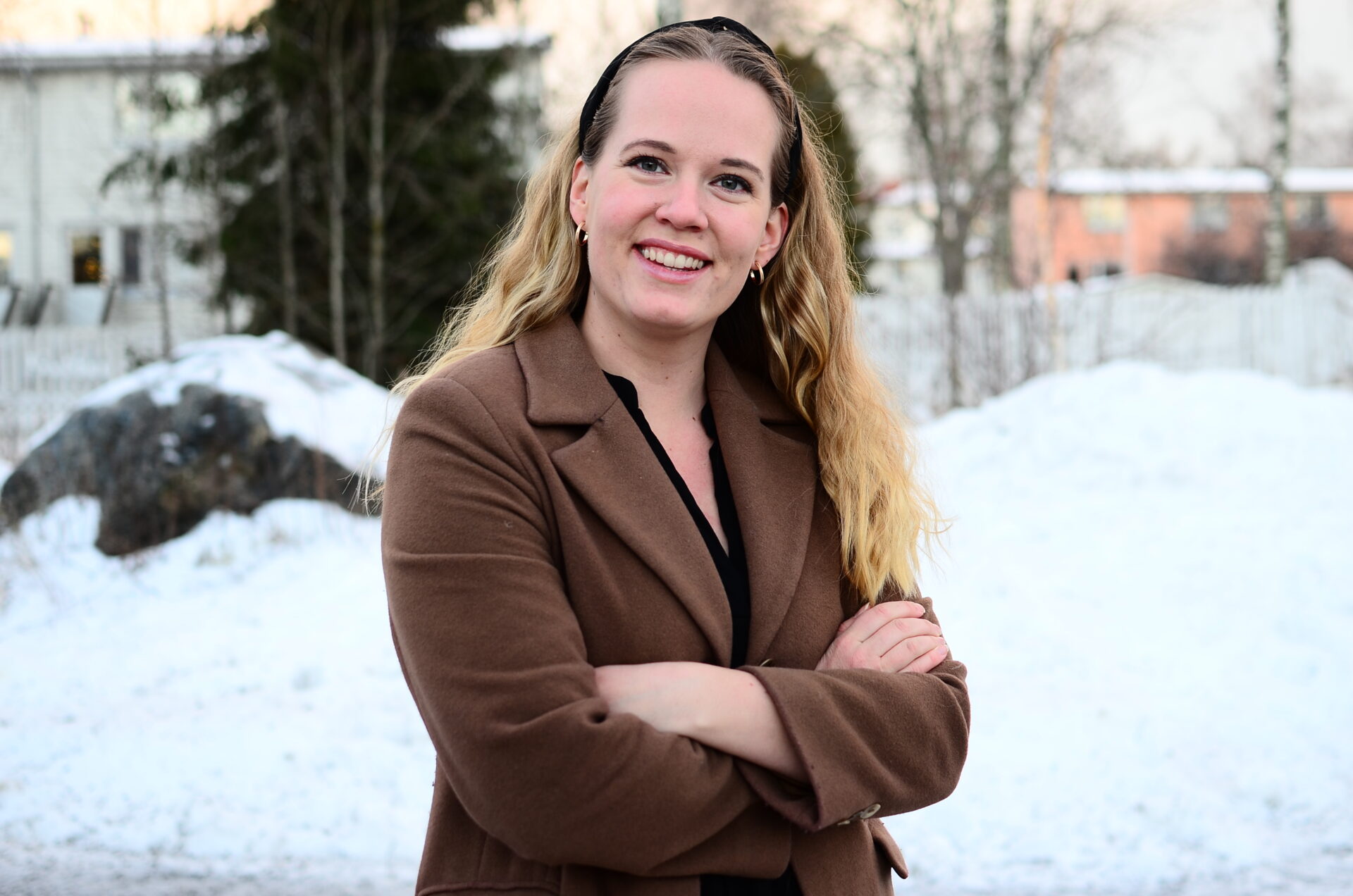
What did you dream of becoming when you grew up?
My career dreams have always been connected to being with children. I didn’t become a nanny, but I came close. I have always liked writing and one of my secret dreams is still to write and illustrate a children’s book someday. My current job doesn’t prevent that — if anything, it supports it!
What do you do?
I am a class teacher at Hietalahti School. Currently I teach third graders and I am also the school’s ICT coordinator. I also teach music to several classes.
What is a typical workday like?
I am a morning person and start at the school well before lessons begin. First I answer emails and Wilma messages and post the day’s schedule in the classroom. Teaching is from 8 to 13, after which I have time to take care of important tasks and prepare for the next day. I like that a teacher can leave the workplace in good time and continue some tasks at home with a cup of tea. Planning takes a surprisingly large amount of time, but it is precisely the idea generation and implementation that I especially enjoy in this work.
What is best about your job, and what is most challenging?
The best parts are the children and supporting and following their development. Children’s joy and enthusiasm for small things are contagious and my own enthusiasm and motivation help a lot. I also have a strong desire to help, which manifests in many ways in my work. I enjoy being able to work in my own style and use my strengths broadly. The most challenging aspect is the constant pace and difficulty separating work and free time. Some children’s life challenges can be confronting and they show up in daily life. Still, I try to think that by helping, understanding and being a safe adult for a child, I can give something important to their life.
What is it like to work here?
I enjoy working very much and was warmly welcomed. Everyone is often busy with their own tasks, but you can always get peer support, humour and help from everyone!
Is there something about your job that surprises people or that people don’t know?
People may not realise how multifaceted a class teacher’s job is and what it involves. Sometimes it’s amusing how one has to take on tasks ranging from family counsellor to school nurse and even substitute parent. Children are open and you get to know them very well in a short time by being present with them.
People often bring up teachers’ long holidays and short workdays. A teacher’s work doesn’t end when pupils go home — it involves much more than “playing around”. Collaboration with parents and other parties and daily documentation take significant time in addition to planning and assessment.
Is your work meaningful? Why?
Absolutely. Teaching is extremely important socially and the responsibility is great regarding the future. Even small successes in education are steps forward.
What kind of person suits a job with you?
Positive, responsible, flexible and creative. Conditions vary and days don’t always go as planned. A little twinkle in the eye keeps things pleasantly relaxed.
What is the workplace like?
Our work community is large with many staff. Multidisciplinary collaboration works seamlessly and help is provided without asking. Newcomers adapt quickly and with the right attitude and enthusiasm you can make a big difference.
How do you unwind from work?
In my free time I do many creative things: I make music, paint and craft. I recently made 17 gingerbread houses! Handicrafts are close to my heart and I draw much inspiration for my work from my hobbies. Sometimes it feels great that my work doesn’t always feel like work because it’s so enjoyable. I also make sure to schedule rest and recovery time from work from my very first years as a teacher.
Over 15 years at the City of Vaasa have given Pauliina Pääkkönen a good perspective on our city and its services. Pauliina has worked at Tikanoja Art Home, the Kuntsi Museum of Modern Art, the library, sports services and the development unit, and today she is based at the Administrative Building in the Communications and External Relations unit. As a marketing planner, Pauliina handles communications and marketing for the city’s cultural operators — museums, cultural services and the library — turning abstract ideas into concrete products together with many specialists.
What did you dream of becoming when you grew up?
As a child I wrote in a friend’s book that I would become an entrepreneur or shopkeeper. I dreamed of having a flower shop. After high school I studied business at the Entrepreneurs’ University of Applied Sciences in Kauhava, lured by an exchange year abroad. Later I found myself studying communications and marketing in Vaasa at university. I also studied in the Netherlands before graduating with a Master of Arts. I was employed by the City of Vaasa as a communications officer at Tikanoja Art Home and the Kuntsi Museum and spent ten years in the museum world. In 2015 I moved to centralised communications, today’s Communications and External Relations unit.
About six years ago I took a gap year and ended up returning to studies, becoming interested in regional studies — how municipalities and cities differentiate and leverage strengths in interregional competition and how people experience participation. What was supposed to be a few courses turned into a degree and I graduated with a Bachelor of Administrative Sciences in 2018, which allowed me to try development work.
I have promised myself many times not to study anymore, but I seem to belong to the type who breaks that promise when enough time passes. I already sense a few new sprouts of interest growing.
What do you do?
As a marketing planner I handle communications and marketing for the city’s cultural operators — museums, cultural services and the library. I create marketing plans, design and produce various textual contents and campaigns that increasingly focus on videos and social media. I work a lot with graphic designers and advertising agencies.
My job also involves extensive writing: press releases, web news and articles for our magazines. I also serve as the editor for the cultural magazine KultTour and develop the city’s cultural marketing with various partners.
What is a typical workday like?
Although days can differ greatly, my core work is almost always writing something. After that I publish content across the city’s many channels. A large part of the day is also spent answering emails.
I also respond to communications questions, for example on social media channels, and help clarify issues. The rest of the time I spend in meetings with my team, internal clients or other stakeholders.
I usually plan the week’s activities in advance because communications work is constantly hectic. We use a shared communications calendar where all planned publications are scheduled.
What is best about your job, and what is most challenging?
The best thing is when an entirely abstract idea turns into a concrete product, such as a video. That is when you can see what results from combining different skills: graphic design, apt content, project management and the right camera angles. These make visible some service or new thing important to residents.
I also enjoy writing, if I can get into the right flow. The hardest thing is anticipating, keeping to schedules and publishing real-time information across the many channels the city uses.
What is it like to work here?
Millaista täällä on olla töissä?
I apparently like it here — I’ve worked at the City of Vaasa for over 15 years. I’m grateful that over the years I’ve had opportunities to change posts and units for longer or shorter periods. I’ve been based at Tikanoja Art Home, Kuntsi, the Administrative Building, the library, Sports Services and the development unit. This “wandering” has given me perspective on the large organisation that a city employer is and the range of services it produces. I’ve also met many people, which is helpful when developing things across administrative boundaries.
Is there something about your job that surprises people or that people don’t know?
Some may imagine marketing work as light slogan-making. It is not; the work requires focus to advance strategically important matters, perseverance and the ability to grasp the whole.
Is your work meaningful? Why?
Yes, my work is meaningful. It makes visible many things that matter to residents and service users. My role is to provide communications and marketing expertise. Sometimes I feel like a consultant, at other times like a midwife helping a big project to completion. I enjoy the feeling of achieving a successful result together.
What kind of person suits a job with you?
This job emphasises versatile communications and marketing skills. Although the work requires precision and concentration, it’s also good to be able to throw yourself into situations and improvise a little.
What is the workplace like?
Our Communications and External Relations unit is cheerful, energetic and full of skilled people. I value that we understand work quality — in its fun and demanding parts. We can give each other work peace, offer help, encourage and celebrate successes. It’s important to pause and look at your results before moving on to the next task.
How do you unwind from work?
I do things that make me feel good. I sing in a pop and rock choir I’ve been part of for about six years and take private singing lessons. This autumn I got into ice bathing and aerial yoga. I like going to the gym, running and skiing in winter. I’m also involved in an association that brings Finnish cultural heritage to the present with a small twist, and I’ve even learned to use traditional folk costume — at celebrations, on trips and even on the ski track.
Sari Höglund once dreamed of being a nurse or a physiotherapist, but her path unexpectedly led to education. Sari worked 19 years as a kindergarten teacher and has since switched to the recruiter’s role. Even though the shoes are different, they are still in the same boat. Sari has worked at the City of Vaasa for over 30 years and it feels like a second home. As a recruiter she often finds herself telling people about the world’s most meaningful work: early childhood education.
What did you dream of becoming when you grew up?
I was going to become a nurse or a physiotherapist. After the matriculation exams I worked as a daycare assistant, which inspired me to become a kindergarten teacher. I worked as a kindergarten teacher for 19 years and later completed a vocational qualification in business as part of a career change.
What do you do?
I work as a recruiter in the City Group administration’s personnel services area. I recruit substitutes for early childhood education.
What is a typical workday like?
My day starts by checking requests for substitutes, employment contract requests and applications that have arrived in our recruitment system. I prepare employment contracts for early childhood education supervisors and interview new substitutes and advise them with their questions. Part of recruitment also involves visiting educational institutions where we inform students about opportunities to take short-term and fixed-term substitute positions during their studies and employment possibilities after graduation. We usually visit educational institutions in spring and autumn.
What is best about your job, and what is most challenging?
The best part is definitely meeting people and seeing when an applicant gets substitute work, fixed-term employment and finally becomes employed by the City of Vaasa. I also enjoy meeting students during institution visits and telling them about the most meaningful job in the world — early childhood education.
The most challenging part is sometimes scheduling my own work. Occasionally I hold dedicated interview days where I conduct several interviews in one day.
Also, you have to be precise when preparing employment contracts and take account of various HR and employment law matters.
What is it like to work here?
It’s fantastic to work for the City of Vaasa. I have been with the same employer for over 30 years. It feels like a second home.
Is your work meaningful? Why?
I feel I do important work by providing substitutes to daycare units so that everyday life there runs as smoothly as possible and children can enjoy high-quality and safe early childhood education.
What kind of person suits a job with you?
Customer service oriented, cooperative, flexible and precise.
What is the workplace like?
We have an excellent recruitment team! Our team has skilled and committed workers. We trust each other and help one another. Our team has plenty of humour and situational comedy.
How do you unwind from work?
I relax by walking my dog Sulo in nature, spending time with family and grandchildren, meeting friends and cottage life.
Päivi Korkealaakso, who works as the director of city planning, never has the same workday twice. Päivi thinks it’s great to be involved in shaping the kind of city we live in now and in the future.
What do you do?
I work as the director of city planning (kaavoitusjohtaja) at the City of Vaasa. In my work I try to accommodate various needs — everyday life, workplace clusters, services, transport and leisure. I have worked here for 20 years: no two days have been the same and I like that.
Describe a typical workday?
My day consists of meetings aimed at defining policies, both large and small. In these meetings matters move step by step toward final plans intended to enable various future needs. After work you’ll usually find me in the garden or on a running trail.
What are the highlights of your work?
When a common solution is found for a complex whole.
And the most challenging part?
In some projects there is little room for manoeuvre. A previous legislative decision or a similar policy may prevent a landowner’s primary wish, but then we try to find solutions through alternatives.
Do you feel your work is meaningful, and why?
Land use planning aims to secure the city’s strategic needs democratically, treat landowners fairly and create a healthy, safe and pleasant environment.
Is there something about your job that surprises people or that people don’t know?
Drawing a plan on paper is quick, but every line and every provision in the plan includes a lot of law, money, contracts, impacts and negotiations.
What is the work community like?
Land use planning is not done alone — it requires wide interaction, collaboration and coordination, networks and diverse expertise. In a successful project the different areas and experts come together at the right time and respect each other’s expertise. Our group masters this way of working.
Accessibility is Elisabeth Hästbacka’s passion. Elisabeth Hästbacka wants to build an inclusive Vaasa.
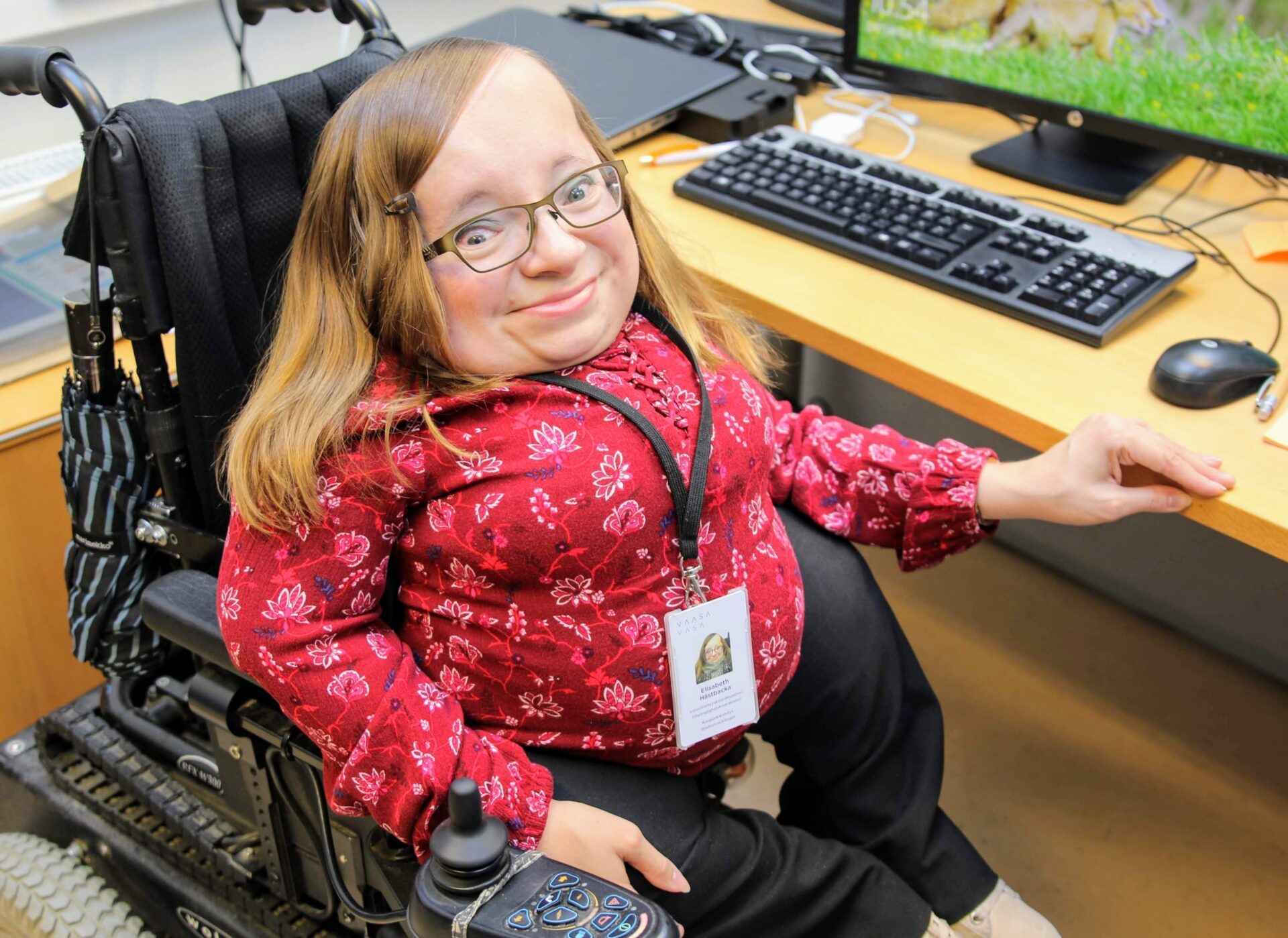
Hästbacka has organised meetings of the Disability Council and networked with colleagues working in other Finnish cities.
– As an accessibility coordinator I am involved in monitoring and promoting accessibility. I also act as the secretary of the Disability Council and as a liaison to organisations. It’s great to advance matters that are important both personally and to society, Hästbacka says.
Hästbacka is currently finishing a doctoral thesis at Åbo Akademi about the participation of disabled people in society.
– I hope to use my researcher background and the contacts I have with disability researchers across Finland in my work. Of course my personal experiences of accessibility also bring a useful perspective to the job, Hästbacka adds.
Accessibility is about cooperation
When Hästbacka moved to Vaasa in 2004 to study, she noticed that accessibility in the city centre had been prioritised.
– Much work has been done over the years to advance accessibility in Vaasa. The Disability Council has been active for a long time and has achieved results, Hästbacka praises.
Hästbacka believes Vaasa is a forerunner in accessibility: for example, there are fewer than ten cities in Finland with a dedicated accessibility coordinator or officer. Although progress has been made over the years, work remains even in Vaasa.
– Accessibility is an important part of people’s equality as it is a broad whole and matters to everyone. It isn’t only about people with disabilities, but also older people and families with children. Accessibility is not just about the built environment, but also about interaction and information flow as well as opportunities for work and education, Hästbacka reminds us.
– Promoting accessibility always starts with cooperation. I’ve already met many interesting people and I look forward to learning more in my work, Hästbacka smiles.
As a special needs teacher in early childhood education, Tiina Mäenpää did not become a teacher, psychologist, florist or musician as she dreamed of in childhood. However, in this role she combines essential elements of all those professions: creativity, teaching and psychological insight.

What did you dream of becoming when you grew up?
As a child I dreamed of being, for example, a teacher, psychologist, florist or musician. In this job I get to combine a bit of all of those — creativity, teaching and psychological insight.
What do you do?
I work as a special needs teacher in early childhood education. My main task is to work with staff to plan, implement and evaluate support provided to children in early childhood education and pre-primary education.
What is a typical workday like?
My work combines time with children, work with adults and independent work. A typical day includes working with children in daycare groups, small groups or individually. I participate daily in meetings with professionals and parents and perform independent office tasks. Every day is different and I meet a wide variety of people.
What is best about your job, and what is most challenging?
The best part is that I get to help children and families. I find my work meaningful because support provided in early childhood and pre-primary education is very effective. Together with other professionals and families we can, in the best cases, change the course of an individual child’s life. All children benefit from special pedagogical methods implemented in groups, which also allows me to influence society at large.
The most challenging part is finding the right and effective support measures and special pedagogical solutions for each child in their specific group. The work is largely problem-solving and it’s nearly impossible to do alone. Aligning the views of those working with the child is crucial for the support to be implemented and function well. Effective collaboration is a key factor in ensuring that support works.
What is it like to work here?
The City of Vaasa’s early childhood education aims to be on the cutting edge, which makes the work meaningful. Investment is made in early special education and practices are continuously developed. As a special needs teacher it is a pleasure to work with committed staff in daycare centres. Groups typically include two early childhood education teachers, which gives a strong pedagogical emphasis. Collaboration practices are constantly developed so that together with various actors we can build a good future for children.
How do you unwind from work?
I find balance in family, close ones and friends. I also enjoy being in nature, photography and music.