

Every summer hundreds of young people work with us in about 60 different job roles. The feedback we collect annually from our summer employees has been positive: most feel that a summer job at the city has met their expectations and been meaningful. Friendly coworkers are also praised.
Summer work teaches initiative and responsibility. In addition to new skills, work experience, pay and new networks are good reasons to apply for a summer job. But why apply for a summer job at the City of Vaasa? Read about our summer employees’ experiences below.
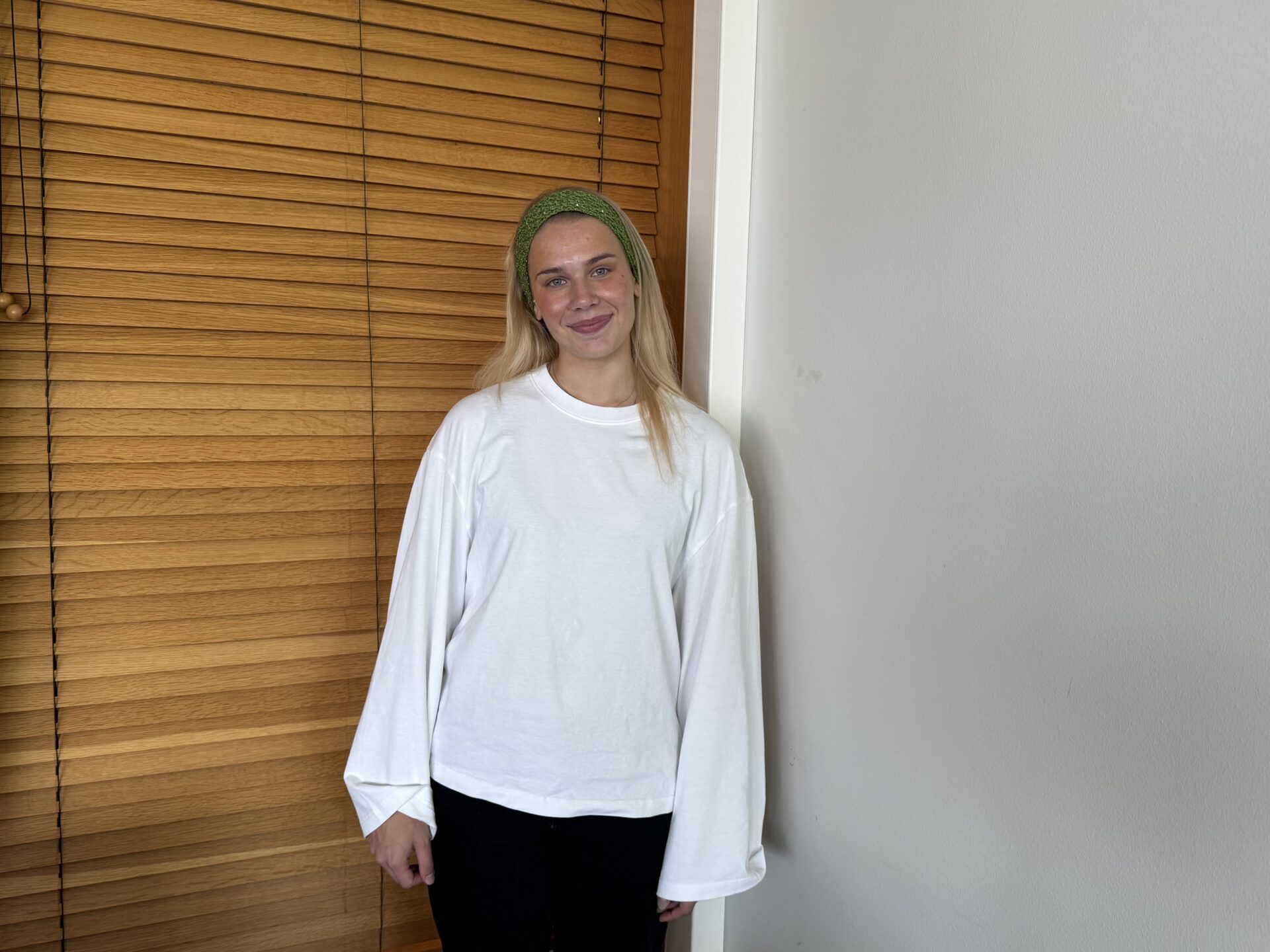
Muusa Koivusipilä has spent her summer working on the Night of the Arts. She says the summer job has provided valuable experience in the comprehensive planning of events, while also developing her ability to manage large-scale projects.
What did you want to be when you were a child?
A pop star, I guess. I once went to see Robin perform with my dad, and I thought, “Wow, I’m going to become a singer.” But my dad didn’t agree. That dream career ended there when I was seven years old.
What does a cultural assistant do?
I assist with organizing the Night of the Arts. We create schedules and communicate with artists. I’ve also had the chance to help a little with communications, which has been nice. But mostly, we assist our cultural producer.
What has been the best part?
Probably learning about the events industry and how organising an event works on a larger scale. And then, of course, my colleagues!
What have you learned?
How to manage larger projects than I’ve ever been used to before.
What has been the most challenging?
Probably the fact that the schedule has been quite tight. And there’s a lot happening at the same time, so I’d say time management. How to schedule things when you have several tasks on your hands at once.
What has been the most surprising?
How demanding the work actually is. I’ve realised there are so many things you need to think about when organising an event that I would never have thought of myself. For example, that an event needs electricity. Of course it needs electricity, but I’d never really thought about it before.
What has been your most memorable moment?
Probably yesterday. We’ve been doing interviews for the Night of the Arts, and yesterday we went to Kirkkopuisto to interview an artist who makes sculptures. During the interview, he sculpted my colleague’s face out of clay, and the finished result actually looked just like my colleague. He did it in 40 minutes while telling us about his work.
It was also really wonderful how he brought up the experiences of people who are less privileged during the interview, so it became a really inspiring moment. I think all of the Night of the Arts interviews have been memorable because the artists speak so passionately about what they do.
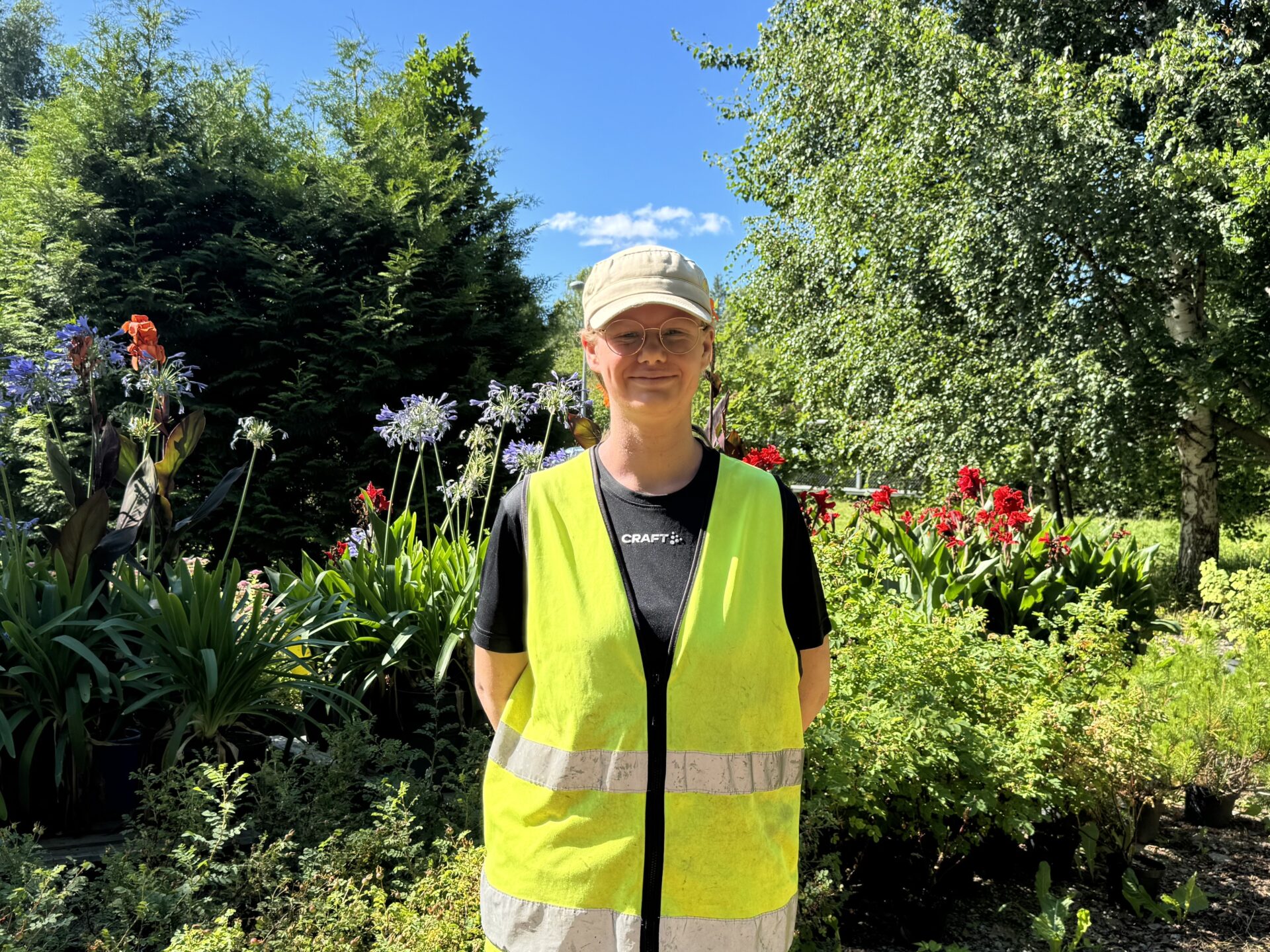
Sandra Carlsson has taken care of the green areas in Vöyrinkaupunki during the summer. She feels she has learned a lot in her summer job, both about work routines and gardening tips that are useful in her free time. At the same time she has enjoyed spending her workdays outdoors.
What did you want to be when you were a child?
I wanted to be a firefighter.
What does an assistant park worker do?
I have mowed some lawn, but at the moment I mostly work on weeding and pruning shrubs.
What has been the best part?
I like being outdoors all day and working in nature.
What has been boring?
Sometimes the weather is bad, and then the work can be tough, especially if there is heavy rain and you get soaked. Sometimes getting up early in the morning also feels hard.
What have you learned?
I have learned a great deal — for example about work routines and how everything functions, but also about gardening, such as caring for different plants and shrubs.
What has been the most challenging?
The work is physically demanding, so sometimes my muscles ache when I’ve been in the same position for a long time or doing certain tasks. On the other hand, it is good that the job allows varied tasks.
What has been the most surprising?
It is interesting to notice that when you work with nature and learn new things, you start seeing them everywhere. This happens in everyday life too, when I cycle from place to place. I might stop and think, “Hmm, that is a columnar aspen” or “Hmm, there are meadowsweet shrubs over there.” Sometimes you notice things you hadn’t paid attention to before and think, “Hey, that is the plant I recognize!”
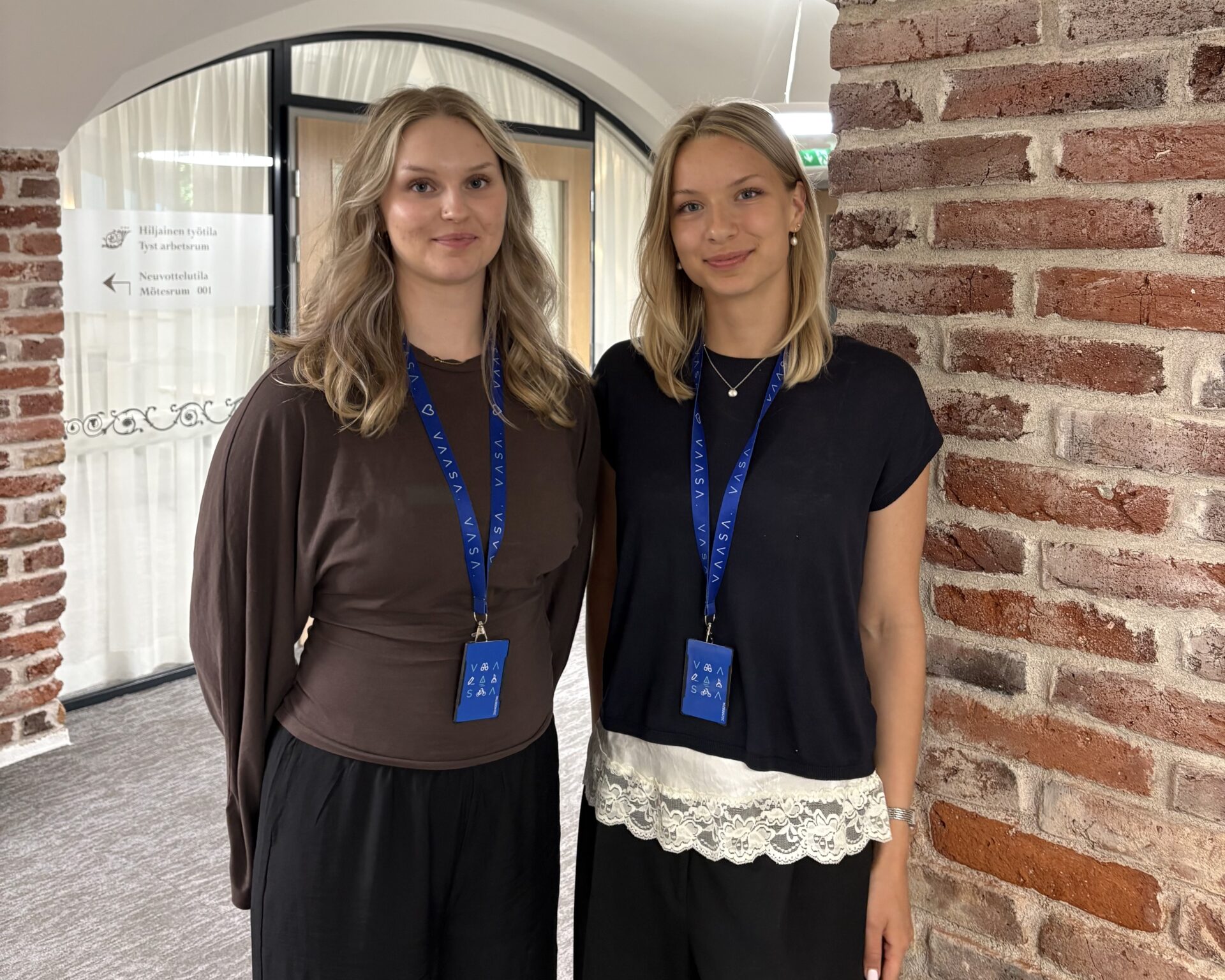
Summer interns Sofia Pajunen and Roosa Hakola have spent their summer as KesäStartti coaches in the City of Vaasa’s employment unit. According to them, varied planning work, guiding groups and genuine encounters with people have been rewarding and educational.
What did you want to be when you were children?
Sofia: For a long time I thought my childhood dream job was something else, but I recently found my childhood notebook. There my dream job was teacher or pediatrician.
Roosa: My childhood dream job was probably childcare worker or hairdresser-barber.
What does a KesäStartti coach do?
Sofia and Roosa: During the summer we run a total of four two-week work coaching sessions. The first week is lecture-heavy, with theory, visitors and CV work. In the second week the trainees have work trials, where we assist and support them as needed.
At the start of the summer, before the sessions began, we had a planning week when we planned the upcoming courses and schedule. We also write a report at the end of the courses. The work trainings are aimed at young people and immigrants who have challenges in job-seeking or planning their next steps.
What has been the best part?
Sofia and Roosa: The best part of the work training has been seeing how the participants develop and find their direction. It has been wonderful to notice how their confidence in their plans grows and how they become excited about pursuing their goals. The moments when someone realizes something new or finds a suitable path have made this work particularly meaningful.
The participants’ own motivation has also been great to see. It is rewarding to work with people who are genuinely interested in learning and getting as much as possible out of the activities. Their enthusiasm rubs off on us and makes the work even more enjoyable.
We have also received a lot of positive feedback from participants. It feels good to hear that they enjoyed the activities and found them useful. It feels great to see that we have been able to influence their everyday lives and future plans with our contribution.
What have you learned?
Sofia and Roosa: We have already learned a lot of new things. One of the most important things has been clarifying our own activities and communication. The participants’ backgrounds, life situations and Finnish language skills have varied a lot, so we have had to carefully consider how we present things and how to include everyone. At the same time we have learned to make materials and guidance clearer and more accessible.
We have also studied working life practices more deeply than we expected. Collective agreements, trade unions, employees’ rights and obligations and other working-life rules have become familiar as we prepared content and answered trainees’ questions. Our understanding of working life has grown.
We have also learned a lot about different cultures, backgrounds and life situations. It has been very interesting to meet people with very different experiences and starting points. That has increased our understanding and helped us look at things from many perspectives. The importance of feedback culture and interaction has also emerged in our work. We have had many conversations with trainees and given and received feedback from participants and each other. At the same time we have learned to take responsibility for our work and for supporting and guiding other people.
What has been the most surprising?
Sofia: The work has been more diverse than I expected. Although I expected to do a variety of things, I was still pleasantly surprised by how much responsibility and opportunity for planning there has been.
Another thing that surprised me is how much we have had to research different topics. I knew beforehand that the role requires familiarizing oneself with many subjects, but I was positively surprised by how much new information I have had to find and learn. We have studied, for example, working-life rules, employees’ rights and obligations, and various employment-related practices and regulations. Different legal and official matters have also become familiar through the job. It has been interesting to see how broadly different working-life themes connect to this work.
Roosa: One thing that surprised me is how different backgrounds participants come from. In a group there may be native Finnish speakers, but also participants whose Finnish is still very basic. This has brought its own challenges to implementing the training, as participants’ needs and abilities vary widely. Sometimes it has required more individual guidance and taken more of our time as coaches. On the other hand it has taught us to consider different learners and adapt our guidance to various situations. Although the variation has sometimes been challenging, it has also made the work diverse and given valuable experience in meeting and supporting very different people.
What expectations did you have before the internship and how has the experience matched them?
Sofia: When I saw the summer job posting, I knew immediately I wanted to apply. I study special education, so the job partly matches my field, but even more it matches my interests. I am especially interested in employment issues and working life in general, so I looked forward to the new learning the job would bring.
I have really liked that this job allows combining different skill areas. The group size is suitable since there are usually at most ten participants. Thus the work combines group coaching, teaching and lecturing, but also leaves time to meet and discuss individually with participants. I can say the summer job has been even better than I expected!
Roosa: I started with good vibes and excitement. I study social services (sosionomi) and last summer I worked as a coach for special youth, so I somewhat knew what to expect. This summer I hoped especially to work with young jobseekers and those with immigrant backgrounds. I wanted experience in that, as my previous summer job did not offer much of that, and supporting them in job-seeking interests me.
I also hoped to gain more cultural competence and new experiences, so the summer job has met my expectations well. It has also been very interesting to meet people with different backgrounds.
It has been really nice that we have been able to plan activities ourselves. Although we had last year’s plan available, we didn’t have to follow it exactly and had fairly free hands in designing the implementation. For example, we have made many of our own materials and collaborated with visitors and work trial placements.
What benefits do you think this internship will bring to your future?
Sofia: I feel this summer job has inspired me to consider my future career path. The job has sparked a strong interest in promoting employment. I have gained new perspectives on how I might in the future combine my special education competence with employment support and societal impact. The internship has helped me outline possible career paths and consider in which tasks I could use my skills in the future.
In addition, I have gained valuable experience in planning work, guiding groups and reporting. The interaction, organization and collaboration skills I have learned are useful in working life regardless of sector. It has been particularly important to learn to meet different people and understand their needs, as these skills are central in many expert and guidance roles.
Roosa: I would say the greatest benefit for the future has been gaining experience working with different client groups and learning to meet people with very different backgrounds, life situations and needs. I have also gained good experience in leading groups. These are skills I expect will be very useful in future jobs. I have also learned to take more responsibility, developed my interaction skills and gained confidence in my work.
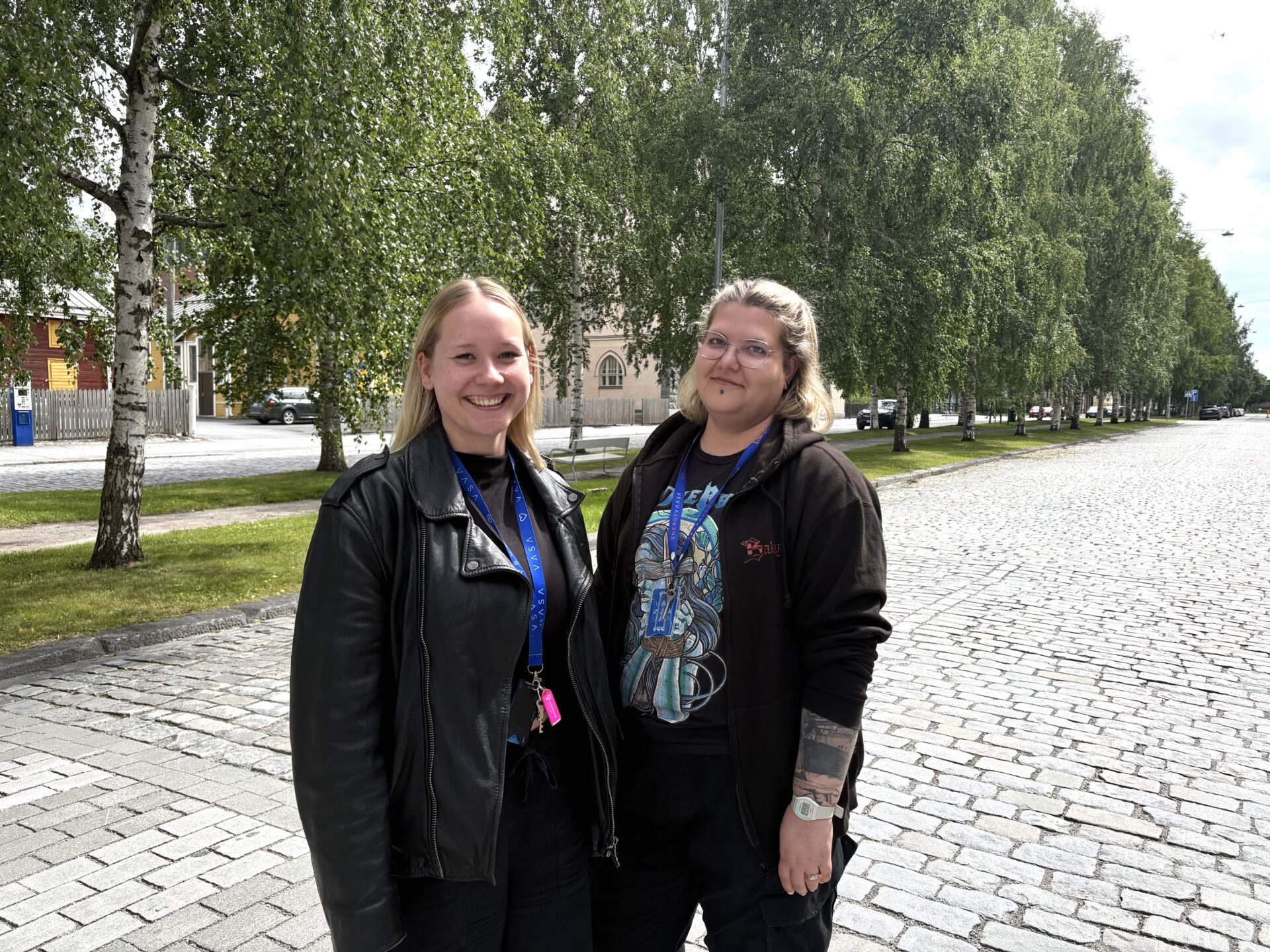
Aino Karjalainen and Inka Syrjämäki have spent the summer at the City of Vaasa working in varied tasks. They say the internship has offered responsibility, new learning and practical experience in micromobility and permit matters.
What did you want to be when you were children?
Aino: As a child I dreamed of becoming a police officer, but life has taken me in a slightly different direction.
Inka: A dentist.
What does an engineering intern do?
Aino: I handle supervisory tasks related to micromobility. I plan and monitor the functionality of parking spots for electric scooters and track operators’ compliance with micromobility permit conditions. I also do some temporary and permanent traffic arrangements.
Inka: I have served as a substitute for the excavation permit inspector and the traffic arrangements manager. I prepare excavation permits, inspect sites at start and finish, and sometimes check the status of existing sites, contacting site managers if I notice deficiencies. If there are serious violations, I intervene immediately. In traffic arrangements work I prepare permits related to the use of the city’s street and square areas, for example when scaffolding off street areas for building façade renovations. I also create traffic plans for worksites when contractors/clients have not prepared them. I also check that necessary traffic signs and pedestrian routes around the site are in place.
What has been the best part?
Aino: The best part has been working closely with professionals from different fields. For example, I work closely with parking inspectors.
Inka: The best things are definitely the flexible working hours and the very varied work.
What have you learned?
Aino: I have learned something new every day, from software use to laws and the work of parking inspectors.
Inka: I have learned many things. The most notable is learning to read and study maps — whose area is whose and where we do not grant permits. Especially during holiday periods I’ve also learned to figure out who is responsible for which area and who to contact. In addition, I have become familiar with decision-making at the City of Vaasa.
What has been the most surprising?
Aino: I was most surprised by the positive attitude of citizens toward the electric scooter parking reform. While patrolling the streets we’ve received a lot of positive feedback about the tidier appearance of the city.
Inka: What has surprised me most is that a lot of the work happens outside the office. I have walked and driven many kilometres during the summer.
What expectations did you have before the summer job and how has the experience matched them?
Aino: I didn’t have many expectations because micromobility issues and the electric scooter parking reform are so new in the city. However, I have really enjoyed this summer job.
Inka: I didn’t really know what to expect, so I have been pleasantly surprised by the job’s variety.
What is required in this job?
Aino: I think initiative and courage are good to have. Of course you also learn and develop those skills daily. Good fitness doesn’t hurt either, because you will walk and cycle some kilometres.
Inka: Initiative, because the work is independent; courage to ask for help in unclear situations; and problem-solving skills. Sometimes you encounter situations that require creative solutions, and you must have the courage to say if something has gone wrong.
Venla Aalto has jumped into fast-paced customer service tasks at the museum. Through the experience Venla has learned to switch languages on the fly and answer visitors’ tricky questions. She also appreciates the history knowledge she has gained, which supports her history studies.
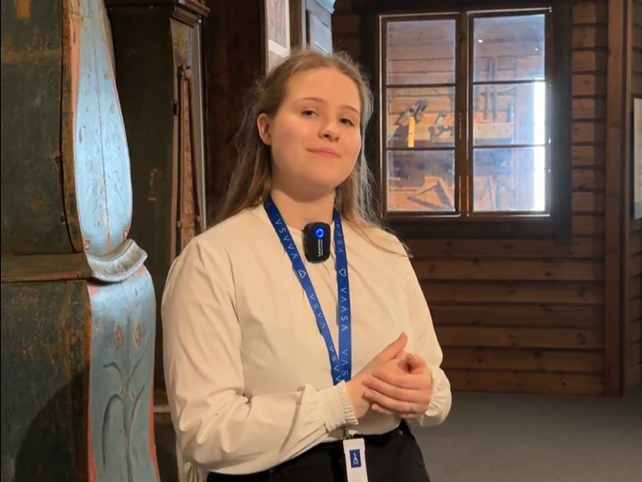
What does a museum assistant do?
It’s almost easier to list what we don’t do. We sell tickets at the cash desk, run a small museum café and sell products. In addition, we lead guided tours, supervise exhibitions and ensure everything runs smoothly here.
What has been the best part?
Well, all the coworkers — everyone wants to be here. We have a very service-minded team and we help each other. It has also been lovely to see how interested the visitors are in experiencing Ostrobothnian culture.
What have you learned?
Of course about the history of Vaasa, which is essential to me as a history student. Also about how Finnish- and Swedish-speaking culture have coexisted closely in this region for a long time, so you can see its changes over time quite concretely in the museum.
What has been the most challenging?
I like languages and speak many, but the constant language switching in customer service is challenging. A Finnish-speaking customer may come, then Swedish, then English, and sometimes Spanish or something else. You constantly have to switch language in your head. You must know the correct terms for everything in all languages and be able to advise tourists at the same time, so the languages mix up a bit. It trains languages effectively and they become more readily usable, but it’s a big challenge.
What has been the most surprising?
The versatility of the knowledge and skills required. The Vaasa museums include The Ostrobothnian Museum, the Kuntsi Museum of Modern Art, the Tikanoja Art Museum and the Museum of Old Vaasa. I came here as a history specialist, but I have also had to explain natural sciences, modern art and other topics I’m less familiar with. It surprised me how quickly you absorb information and can guide visitors well.
Emma Haapala and Iris Fors have been able to use their studies in varied tasks during their internship in the SILTA project promoting employment. Their duties have ranged from project planning to client work, which they say has strengthened their professional skills and confidence.
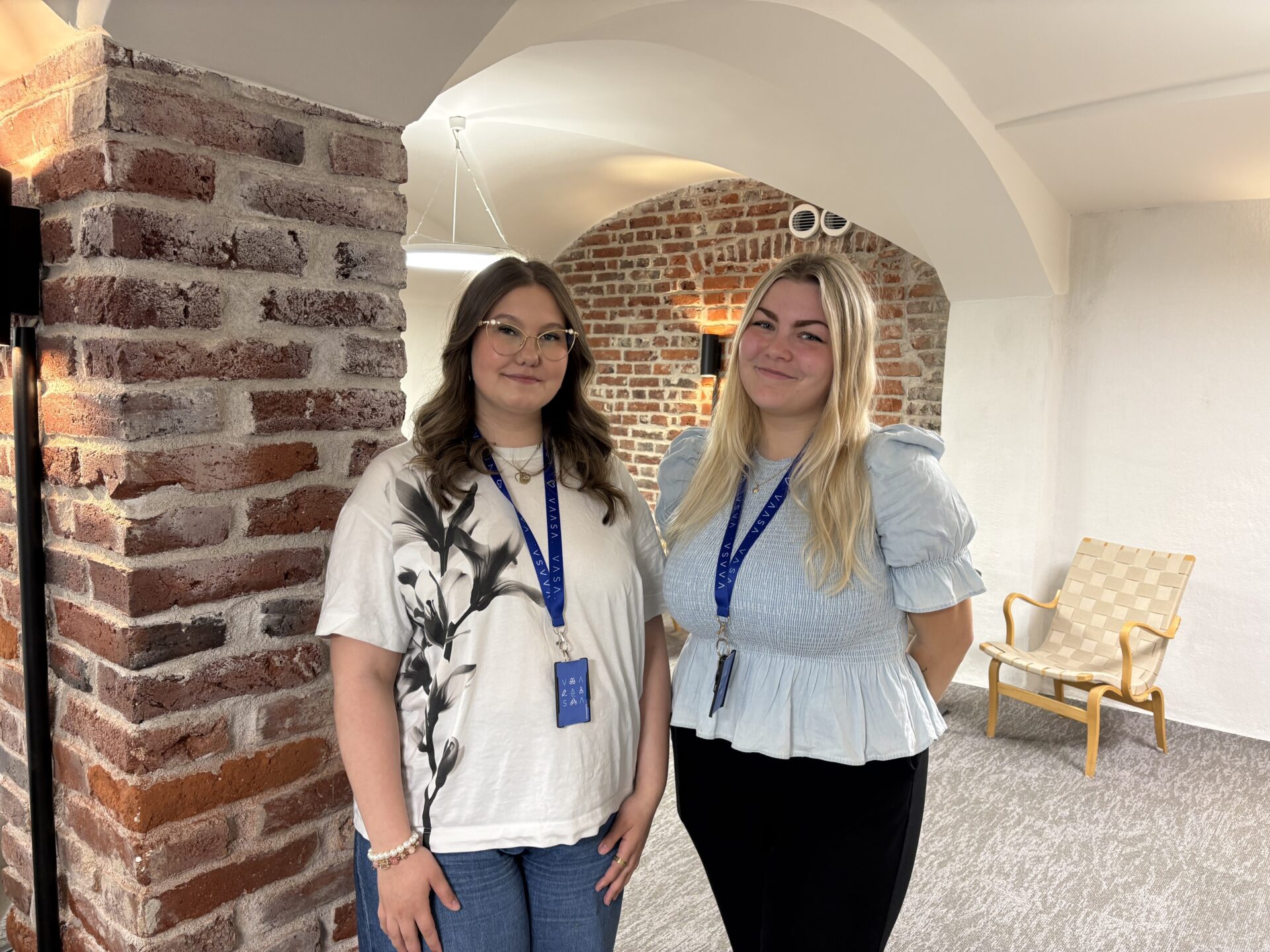
What did you want to be when you were children?
Emma: As a child I wanted to be a veterinarian or a rally driver.
Iris: Little Iris wanted to be an ambulance. Besides that I think I wanted to be a veterinarian or a doctor.
What does an intern in the SILTA employment project do?
Emma and Iris: Our tasks include planning and implementing various pilots and projects, often in cooperation with other employment support actors. We also run group coaching and help with job-seeking matters in the employment unit on certain days of the week.
What have you learned?
Emma: I have learned a lot about public speaking and gained more confidence both in presentations and in my competence. Leading trainings and different client encounters have shown me that I can trust my abilities and that I know my work well. This summer I have also learned to better identify my strengths and to use them in work.
Iris: I have learned a lot about the whole of public services and how different services work together. My understanding of public administration has grown, which helps me guide clients to the right services. I have also gained confidence in presenting and in my own skills. Presentations, leading trainings and client work have made public speaking more natural and strengthened trust in my abilities.
What has been the most surprising?
Emma and Iris: Perhaps it has been surprising how much freedom and responsibility we have been given in planning and implementing projects and pilots. We often get to decide on their execution. Additionally, we have been trusted a lot from the start, which pleasantly surprised us.
What expectations did you have and how has the experience matched them?
Emma: I came with an open mind and excitement. In the job interview I immediately got the feeling this could be the right job for me. The expectations have been exceeded so far. I have enjoyed it a lot!
Iris: I wanted a job in my field this summer, so I applied. I expected a lot of new learning and experiences — I wanted to learn! I have been positively surprised by the work, and this job experience has set high standards for my future workplaces.
How have your university studies supported your success in the tasks?
Emma: I study administrative sciences at the University of Vaasa, and my studies have been very useful in this job. Knowledge of public administration helps understand how the service system works and how to guide clients to the right services. When advising people who need support with public services, it is important to know what you’re talking about and where to direct them.
My studies have covered leadership, working with people and organizational development, which have been very useful. They have given me tools to meet different people, act constructively in interaction situations and consider how to develop practices and services. It has been great to see how academic learning appears in practice and how it can be used daily to support clients.
Iris: I study general education and pedagogical leadership and development at Åbo Akademi. My studies have been surprisingly useful in this job. The emphasis on leadership and supporting others is something I can apply daily. Education studies have helped me understand how people behave and why they react differently. The theoretical knowledge related to psychological phenomena has also become practically relevant. It’s been great to see theory transfer into everyday practice.
You work closely together — how has cooperation supported the work?
Emma and Iris: Cooperation has supported the work tremendously. We work closely together and are practically a work pair. The division of work has become natural and balanced. We have been able to use our strengths and interests, which has eased daily routines.
Shared views have also made planning and decision-making straightforward, for example when designing group training content. Our skills complement each other, so we have been able to share responsibilities naturally.
Cooperation has been an important support in client work as well. Challenging situations do not have to be solved alone — we can discuss and ask for the other’s perspective or help. This has brought confidence and helped our professional development.
Elias Lintunen has gotten to know city environment maintenance in the Vähäkyrö green areas team. During the summer he has been surprised by the variety of tasks.
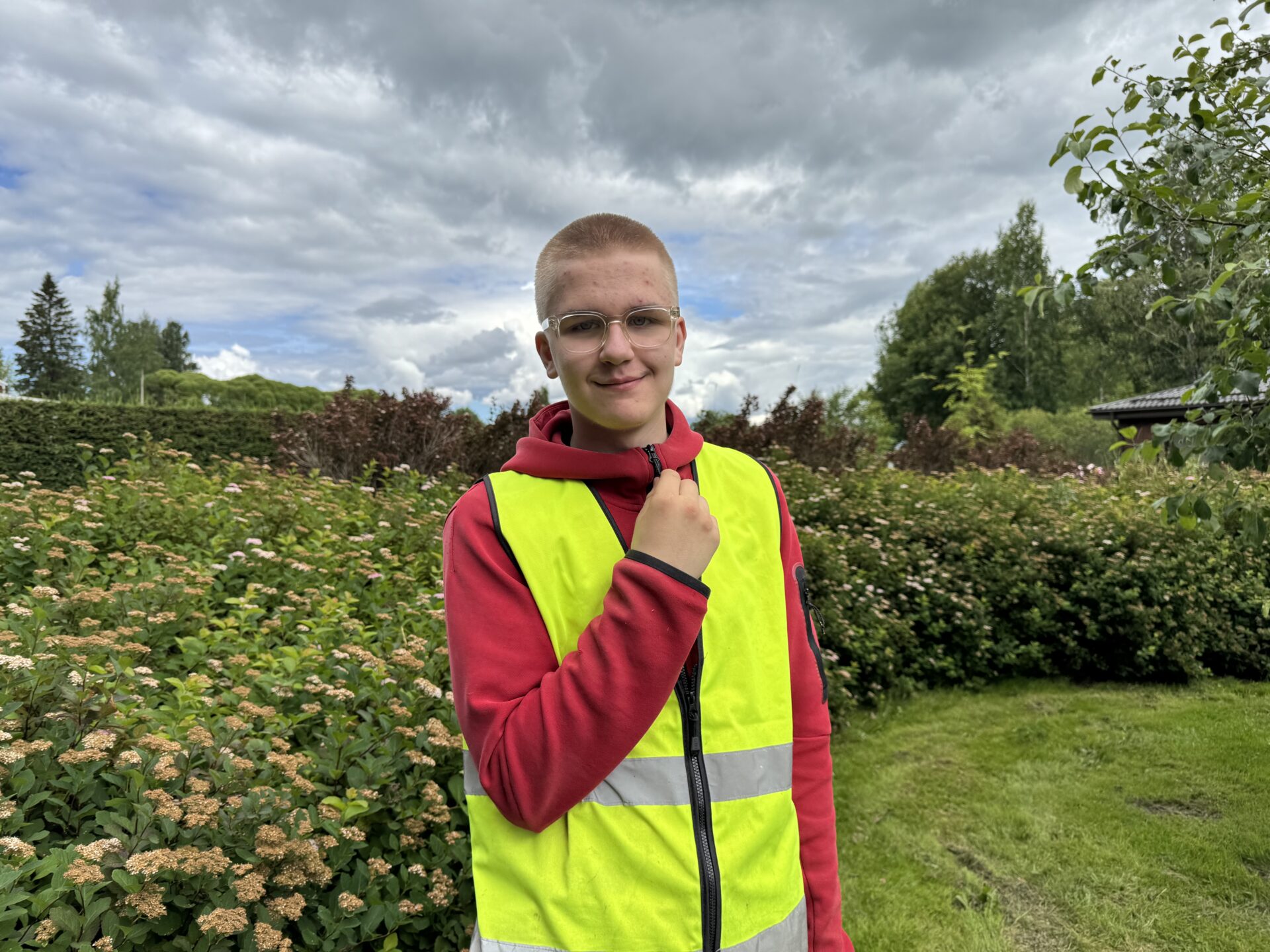
What did you want to be when you were a child?
Probably a police officer, not anymore. Nowadays I would like to be a lawyer or an MMA fighter.
What has been the best part?
Cutting that one tree over there was pretty fun. We cut off branches and leaves with shears.
What has been boring?
Running around in the bushes and being there is pretty boring. And there are thousands of mosquitoes, so it’s not very nice.
What have you learned?
Honestly, not much. Well, I haven’t picked nettles before, so that was new.
What has been the most surprising?
When I arrived here I raked at the library and then the next day I was out thrashing in the bushes..
Senja Aho has had the chance this summer to get to know the work of the city lawyers through assisting tasks. During her legal internship she has particularly appreciated helpful colleagues and shared coffee moments. Senja has been pleasantly surprised by the responsibility given and the variety of tasks.
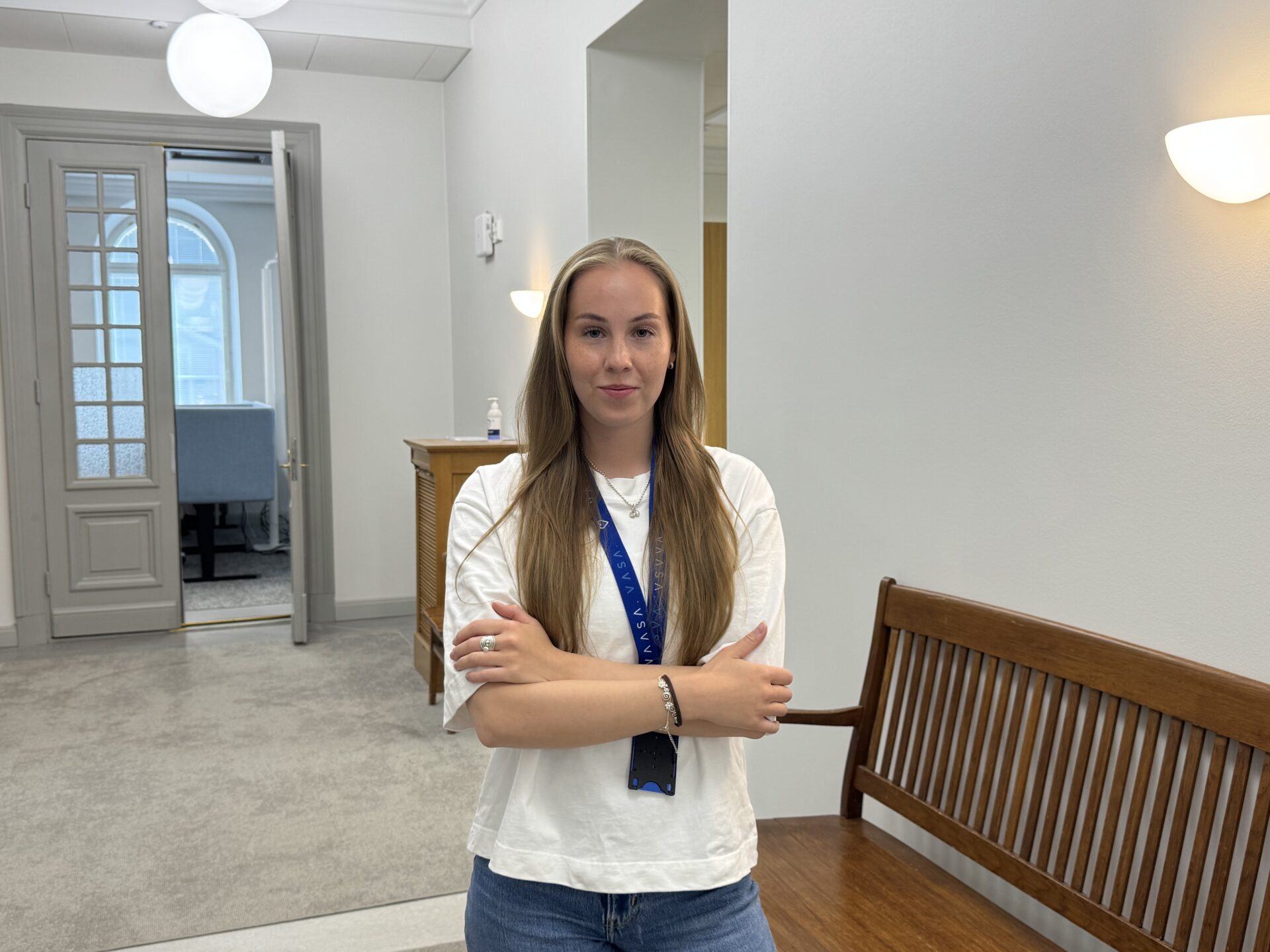
What did you want to be when you were a child?
As a child I dreamed of being a judge or a veterinarian.
What does a legal trainee do?
I assist all the City of Vaasa’s lawyers in their tasks, for example with damage cases and matters related to parking enforcement. I also carry out various investigations, for instance in insolvency cases or permit matters.
What has been the best part?
The best part has been the varied tasks, helpful colleagues and inspiring work community. Also being able to apply my studies in work is valuable. It certainly increases study motivation to use what you’ve learned in practice.
What have you learned?
I have learned quite a lot about decision-making and how to justify decisions, as well as municipal legislation and the organization’s operation. I have also learned a lot from practical legal situations and challenges that don’t come up in studies.
What has been the most surprising?
The diversity of lawyers’ tasks and the fact that I have been able to do so much myself. At the City of Vaasa you can learn broadly across many areas of law.
What has been the most memorable moment?
Probably the successes at work and participating in meetings of different governing bodies, such as committees.
As a child Ilmari Tuokko dreamt of nature photography and writing — now work at the registry brings varied tasks in document management. His first job in his field has provided practical learning and a chance to develop new practices and professional confidence.
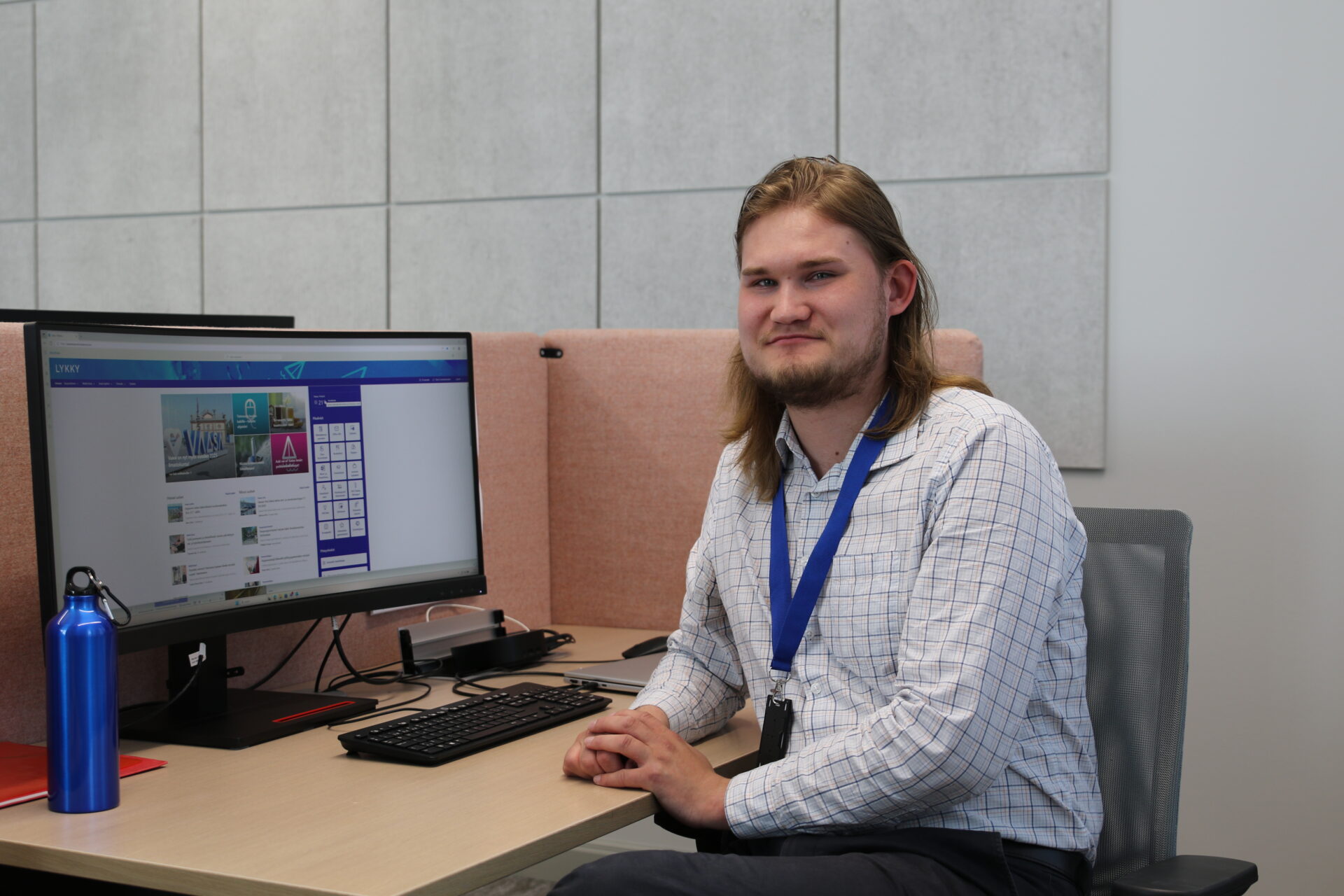
What was your childhood dream job?
I had two childhood dream jobs. When I was little I wanted to be a nature photographer and buy the best possible camera for it. Later I dreamed of being a writer because I love writing and storytelling.
What do you do at work?
My tasks are mainly related to recording various matters in Tweb (the case management system). Several different things arrive by email during the day that need to be recorded or forwarded if they are not registry matters. The most interesting are the more challenging cases where you have to think about how to handle the matter. I enjoy handling statement and information requests.
What has been the best part?
The best thing is definitely feeling that I’m in the right field, having my first job in my area and really enjoying the tasks. This is the first workplace where I haven’t once been annoyed to go to work. It’s great to have nice and helpful coworkers to work with.
What has been the most boring?
The most boring so far have been mechanical registry recording tasks that follow a routine. They are done without much wonder, but I find it nice that work includes tasks of different kinds and levels. Mechanical work can be fun after doing something more demanding earlier in the day.
Has anything surprised you at work?
I have been surprised by how many different things come to the registry to be recorded. Even though my studies have taught me what municipal tasks include, I’m still surprised by the variety of matters I’ve recorded or investigated. This increases job meaningfulness because you never know what will come up. I’ve also been positively surprised by how freely I’ve been allowed to try new things. I have been able to try myself first and then a permanent employee checks it. It’s motivating to see that summer employees are trusted and allowed to try things calmly.
What have you learned?
I have learned a lot about document management and it’s been nice to see that what’s taught at school really supports succeeding at work. I have also learned a lot about independence in working life, as I was a bit afraid to take responsibility at the start. The registry didn’t have unified instructions for how to do certain tasks, so I made my own notes while learning. I ended up creating an onboarding manual for future employees who are not familiar with document management or Tweb. Now the instructions are in one clear package with a table of contents. I hope it will really help future employees learn new skills.
Hannes Ulvens has worked for several summers in the city’s green areas. With experience he gets to do a wide range of tasks. A nice working environment, friendly coworkers and stress-free work have made him return summer after summer.
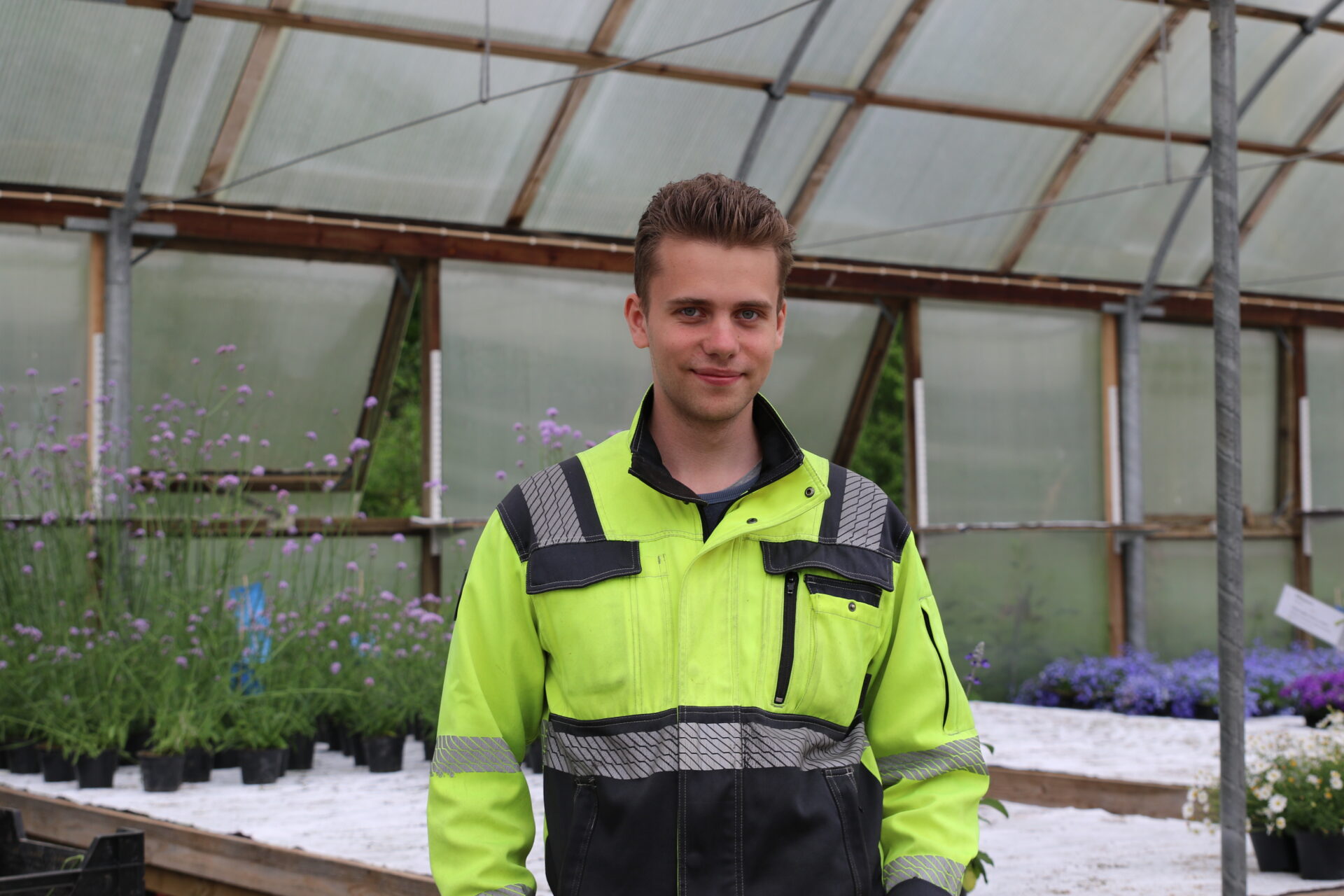
What did you want to be as a child?
I don’t quite remember, but when I was very small I probably wanted to be a police officer.
What does an assistant foreman do?
Generally, I learn what working in green areas is about. I also substitute for those who are on holiday or sick — so I step in to do their tasks as needed. I have worked here many summers, which means if I don’t have other tasks and critical help is needed somewhere, I go help where I’m needed, especially in tasks I’ve done before.
Currently I have been with the maintenance vehicle that goes around fixing machines and delivering supplies and such.
What has been the best part?
The best part is a pleasant work environment, friendly colleagues and the work being stress-free.
What has been the most boring?
The work can sometimes be quite repetitive or monotonous. Also poor weather affects enjoyment of the work.
Has anything surprised you at work?
How flexible and how much flexibility the work requires.
What have you learned?
I have learned a lot of different things, especially practical skills.
Lotta Ilmarinen has taken the first step toward her dream job during her summer work. She has dreamed of being a chef since childhood, and now Lotta spends her days helping in the café of The Ostrobothnian Museum.
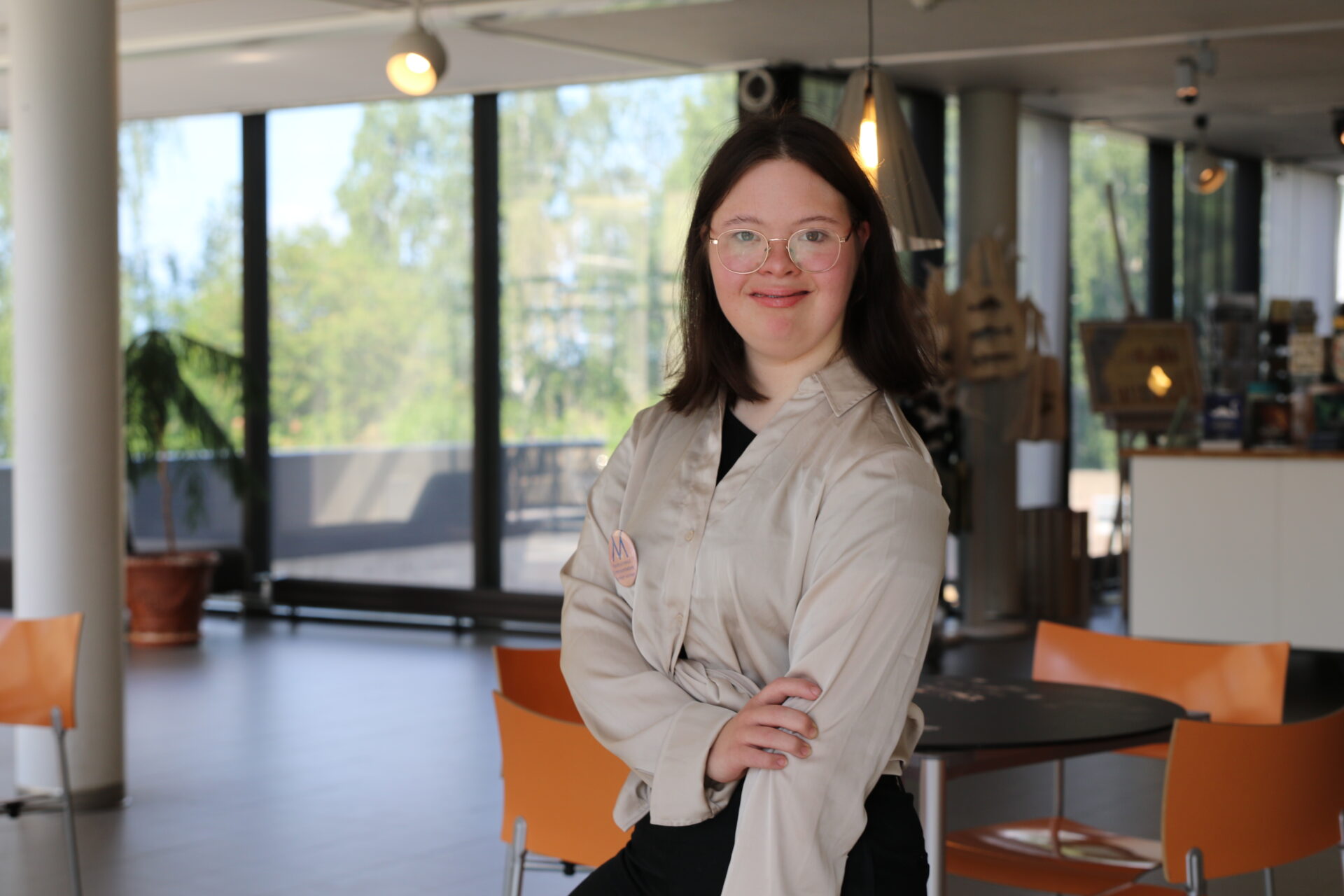
What do you do at work?
I work in the café at The Ostrobothnian Museum. I help with pastries, wash dishes and clean tables.
What has been the best part?
Helping with the pastries — presenting them.
And the most boring?
Nothing.
What was your childhood dream job?
Chef. I’m studying to be a cook now, so hopefully I’ll work in the field in the future.
What have you learned?
To wipe all tables thoroughly.
Special youth work coach Julia Wihuri has always dreamed of helping others. In her summer job she supports special youth at different stages of their summer employment. The most rewarding thing for Julia has been seeing young people shine in their work.
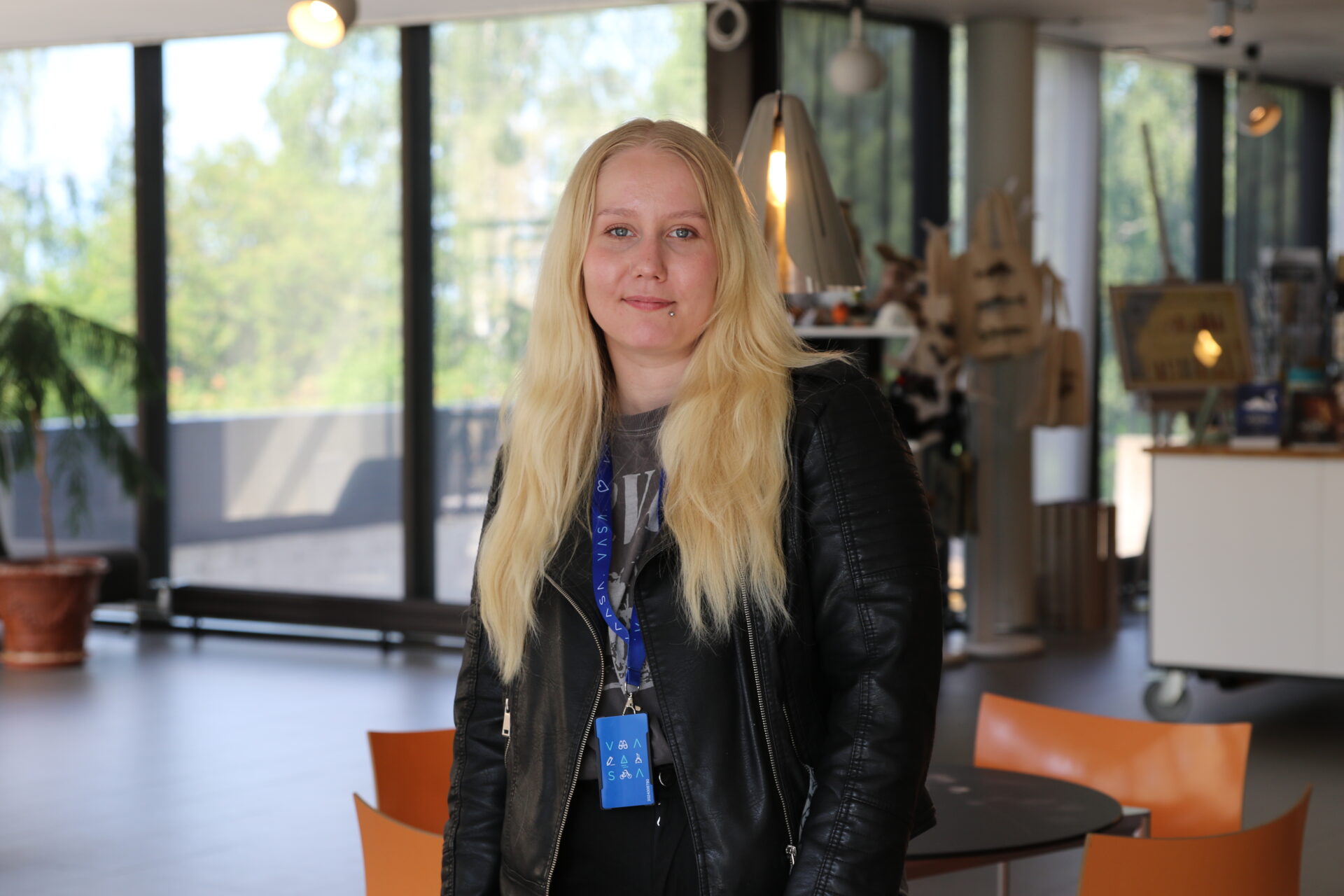
What do you do at work?
I contact young people who have applied for summer jobs and find summer placements for them. I also visit these workplaces to meet the young people.
What has been the best part?
The best part has been meeting the young people face to face. It’s also great to see the young people succeed in their work.
And the most boring?
The work can be slow at times because you sometimes have to wait for others to respond. Then you can’t progress in your own tasks while waiting for replies.
What did you want to be as a child?
As a child I’ve wanted to be many things, but police officer was probably the first real dream job. I’ve always wanted to work with people and help others.
What have you learned?
I’m not sure I’ve learned anything entirely new, other than doing this job. It’s been great to see that such opportunities are arranged for special youth by the city. New encounters always teach something and it’s been nice to get to know the young people.
As a sports day camp instructor Kia Lintala spends her workdays playing games with children. She feels an important task is to make sure no one is left out and that nobody is bullied.
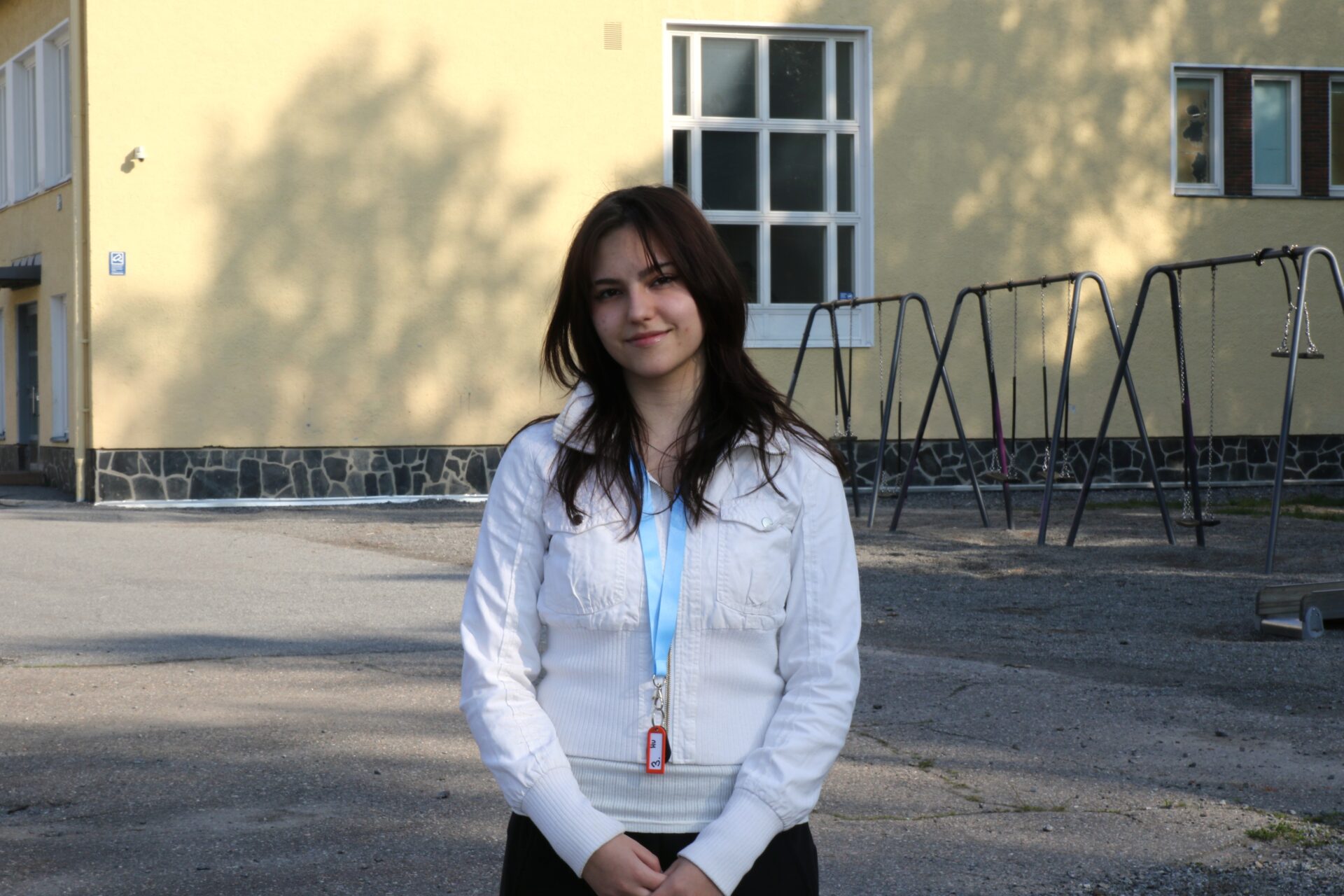
What does a sports day camp instructor do?
The instructor is responsible for the children and plays with them. My tasks include inventing games and activities and serving food to the children. You get to do lots of fun things!
An important task is also making sure no one is left alone and that nobody is bullied.
What has been the best part?
The best part has been playing with the children. The kids are lovely and it’s been great to play and run around outdoors in good weather. It’s also pretty nice that you get paid for it.
And the most boring?
Nothing has been boring.
Has anything surprised you at work?
Maybe I was surprised by how much work this requires and how many instructors are actually needed to play with children. It’s definitely teamwork — you can’t manage alone!
Reading buddies Avigail Hong and Saga Nordvall have spent two weeks reading at camps and daycare centres. The young people have enjoyed reading to children and especially liked the freedom to plan their own work.
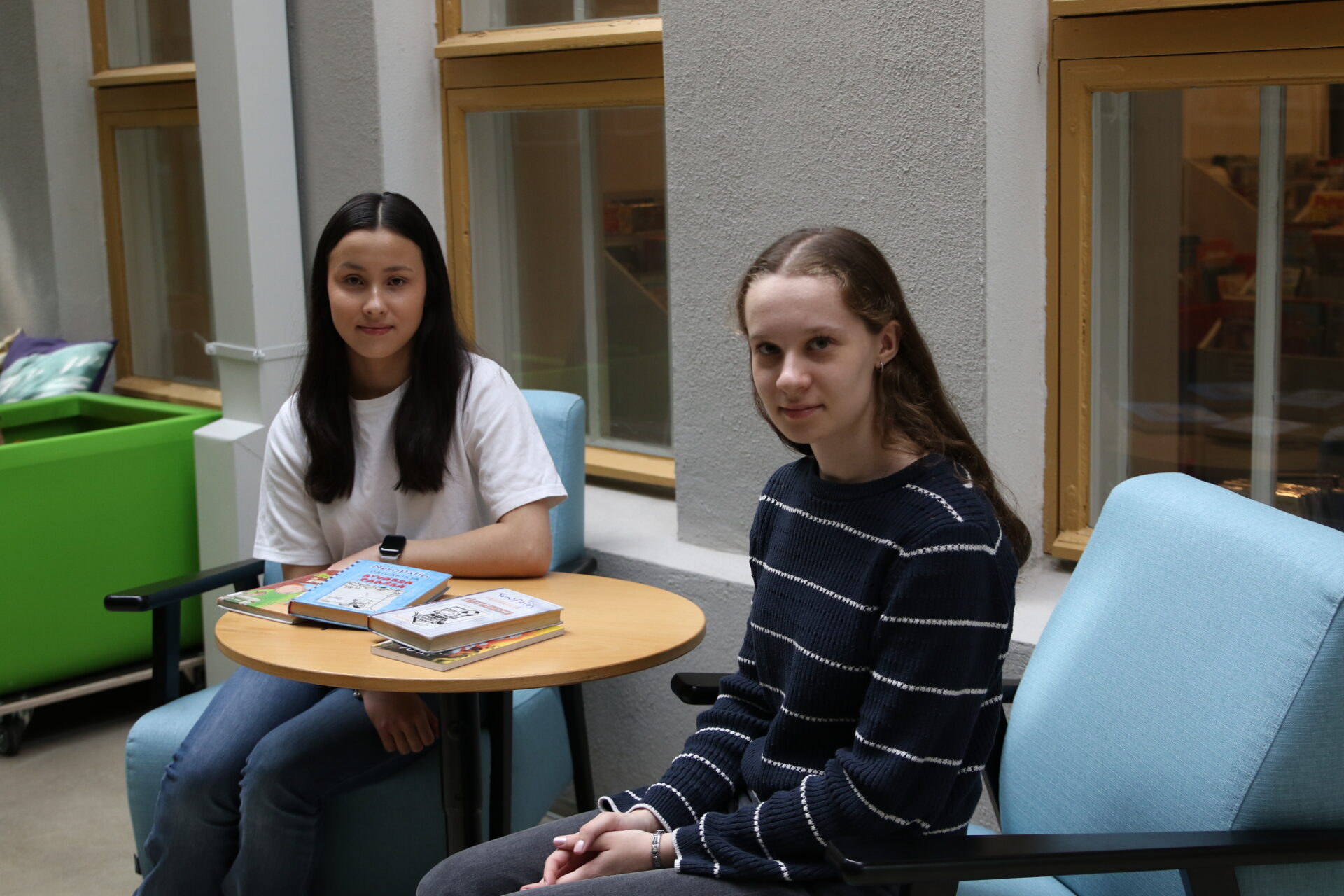
What do reading buddies do?
Avigail: Reading buddies go to camps and daycare centres to read books aloud.
Saga: The aim of the reading buddy scheme is especially to encourage children to read books.
What has been the best part?
Saga: The best part has been reading to children. It’s also been nice to see new places.
Avigail: It’s been nice to be able to plan which books to read in different places.
What has been the most boring?
Saga: If the children don’t listen.
Avigail: If I’m not listened to while reading books.
Has anything surprised you at work?
Saga: I was surprised by how much freedom there is in planning your own work.
Avigail: The work has also been surprisingly fun!
Venla Happonen has learned a lot about local public transport during her summer job. Friendly coworkers have been the best part and the varied tasks have made the work interesting. Venla values working with different stakeholders as her most important learning.
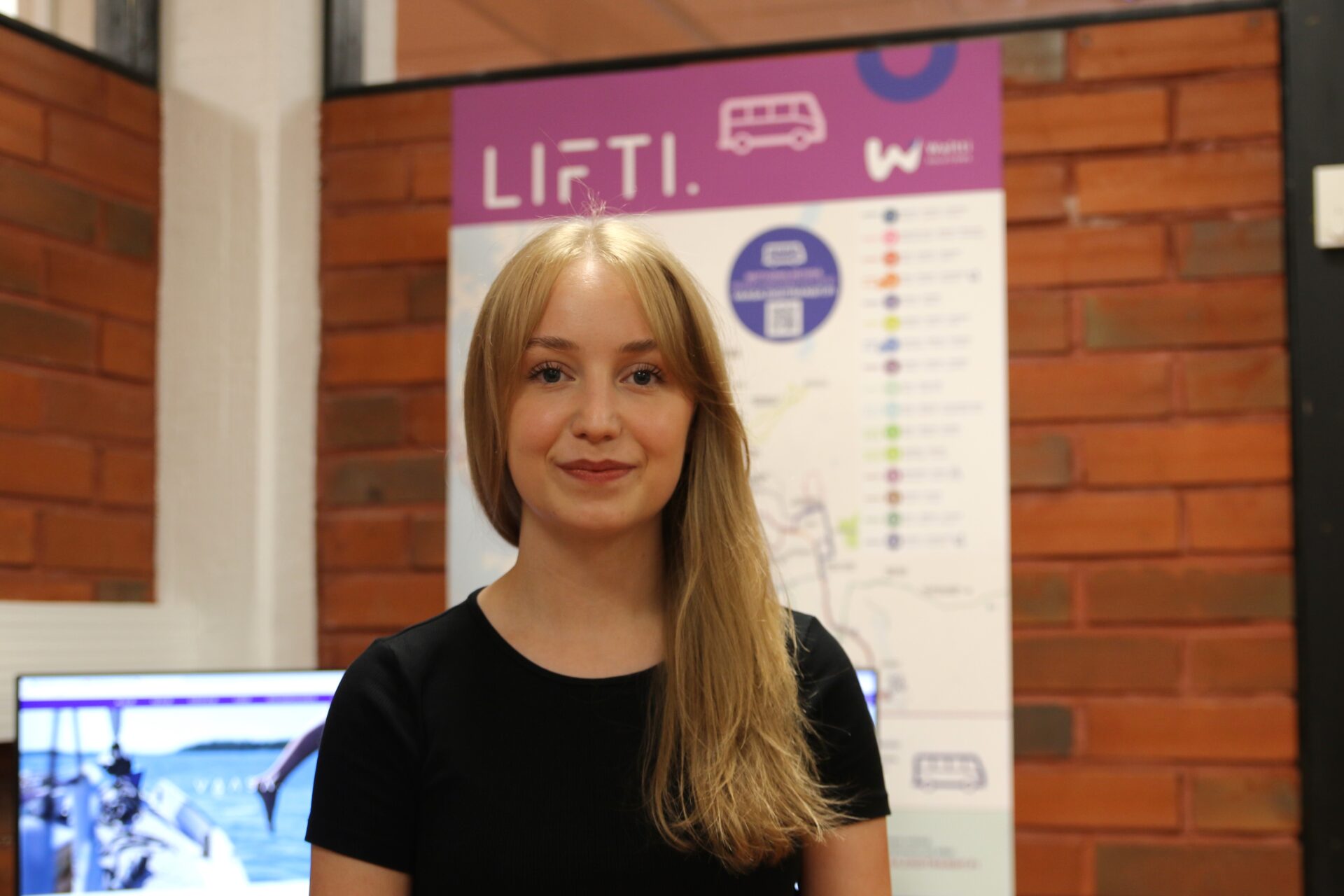
What did you want to be as a child?
The classic for little girls: a princess. A bit older I dreamed of being a flight attendant or a tour guide.
What does an engineering intern do?
As a public transport engineering intern I’ve done many different tasks. For example, I have planned and conducted a customer survey, updated bus stop timetables, written public transport reports and responded to customer feedback.
What has been the best part?
The best parts of the summer job have been its variety and flexibility, as well as the new coworkers.
What has been the most boring?
It’s hard to find something boring. All summer I have had several very different tasks going on. If one task starts to feel dull, I can switch to a more interesting task and come back to the other later.
What have you learned?
I have learned a lot about how public transport works and its background. The most valuable learning has been working with stakeholders.
Has anything surprised you at work?
It has surprised me how much background work and planning smooth public transport requires.
Special youth work coach Sofia Rosenblad helps young people find summer jobs and supports them on the path to working life. The work is rewarding because working with young people and seeing their enthusiasm brings joy to everyday life.
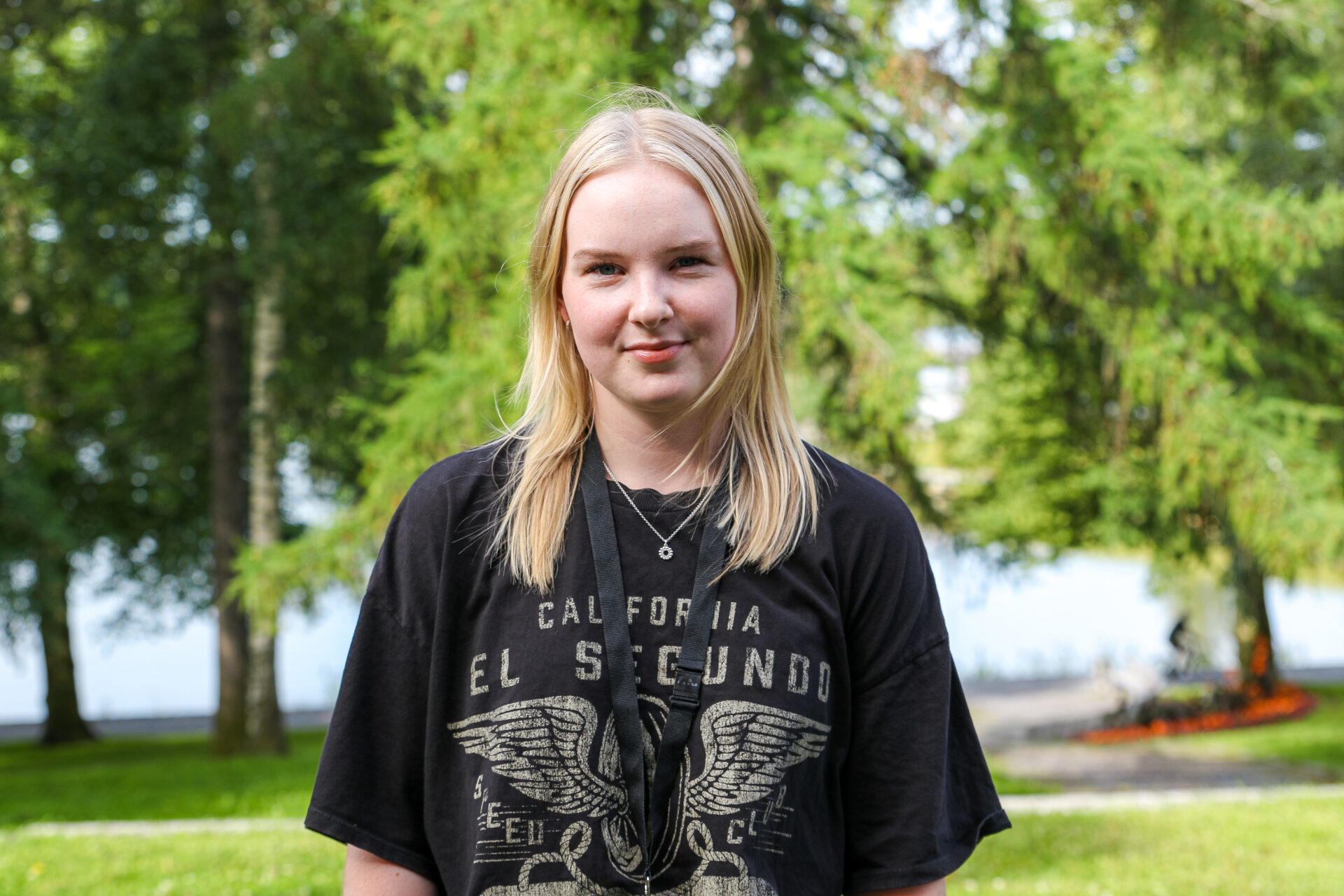
What did you want to be when you were a child?
Teacher
What does a special youth work coach do?
A special youth work coach helps young people get employed and finds them, for example, summer jobs. I have worked with youth who have been employed in green areas. My tasks have included guiding work and matching groups. The most important task is to support young people toward working life and help them consider their future plans.
What has been the best part?
The best thing has definitely been the young people! It’s wonderful to work with them and see how motivated they are. Also the lovely coworkers are one of the best parts, because you get support from them when needed.
What has been the most boring?
I would say that sometimes repetitive tasks or slow days can be boring. If, for example, we do the same task all day with the youth, you notice that after lunch the task can get tedious.
What have you learned?
A lot about group dynamics! In this job you really learn how to match people’s weaknesses and strengths to tasks.
Has anything surprised you at work?
At least how tough it is to work outdoors all day! Also a lot of time goes into work supervision; it’s surprisingly challenging and requires a lot of learning. And wasps — I don’t like them at all!
The workdays of assistant park workers include many kinds of activities that can be surprising. Emilia Back and Elias Toivonen have enjoyed outdoor work for its routines and variety. They like working in a team because together they can get tasks done quickly.
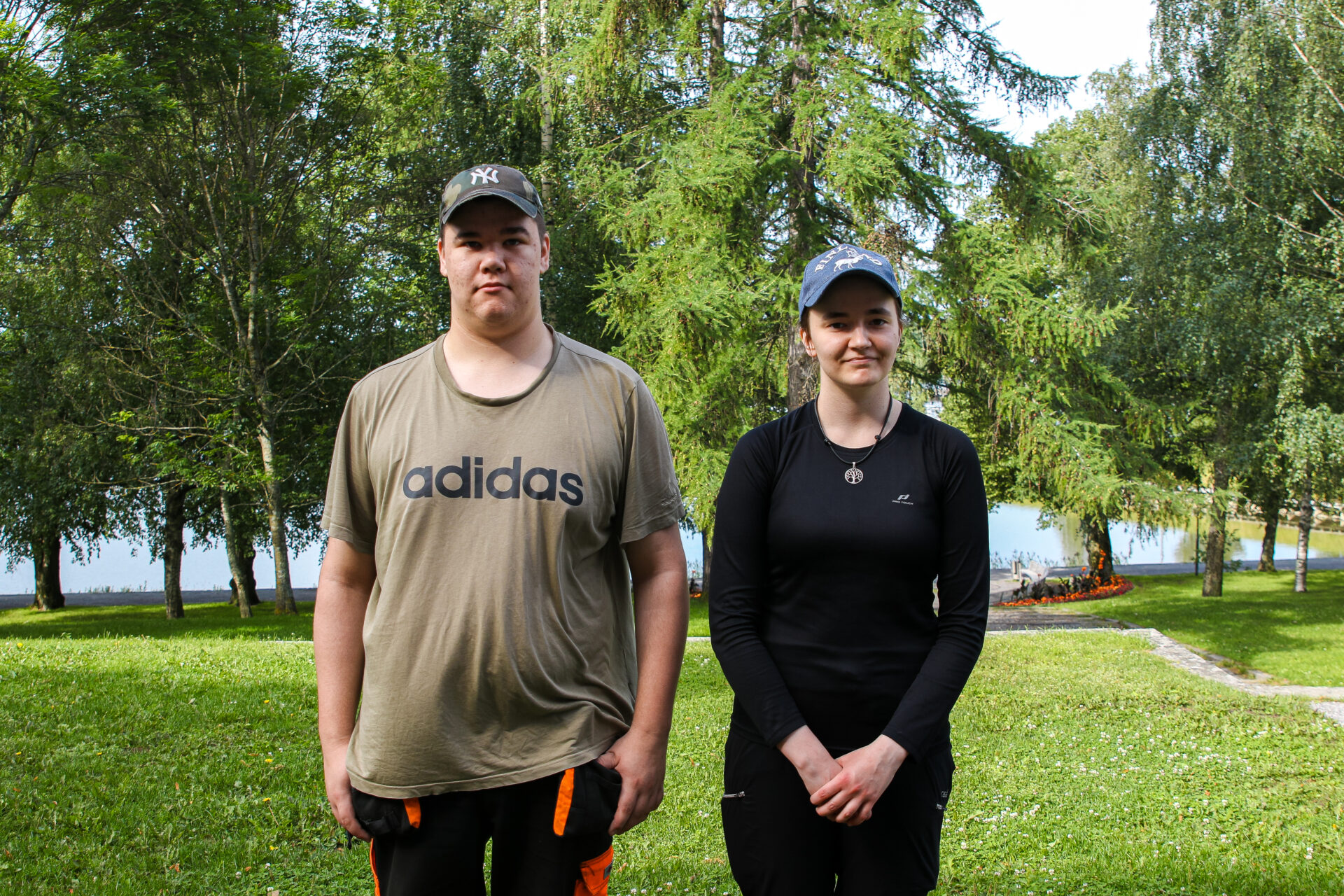
What does an assistant park worker do?
Elias: We clean parks and make sure they don’t look messy.
Emilia: We rake lawns and tidy park paths. We also collect fallen branches and the like from park areas.
What has been the best part?
Elias: The best part is doing work; you don’t get bored!
Emilia: I would say the fresh air and meeting new people. I also like the routines related to the work.
What has been the most boring?
Elias: The commute is boring. The work itself is not boring.
Emilia: I don’t get bored easily, so nothing has been boring.
Has anything surprised you at work?
Elias: Rain is probably the only thing that can surprise you in this work.
Emilia: I was surprised by how tired you can be after a workday!
Summer work as an office trainee has offered Laura Nieminen varied tasks and a pleasant work environment. Learning new things and the trust coworkers placed in her competence have made the summer job meaningful.
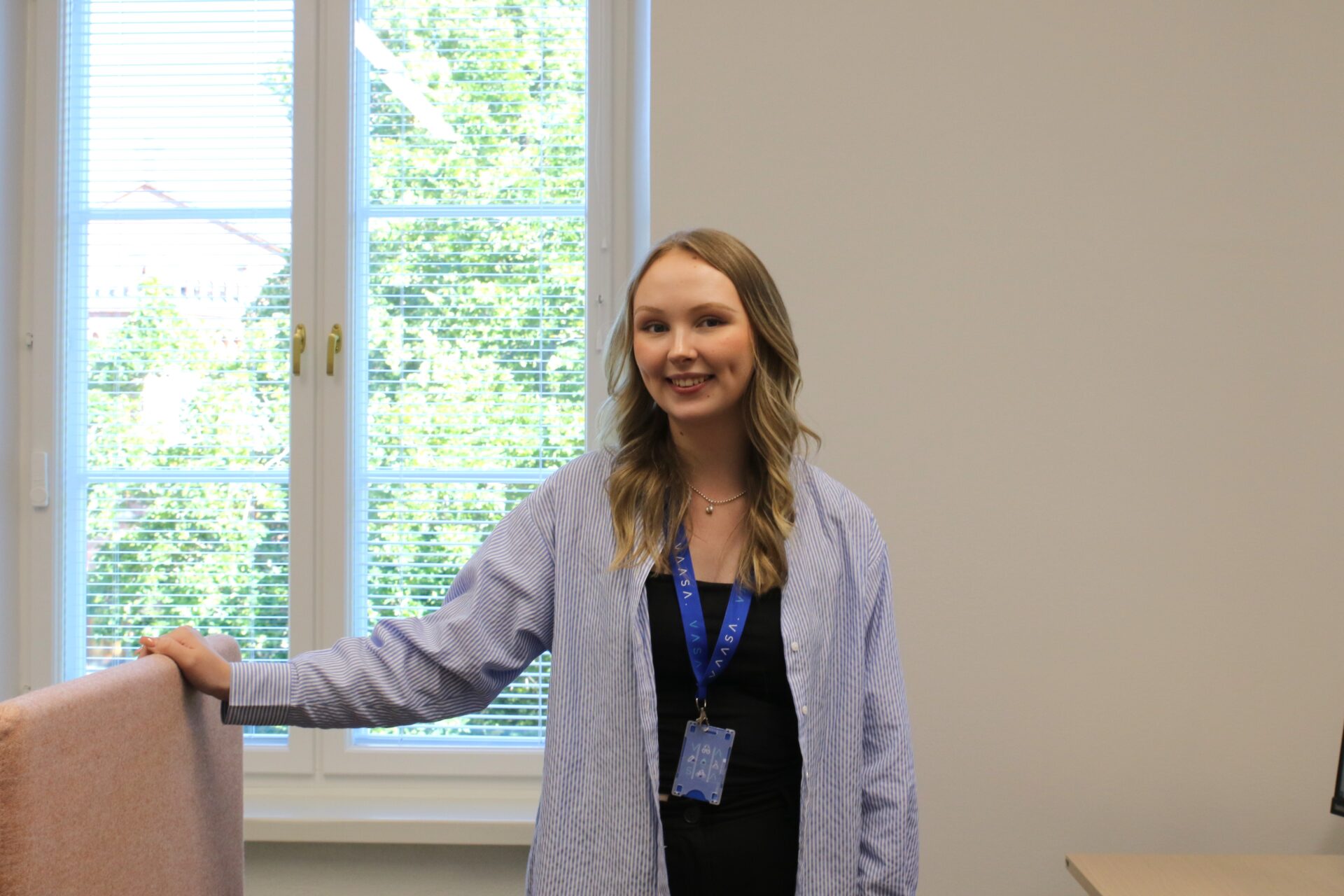
What was your childhood dream job?
Veterinarian or flight attendant — but Little Laura would probably be happy with my current career choices!
What does an office trainee do?
As an office trainee I mainly substituted for other central administration secretaries during their summer holidays. My tasks have included preparing official decisions, coding invoices, preparing travel expense reports, arranging meetings and assisting city management with various administrative tasks.
What has been the best part?
The best things have been learning new things, the variety of tasks, nice new coworkers and a pleasant work environment.
What has been the most boring?
Nothing in particular, except quiet late afternoons when others are on holiday.
What have you learned?
I have learned to use many different systems and I have become familiar with the different phases of decision-making. I also feel my general understanding of the City of Vaasa’s administration and organization has developed greatly through this job.
Has anything surprised you at work?
The amount of responsibility was perhaps a bit surprising, but definitely in a positive way! It has been nice to notice that my skills were trusted from the first days.
Childhood dream of becoming an astronaut led Oskari Rönkkö to glimpse daycare life as a daycare assistant. The varied tasks and nice coworkers have been highlights of the summer job.
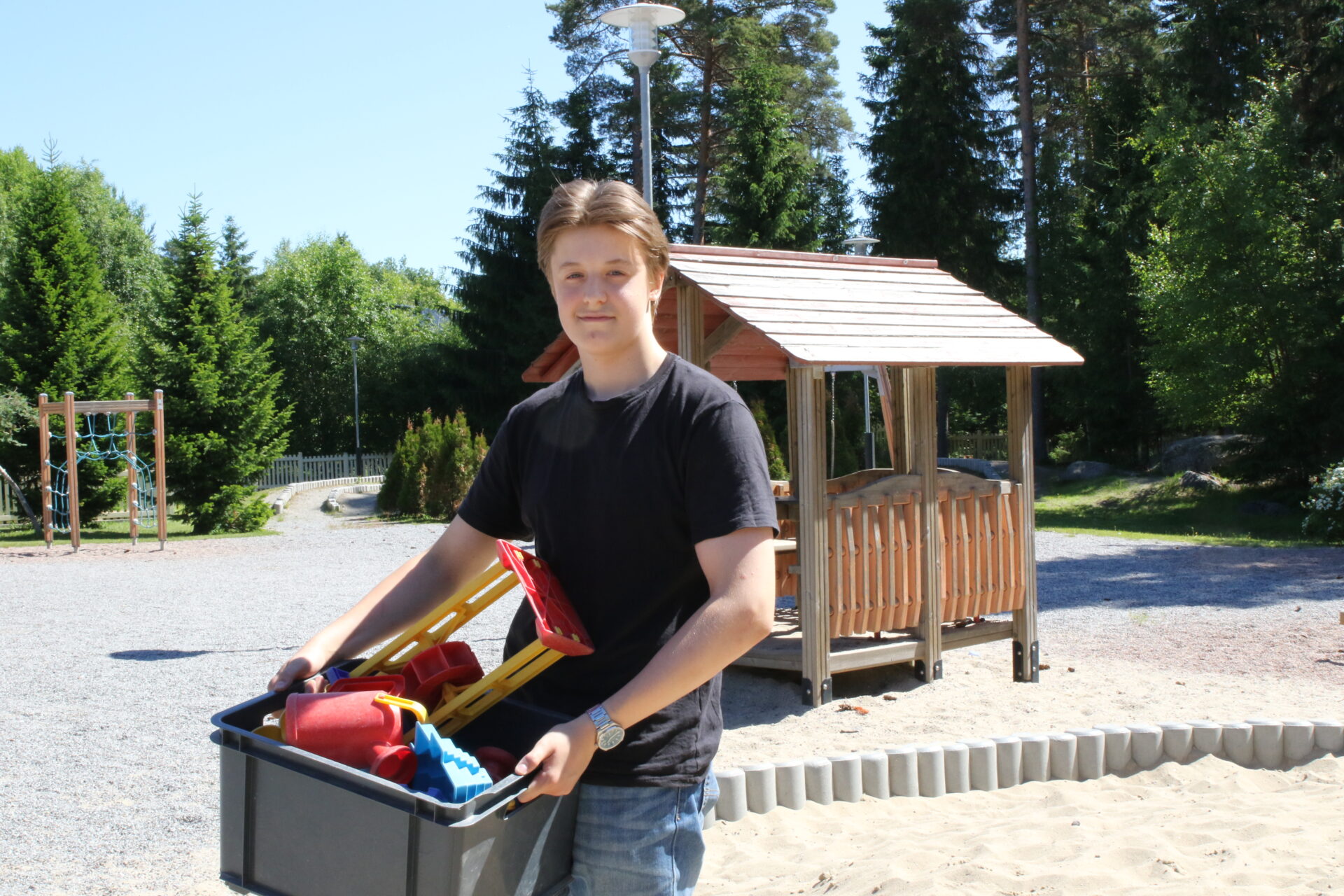
What does a daycare assistant do?
A daycare assistant plays with the children and ensures nobody is bullied and that everyone treats each other fairly. The job also involves helping with all kinds of daycare chores, such as washing and fixing toys.
What has been the best part?
The best part has definitely been the coffee breaks! That’s when you can chat with coworkers and there are often treats at the breaks.
What has been the most boring?
It’s not exactly the most boring, but time can feel long if there are only a few children and you have to watch their play to make sure they don’t treat each other badly or bully.
Has anything surprised you at work?
Nothing surprising — the job has been pretty much what I expected.
As summer artists in June, Axel Asplund and Aron Karakan enjoy playing a variety of music. Outside of work they also spend their summer with music. Memorable moments from the summer job include encounters and conversations after gigs.
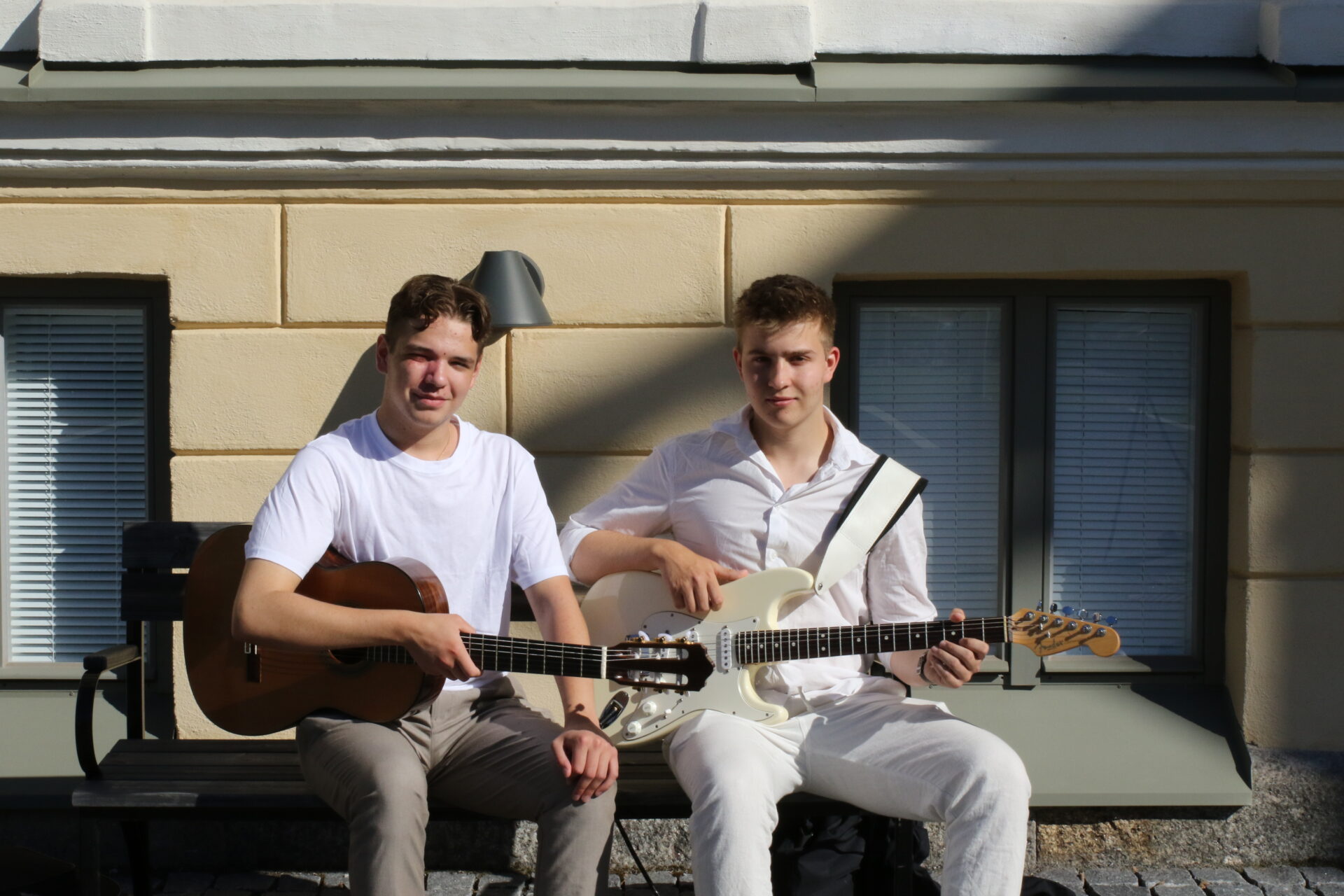
What does a summer artist do?
Axel: Summer artists play music in various places for different audiences.
Aron: During the month we’ve had gigs at daycare centres and care homes for the elderly. We also performed at events like the Kaleva Games.
What has been the best part?
Aron: The best part is doing what you love and getting paid for it!
Axel: The summer job has also included good conversations! The gig at the Majakka service center was especially memorable because everyone loved the concert and we stayed there a long time chatting pleasantly.
What has been the most boring?
Axel: Nothing really has been boring!
Aron: Our days vary a lot because the number of gigs changes, so there’s no time to be bored. Our days are quite freely planned and we spend time together, for example, planning the repertoire for gigs.
Has anything surprised you at work?
Axel: Nothing majorly surprising, but the daycare children pleasantly surprised me!
Aron: Same here! The kids have a lot of energy, but it was nice to see how they could still listen and concentrate.
Siiri and Salli Usmi have toured Vaasa as summer artists from daycare centres to the Kaleva Games. The varied work has been enjoyable and June has flown by. The best parts have been music and performing at different events.
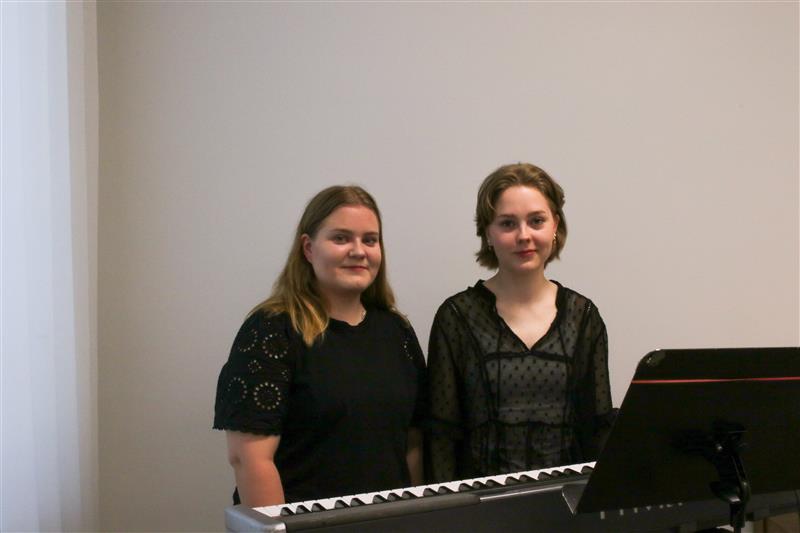
What does a summer artist do?
Siiri: A summer artist performs around Vaasa at various city events.
Salli: We have also performed many times at daycare centres and care homes.
What has been the best part?
Siiri: The best part has been making music and performing and meeting different people during the performances.
Salli: It’s also been wonderful to see people’s reactions! From their expressions and gestures you could see how much the music meant to those we performed for.
What has been the most boring?
Salli: Nothing has really been boring!
Siiri: Every day has been different.
Has anything surprised you at work?
Siiri: No big surprises have come up.
Salli: Maybe it has surprised me how different audiences can be on the same day. We’ve had several gigs in one day and each performance had a different audience.