
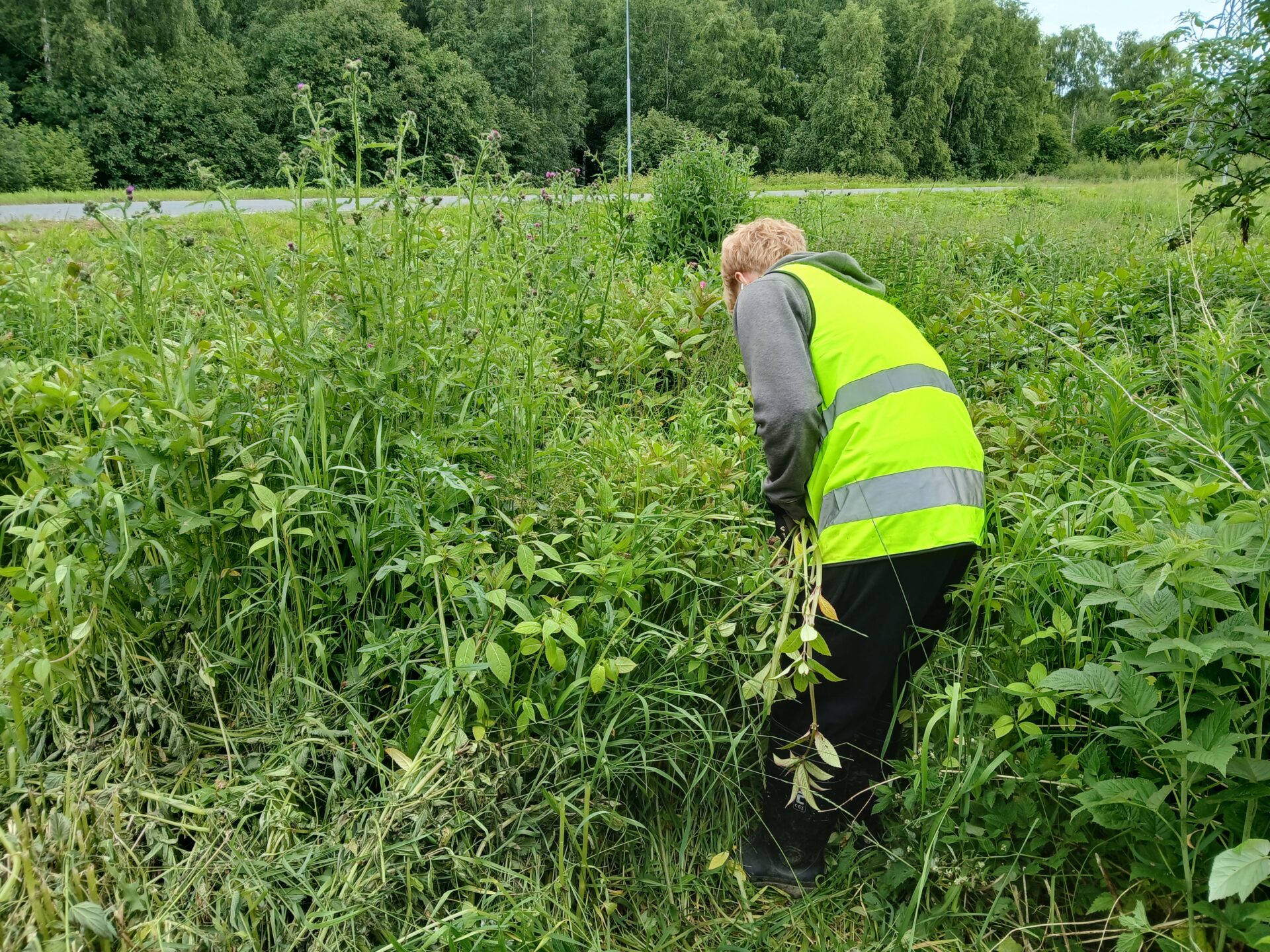
Invasive species are species that have spread with human assistance and can diminish biodiversity and cause harm.
Under the law, their spread must be prevented, and the responsibility for control lies with the landowner. Vaasa controls invasive species, collects spatial data about them and encourages residents to combat them on their own land as well. This page provides guidance on species identification, control methods, waste handling, and on reporting observations and finding additional information about invasive species.
Observations of invasive species can be reported by email to vieraslajit@vaasa.fi or via the vieraslajit.fi website’s observation portal. Useful information when making a report includes, for example, the species, number of individuals, area, location and information about when the observation was made and a photo.
What is an invasive species?
Invasive species are animal and plant species that have spread from their natural ranges to new areas with human assistance, intentionally or unintentionally. Some invasive species can adapt to a new environment and reproduce effectively, which may cause particularly severe damage to native species and ecosystems. In addition to ecological harm, invasive species can cause health, economic and aesthetic problems and hinder recreational use of nature.
For example, some invasive plant species spread rapidly and can smother native vegetation. As a result, insects that depend on native plant species disappear, which in turn affects animals that rely on those insects. An example of such a plant is the garden lupin, which does not serve as a food plant for certain butterflies. In addition, its pollen contains toxic alkaloids that can impair bumblebee reproduction.
Legislation and responsibility for control
In Finland, the management of invasive species is governed by both the European Union’s invasive species regulation and national legislation. The EU Invasive Alien Species Regulation (EU No 1143/2014) entered into force in 2015 and aims to prevent the risks posed by invasive alien species to biodiversity, ecosystem services, health and the economy. The regulation concerns so-called invasive alien species of Union concern, for which import, cultivation, possession, transportation, placing on the market, use, exchange and release into the environment are prohibited. Member States are also required to monitor the occurrence of these species, prevent their spread and take control measures after new occurrences are detected.
In Finland the EU regulation is complemented by the Act on the Management of the Risks Caused by Harmful Invasive Alien Species (1709/2015), commonly referred to as the Invasive Species Act. The Act entered into force on 1 January 2016 and aims to prevent the environmental and economic damage caused by harmful invasive species and support the implementation of the EU regulation at the national level. The Act sets out, among other things, the tasks of authorities, control measures, supervision and the responsibilities of landowners and operators.
According to the Invasive Species Act, the owner or holder of a property must ensure that a harmful invasive species under their control does not spread into the environment.

Do not take garden waste to green areas and spread invasive species
Please remember that garden waste must not be taken outside your own yard. Seemingly harmless garden waste may contain seeds of non-native plants or, for example, eggs of the Spanish slug, which can spread into the environment. In addition, unmanaged piles of plant waste can enable the spread of pests such as rats.
Controlling an invasive species that has spread into the environment requires effort and resources from the city and residents. If a litterer becomes known to the authorities, they can be obliged to clean up the waste or pay the cleanup costs.
City-led control of invasive species
The City of Vaasa primarily controls harmful invasive species in areas under its administration. Control work is carried out according to available resources, with priority given to valuable natural sites. The City of Vaasa seeks to prevent the spread of invasive species through the choice of plants used in plantings. Species classified as invasive are not used in the city’s new plantings, and we utilize the alternative plant list for invasive species compiled in the INSPIRE project by Elinvoimakeskus and Länstyrelsen to avoid invasive species risks.
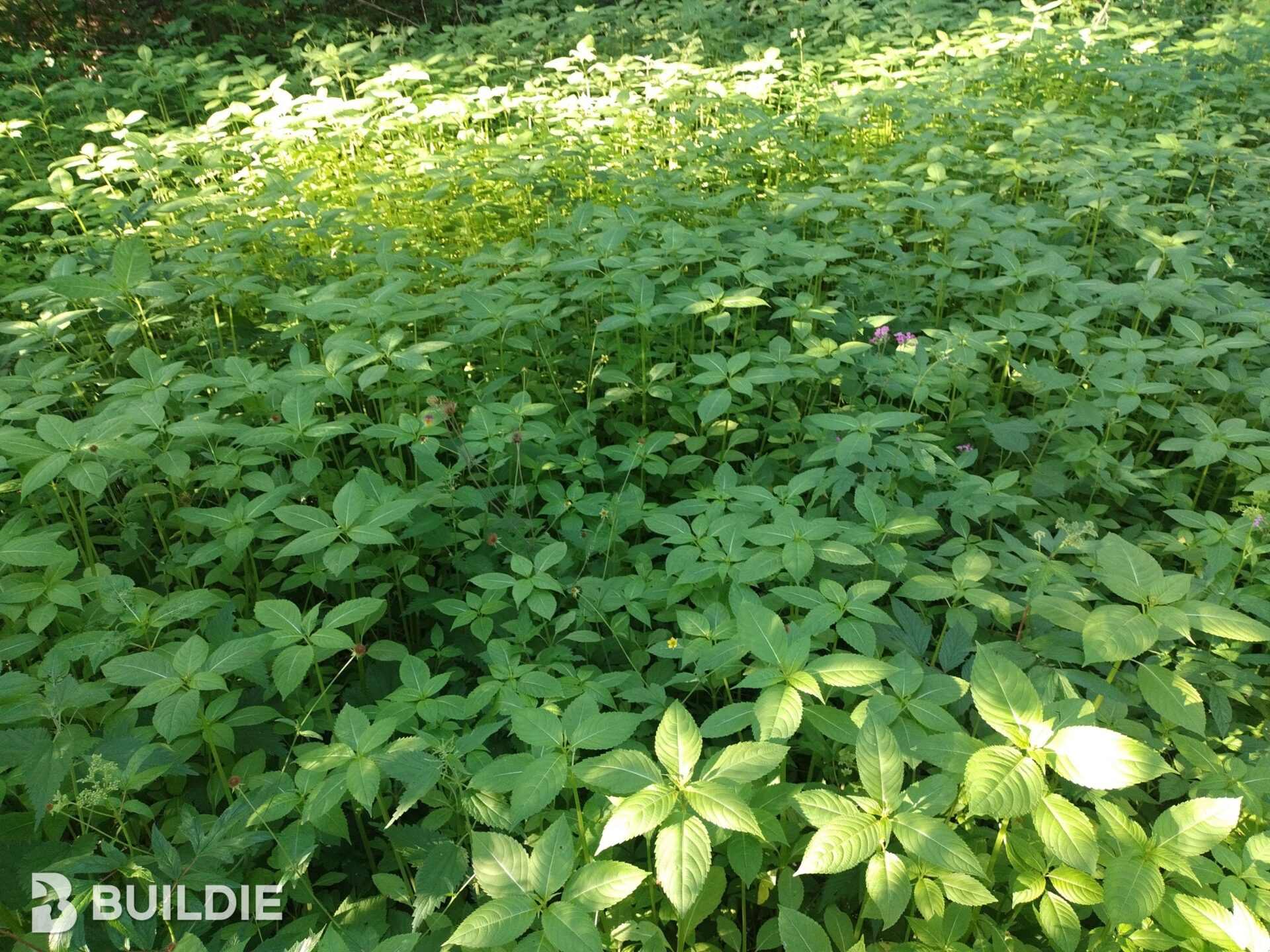
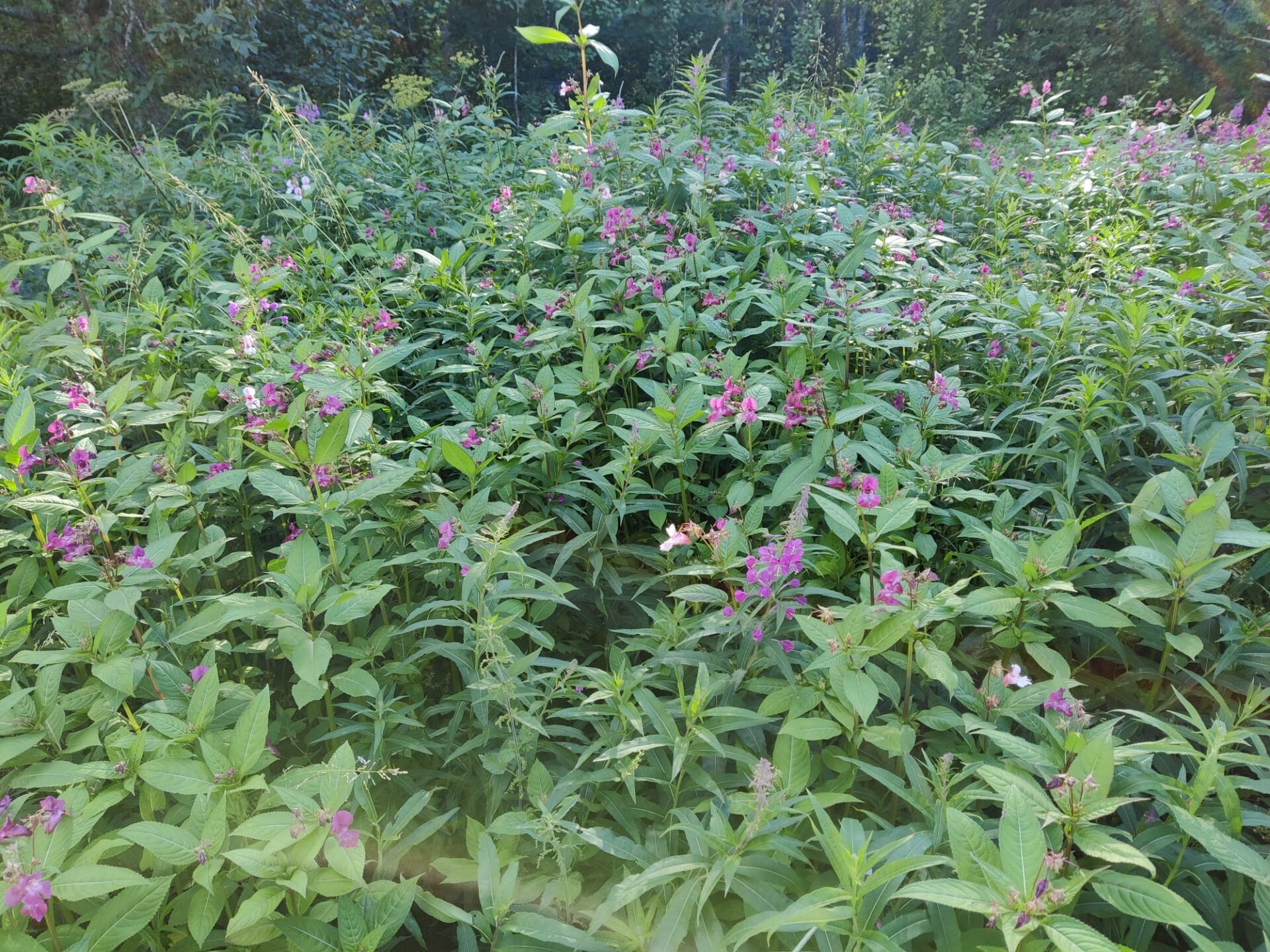
Himalayan balsam (Impatiens glandulifera) is the most significant harmful invasive species in Vaasa. The species can form extensive stands of a single species that displace native vegetation and weaken plant diversity. Himalayan balsam can threaten endangered or declining plant species, as it also occurs in sites of conservation value, nature reserves and near occurrences of threatened plants. With its large, insect-attracting flowers it competes with native vegetation for pollinators. In addition, Himalayan balsam can reduce the number of invertebrates both on the ground and above it.
The annual Himalayan balsam has a shallow root system and does not bind soil in the same way as perennial vegetation – thus riverbank wetlands dominated by Himalayan balsam are prone to erosion. Soil not held by perennial vegetation can be washed into waterways by rain and may threaten spawning gravel and newly hatched fish larvae, for example.
Himalayan balsam is an allelopathic plant, meaning its plant parts release chemicals that affect the germination of other plants.
Control of Himalayan balsam should be started before flowering and seed maturation. Timing is important in control work. If flowering is already advanced and seeds have formed late in the season, control efforts may even promote the spread of seeds into the surrounding area. However, flower heads can be carefully cut off into a waste bag to prevent spread.
Pulling and mowing are effective ways to get rid of Himalayan balsam. Himalayan balsam is easy to pull as it comes away from the ground easily, and no special protective equipment is required. Mowing is suitable especially for large stands. Pulling or mowing should be carried out 2–3 times during the growing season. Control must be repeated in subsequent years. If seeds do not have time to form, Himalayan balsam will disappear from the site within a few years. Along flowing waters, control measures should be started upstream.
Controlling and eradicating rugosa rose requires persistent work. For home yards and gardens, mechanical control methods are particularly recommended, such as repeated cutting to weaken the plants.
A small shrub can be pulled out with its roots. Larger shrubs are best cut down first and then the rootstock dug out completely. Because pieces of root may remain in the soil, the stand should be monitored in subsequent years and any new shoots should be pulled up.
An advantage of the starvation-by-cutting method is that it does not generate much difficult-to-dispose plant and soil waste. It is also well suited to rocky sites where it is difficult to remove entire rootstocks. In killing-by-cutting all new green shoots are cut off. In the first year this should be repeated 3–4 times. In following years, new shoots are cut a couple of times during the growing season. Within a few years the shrub dies including the rootstock.
The cut stand can also be covered with a thick, securely fastened sheet. The cover should extend at least one metre beyond the edges of the treated plant stand. The cover is left in place for 2–3 years and any shoots that emerge outside the cover should be removed if necessary. More information on restoration options is available in the restoration strategy guide implemented by Elinvoimakeskus and Länstyrelsen Västerbotten: ___________________
Careful disposal of plant waste is required. Especially all plant waste containing propagules, such as seeds, rose hips and pieces of root, must be disposed of properly and must not be stored or taken into nature. If hips have already formed, they must be disposed of with mixed waste directed to incineration or delivered as invasive species waste to a waste station. Small amounts of rootstock and soil containing root pieces can be disposed of in the same way.
Pack propagule-bearing plant parts preferably into two tightly sealed waste bags before placing them in mixed waste. Cut branches and the dried stems remaining after killing can be left to rot on site, chipped, burned or delivered to the waste station as brushwood. During transport, always ensure that no plant parts can escape from the load.
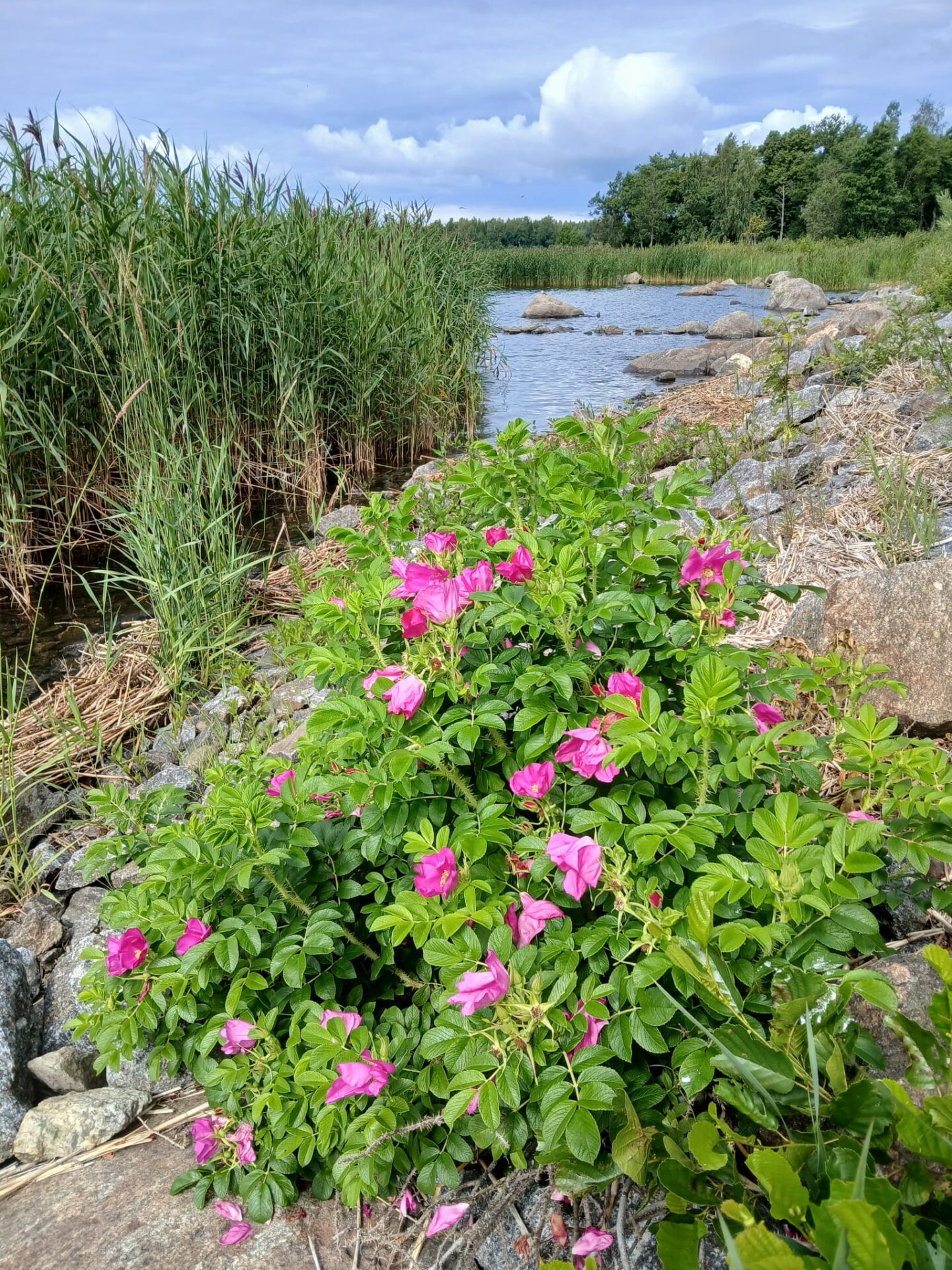
Rugosa rose is very similar to many other rose species. If you are unsure about your identification, consult the identification charts below:

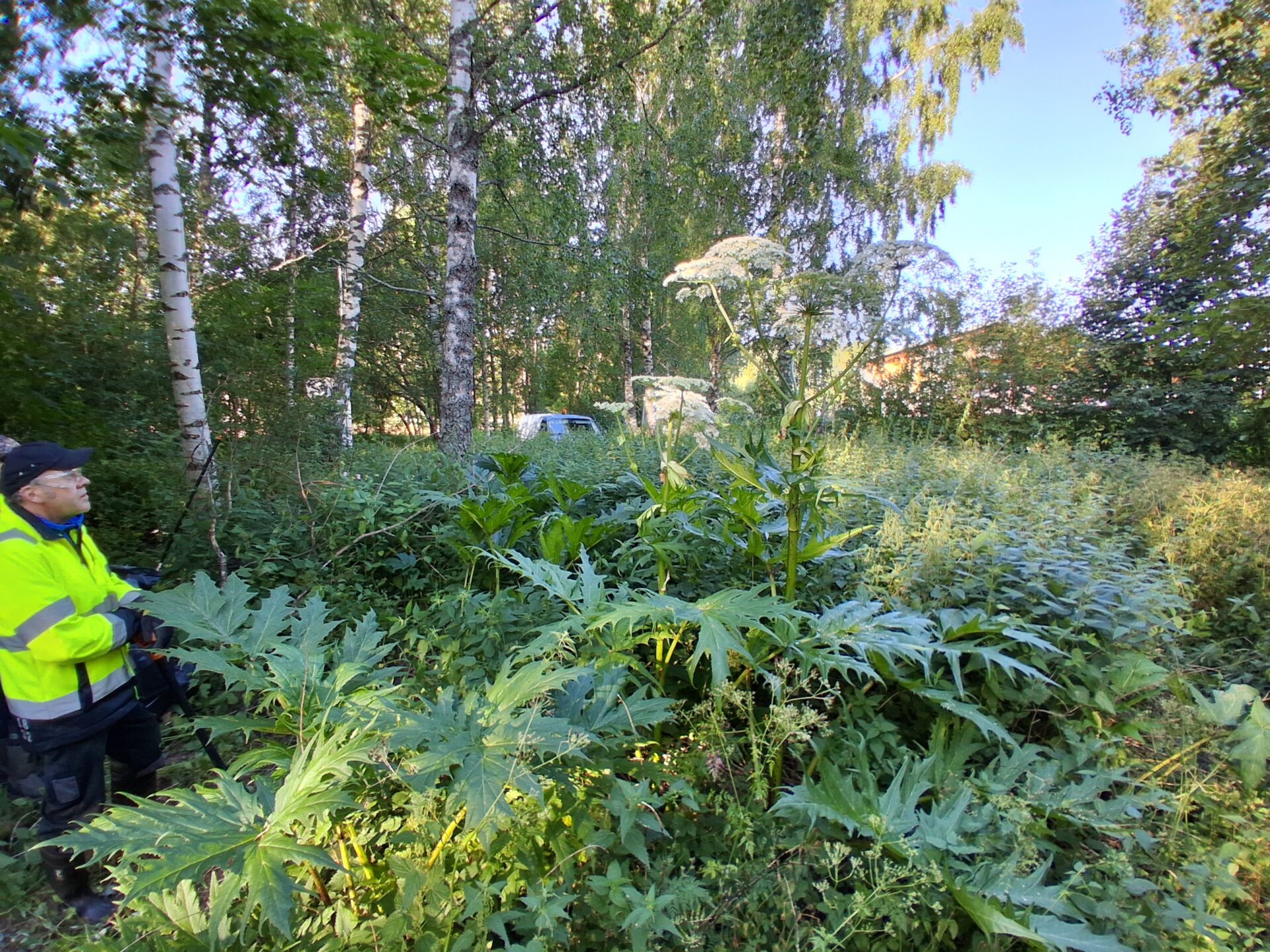
In this context, giant hogweeds refer to the group including Heracleum mantegazzianum, Heracleum persicum and Heracleum sosnowskyi. The City of Vaasa takes sightings of the harmful invasive giant hogweed group very seriously. Giant hogweeds are nationally designated as harmful invasive species. It is prohibited to release a harmful invasive species into the environment, import it into Finland from outside the EU or from another EU country, keep, cultivate, transport, place on the market, transfer or otherwise dispose of it.
Giant hogweeds are highly competitive and have spread to many types of habitats such as fields, road verges, forests and shores. In the best growing sites they form large, dense stands that suppress all other vegetation. Giant hogweeds also affect other organisms. Stands of giant hogweed homogenize the landscape and reduce biodiversity. A large occurrence can completely prevent recreational use of an area, such as fishing or movement along riverbanks, as well as outdoor activities near the stands.
Giant hogweeds also pose a health hazard to people. When the plant sap of giant hogweeds reacts with sunlight on the skin, it can cause severe burn-like, slowly healing or even permanent skin injuries. Sensitive people may experience breathing difficulties and allergic symptoms simply from being near a stand.
Read also
Invasive species control in Vaasa, INSPIRE project Interreg Aurora EU
The INSPIRE project brought together Finnish and Swedish actors to develop solutions to enhance the control of harmful invasive species in an Interreg EU-funded project. Learn more about the project here:
Volunteering and participation
Does your association or club want to participate and earn from invasive species control? Learn about the opportunities here.