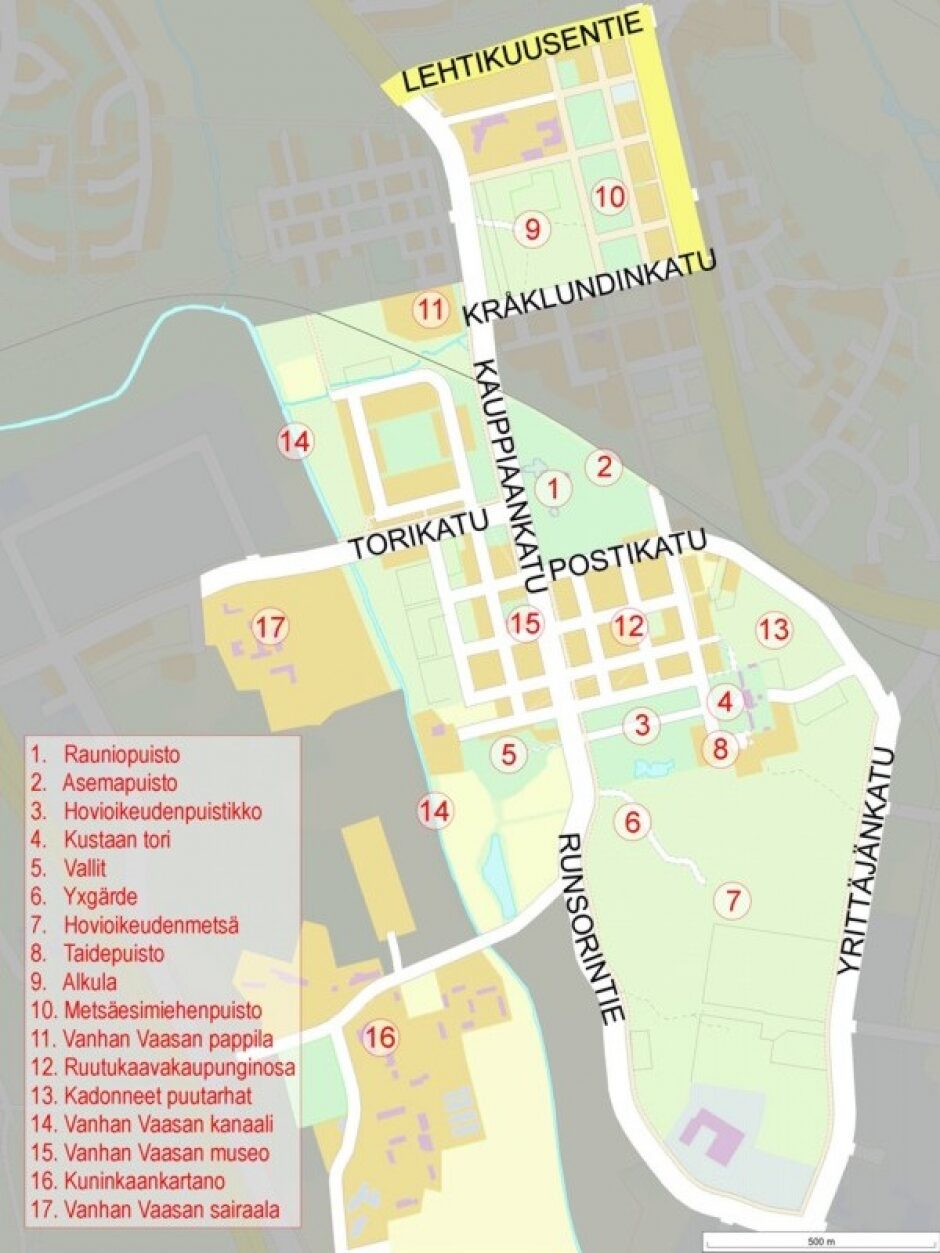
Old Vaasa is located about 7 km southeast of Vaasa city centre and has been classified as a nationally valuable landscape area. It is a diverse landscape attraction with rich natural, cultural, settlement and archaeological values.
Land uplift has had a great influence on the area’s history and landscape. It is estimated that the area rose from the sea about 1,000 years ago. Korsholm Castle was built as the area’s administrative centre at the end of the 14th century.
King Charles IX founded the city of Vaasa in 1606. The city developed around the solid stone church, St. Mary’s Church, and in the 17th–18th centuries a grid plan was drawn up for the city. The aim was to create a green garden city partly for fire safety reasons, but also to ensure the residents’ comfort. By decision of King Gustav III, the chief intendant Carl Fredrik Adelcrantz drew up in 1777 a town plan concerning the Courthouse buildings and Courthouse Park. According to the king, this green promenade area should be established “to beautify Vaasa and the whole country”.
In 1852 a raging fire burned the city and only a few buildings survived. One of these buildings was the Courthouse. The Courthouse’s four-row linden alley, planted in 1836–1842, also survived the fire. The city’s only private stone house, the house of the wealthy burgher Abraham Falander (ennobled as Wasastjerna), survived and today serves as the Museum of Old Vaasa.
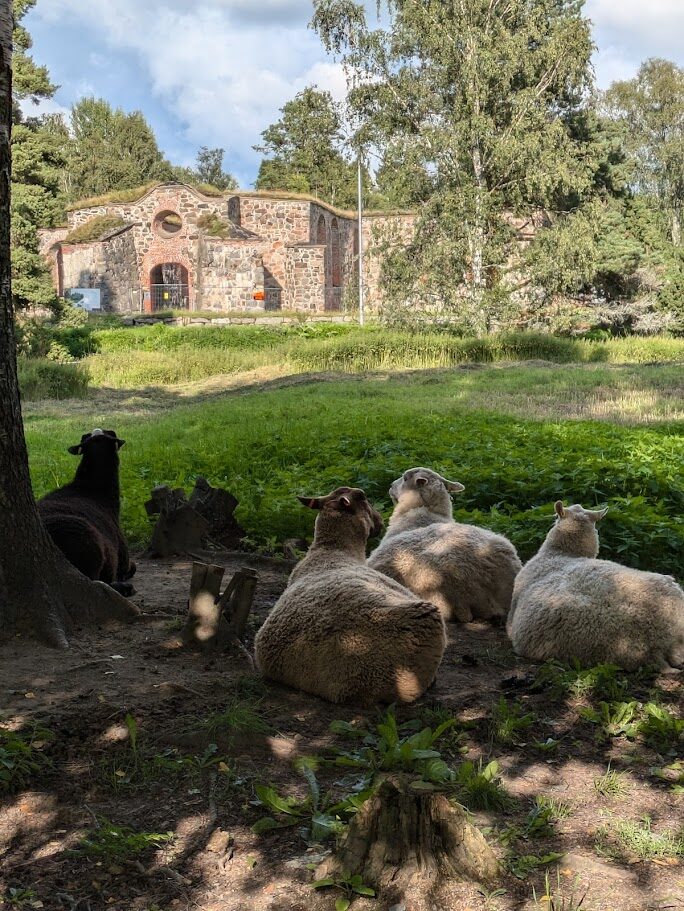
Areas outside the dense city, such as Alkula, the manor area that at the time of the fire was part of A. A. Lévon’s factory operations, were spared from the Vaasa fire. Other areas that escaped the fire included, for example, the Old Vaasa Hospital, which was moved to its current location west of the city, to the other side of the canal, in 1818. The current hospital building of Old Vaasa, designed by C. L. Engel, was built in 1841–44. A beautiful park with valuable trees surrounding the hospital was established in the 1840s. Slightly to the south along the canal, also out of reach of the fire, lies the Royal Manor (Kuninkaankartano), founded in 1556 by King Gustav Vasa. In 1859 agricultural education began on the manor grounds by imperial decree. The Royal Manor is nowadays managed by Yrkesakademin i Österbotten and is still used for education. The Royal Manor park includes lawns, flower beds, old trees and tree-lined avenues as well as an arboretum.
After the fire it was decided to move the city 6 km to the coast, because land uplift had left the city further and further from the sea. The lands of Old Vaasa were turned to pasture and, after the Courthouse moved to the new Vaasa, in 1863 the former magnificent Courthouse building was converted into the church of Mustasaari. Around the turn of the 1880s construction began on the Vaasa railway, which included a station established also for Old Vaasa, but the area did not begin to be resettled until the 1920s.