
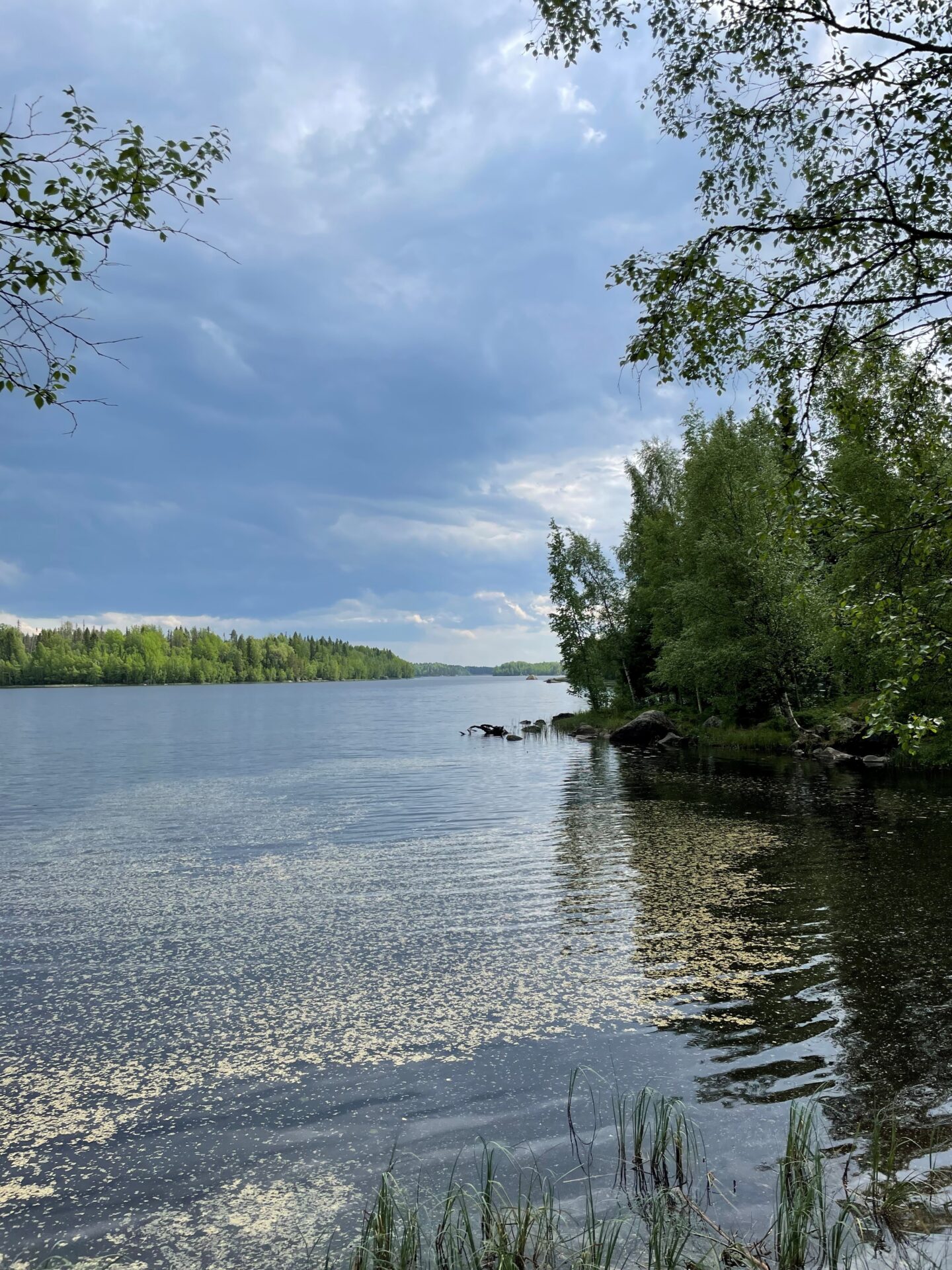
The Pilvilampi recreational area of Vaasa is located to the east of the city, about 9 kilometres from the centre. Pilvilampi, in terms of its larger landscape, is part of the extensive Höstveden ridge area, which continues north beyond the city limits of Vaasa.
The Pilvilampi recreational area covers roughly 800 hectares. In winter the area has good cross-country skiing tracks, and in summer you can cycle on the marked routes. The natural environment is mostly very rocky and in places difficult to traverse forest land. There are old spruce stands in places, but younger coniferous forest also grows among the mature woods. A characteristic feature of the area is colonies of lily-of-the-valley growing under the spruces, which can be abundant and extensive in places.
The waterfowl breeding at Pilvilampi include, among others, the common goldeneye, tufted duck, mallard, common sandpiper and common gull. During 2005–2008 the black-throated diver and the horned grebe have also been observed at Pilvilampi.
The forests of Pilvilampi provide a favourable habitat for coniferous forest birds. The large continuous forest area ensures a calm breeding environment for forest species. Breeding birds at Pilvilampi include, for example, hazel grouse, black grouse, Eurasian pygmy owl, black woodpecker, tree pipit, wren, redpoll, European robin, common blackbird, song thrush, various warblers and tits, long-tailed tit, coal tit, crested tit and treecreeper.
Pilvilampi is a good destination throughout the year. There are well-marked walking and cycling routes. Along the routes there are stopping places, some of which offer opportunities for making a fire and for overnight stays. In winter there is an extensive network of ski tracks. Pilvilampi serves as Vaasa’s raw water reserve basin, so swimming in Pilvilampi or allowing animals into the water is prohibited.
From early in the year, already in March, you can hear the drumming of woodpeckers, the delicate song of the treecreeper and the lively calls of the tits in the forests. In the late evenings of May–June the forests of Pilvilampi fill with the mating songs of blackbirds, song thrushes and robins. In autumn you may spot the Eurasian pygmy owl or the long-tailed tit.
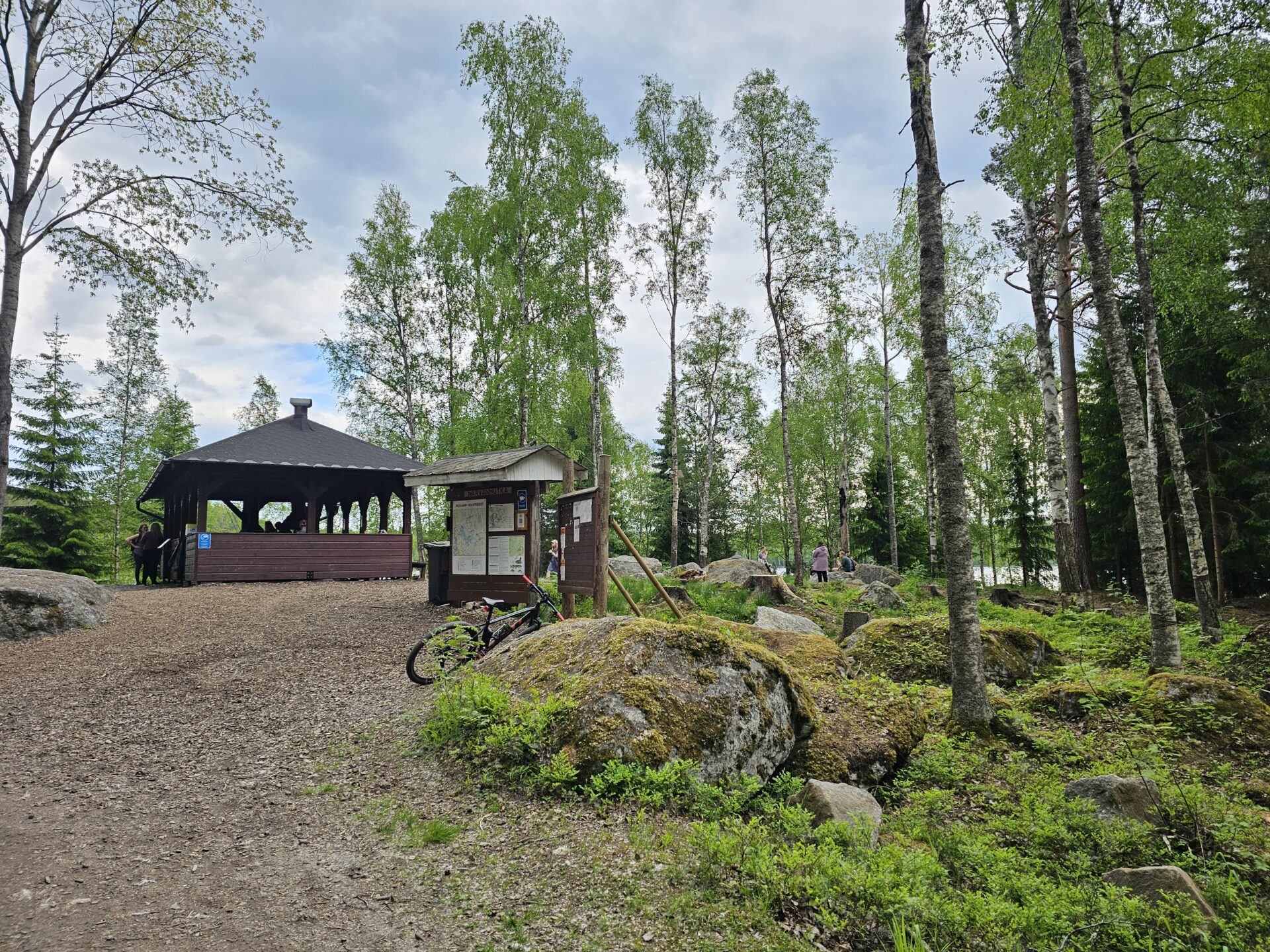
Pilvilampi’s lean-tos and barbecue sites (Vaasan latu)
Locations of the lean-tos and barbecue sites on the map:
- Närvänmutka – barbecue site
- Eetunpiilo – barbecue site
- Pilvimaja – barbecue site
- Höstvesilaavu – barbecue site and lean-to
- Kivijärvenlaavu – barbecue site and lean-to
- Aurinkolaavu – barbecue site and lean-to
More information about the Pilvilampi area (Vaasan latu)