
Museums and exhibition
Discover the museums and exhibitions of the Vaasa region! Explore the region’s history, art and culture and find fascinating places to visit – from local history to contemporary art.
-
Hägglund’s Photography Museum was inaugurated in 2000, and it is founded upon photographer Erik Hägglund’s studio. The wide collection of cameras and the studio’s equipment illustrate the history of photography from the 1910s to the present day.
Erik Hägglund from Rökiö was interested in art already at an early age, and he travelled to Sweden to work as the apprentice of a painter. There he was employed in a studio and his interest in photography was aroused. When he returned to his home region, he established a modest studio in a stave shed in 1910. He constructed his first atelier camera himself and also painted the shooting background himself. Those are both displayed in the replica of the workshop built inside the museum.
-
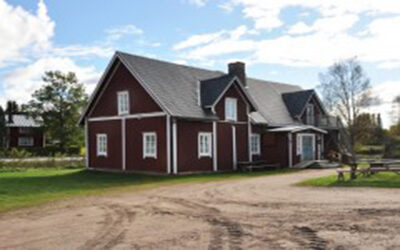
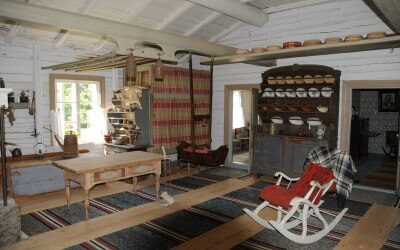
In the Isokyrö Museum can be seen peasant artefacts from the latter half of the 19th century. Everyday utensils are displayed as if the people of the house had just gone to their work outside and left the house for the day. The visitor rather steps into a genuine 19th century milieu than an exhibition.
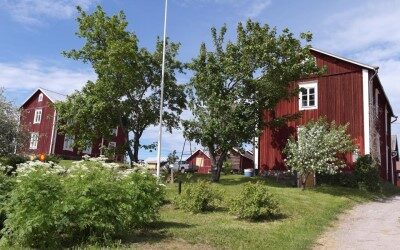
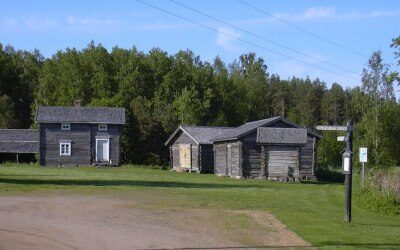
The museum is characterized by two traditional 1½-storey Ostrobothnian houses. They are grouped with the outbuildings in a way typical for a traditional courtyard. The main building, the Piuhola house, dates back to 1768 and has been moved to the area from the Kuivila village. The buildings represent the building traditions of the 18th and 19th century. The artefacts in the museum also originate from that period.
-
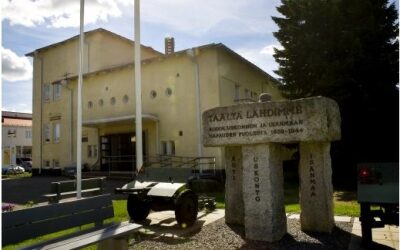
In the Isokyrö War Museum are displayed objects and stories from all the wars waged by Finland. The specialty of the museum is the cannon park, where there are nine different kinds of cannons on view.
In the War Museum one can with the help of items and guidance get acquainted with the Gudgel War (a peasant uprising in the kingdom of Sweden in the part that is now Finland), the Hakkapeliittas (Finnish light cavalryman), the Carolinians, the Finnish War in 1808-1809, the First World War, the Civil War in 1918, and the Second World War in 1939-1945. In the vitrines are exposed soldiers’ uniforms and helmets, rifles and other equipment. One can see in the museum men’s attires from the period of the Gudgel War, a file soldier with his wife, an ensign’s uniform from the year 1918, a festive uniform of a lieutenant colonel and the uniform belonging to a member of the Lotta Svärd organization during the Second World War.
One of the museum’s pearls is a park with nine different kinds of modern era cannons. Here you can see for example an infantry cannon dating back to 1936, a field cannon dating back to 1938 and other cannons from Russia, Finland, Switzerland and Sweden. A Russian horse-drawn field cannon from the year 1902 is one of the oldest weapons in the park. The cannons are no longer in working order, as they have been defused.
-
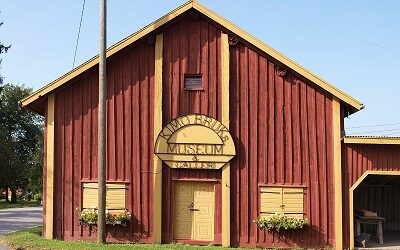
The Kimo Ironworks is the only ironworks museum in Ostrobothnia. The three hundred years old art of forgery is being taught here by one generation to the next with the help of courses and all-day presentations. In the beautiful leafy landscape of dams, rapids and bridges one can explore epochs in history among the 18th century buildings, such as an ironworks estate, a steeple and the ruins of a tilt smithy.
The museum is located in an iron magazine dating back to 1763. On display there are scale models of the 18th century Kimo ironworks and hammer smithy, atmospheric pictures depicting work on the ironworks, and diverse items and tools associated with processing of iron, such as a smith’s diploma from the Bergskollegiet school in Stockholm, and tomb crosses forged by smiths, including also their own ones.
-
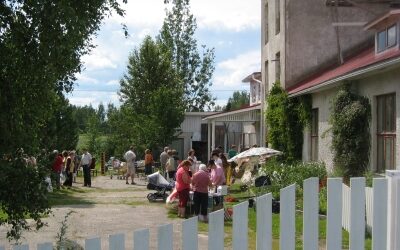
The idyllic courtyard milieu of the Klemets Houses is in many ways unique. No other group of houses built in a similar way has survived in the county. Here can as well be found a versatile selection of exhibitions, such as a textile exhibition, a harmonium museum, a motorcycle exhibition and everyday items associated with peasant life. The atmosphere of the early 20th century can also be sensed in the café, which has been elegantly furnished with 1940s functionalism style furniture.
The idyllic courtyard milieu of the Klemets Houses is unique in a number of ways. No other group of houses built in a similar way has survived in the country. Here can as well be found a versatile selection of exhibitions, such as a textile exhibition, a harmonium museum, a Sunday school museum and everyday items associated with peasant life. The atmosphere of the early 20th century can also be sensed in the café, which has been elegantly furnished with 1940s functionalism style furniture.
-
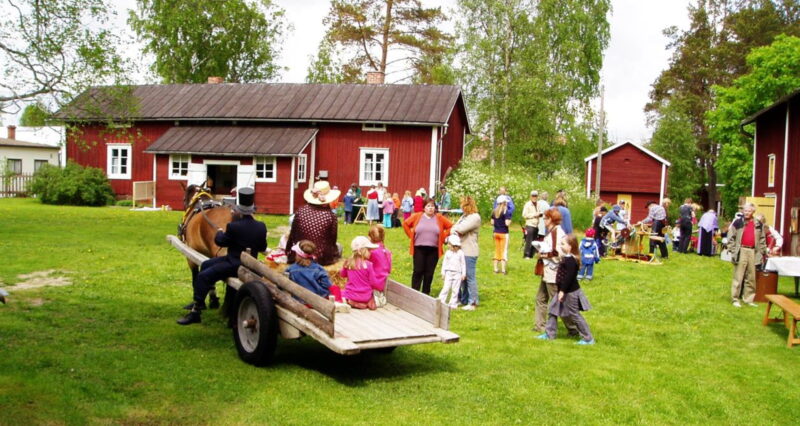
The Korsnäs Local Museum premises today include the old hired hand’s cottage, the windmill, the forge, three rooms in the loft building, and the parish granary across the road. The beautiful museum yard serves as a place for festivities, demonstrations of handicrafts, and games.
The Korsnäs sweater, a special kind of sweater made and used in Korsnäs during the late 19th and early 20th centuries, has experienced quite a renaissance in the last few decades. It is a unique piece of clothing, mainly because it has both crocheted and knitted sections in bright colors. The museum’s collection is comprised of several Korsnäs sweaters of earlier and later origin. The oldest is from 1864. -
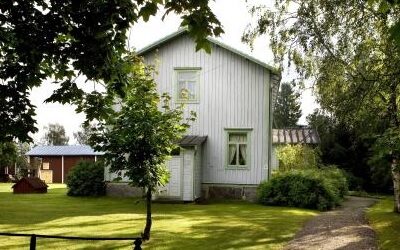
The vicarage dating back to the 1830s has been preserved in the style of the early 20th century. The elegant rooms have been furnished with furniture typical for the period and for vicarages, and the garden creates a park-like atmosphere.
In the Vicarage Museum the visitor gets to see, how an Ostrobothnian ministerial family lived at the end of the 19th century. The Vicarage Museum is one of the two of this kind of special museums in Finland. The interior represents a ministerial home of the period with its original tile stoves from the 1890s. The walls have been papered with newly printed wallpapers modeled on the old Korsnäs patterns.
-
From Vaasa market square, it is only a short walk to the Kuntsi Museum of Modern Art, which is in a beautiful spot by the sea in the Inner Harbour. The museum was named after art collector Consul Simo Kuntsi (1913–1984), and the art collection of the foundation established by him is considered one of the most important collections of modern and contemporary art in Finland. Donations and deposits, such as Lars Swanljung’s (b. 1944) collection of contemporary art, consolidate the importance of Vaasa in the art world.
The exhibition activities of the museum are based on changing exhibitions of modern and contemporary art as well as on displays of the museum’s own art collections. The exhibitions at the Kuntsi museum are in-depth analyses of phenomena in contemporary art and topical issues providing substance for identity building and understanding the phenomena of our time.
The facilities at Kuntsi offer excellent scope for organizing various events. Cross-disciplinary art performances and events, in particular, in collaboration with the third sector and special groups of the public, are frequently organised.
-
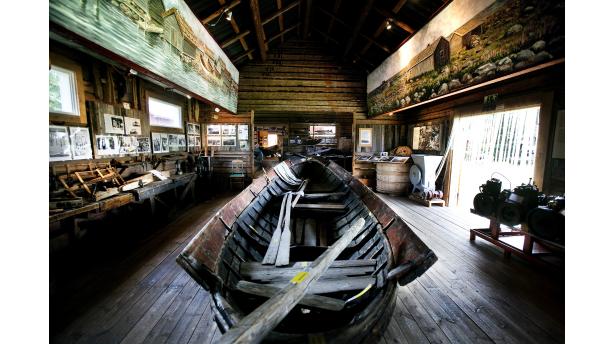
Kvarken Boat Museum is one of the largest boat museums in the Nordic countries. The collection contains 96 traditional (wooden) boats (1850-1993) of different types for varying uses. The boats originate from the province of Ostrobothnia. Besides the boats, exhibited are also tools and equipment used in the region for fishing and hunting. Fisherman’s cottage. Exhibitions.
The museum is situated in Åminne in a culture-historically valuable coastal surroundings in Malax. -
The Laihia Museum and the Museum of Stinginess are a versatile travel destination for the whole family. The objects and buildings in the museum tell the tale of a typical Ostrobothnian estate of the late 19th century. The famous stinginess of the people of Laihia is represented with worn-out items, with a twinkle in the eye.
The Laihia Museum is situated in the Rapila House built in 1827. The building is on its original site, but the museum was relocated there in the 1970s. Rapila used to be a wealthy estate; the walls were for instance painted and decorated with floral patterns.
In the museum are over 5 000 artefacts and 16 buildings, the oldest one of them a grain barn from the year 1731. The objects date back to the 18th and 19th century. One of the oldest items in the museum is a bridal bench with the year “1683” carved in its back. There are also displayed grave heaps discovered in Laihia and for instance ancient findings dating back to the Iron Age. On view in the attic are tools and textiles, for example pieces of clothing from the wartime.
-
The Art Factory is an independent production-house that focuses on the realization of ideas and where artists from different disciplines can gather, create and share their ideas and works. Malakta is a space that offers facilities to artists in different fields and as production company initiates innovative projects and productions.
-
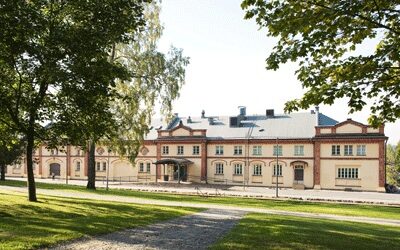
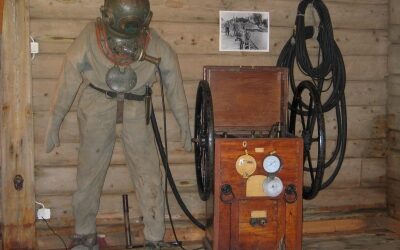
Vaasa used to be an important shipping company and maritime city. In the Vaasa Maritime Museum are displayed local maritime traditions from the shipbuilding of the 19th century to the present day luxury yachts. Various fascinating objects, scale models, shipwrecks and photographs give a glimpse of the life of old time seafarers.
The Vaasa Maritime Museum is located on the shore of the Palosaari strait. The strait was for over 150 years the outport of Vaasa and the centre of shipbuilding. In the 19th century and early 20th century the shore was bordered with the shops and magazines of traders, and the museum is situated in one of these old salt magazines. Ship-owner Wolff had a salt magazine constructed in the middle of the 19th century and the building has been well preserved thanks to the conserving effect of salt. There are four original harbour magazines on the area altogether, one of which probably dates back to the late 18th century and has been relocated on the area from Old Vaasa.
Current exhibitions and events at museums
-
Museums & Folklore
Näyttely – Jon Gredmark

24.11.2026 – 5.1.2027 at 08:00 – 21:00

Galleri Campus Norrvalla, Vöyrintie 305, Vörå
-
Museums & Folklore
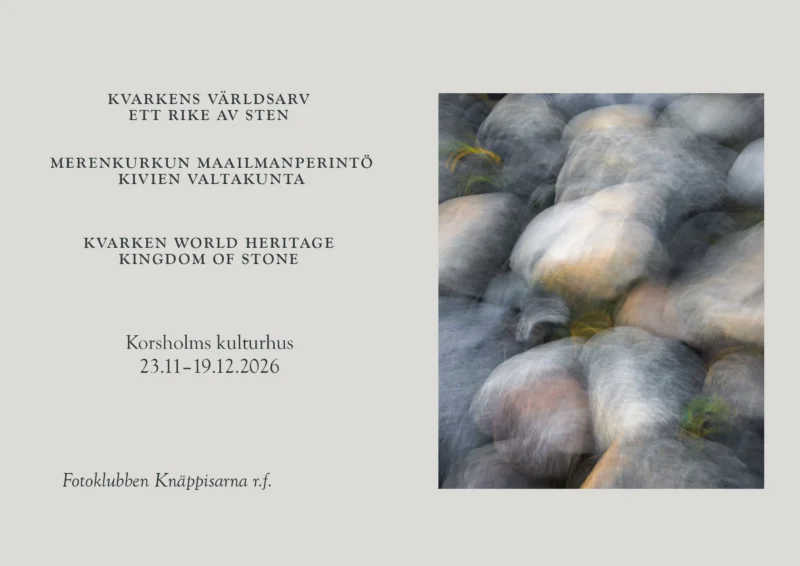
KVARKEN WORLD HERITAGE – KINGDOM OF STONE
24.11.2026 – 19.12.2026 at 09:00 – 20:00
Korsholms kulturhus, Skolvägen 1 KORSHOLM
-

Museums & Folklore
Annual Exhibition of Vasa Art Club 2026
24.11.2026 – 18.12.2026 at 12:00 – 18:00
Pitkäkatu 66, Vaasa
-
Museums & Folklore
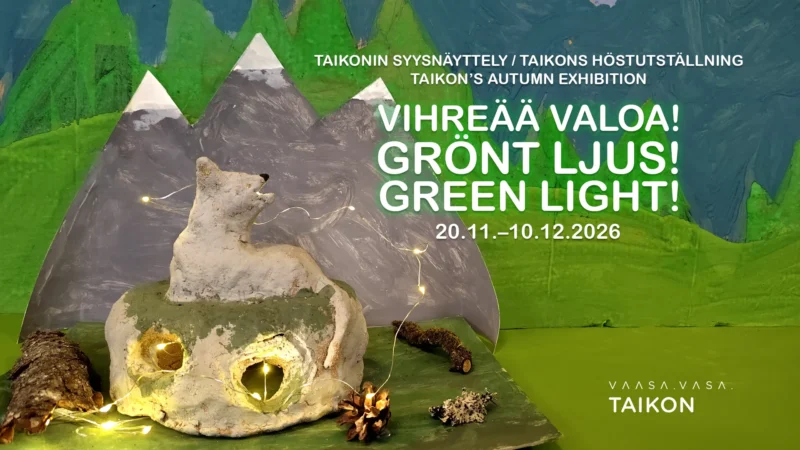
TaiKon’s autumn exhibition: Green Light!
24.11.2026 – 10.12.2026 at 16:00 – 20:00
TaiKon, Kasarmi 11, Itäinen Kasarmi 7–9, Vaasa
-
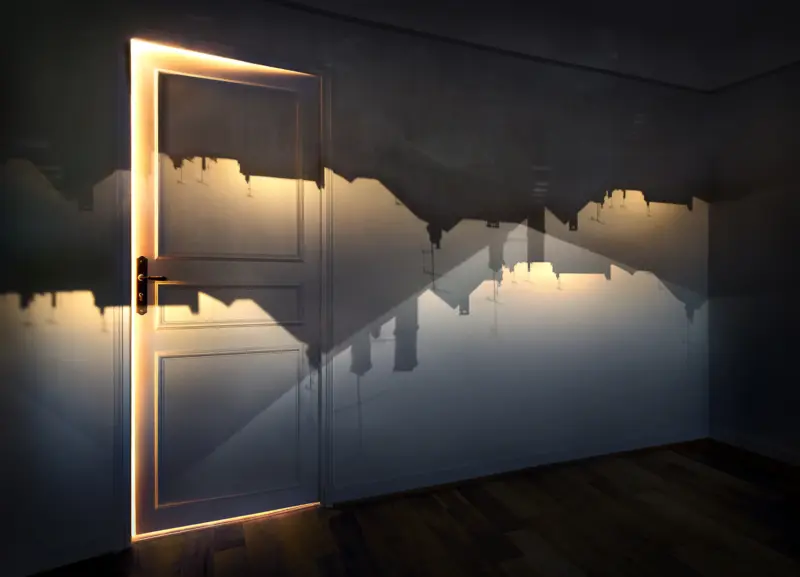
Museums & Folklore
Marja Pirilä – Camera Obscura
25.11.2026 – 10.1.2027 at 10:00 – 17:00
Kuntsi Museum of Modern Art
-
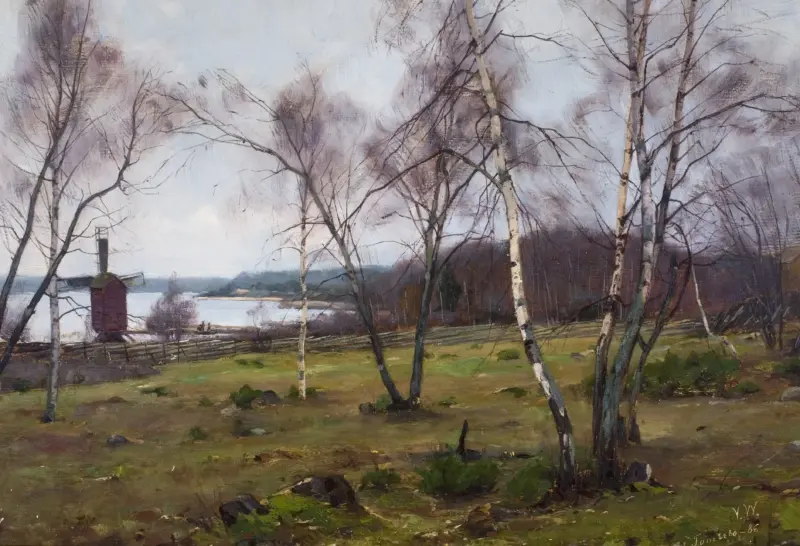
Museums & Folklore
mÅland – Önningeby Artists Colony
25.11.2026 – 21.2.2027 at 10:00 – 17:00
Tikanoja Art Museum
-
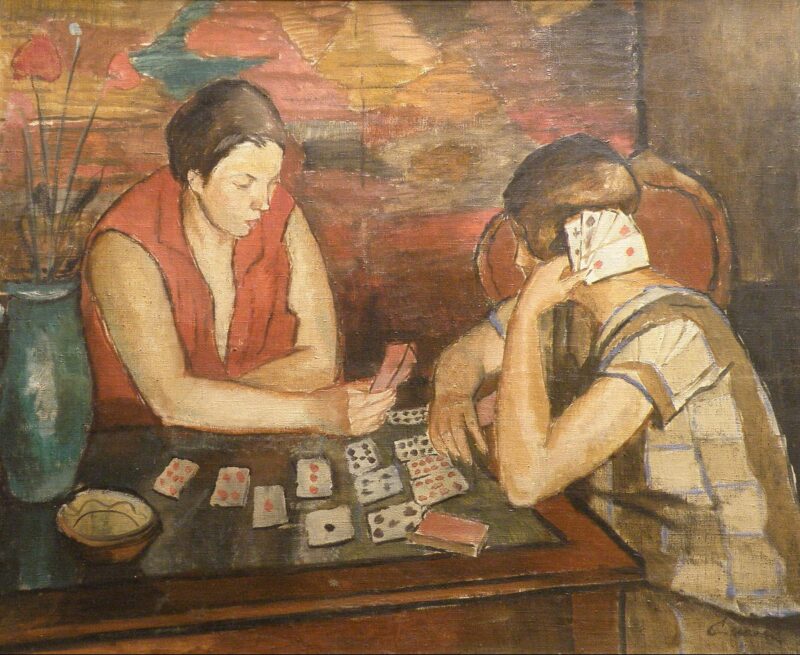
Museums & Folklore
Fortuna
25.11.2026 – 7.3.2027 at 10:00 – 17:00
Ostrobothnian Museum
-
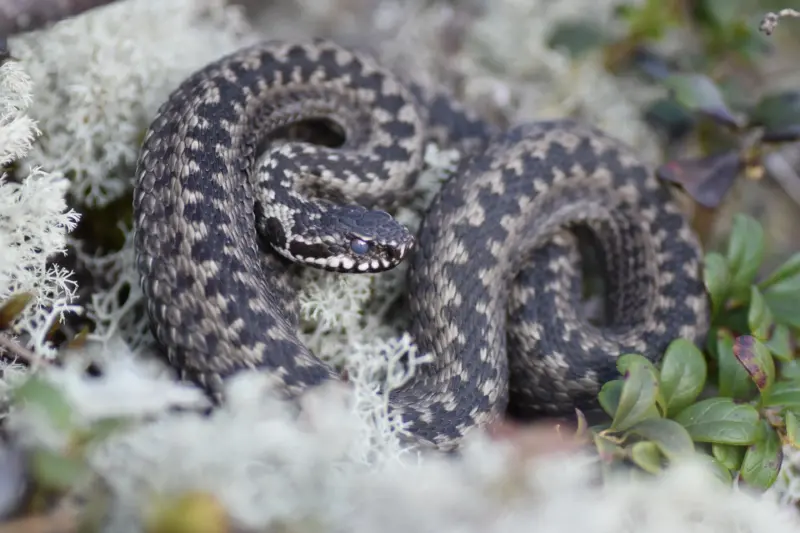
Museums & Folklore
The Viper and its Cousins
25.11.2026 – 30.12.2027 at 10:00 – 17:00
Ostrobothnian Museum
-
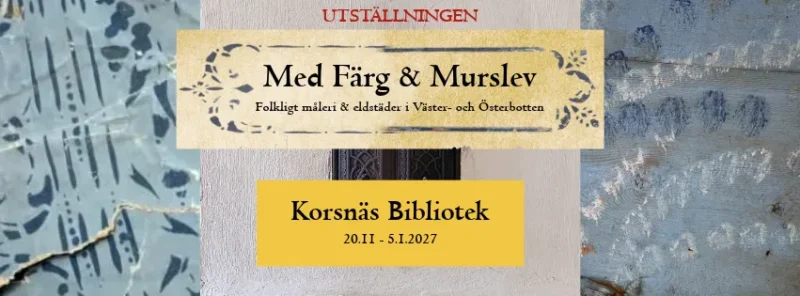
Museums & Folklore
“Maalilla Muurauslastalla” Korsnäsin kirjastossa
28.11.2026 at 11:00 – 14:00
Korsnäsin kirjastossa, Silverbergsvägen 9, Korsnäs

Vaasa Region Tourism Ltd.
Tourist information
Visit Vaasa’s office
Vaasanpuistikko 12, Vaasa
Open Mon-Fri: 10 am to 3 pm
Special hours:
24.-25.12.2026 closed
+358 40 123 8977 |
visit.vaasa@visitvaasa.fi