


The Viper and its Cousins

Article categories: Museums & Folklore
The exhibition offers a journey into the world of vipers, especially Finland’s best-known snake species, the adder
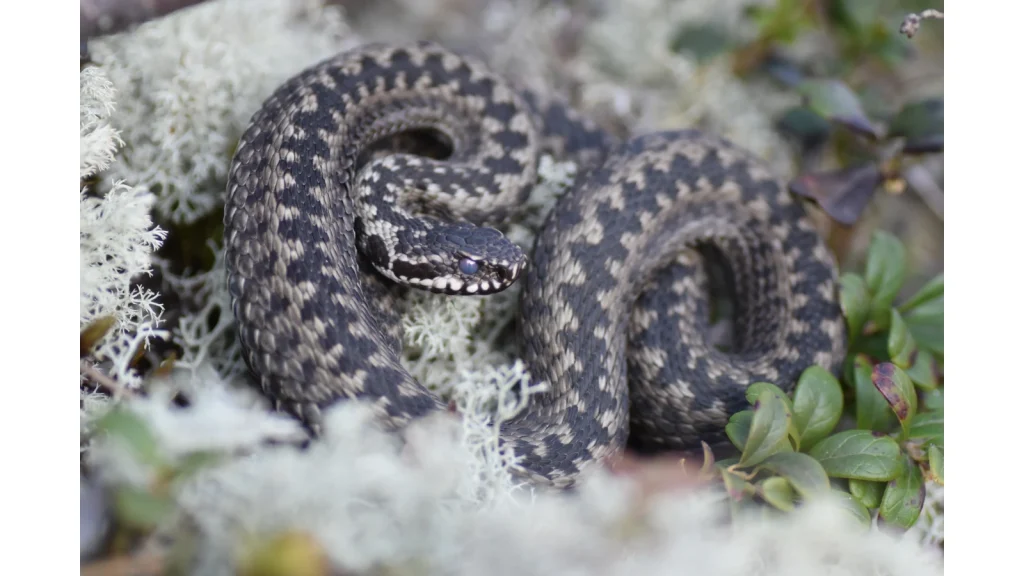
A new section of Terranova’s permanent natural history exhibition explores the diversity and distribution of vipers and the important role they play in natural ecosystems. The exhibition features information and photographs, as well as display cases containing preserved specimens of adders and their close relatives from around the world, wherever vipers are found: Europe, Southeast Asia, Africa, North America, South and Central America, and the Middle East.
Approximately 350 species of vipers are known today. The exhibition places a special focus on Finland’s native viper, the adder, or common European viper (Vipera berus), one of the most widely distributed snake species in the world. Its range extends across most of northern Eurasia, from the British Isles to the Pacific coast. Unlike most other vipers, which typically live in tropical climates, the adder has adapted to Arctic conditions and can survive even north of the Arctic Circle.
The exhibition also features Finland’s two other snake species, the grass snake (Natrix natrix) and the smooth snake (Coronella austriaca). All snake species found in Finland are protected by law.
Snakes are among the world’s most misunderstood and persecuted animals. Today, many viper species are threatened by habitat loss, road traffic, and persecution by humans. Terranova’s new exhibition invites visitors to discover the fascinating world of snakes through facts and biodiversity, leaving prejudices behind.
Image: Tom Hoogesteger
-
Time
7.11.2026 – 30.12.2027 10.00 – 17.00Event times
- 7.11.2026 10.00 – 17.00
- 8.11.2026 10.00 – 17.00
- 11.11.2026 10.00 – 17.00
- 12.11.2026 10.00 – 17.00
- 13.11.2026 10.00 – 17.00
- 14.11.2026 10.00 – 17.00
- 15.11.2026 10.00 – 17.00
- 18.11.2026 10.00 – 17.00
- 19.11.2026 10.00 – 17.00
- 20.11.2026 10.00 – 17.00
- 21.11.2026 10.00 – 17.00
- 22.11.2026 10.00 – 17.00
- 25.11.2026 10.00 – 17.00
- 26.11.2026 10.00 – 17.00
- 27.11.2026 10.00 – 17.00
- 28.11.2026 10.00 – 17.00
- 29.11.2026 10.00 – 17.00
- 2.12.2026 10.00 – 17.00
- 3.12.2026 10.00 – 17.00
- 4.12.2026 10.00 – 17.00
- 5.12.2026 10.00 – 17.00
- 6.12.2026 10.00 – 17.00
- 9.12.2026 10.00 – 17.00
- 10.12.2026 10.00 – 17.00
- 11.12.2026 10.00 – 17.00
- 12.12.2026 10.00 – 17.00
- 13.12.2026 10.00 – 17.00
- 16.12.2026 10.00 – 17.00
- 17.12.2026 10.00 – 17.00
- 18.12.2026 10.00 – 17.00
- 19.12.2026 10.00 – 17.00
- 20.12.2026 10.00 – 17.00
- 23.12.2026 10.00 – 17.00
- 24.12.2026 10.00 – 17.00
- 25.12.2026 10.00 – 17.00
- 26.12.2026 10.00 – 17.00
- 27.12.2026 10.00 – 17.00
- 30.12.2026 10.00 – 17.00
- 31.12.2026 10.00 – 17.00
- 1.1.2027 10.00 – 17.00
- 2.1.2027 10.00 – 17.00
- 3.1.2027 10.00 – 17.00
- 6.1.2027 10.00 – 17.00
- 7.1.2027 10.00 – 17.00
- 8.1.2027 10.00 – 17.00
- 9.1.2027 10.00 – 17.00
- 10.1.2027 10.00 – 17.00
- 13.1.2027 10.00 – 17.00
- 14.1.2027 10.00 – 17.00
- 15.1.2027 10.00 – 17.00
- 16.1.2027 10.00 – 17.00
- 17.1.2027 10.00 – 17.00
- 20.1.2027 10.00 – 17.00
- 21.1.2027 10.00 – 17.00
- 22.1.2027 10.00 – 17.00
- 23.1.2027 10.00 – 17.00
- 24.1.2027 10.00 – 17.00
- 27.1.2027 10.00 – 17.00
- 28.1.2027 10.00 – 17.00
- 29.1.2027 10.00 – 17.00
- 30.1.2027 10.00 – 17.00
- 31.1.2027 10.00 – 17.00
- 3.2.2027 10.00 – 17.00
- 4.2.2027 10.00 – 17.00
- 5.2.2027 10.00 – 17.00
- 6.2.2027 10.00 – 17.00
- 7.2.2027 10.00 – 17.00
- 10.2.2027 10.00 – 17.00
- 11.2.2027 10.00 – 17.00
- 12.2.2027 10.00 – 17.00
- 13.2.2027 10.00 – 17.00
- 14.2.2027 10.00 – 17.00
- 17.2.2027 10.00 – 17.00
- 18.2.2027 10.00 – 17.00
- 19.2.2027 10.00 – 17.00
- 20.2.2027 10.00 – 17.00
- 21.2.2027 10.00 – 17.00
- 24.2.2027 10.00 – 17.00
- 25.2.2027 10.00 – 17.00
- 26.2.2027 10.00 – 17.00
- 27.2.2027 10.00 – 17.00
- 28.2.2027 10.00 – 17.00
- 3.3.2027 10.00 – 17.00
- 4.3.2027 10.00 – 17.00
- 5.3.2027 10.00 – 17.00
- 6.3.2027 10.00 – 17.00
- 7.3.2027 10.00 – 17.00
- 10.3.2027 10.00 – 17.00
- 11.3.2027 10.00 – 17.00
- 12.3.2027 10.00 – 17.00
- 13.3.2027 10.00 – 17.00
- 14.3.2027 10.00 – 17.00
- 17.3.2027 10.00 – 17.00
- 18.3.2027 10.00 – 17.00
- 19.3.2027 10.00 – 17.00
- 20.3.2027 10.00 – 17.00
- 21.3.2027 10.00 – 17.00
- 24.3.2027 10.00 – 17.00
- 25.3.2027 10.00 – 17.00
- 26.3.2027 10.00 – 17.00
- 27.3.2027 10.00 – 17.00
- 28.3.2027 10.00 – 17.00
- 31.3.2027 10.00 – 17.00
- 1.4.2027 10.00 – 17.00
- 2.4.2027 10.00 – 17.00
- 3.4.2027 10.00 – 17.00
- 4.4.2027 10.00 – 17.00
- 7.4.2027 10.00 – 17.00
- 8.4.2027 10.00 – 17.00
- 9.4.2027 10.00 – 17.00
- 10.4.2027 10.00 – 17.00
- 11.4.2027 10.00 – 17.00
- 14.4.2027 10.00 – 17.00
- 15.4.2027 10.00 – 17.00
- 16.4.2027 10.00 – 17.00
- 17.4.2027 10.00 – 17.00
- 18.4.2027 10.00 – 17.00
- 21.4.2027 10.00 – 17.00
- 22.4.2027 10.00 – 17.00
- 23.4.2027 10.00 – 17.00
- 24.4.2027 10.00 – 17.00
- 25.4.2027 10.00 – 17.00
- 28.4.2027 10.00 – 17.00
- 29.4.2027 10.00 – 17.00
- 30.4.2027 10.00 – 17.00
- 1.5.2027 10.00 – 17.00
- 2.5.2027 10.00 – 17.00
- 5.5.2027 10.00 – 17.00
- 6.5.2027 10.00 – 17.00
- 7.5.2027 10.00 – 17.00
- 8.5.2027 10.00 – 17.00
- 9.5.2027 10.00 – 17.00
- 12.5.2027 10.00 – 17.00
- 13.5.2027 10.00 – 17.00
- 14.5.2027 10.00 – 17.00
- 15.5.2027 10.00 – 17.00
- 16.5.2027 10.00 – 17.00
- 19.5.2027 10.00 – 17.00
- 20.5.2027 10.00 – 17.00
- 21.5.2027 10.00 – 17.00
- 22.5.2027 10.00 – 17.00
- 23.5.2027 10.00 – 17.00
- 26.5.2027 10.00 – 17.00
- 27.5.2027 10.00 – 17.00
- 28.5.2027 10.00 – 17.00
- 29.5.2027 10.00 – 17.00
- 30.5.2027 10.00 – 17.00
- 2.6.2027 10.00 – 17.00
- 3.6.2027 10.00 – 17.00
- 4.6.2027 10.00 – 17.00
- 5.6.2027 10.00 – 17.00
- 6.6.2027 10.00 – 17.00
- 9.6.2027 10.00 – 17.00
- 10.6.2027 10.00 – 17.00
- 11.6.2027 10.00 – 17.00
- 12.6.2027 10.00 – 17.00
- 13.6.2027 10.00 – 17.00
- 16.6.2027 10.00 – 17.00
- 17.6.2027 10.00 – 17.00
- 18.6.2027 10.00 – 17.00
- 19.6.2027 10.00 – 17.00
- 20.6.2027 10.00 – 17.00
- 23.6.2027 10.00 – 17.00
- 24.6.2027 10.00 – 17.00
- 25.6.2027 10.00 – 17.00
- 26.6.2027 10.00 – 17.00
- 27.6.2027 10.00 – 17.00
- 30.6.2027 10.00 – 17.00
- 1.7.2027 10.00 – 17.00
- 2.7.2027 10.00 – 17.00
- 3.7.2027 10.00 – 17.00
- 4.7.2027 10.00 – 17.00
- 7.7.2027 10.00 – 17.00
- 8.7.2027 10.00 – 17.00
- 9.7.2027 10.00 – 17.00
- 10.7.2027 10.00 – 17.00
- 11.7.2027 10.00 – 17.00
- 14.7.2027 10.00 – 17.00
- 15.7.2027 10.00 – 17.00
- 16.7.2027 10.00 – 17.00
- 17.7.2027 10.00 – 17.00
- 18.7.2027 10.00 – 17.00
- 21.7.2027 10.00 – 17.00
- 22.7.2027 10.00 – 17.00
- 23.7.2027 10.00 – 17.00
- 24.7.2027 10.00 – 17.00
- 25.7.2027 10.00 – 17.00
- 28.7.2027 10.00 – 17.00
- 29.7.2027 10.00 – 17.00
- 30.7.2027 10.00 – 17.00
- 31.7.2027 10.00 – 17.00
- 1.8.2027 10.00 – 17.00
- 4.8.2027 10.00 – 17.00
- 5.8.2027 10.00 – 17.00
- 6.8.2027 10.00 – 17.00
- 7.8.2027 10.00 – 17.00
- 8.8.2027 10.00 – 17.00
- 11.8.2027 10.00 – 17.00
- 12.8.2027 10.00 – 17.00
- 13.8.2027 10.00 – 17.00
- 14.8.2027 10.00 – 17.00
- 15.8.2027 10.00 – 17.00
- 18.8.2027 10.00 – 17.00
- 19.8.2027 10.00 – 17.00
- 20.8.2027 10.00 – 17.00
- 21.8.2027 10.00 – 17.00
- 22.8.2027 10.00 – 17.00
- 25.8.2027 10.00 – 17.00
- 26.8.2027 10.00 – 17.00
- 27.8.2027 10.00 – 17.00
- 28.8.2027 10.00 – 17.00
- 29.8.2027 10.00 – 17.00
- 1.9.2027 10.00 – 17.00
- 2.9.2027 10.00 – 17.00
- 3.9.2027 10.00 – 17.00
- 4.9.2027 10.00 – 17.00
- 5.9.2027 10.00 – 17.00
- 8.9.2027 10.00 – 17.00
- 9.9.2027 10.00 – 17.00
- 10.9.2027 10.00 – 17.00
- 11.9.2027 10.00 – 17.00
- 12.9.2027 10.00 – 17.00
- 15.9.2027 10.00 – 17.00
- 16.9.2027 10.00 – 17.00
- 17.9.2027 10.00 – 17.00
- 18.9.2027 10.00 – 17.00
- 19.9.2027 10.00 – 17.00
- 22.9.2027 10.00 – 17.00
- 23.9.2027 10.00 – 17.00
- 24.9.2027 10.00 – 17.00
- 25.9.2027 10.00 – 17.00
- 26.9.2027 10.00 – 17.00
- 29.9.2027 10.00 – 17.00
- 30.9.2027 10.00 – 17.00
- 1.10.2027 10.00 – 17.00
- 2.10.2027 10.00 – 17.00
- 3.10.2027 10.00 – 17.00
- 6.10.2027 10.00 – 17.00
- 7.10.2027 10.00 – 17.00
- 8.10.2027 10.00 – 17.00
- 9.10.2027 10.00 – 17.00
- 10.10.2027 10.00 – 17.00
- 13.10.2027 10.00 – 17.00
- 14.10.2027 10.00 – 17.00
- 15.10.2027 10.00 – 17.00
- 16.10.2027 10.00 – 17.00
- 17.10.2027 10.00 – 17.00
- 20.10.2027 10.00 – 17.00
- 21.10.2027 10.00 – 17.00
- 22.10.2027 10.00 – 17.00
- 23.10.2027 10.00 – 17.00
- 24.10.2027 10.00 – 17.00
- 27.10.2027 10.00 – 17.00
- 28.10.2027 10.00 – 17.00
- 29.10.2027 10.00 – 17.00
- 30.10.2027 10.00 – 17.00
- 31.10.2027 10.00 – 17.00
- 3.11.2027 10.00 – 17.00
- 4.11.2027 10.00 – 17.00
- 5.11.2027 10.00 – 17.00
- 6.11.2027 10.00 – 17.00
- 7.11.2027 10.00 – 17.00
- 10.11.2027 10.00 – 17.00
- 11.11.2027 10.00 – 17.00
- 12.11.2027 10.00 – 17.00
- 13.11.2027 10.00 – 17.00
- 14.11.2027 10.00 – 17.00
- 17.11.2027 10.00 – 17.00
- 18.11.2027 10.00 – 17.00
- 19.11.2027 10.00 – 17.00
- 20.11.2027 10.00 – 17.00
- 21.11.2027 10.00 – 17.00
- 24.11.2027 10.00 – 17.00
- 25.11.2027 10.00 – 17.00
- 26.11.2027 10.00 – 17.00
- 27.11.2027 10.00 – 17.00
- 28.11.2027 10.00 – 17.00
- 1.12.2027 10.00 – 17.00
- 2.12.2027 10.00 – 17.00
- 3.12.2027 10.00 – 17.00
- 4.12.2027 10.00 – 17.00
- 5.12.2027 10.00 – 17.00
- 8.12.2027 10.00 – 17.00
- 9.12.2027 10.00 – 17.00
- 10.12.2027 10.00 – 17.00
- 11.12.2027 10.00 – 17.00
- 12.12.2027 10.00 – 17.00
- 15.12.2027 10.00 – 17.00
- 16.12.2027 10.00 – 17.00
- 17.12.2027 10.00 – 17.00
- 18.12.2027 10.00 – 17.00
- 19.12.2027 10.00 – 17.00
- 22.12.2027 10.00 – 17.00
- 23.12.2027 10.00 – 17.00
- 24.12.2027 10.00 – 17.00
- 25.12.2027 10.00 – 17.00
- 26.12.2027 10.00 – 17.00
- 29.12.2027 10.00 – 17.00
- 30.12.2027 10.00 – 17.00
-
Place
Ostrobothnian Museum Finland, 00000 Show route on map -
Price
15/9 €, Museokortti-card, Kaiku-card, free entry for under 18 year olds.
-
Organizer
Vaasa City Museums 06 325 3800 museoinfo@vaasa.fi