
Read about the city’s climate actions related to nature and adaptation, which promote biodiversity and the wellbeing of the environment.
In cooperation with nature
The City of Vaasa is committed to promoting biodiversity and adapting to climate change. Biodiversity plays a significant role in the functioning of ecosystems and in the wellbeing of city residents. The city implements a variety of measures focused on developing green areas, strengthening ecosystem services and safeguarding biodiversity.
The measures aim to increase urban greenery, improve resilience to climate change and promote sustainable development as part of the Carbon Neutral Vaasa 202X target. At the same time, the goal is to create habitats that are both ecologically sustainable and pleasant and safe for residents.
Biodiversity and adaptation in Vaasa
Areas around the city have been left to develop into meadows instead of being subjected to intensive lawn mowing in Vaasa. They are mown less frequently so that the soil becomes poorer and the vegetation changes into meadow species that are vital for many plant and insect species.
Developing meadows aims to enhance the attractiveness of the environment as well as biodiversity. Meadow flowers and grasses are allowed to grow, among other things, for the benefit of pollinators. Meadows also provide food and shelter for birds and other small mammals. Another purpose of the meadows is to encourage residents to create small meadow patches in their yards, because even small meadow areas benefit the local environment.
The meadow experiment was carried out for the first time in 2023 and the experiment continued in the summer of 2024.
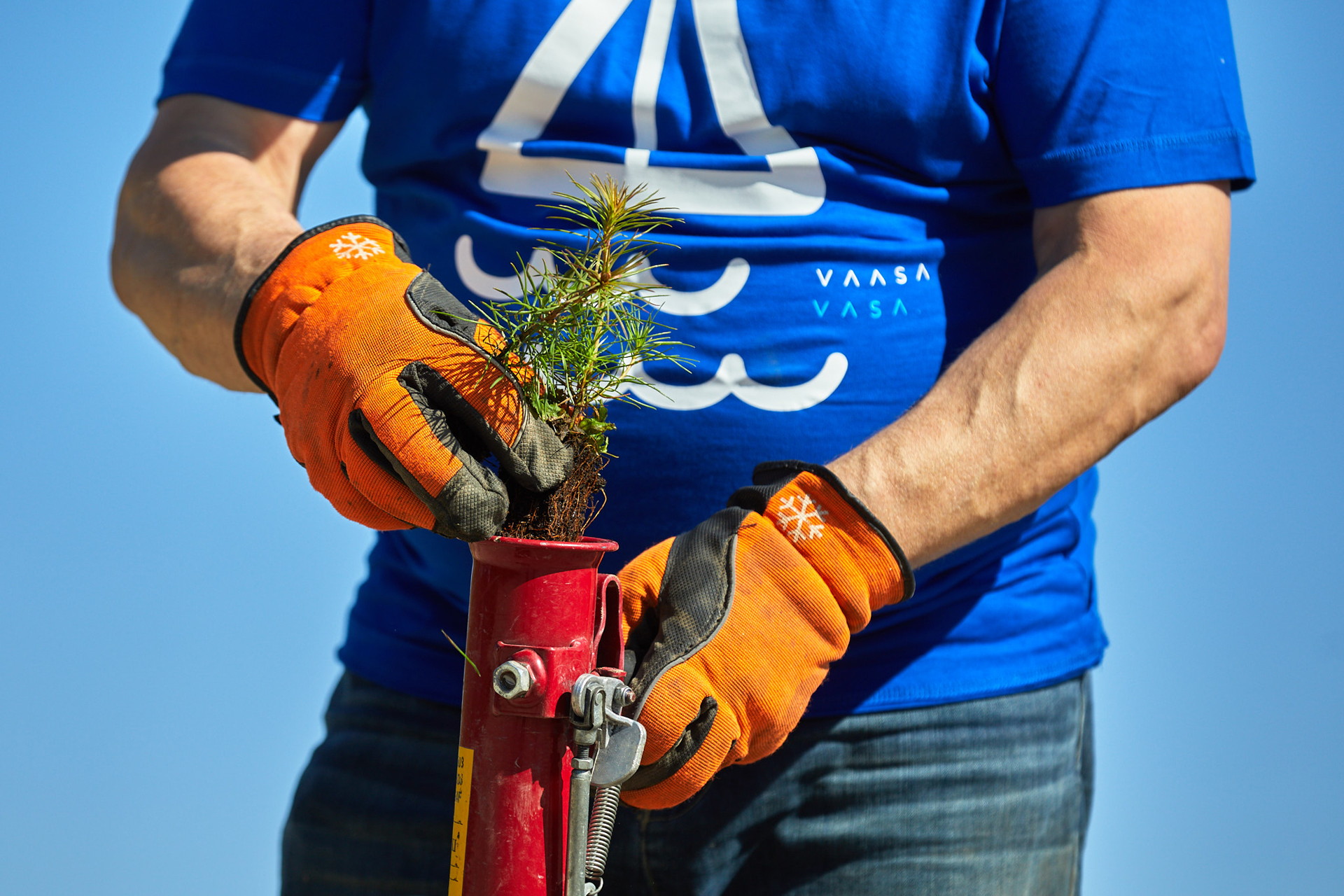
Seventy thousand new trees will be planted in Vaasa over the next four years! The aim of the A Tree for Every Vaasa Resident project is to offset carbon emissions and tree removals caused by construction projects, support Vaasa’s carbon neutrality target and celebrate the city’s population growth into the new decade. Forests are an important habitat for endangered species, so tree planting also helps safeguard biodiversity.
The A Tree for Every Vaasa Resident project began in spring 2024 and will continue until the end of 2027. A total of 70,000 trees will be planted, which means approximately 17,500 seedlings per year.
Vaasa is developing a biodiversity programme, LUMO, which is intended to be completed by the end of 2025. The programme aims to protect and create sustainable and diverse urban environments that support the wellbeing of nature, people and animals, and to prevent species decline and biodiversity loss. At the same time, the programme also promotes the prerequisites for adapting to climate change in Vaasa.
The LUMO programme includes biodiversity promotion goals, concrete measures and various monitoring mechanisms on city-owned areas. By monitoring the objectives, it is ensured that the programme’s measures proceed as planned.
Vaasa is updating its green area system as part of a broader master plan process, with the aim of safeguarding biodiversity and improving residents’ recreational opportunities. The update uses the 3-30-300 principle, according to which every resident should have at least three trees visible from their home, the canopy cover of a residential area should be at least 30%, and the nearest green area should be no more than 300 metres away.
The principle guides tree planting and enriches urban nature with a diverse plant species composition and wildlife. In addition, trees and green areas absorb stormwater, reduce heat exposure and help the city adapt to climate change.
Stormwater management helps reduce flood risks, which increase with climate change. Well-designed stormwater systems, such as detention basins and infiltration areas, can prevent excessive water flows and reduce flood damage.
Recently, the stormwater system has been developed, for example, at Hovioikeudenpuistikko, where flooding in front of the railway station was reduced with an underground detention system and by raising the station’s forecourt. Extensive stormwater studies and plans have also been carried out in the GigaVaasa and Laajametsä areas.
Modeling is one of the key tools for assessing the impacts of climate change and examining the capacity of the current system. Network models and modeling programs make it possible to examine a variety of situations, and by using modeling software it is possible to produce calculation-based design solutions, scenario analyses and to support evidence-based decision-making. For example, the VEMA project aimed to enable comprehensive management of Vaasa’s urban waters and to pilot how network models can be used in cooperation between the city’s different result areas.