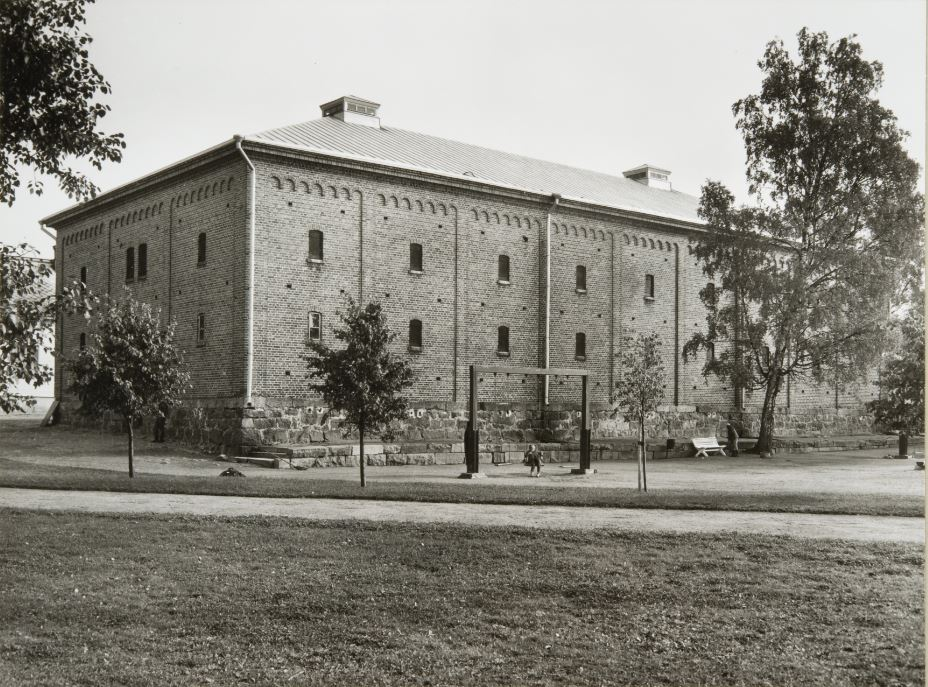
Grain storages of the Crown were built during the period of Russian rule in the 19th century. The state collected taxes in kind, which were paid in grain and stored in these buildings. The storages were built in towns from which grain, known as Crown grain, could easily be transported, especially by water. The grain storage building on Vaasa’s waterfront was designed by C. A. Setterberg and completed in 1868. It could hold up to 20,000 barrels of grain.
Beneath the brick exterior of the building is a wooden inner structure. This construction method helped keep the grain dry and protected it from pests and theft. The grain storage building has two floors, each with ten rooms on either side of a central corridor. The tall rooms are separated by thick log walls. The apparent windows on the exterior, sealed with iron hatches, are actually ventilation openings fitted with sturdy bars and opening only into the space between the outer and inner structures.
The collection of Crown grain ended when the land tax was abolished in the early 1920s. At that time, the grain administration was discontinued and the Crown grain storages were released for other uses. The Vaasa waterfront grain storage building was used by the Vaasa Military District from the 1920s until the early 1990s. The Finnish Defence Forces later relinquished the premises as they were no longer considered practical, and ownership of the building was transferred to the City of Vaasa.
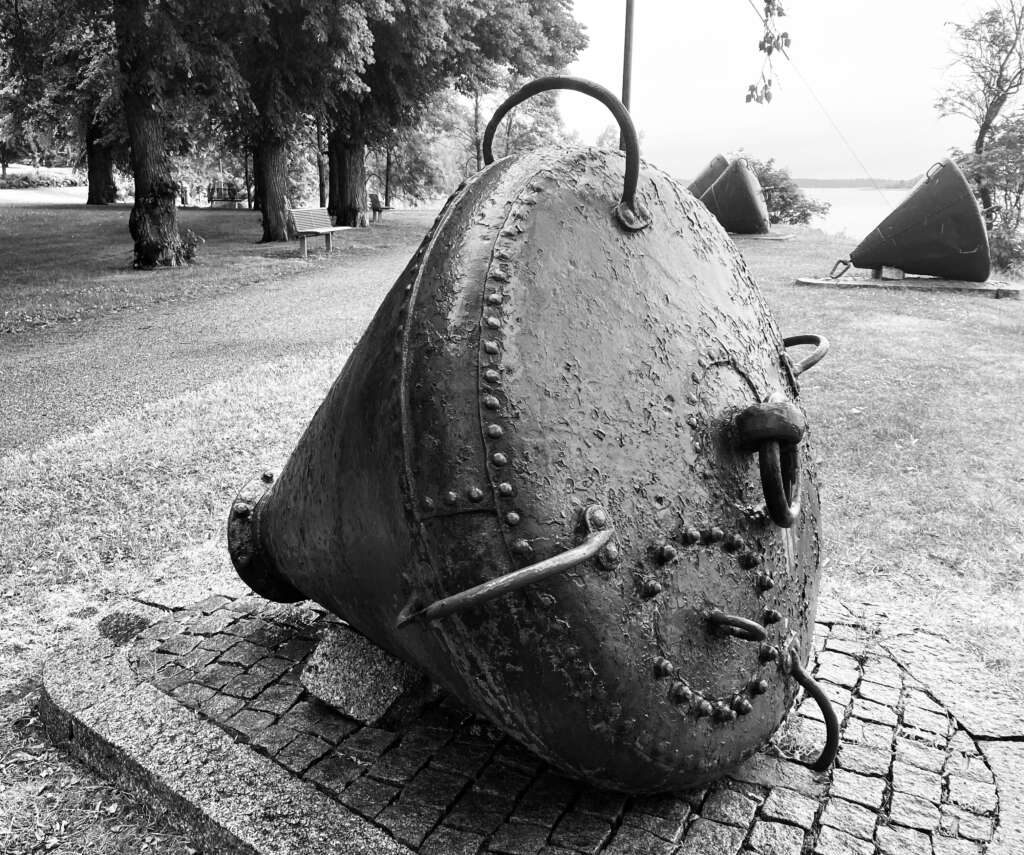
Seven red buoys
In front of the storehouse on the seashore there are seven red iron buoys on display. It has been suggested that the buoys were brought from in front of the Inner Harbour, where similar buoys were seen floating even in the 1950s.
Similar buoys have been used as mooring buoys for ships, particularly barges. Ships were tied to the buoys when they were waiting for a berth in front of the harbour or lying in the sea over winter. Such buoys were likely also used in Sundom Bay at the end of the 19th century and the beginning of the 20th century.