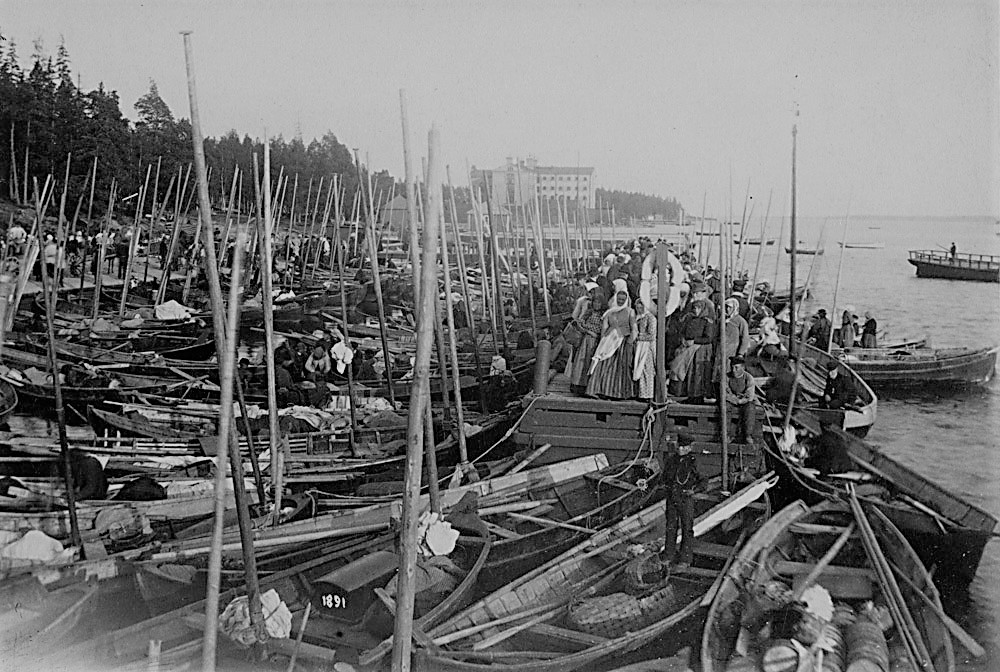
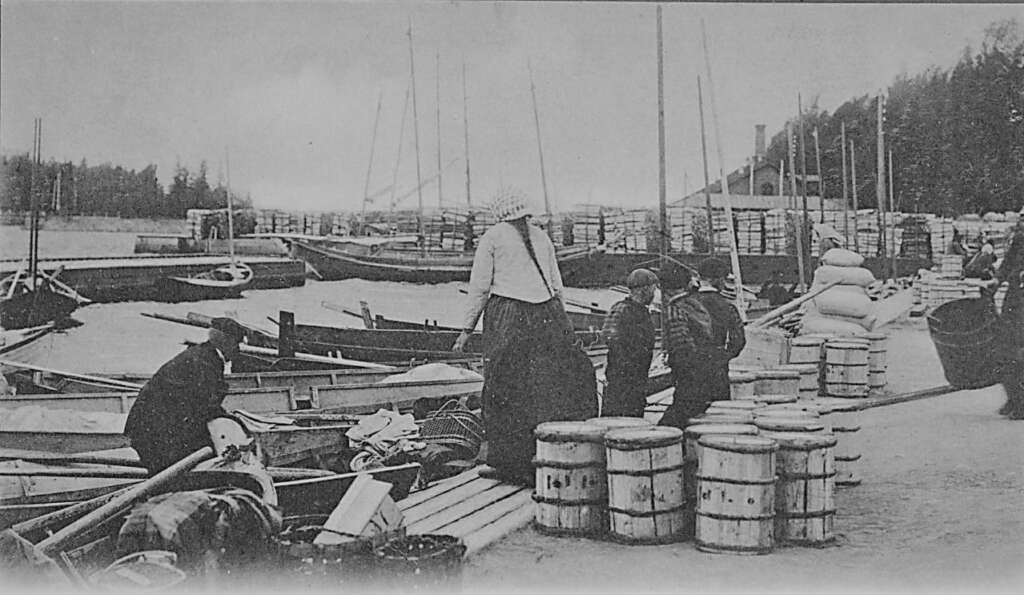
In 1867 Commercial Counsellor C. G. Wolff built a stone pier at the western end of Vaasanpuistikko, which was later donated to the city. The area was designated for archipelago traffic, and it became Kalaranta in 1890. Kalaranta became an important base for trade between islanders and townspeople. The first fish hall was completed in 1906.
The everyday life of fishermen began to change significantly from 1906. That year the first brave fishermen began to use engines manufactured at Wickström’s factory in Vaasa in their boats. Although purchasing an engine for one’s fishing boat was a significant financial investment, fishermen soon began to notice the benefits it brought. With motorboats it was possible to fish farther away and still return to Kalaranta with the catch on the same day.
Regular archipelago connection services began in 1887 between the city and Strömsö. The vessels also called at the piers of the largest villas. Traffic intensified in the early 20th century and, for example, in 1908 there was regular service to Vaasa from Oravais, Raippaluoto, Björkö, Sundom, Maalahti and Korsnäs. The connection boat services ended in 1975–76. The routes were difficult due to the rocky waters and land uplift. Fish stocks had also been declining as a result of land uplift since the 1500s.
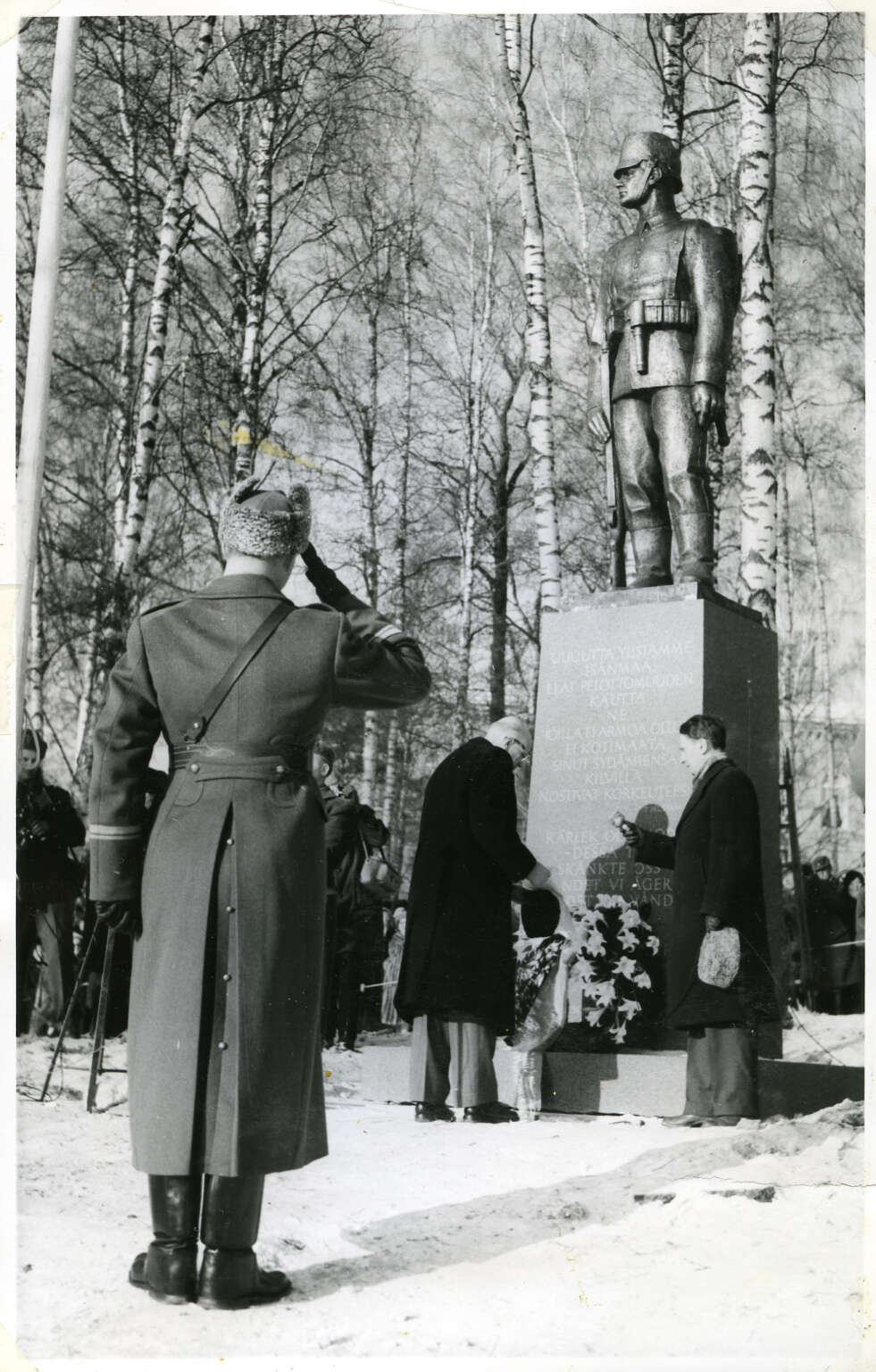
The Jäger Monument
The gaze of the Jäger Monument, located at the head of Vaasanpuistikko near Kalaranta, is directed toward Vaskiluoto. The unveiling ceremony of the monument, erected in honor of the Jägers, was attended in 1958 by the then President of the Republic, Urho Kekkonen. The 2.57-metre bronze statue in full military gear commemorates the 40th anniversary of the homecoming of the Jägers who received military training in Germany. On 25 February 1918 the Jäger unit returned to their homeland, to Vaasa harbour at Vaskiluoto.
The Air Force’s first aircraft
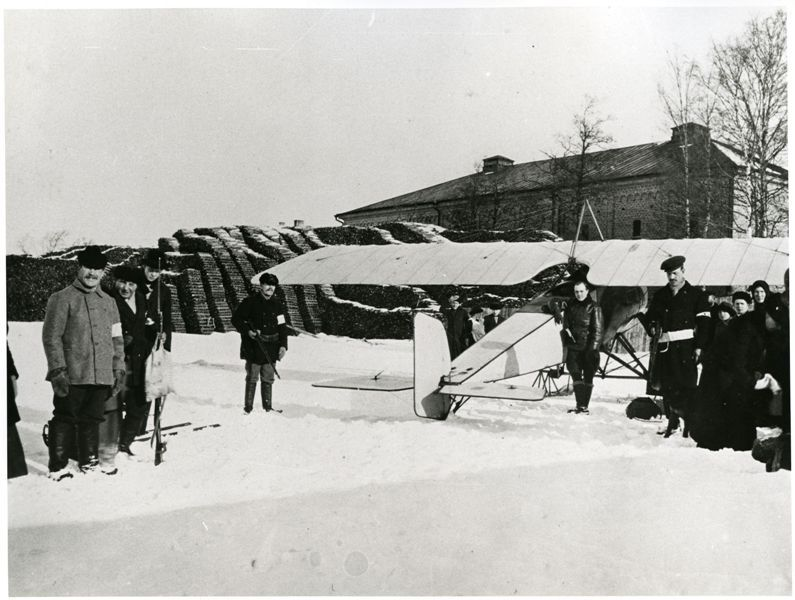
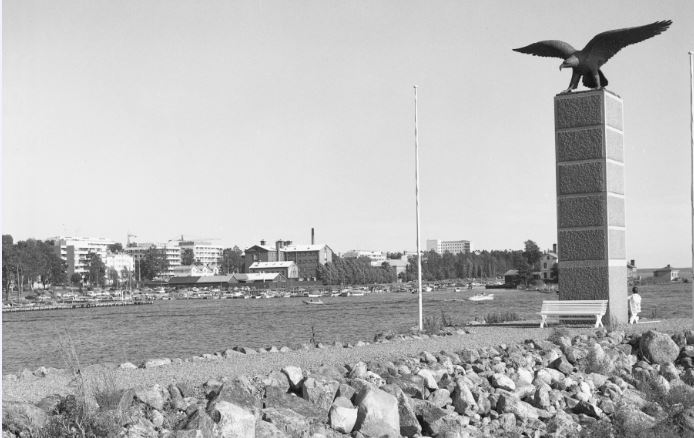
On 6 March 1918 the Air Force’s first aircraft landed on Eteläinen kaupunginselkä near the Kruununmakasiini. The plane, which had flown from Umeå to Vaasa, was piloted by Nils Kindberg. The passenger, Count Eric von Rosen, donated the aircraft to the Finnish Army and the plane was named Count von Rosen. Because of these events, the memorial erected next to the Vaskiluoto bridge is recognisable by the majestic sea eagle. It is believed that the sea eagle was chosen to symbolize the memorial, as it lands from flight with its legs outstretched, much like the first airplanes.