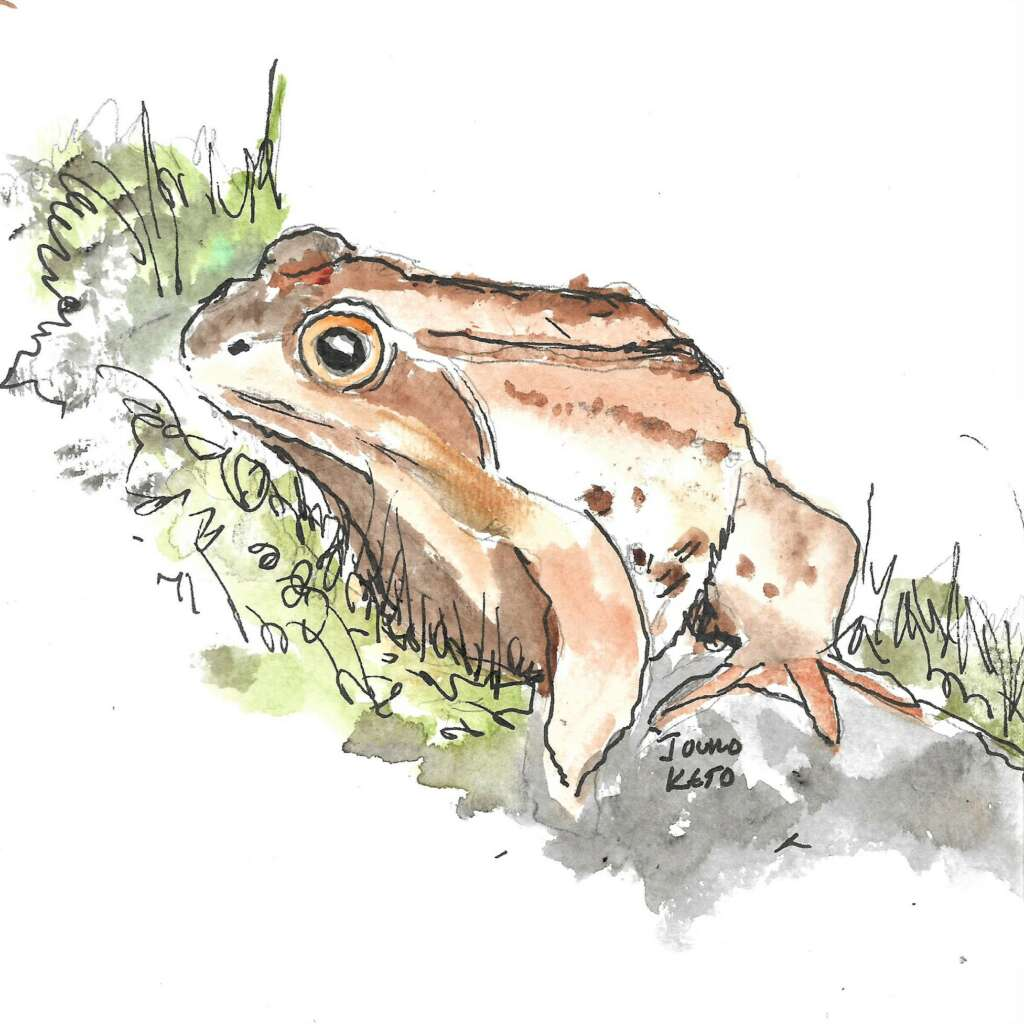
Several observations of the moor frog have been made at Emäntälahti and the bay is indeed a breeding area for the frog.
The moor frog, which looks ordinary, is often mistaken for the much commoner common frog. The most reliable way to recognize the moor frog in the field is by its characteristic bubbling call during the spring breeding season. The moor frog also prefers a wetter environment than the common frog.
The moor frog’s breeding season is in April–May and lasts only a few weeks. You are most likely to hear the species’ call late in the evening after dusk has fallen. The moor frog is relatively shy and will often stop its mating calls when the breeding pond is approached.
In summer the moor frog moves little outside its preferred home area. It spends the winter hibernating on the bottoms of ponds and lakes. Moor frogs eat insects such as flies, beetles and spiders. Tadpoles, on the other hand, feed on algae and other plant material.