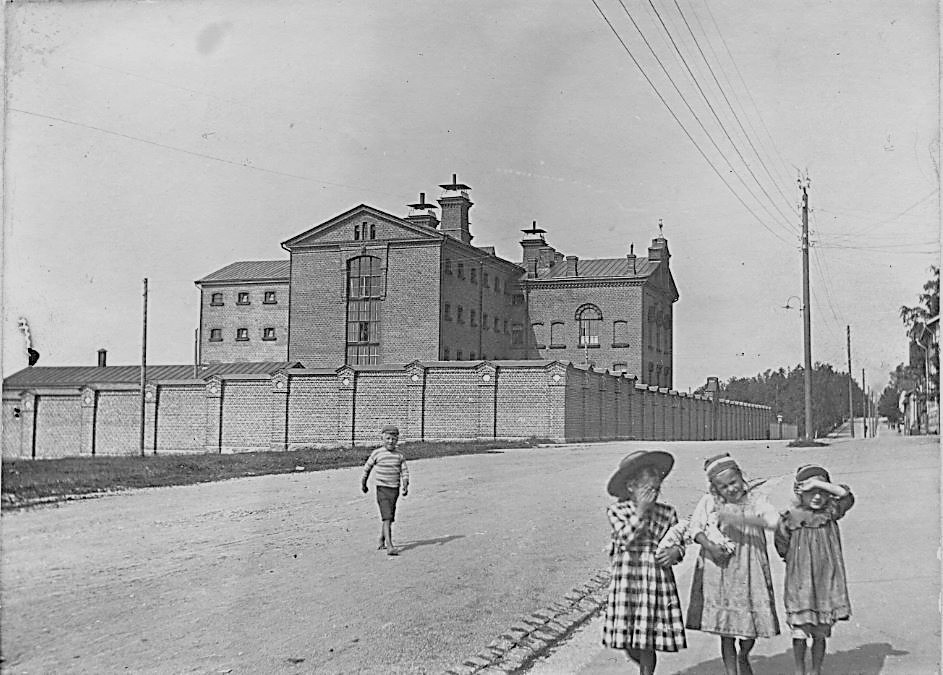
Prisoners were held in Korsholm Castle as early as the 17th century. After the fire in Old Vaasa, a newer and more spacious prison was desired. Vaasa Prison was designed by C.A. Setterberg, and it was built at its current location in 1861–1863. The location was excellent at the time, as for the sake of security and work peace the prison was at a suitable distance from the city, while also being close to the court of appeal.
Many well-known residents have spent time in Vaasa Prison because of their crimes. It is said that a sentence felt worse if, during the summer, one had to watch from the seafront cells as the people of Vaasa set off to their summer cottages with picnic baskets and cases of beer.
Among Vaasa Prison’s best-known inmates are the knife-wielding ruffians Antti Rannanjärvi and Antti Isotalo. The puukkojunkkarit were troublemakers who spread fear in Southern Ostrobothnia, especially from the 1820s to the 1880s. The knife gangs committed various petty crimes. They rode other people’s horses, stole, showed up uninvited to disturb weddings and rioted while drunk. Some of them were also guilty of violent manslaughters.
Editor-in-chief and newspaper publisher Edvin Sundquist managed to escape from the prison on Midsummer Night 1916. He was involved in the Jäger movement and served for a long time as editor-in-chief of Vasabladet. Also the prisoner Kaapo Sutki escaped the prison in a peculiar way in 1874. He managed to remove a few bricks from his cell wall and crawled through the prison stove. Although the stove mouth was narrow, Sutki fit through it, and he then climbed over the fence to freedom.
A large attic fire occurred in Vaasa Prison in 1934, when the fire destroyed the attics of the prison’s western and northern wing buildings. All belongings and archives were also destroyed. The loss of the archives was particularly significant, as the oldest documents dated from 1833. The fire damage was extensive, and when the cause was investigated it was found that an inmate had caused the fire through careless handling of fire. Today the exterior walls and the prison wall of the prison building are protected as architecturally and historically significant sites.
Räätälinsaari factories
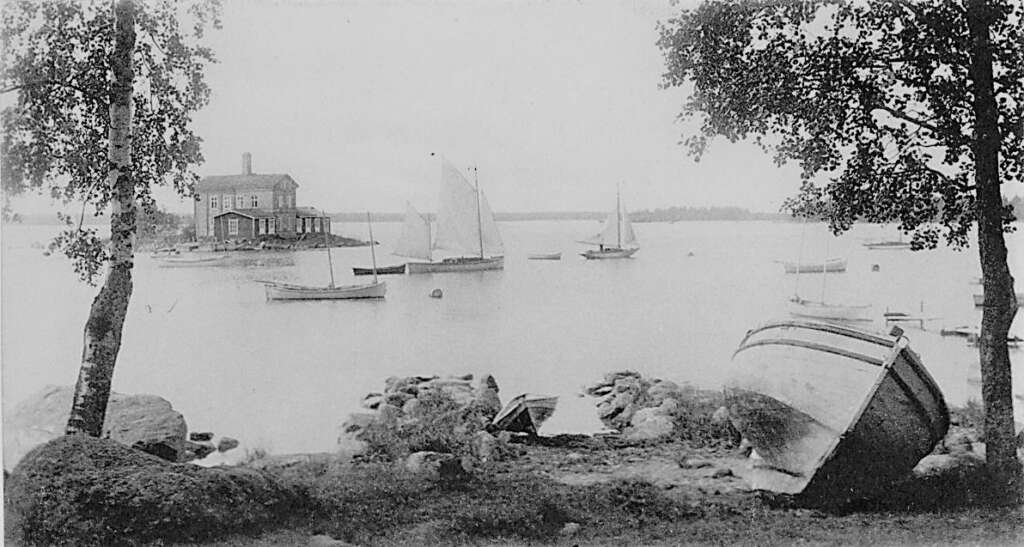
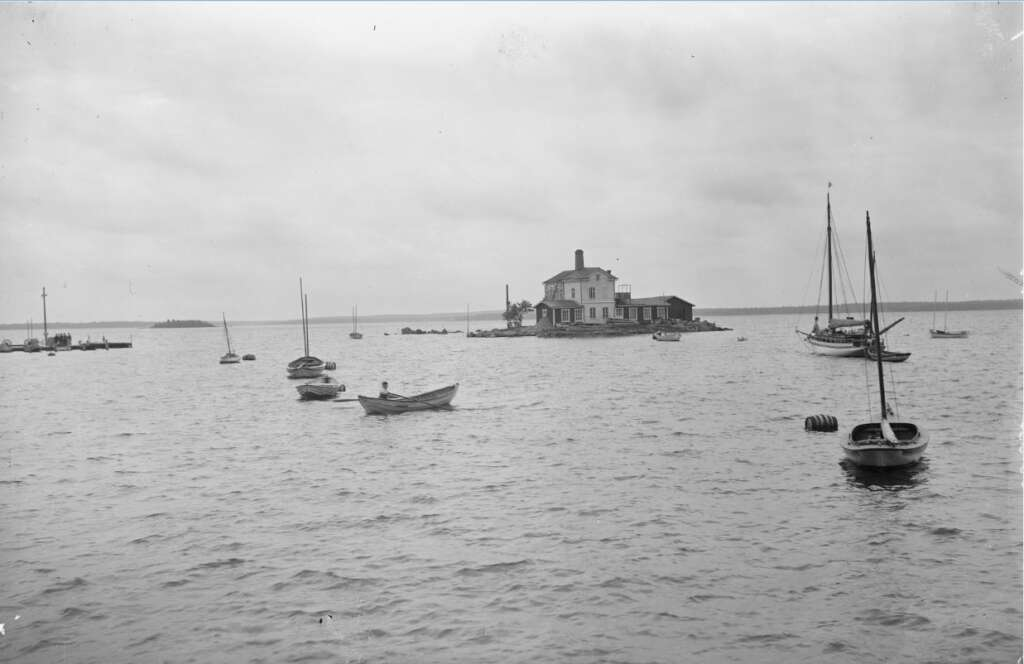
On the small Räätälinsaari in front of Vaasa Prison there was industrial activity from 1881 onwards. Merchant Erik Sandås founded on the island a steam-driven stone crusher. Later on the same site there were also a pencil factory and the Vaasa Technical Factory, until in 1910 Räätälinsaari was taken into use by a motor factory. The factory was founded by August Sarin and Kustaa Pälvi. They had trained as professionals in the Cotton Mill’s machine workshop.
When industrial activity began, Räätälinsaari’s area was considerably smaller than it is today. The island was also so low that stormy seawater soaked the structures of the buildings on the island.
The factory on Räätälinsaari operated for a long time, until the island’s eventful nearly 100-year history as an industrial area ended in the winter of 1980. The island’s factory buildings were demolished, and the island was turned into a recreational area for the townspeople. It has been estimated that several thousand engines were produced at the factory during its period of operation.