
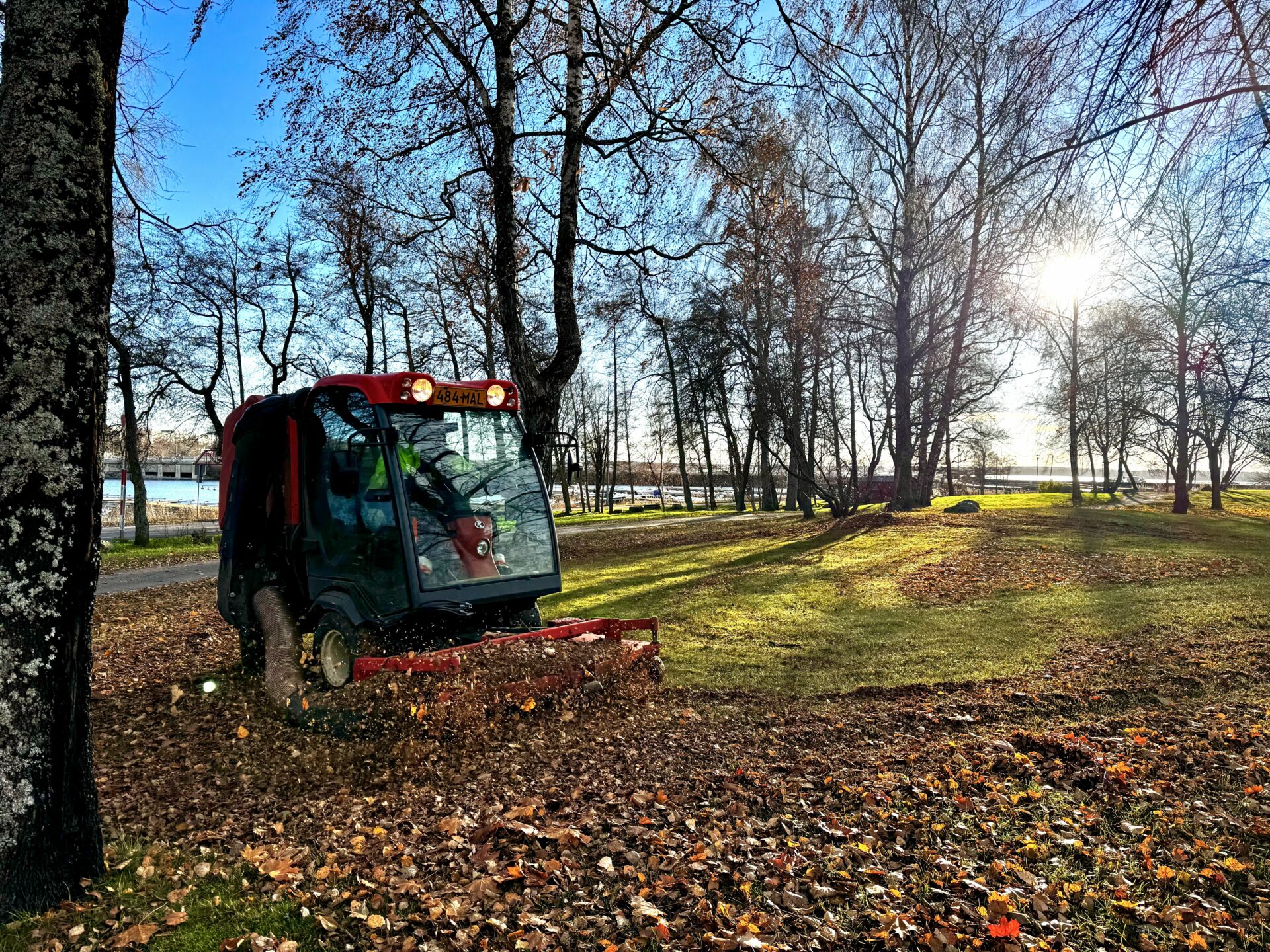
Parks, green areas and nearby nature are an important part of a pleasant, safe and vibrant Vaasa. The city is responsible for the maintenance of parks, playgrounds, green areas, street greenery and other public areas throughout the year.
The green area maintenance team maintains the city’s green areas:
- parks
- playgrounds
- beaches
- allotment areas
- roadside green areas
- dog parks
- campfire sites
- pet cemetery
- carpet washing sites
In winter we maintain park ice rinks, sledding hills and the winter swimming spot. Maintenance of park structures and play equipment is the responsibility of the landscaping team.
The number of areas to be maintained is continuously increasing. In line with the city’s strategy we promote biodiversity by increasing meadow areas and reducing the frequency of lawn mowing. The maintenance of green areas is guided by national maintenance and care classifications (RAMS20 and VKT21), and the level of care is determined by the area’s intended use, vegetation and materials.
In Vaasa, the area of constructed parks maintained in maintenance classes R1–R4 is approximately 163 hectares in total. Other public open green areas in maintenance classes A1–A5 (meadows, landscape fields) amount to over 350 hectares. In addition, we partly take care of the cleanliness of forest areas (M1–M5).

No winter maintenance on park paths
Park paths and the playground are not maintained during winter. Use them at your own risk.
Green area maintenance classification
The City of Vaasa’s green areas are divided according to the national green area maintenance classification (RAMS) into different maintenance classes based on the area’s intended use, users, natural conditions and the quality and cost objectives of the green area. The maintenance classification defines the quality level according to which the area is maintained. Maintenance levels and methods vary greatly between classes. For example, high-quality constructed city green areas require care daily, while nearby forests are maintained every few years. The classification based on green area maintenance classes is used in Finnish cities and municipalities that have a professional green sector organisation.
Source: Finnish Green Environment Association (Viherympäristöliitto) (2020). Green area maintenance classification RAMS 2020. Publication no. 67 of the Finnish Green Environment Association.
Constructed green areas are various parks, squares, outdoor areas of properties, cemeteries, roadside green areas as well as green areas intended for sports, play and other special activities. Constructed green areas withstand wear; they include planted and natural vegetation, paved paths as well as art, structures, equipment, furniture and devices.
R1 High-value constructed green area
High-value constructed green areas are green spaces built to a high standard using quality materials. They are particularly valuable because of garden culture, garden art, cultural heritage and historical features; they have a major impact on the cityscape and provide users with experiences.
High-value constructed green areas include valuable urban parks, squares and roadside green areas, historically valuable environments, plantings associated with representative buildings, yards and entrances, and war heroes’ graves.
High-value constructed green areas require daily, regular and efficient maintenance.
R2 Functional green area
Functional green areas consist of parts of green areas reserved for pedestrian and cycling route connections as well as for exercise, play and special functions. Maintenance work follows a site-specific safety document; winter maintenance is carried out according to maintenance classifications.
Typical functional green areas are:
- park paths in the pedestrian and cycling route network
- playgrounds and playfields
- park fields and park ice rinks
- fitness and local exercise areas
- transport, activity and event parks
- beaches and swimming spots
- carpet washing sites
- dog parks
- allotment and urban cultivation areas
- cemeteries
Sports and playing fields and performance venues are not included in this maintenance class.
R3 Amenity green area
Amenity green areas are urban and town green areas for residents, which may have diverse vegetation and structures such as ponds, bridges, stairs and other engineered structures. They are intended for staying, enjoyment, social interaction, recreation and nature experiences at different times of the year. The areas are kept safe, tidy and free of litter.
- urban parks, squares
- vegetation and seating areas of market areas and courtyards
- shoreline green areas
- street tree plantings
- planter beds
Constructed natural stormwater structures, channels and basins and soakaways that require intensive maintenance.
R4 Protective and transition green area
Protective and transition green areas are transitional zones between built and natural environments and urban nature that provide visual, noise and dust protection. These areas offer layered and diverse habitats for species and vegetation. The areas are managed according to use and maintenance plans and are kept free of litter.
Typically these include:
- protective and edge zones with predominantly natural vegetation
Natural stormwater areas, such as open ditches, streambeds, wetlands and ponds.
Open green areas are natural or constructed meadows and fields. Vegetation on open green areas may be native vegetation, cultivated crops or non-native plant species, with edge zones and islets formed by individual trees and shrubs. Areas may also include structures, equipment and devices whose safety is regularly monitored. The aim of open green areas is to promote biodiversity, and their management is defined in maintenance plans and carried out, for example, by grazing and seasonal mowing.
A1 Valuable meadow
Valuable meadows are meadows that are particularly important and valuable because of landscape, cultural heritage and biodiversity. The management of valuable meadows is carried out according to site-specific management plans.
A2 Amenity meadow
Amenity meadows are part of recreational areas, parks, yards, cultural and heritage landscapes. Vegetation in amenity meadows is cultivated and/or native. They offer opportunities for outdoor activities, hobbies, staying and social interaction. Management aims to keep the area safe and tidy by mowing or mulching according to the management plan 2–4 times per growing season.
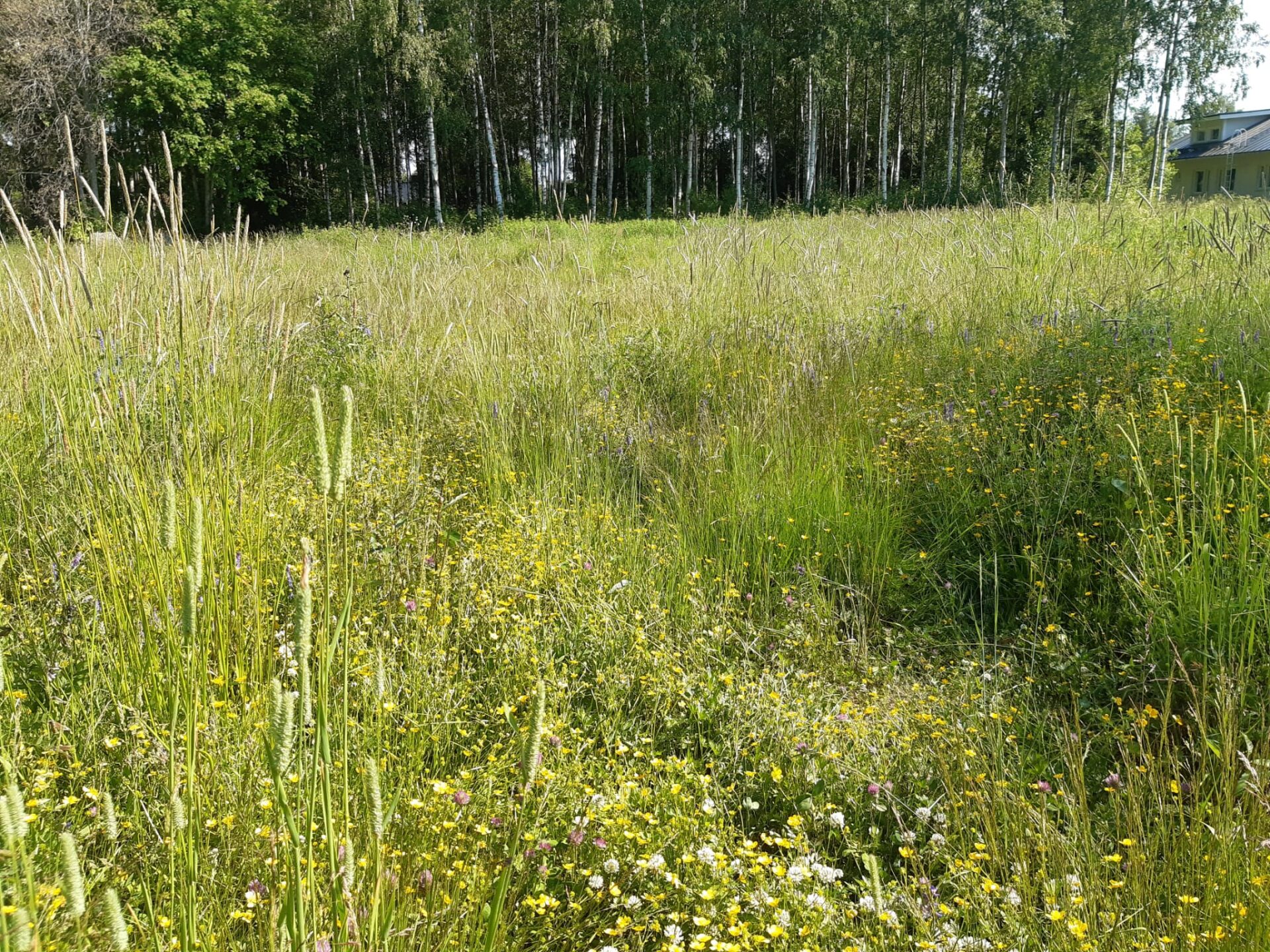
A3 Landscape meadow
Landscape meadows are part of recreational areas, parks, roadside green areas, cultural or heritage landscapes. They are open or semi-open landscape areas. Vegetation consists mainly of grass-like native plants. Access across landscape meadows can be directed from built areas by mowing paths. Management is carried out by mowing or mulching according to the management plan 1–2 times per growing season.
A4 Open area
Open areas are often former agricultural fields along urban approach roads and roadside fields abandoned from cultivation, open areas in forests and under power lines as well as buffer zones of natural stormwater structures. Open areas also include sea landscapes, shoreline meadows, river and lake landscapes and viewpoints. Recreational use of open areas is limited. Management mainly consists of bush clearing and mulching every 1–5 years.
A5 Landscape field
Landscape fields are part of recreational areas, parks or agricultural landscapes and enrich the urban landscape. Landscape fields are cultivated with one- or multi-year useful and landscape plants. They also include allotment and urban cultivation areas, which are tilled annually using arable farming methods. Buffer zones of landscape fields ensure habitats for species dependent on field cultivation. Movement through these areas is directed along constructed pedestrian and cycling paths and trails. Management follows good cultivation practices, water protection guidelines and planned crop rotation. Buffer zone management ensures the preservation of biodiversity, and invasive species are removed regularly.
Valuable forests are special forest areas in or outside urban areas and are important and valuable because of landscape, culture and biodiversity. Valuable forests may be located within or connected to other M-subclass forest areas. Valuable forests are generally not protected and recreational use is limited.
Valuable forests can include forests in areas covered by town plans that qualify under the Forest Act, dense forests and shrublands valuable for fauna, landscape-valuable shoreline forests, planted noble tree forests, tree species arboretums, tree species parks and forest areas containing ancient monuments or war-historically valuable fortification structures.
In planning the management of valuable forests, the special nature of the site and the special needs of users are taken into account; management is guided by a site-specific forest plan.
M2 Nearby forest
Nearby forests are located close to residential areas and are used daily; they have good path and trail networks. Management aims to take account of natural values, forest vegetation, cleanliness, safety and comfort. Nearby forests may include structures and furniture whose maintenance is regularly monitored. Tree and vegetation maintenance cycles recur at 3–5–10 year intervals.
M3 Outdoor and recreational forest
Outdoor and recreational forests are forests located near or a little further from residential areas. They are used for outdoor activities, hiking, exercise, berry-picking, mushrooming and relaxation. They may include various structures such as campfire sites and maintained trail and ski networks. Forest management emphasizes the vitality and regeneration of trees as well as landscape and biodiversity values. Safety of outdoor routes and ski networks is ensured. Tree and vegetation maintenance cycles are 5–10–20 years.
M4 Protective forest
Protective forests are located between residential areas and various disturbance-causing functions such as roads and industrial facilities. Protective forests help mitigate fine particulate, dust and noise impacts. They provide visual screening and act as wind and snow mitigation belts. Recreational use of protective forests is limited; there are usually no outdoor trails or structures for recreation. Management aims to maintain the vitality and layered structure of trees and other vegetation. Maintenance cycles are 5–20 years, preserving the protective function as well as health and safety aspects.
M5 Production forest
Production forests are located outside the urban structure. Production forests are managed with economic return expectations. The aim of production forest management is to provide sustainable good yield while maintaining biological diversity.
Protected areas are areas designated by law, decree or decision by the Government, a ministry, an ELY Centre or another authority, which contain protected nature sites. A protected area may also be an area containing structures or remains protected under the Antiquities Act or other protected ancient monuments, if they can be considered area-wide sites. A protected area can also be protected by the landowner’s decision or other decision. The goal of managing protected areas is to secure the diversity of species and habitat types and to maintain national landscape, cultural heritage, recreational and hiking areas or other special and protected values.
X LAND USE CHANGE AREAS
Land use change areas are areas designated in general or local plans for construction or within the impact area of construction. Their maintenance aims to condition vegetation for future use so that vegetation to be preserved remains vital after changes caused by construction. For example, trees may be thinned so that preserved trees acclimatize to changes in wind conditions and increased light.
X Subclasses
Rx Change area maintained in the appearance of a constructed green area
Ax Change area maintained in the appearance of an open green area
Mx Change area maintained in the appearance of a forest.
The green area cleanliness classification defines the intensity of cleaning and the level of tidiness to be aimed for, taking into account the general appearance of the area. The green area cleanliness classification functions as an independent classification.
- P1 Daily (Mon–Sat)
- P2 Weekdays (Mon–Fri)
- P3 Weekly (3 times/week)
- P4 Weekly (2 times/week)
- P5 Weekly (1 time/week)
- P6 Monthly
- P7 Annually
(Note! Cleanliness during the winter season and cleaning on Sundays and public holidays is agreed separately)
The general work specification for green area maintenance VKT 2021 is intended as a national general work specification and quality requirements document for green area maintenance. The general quality requirements presented in VKT are specified in project-specific maintenance specifications and in maintenance task or product cards prepared by municipalities. It is applicable, for example, to defining the quality of maintenance for parks, forests, cemeteries, roadside green areas and the surroundings of sports and exercise facilities.
Source: Finnish Green Environment Association.
Vaasa combats invasive species, collects spatial data about them and encourages residents to combat them on their own land. Read more about invasive species.
-
Maintenance of green areas


