


Article categories: News
A new exhibition at the Ostrobothnian Museum takes visitors on a journey through different eras in the history of games
Published: 6.11.2026
The Ostrobothnian Museum opens with new exhibitions on 7th of November 2026 the exhibition Fortuna – Games from Cultural History to Contemporary Art explores the history of games and gaming, from their earliest forms to the present day. The exhibition features rare game collections, cultural history objects dating from the 18th century onwards, treasures of art history and contemporary art inspired by games and gaming. At the same time, a new temporary exhibition will open as part of Terranova’s permanent natural history display. The museum’s permanent collection exhibition has also been refreshed with new works.
The exhibition Fortuna – Games from Cultural History to Contemporary Art explores the role of games as a pastime, a tool for learning and a reflection of society. The exhibition showcases rare game collections and objects from the collections of Vaasa Museums, including gaming tables from the 18th and 19th centuries. Interesting artworks in a shape of games are also featured by the contemporary artists Harold Hejazi, Joonas Hyvönen, Marita Liulia, Reija Meriläinen and Maria Nordbäck.
Games as a reflection of culture and society
The exhibition draws inspiration from Dutch cultural historian Johan Huizinga’s well-known concept of Homo Ludens, which sees play and games as a fundamental part of being human.
The exhibition’s title refers to Fortuna, the ancient Roman goddess of luck and fate. In her role as the goddess of fortune, she transcended social boundaries, and even the poorest members of society could take part in festivities held in her honour. The exhibition’s titular work is Eeva Peura’s painting Fortuna (2022), in which reality and fantasy, past and present intertwine. The work also features Juho Jussila’s Fortuna Board Game, a version of the bagatelle pinball game, familiar to generations of Finns. An early version of the game is on display in the exhibition.
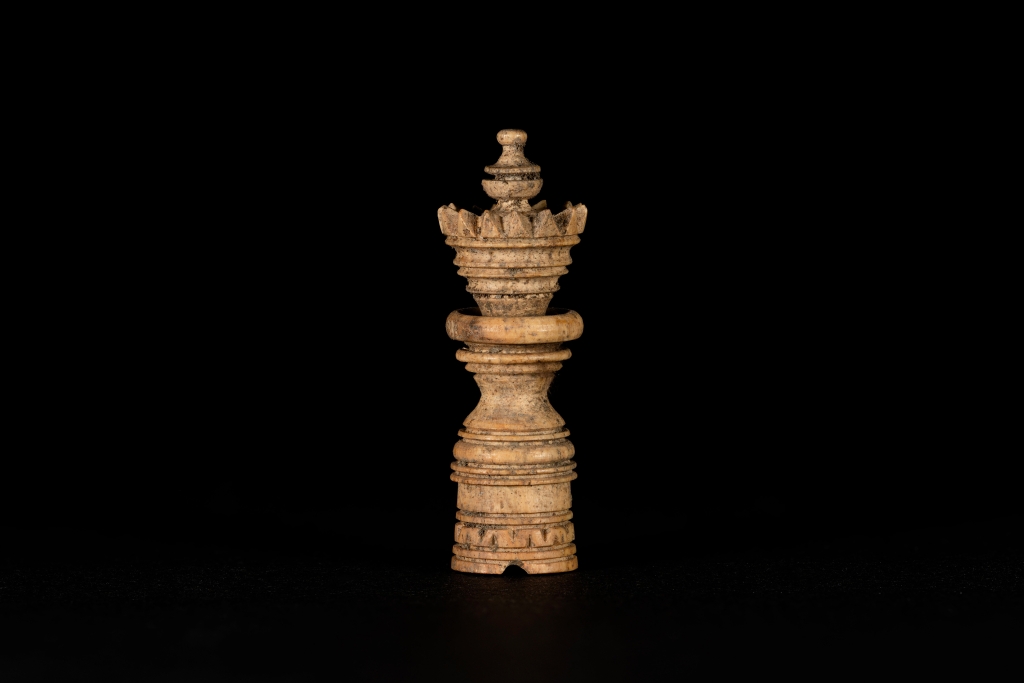
The exhibition explores the history and cultural significance of well-known games such as chess, as well as a variety of board games and card games. It also traces how games have travelled across continents and cultures, shaping the ways people spend time together.
Leading names in Finnish game and media art
Contemporary art offers another perspective on the world of games. The interactive works on display invite visitors to get involved and explore the connections between gaming, society, technology, and identity.
The exhibition features several leading figures in Finnish game and media art, including Harold Hejazi (b.1989), Joonas Hyvönen (b.1990), Marita Liulia (b.1957), Reija Meriläinen (b.1987) and Vaasa-based Maria Nordbäck (b. 1957).
The exhibition features Faint (2018), a spatial sequel to AVEK Award winner Reija Meriläinen’s Survivor (2017). The work explores themes including individual exhaustion and the fragility of support structures in a society driven by the pursuit of maximum efficiency. In Harold Hejazi’s Harri Kala: Omniscient Harjus (2025), harnessing AI technology, visitors can have a real-time conversation with a mythical fish character.
The exhibition also features major works from the history of art, including Adolf von Becker’s A Game of Piquet (1869) and Gunnar Berndtson’s Chess Players (1878), as well as playing cards by Outi Heiskanen and Hannu Väisänen. An early Moomin game board illustrated by Tove Jansson (1957) is also on display, together with Netsurfer (1995), a computer divan by Ilkka Terho and Teppo Asikainen of the Snowcrash group. Other highlights include game-themed artworks, prints and illustrations by Carl Johan Billmark, Alvar Cawén, Sonia Delaunay, Jan Kaila, Ida Silfverberg and Virgil Solis.
The exhibition curated by Museum Curator Noora Lehtovuori. The exhibition has received support from the Finnish Heritage Agency, Vaasan Aktiasäätiö, and the Brothers’ Gröndahl Foundation and will be on display at the Ostrobothnian Museum from 7th of November 2026 to 7th of March 2027. The exhibitions’ official opening, open to all, will be held on Friday 6th of November from 18 to 20.
At the same time, a new exhibition entitled The Viper and Its Cousins will open as part of Terranova’s permanent natural history exhibition. The museum’s permanent collection exhibitions have also been enriched with works on loan from Turku Art Museum.