



Article categories: News
Finland’s first artists’ colony and its pioneering women artists take centre stage in a new exhibition at Tikanoja Art Museum
Published: 9.10.2026
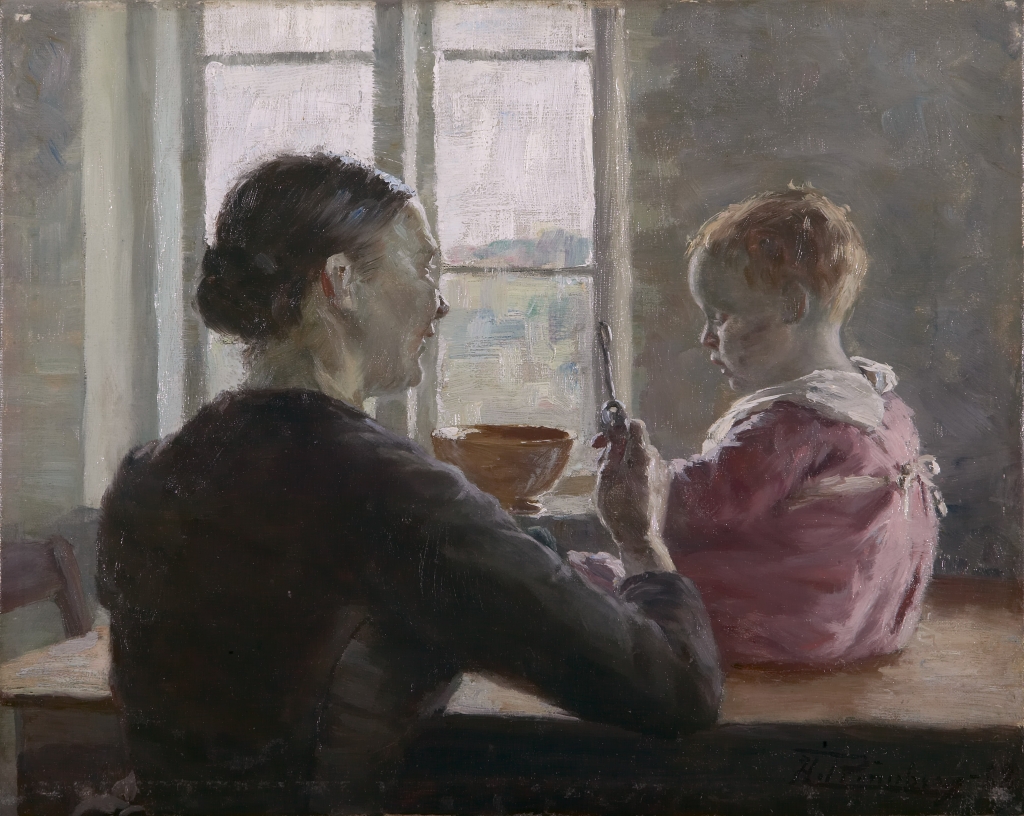
Tikanoja Art Museum opens the autumn season after extensive renovations. The museum’s new exhibition invites visitors to explore the world of Finland’s first artists’ colony. Active in the Åland Islands between 1886 and 1914, the Önningeby artists’ colony was an important meeting place for Finnish and Swedish artists and a leading centre of plein air painting in the Nordic countries. At the same time, the renewed permanent exhibition Serene Moments and Vibrant Colours, highlighting the museum’s collections, will reopen to the public.
The exhibition mÅland – The Önningeby Artists’ Colony presents key figures of the Önningeby artists’ colony, with a particular focus on the women artists who formed the majority of the community. The exhibition features works by, among others, Nina Ahlstedt (1853–1907), Elin Danielson-Gambogi (1861–1919), Ida Gisiko-Spärck (1859–1940), Amélie Lundahl (1850–1914), Anna Wengberg (1865–1936) and Hanna Rönnberg (1862–1946). Also highlighted are two artists with roots in Ostrobothnia: Elin Alfhild Nordlund (1861–1941), who was born in Närpiö, and Eva Topelius-Acke (1855–1929) from Uusikaarlepyy.
Plein air painting flourished in artists’ colonies
The Önningeby artists’ colony was established in 1886 on the initiative of the artist Victor Westerholm. Westerholm invited fellow artists to Åland and to his summer residence, Tomtebo, where they painted and spent time together.
Plein air painting, or the practice of painting outdoors, was gaining popularity at the time. The first artists’ colony had been established in Barbizon, France, in the 1830s, and the so-called Barbizon School quickly spread to other European countries. The artists’ colonies of Grez-sur-Loing, Pont-Aven and Skagen became popular destinations for Nordic artists. In Önningeby, the artists captured rural life and the landscapes of the Åland archipelago in their works.
Villa Tomtebo soon became the heart of the community. In addition to Westerholm, the colony’s founding members included the artist couple Fredrik and Nina Ahlstedt, Hanna Rönnberg, Elin Danielson-Gambogi, Alexander Federley and the Swedish artist J.A.G. Acke. Although the Önningeby artists’ colony remained active from 1886 to 1914, its most vibrant and productive period fell within its first six years. The composition of the group changed from year to year. Some artists returned to the colony every year, while others spent only one or a few summers there. Over the years, more than 30 artists were part of the colony.
Women artists played a prominent role
A distinctive feature of the Önningeby artists’ colony was the prominent role played by women artists. Although women and men were represented in equal numbers when the colony was established, women later came to form the majority of the community. For them, Önningeby offered an opportunity to focus on their artistic work with greater freedom than was possible in many of the more traditional settings of the time.
The artists worked outdoors, capturing the landscapes of the Åland archipelago, rural scenes, local residents and one another in their paintings. Particular highlights include Elin Danielson-Gambogi’s realist depictions, Hanna Rönnberg’s Åland landscapes, and Ida Gisiko-Spärck’s delicate coastal and nature scenes. The colony also became an important forum for networking and the exchange of ideas, fostering new friendships and artistic influences that transcended national borders.
Connections to Ostrobothnia
The exhibition highlights two artists born in Ostrobothnia who were members of the Önningeby artists’ colony, and whose works were sought out specifically for this exhibition.
Eva Topelius-Acke (1855–1929), born in Uusikaarlepyy, was the daughter of the prominent writer Zacharias Topelius. She joined the Önningeby artists’ colony in 1887 and is particularly known for her landscape watercolours and floral motifs.
Elin Alfhild Nordlund (1861–1941), who was born in Närpiö, studied in Finland, Denmark, and France under some of the leading artists of her time. She was active in the Önningeby artists’ colony in the late 1880s and is particularly known for her depictions of coastal landscapes. She later worked for many years as an art teacher, while continuing to pursue her own artistic practice actively throughout her career.
The exhibition is on display at Tikanoja Art Museum from 10 October 2026 to 20 February 2027. The exhibition project has received financial support from the Veljekset Gröndahlin Säätiö foundation.
The exhibitions’ official opening, open to all, will be held on Friday 9 October from 18.00 to 20.00. Words of welcome will be delivered by Salme Sulander, Director of Education and Culture for the City of Vaasa, and the opening address will be given by Kjell Ekström, Chair of the Önningeby Heritage Association. Exhibition Curator Janna Sirén presents the exhibition. On Saturday 10 October at 13.00, Kjell Ekström will lead an expert-guided tour of the exhibition. The tour at Tikanoja Art Museum will be conducted in Swedish.
Tikanoja Art Museum’s renewed permanent exhibition reopens
Tikanoja Art Museum’s renewed permanent exhibition, Serene Moments and Vibrant Colours, reopens to the public. Located on the museum’s first floor, the exhibition presents highlights from the outstanding art collection of Vaasa-based Commercial Counsellor Frithjof Tikanoja (1877–1964), featuring masterpieces of both Finnish and international art.
New additions to the permanent exhibition offer fresh insights into the Tikanoja collection. Among the exhibition’s new features is a rotating display of works on paper, with each selection on view for around six months at a time. Woodcuts from Paul Gauguin’s 1895 Te atua series, Gods and Te Po (Night), are on display from the museum’s collection of international art. Highlights of the Finnish art collection include Akseli Gallen-Kallela’s Joukahainen’s Revenge (Joukahaisen kosto, 1903) and Matti Visanti’s paintings The Skiing of Lemminkäinen (Lemminkäisen hiihto) and Kullervo as a Sheperd Boy (Kullervo paimenessa, 1932).
A new addition to the exhibition is a display case presentation featuring Portrait of the Artist’s Sister by Valle Rosenberg from the Karl Hedman Collection, together with archival material relating to the artist’s sister, Ina Rosenberg. Works by Valle Rosenberg are also displayed on the Karl Hedman floor at the Ostrobothnian Museum from 7 November 2026 onwards.
Tikanoja Art Museum opens the autumn season after extensive renovations. In the summer of 2026, the building underwent an extensive façade renovation, restoring a colour scheme that honours the original character of Tikanoja Art Museum, both inside and out.