
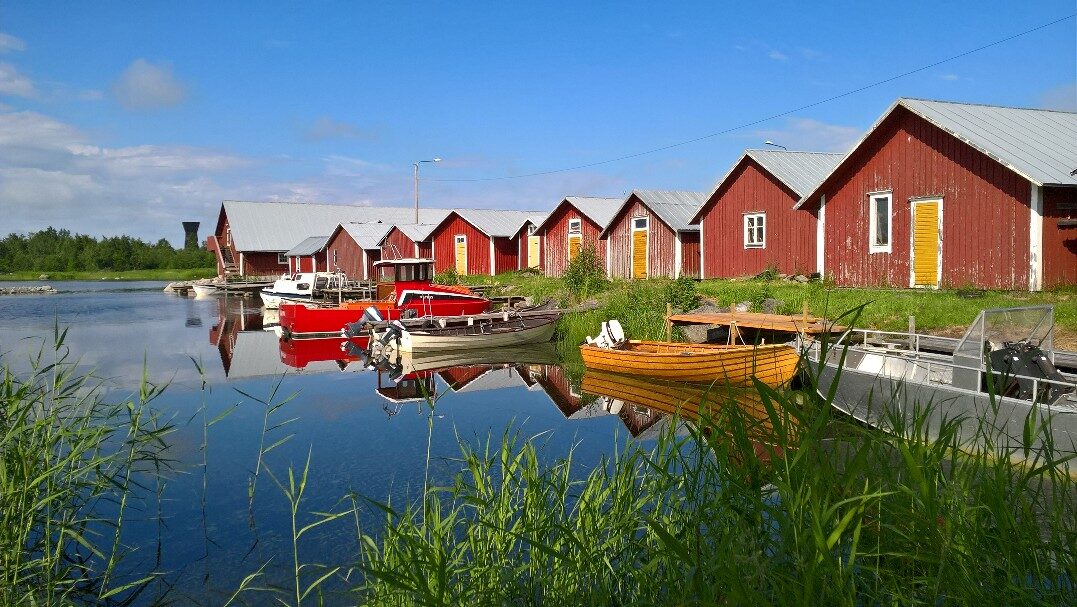
The project’s main task has been to collect stories from the Kvarken Archipelago UNESCO World Heritage area and make them available to visitors. Some of the stories have been compiled into an audio guide, which is available to visitors before, during or after their visit to the Kvarken Archipelago. Information boards have been placed in the landscape and at information points to tell about the audio guide and, in some cases, about the history of the sites where the boards are located.
Project description
The “Människan och landhöjningen” project creates the cultural-historical story of the Kvarken Archipelago. The project tells what it is like to live in an ever-changing landscape in the Kvarken Archipelago UNESCO World Heritage area. The aim of the project is to make the area’s cultural history more accessible both digitally and in analogue form, thereby adding a new dimension to the guidance offering for the geological World Heritage area.
The goal will be achieved by producing an audio guide in Finnish, Swedish and English that includes several important sites in the area. The project also includes information boards and other signs at certain field sites.
In the Kvarken Archipelago, piers slowly move onto dry land and hay barns hide deep in the forest. Many know that this is due to land uplift, a legacy of the last Ice Age. The phenomenon is also well known because the Kvarken Archipelago has been designated a UNESCO World Heritage site together with the High Coast of Sweden. The area’s distinctive geology represents an important part of the Earth’s history. But what has living in an ever-changing landscape meant for people?
In the project we are creating the cultural-historical story of the World Heritage area, which will later be presented, among other things, via a comprehensive audio guide along hiking trails, at sites and at special historical locations within and near the Kvarken Archipelago World Heritage area. The cultural-historical story will also offer product development ideas for tourism entrepreneurs and cultural workers, and tools will be created to help them tell the World Heritage story. The project also enhances on-site guidance, for example by adding information boards, developing the Björkö–Panike hiking route and developing a visitor attraction in the southern part of the World Heritage area.
- We are able to understand the surrounding world or places through people. This also applies to the area’s somewhat hard-to-understand geology, says project leader Liselott Nyström Forsén. By exploring the unique archipelago culture that has developed in the area you can also create an emotional bond to this magnificent landscape. Whether one is an islander with deep ties to the stony soil of Kvarken, a person who has moved to the area, a summer cottage owner, a visitor from different parts of Ostrobothnia or a tourist from far away, the World Heritage is our shared heritage that arouses both pride and enthusiasm in us all.
There are over 1,100 World Heritage sites worldwide, established so that unique places are preserved for future generations – which also means that we must preserve the history of previous generations. That is why we now want to bring together people, associations and organisations interested in local and regional history. In this way we can together pick the pearls of the Kvarken Archipelago, select sites for the audio guide and consider how the cultural-historical story of the World Heritage area can be passed on.
- However, the matter should be considered through ‘World Heritage lenses’, Liselott Nyström Forsén smiles, and really find the connection between landscape and culture. For example, the beautiful furniture made in Björkö would not have received its distinctive blue colour if a ship carrying blue pigment in its cargo had not been wrecked on the treacherous rocky shores of our archipelago. We can in turn thank the rocks to the Ice Age, and thanks to the land uplift that followed, there are rocks in places where there should be none.
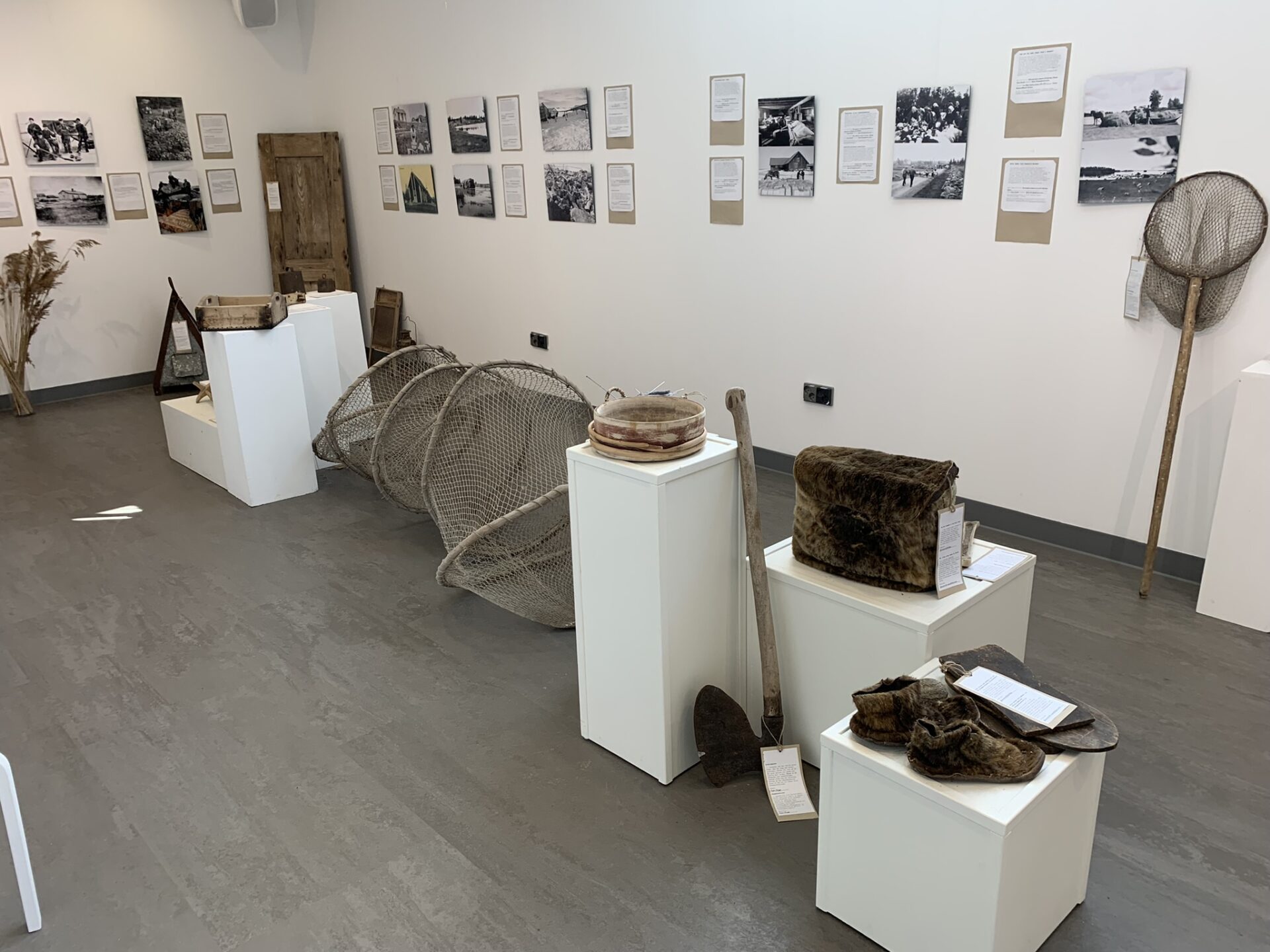
The “Människan och landhöjningen” project started on 1 June 2020 and continued until 31 October 2022.
The project is financed by the Ministry of Education and Culture, Metsähallitus and KulturÖsterbotten. For more information, contact the Kvarken World Heritage Association by email at info@kvarken.fi or by phone at +358 50 3466 200.