
You should always take the opportunity to go on a trip to the outer archipelago of the Kvarken. On sunny summer days the outer islands are true paradises.
Thousands of unique islands are full of contrasts: smooth rocks, barren skerries as well as lush forests and bays. Majestic lighthouses and pilot stations recall life in former times. Today the islands have summer cottages, and many of these cottages are former fishermen’s huts. The Kvarken archipelago is also home to many birds, which in their abundance are one of the attractions of the Kvarken. Please also remember to respect all the wonders of nature, for example by taking your rubbish away and leaving the birds’ nests undisturbed.
World Heritage cruises to the Mikkelinsaarit are organised in the summers. Archipelago entrepreneurs also offer boat trips to the outer islands on request. For those who own their own boat we recommend landing, for example, at the guest harbours of Moikipää or Fäliskäret islands.
Maritime attractions
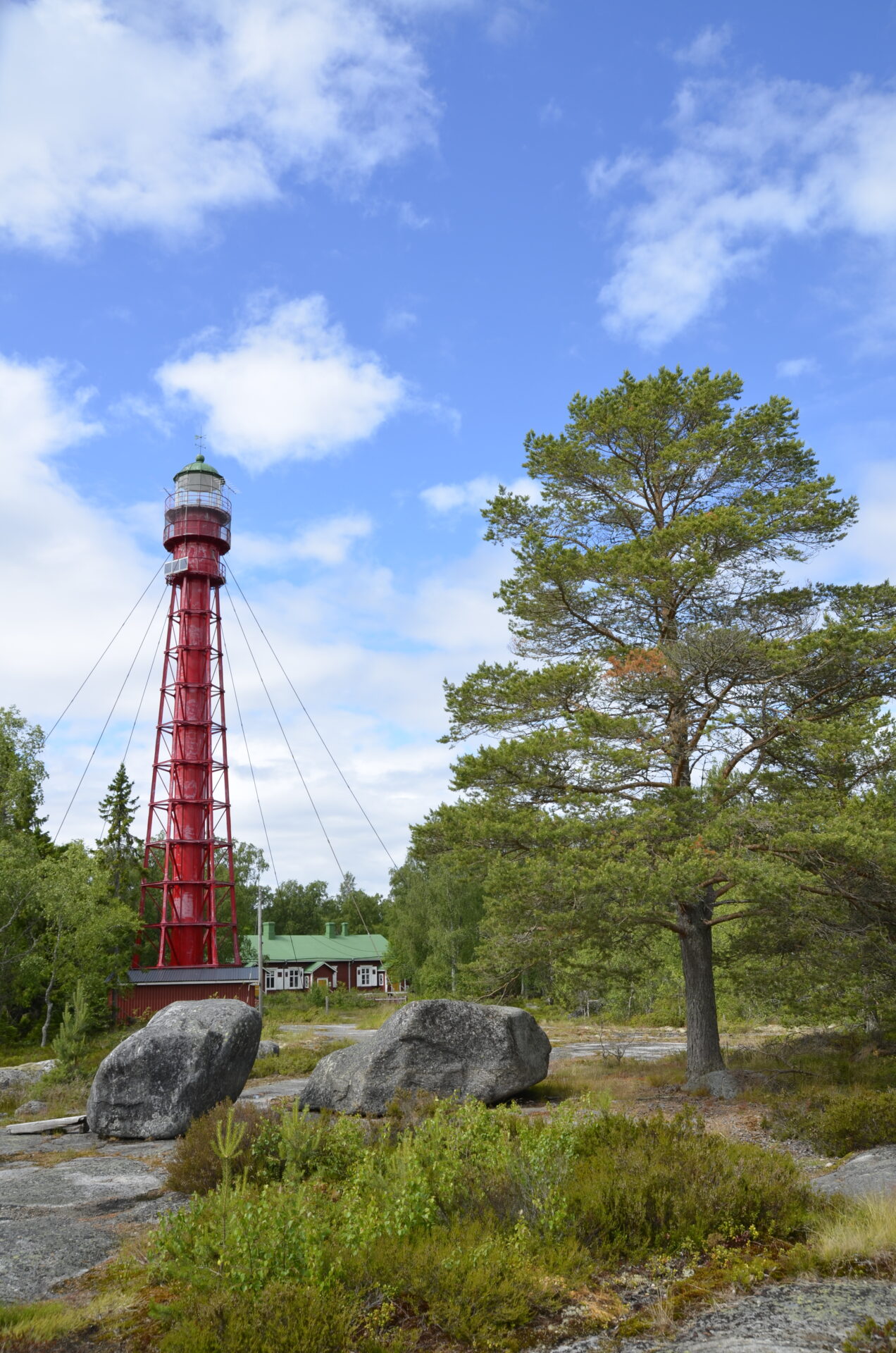
When you approach the Valsörarna Islands, you will see the islands’ own red “Eiffel Tower” on the horizon. The tower is actually a lighthouse. Valsörarna have been one of the most important fishing grounds for the villagers of Björköby, and the island has been inhabited by lighthouse keepers and coast guards. Now the lighthouse operates automatically, and the Kvarken’s rocky waters are monitored from Södra Vallgrund.
Today you mainly hear the songs of abundant birdlife on Valasörarna – or the delighted exclamations of birdwatchers from the Ostrobothnia Australis association. Valsörarna are a popular resting place for migratory birds and a breeding area for seabirds. The villagers of Björköby made the islands a bird protection area already in 1948.
Along the island’s nature trail you can spot one bird after another and experience the post-glacial uplift forests that are characteristic of the Kvarken archipelago. Please stay on the path so you do not disturb the birds and their chicks.
The Mickelsörarna Islands were inhabited for a long time. At its peak the Mickelsörarna Islands had up to 35 inhabitants who lived on the islands almost year-round. But as early as the 16th century the first fishermen and hunters visited Kummelskär. At that time Kummelskär had just risen from the sea as a result of post-glacial uplift. Signs from those times can still be seen along the island’s nature trail: mysterious stone labyrinths, old fishermen’s ovens and compass roses
The last resident was 90-year-old Ida Lundberg, who lived on the islands until the late 1990s. The stories of Ida and many other residents have been written down.
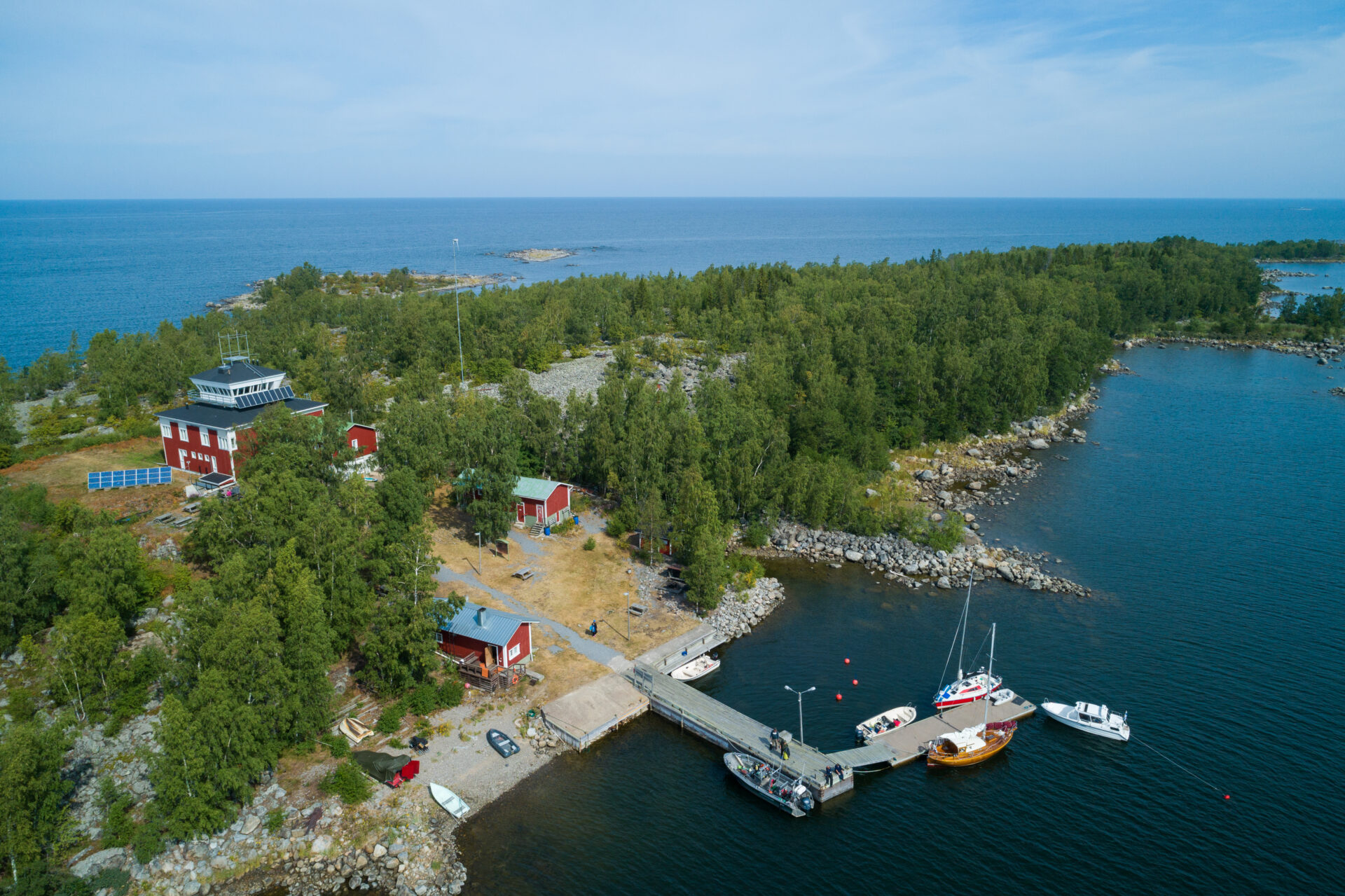
The former coast guard station on Kummelskär now houses a summer café. The island’s sheltered southern shore has a guest harbour. From the nature station’s observation tower you can admire the unique landscape that has been included on UNESCO’s World Heritage List.
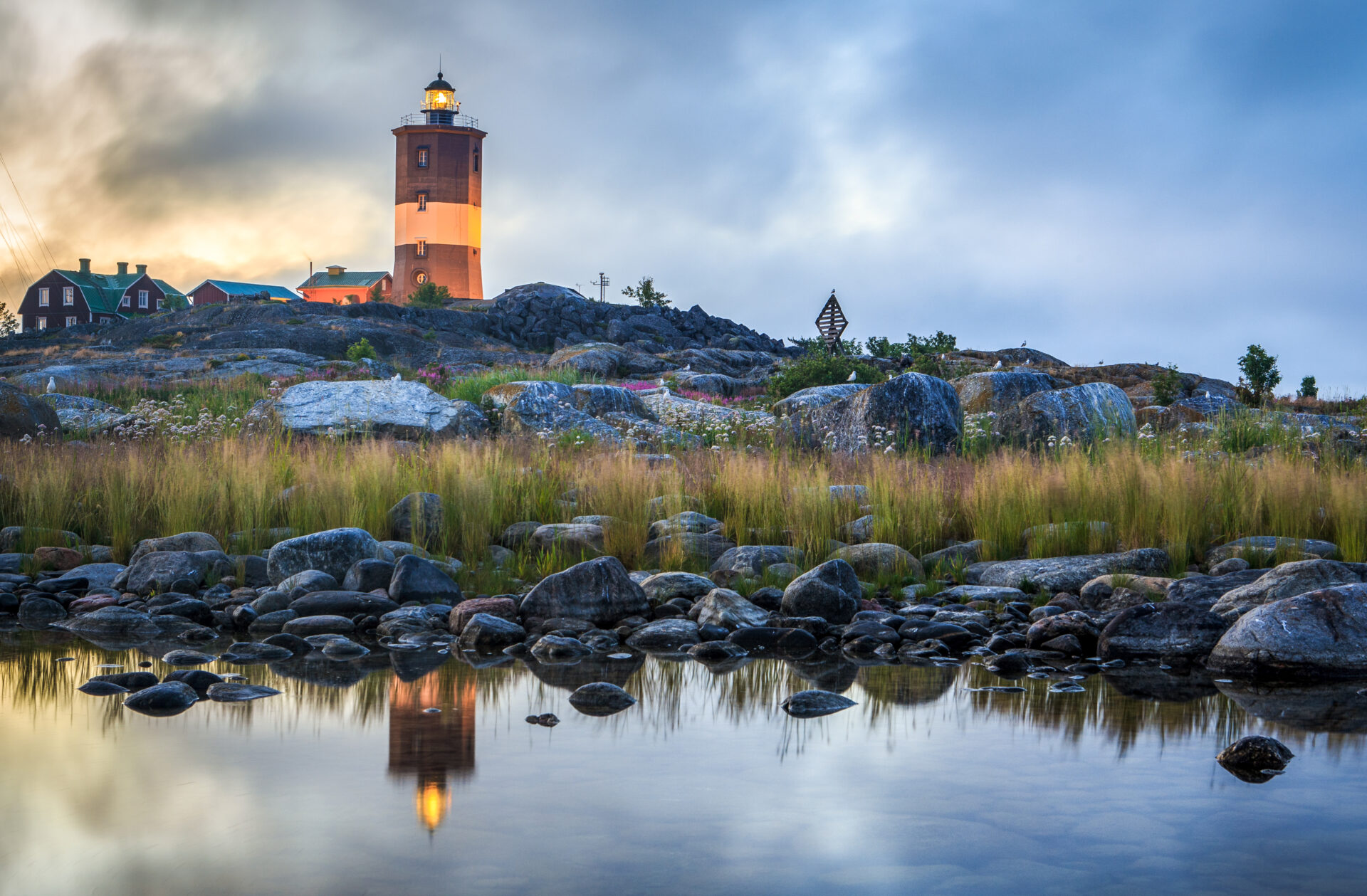
In the middle of the Kvarken area lies the island group of Norrskär. Here the force of weather and waves is clear. In 1846, a black and white light house was built on the northern Norrskär. In total four light house keepers watched over the light house until 1987, when the light house was Finland’s last manned light house.
Over the decades, the sea pilots lived on the barren and nearly treeless islands. During the Second World War, the place served as a military outpost. Bunkers, cannons and old barrack remind of those times.
Metsähallitus takes care of the area nowadays, and the old maritime pilot station has been changed into a bird watching station. The former fishermen’s huts, which were part of a fisher village, are now treasured summer cottages owned by the fishermen’s descendants.
Even though Norrskär is rough and windy, the birds thrive there. Water birds like turnstones and red-necked phalaropes like the lush meadows by the bays. Over 50 bird species call Norrksär home during the Kvarken’s long and light summers.
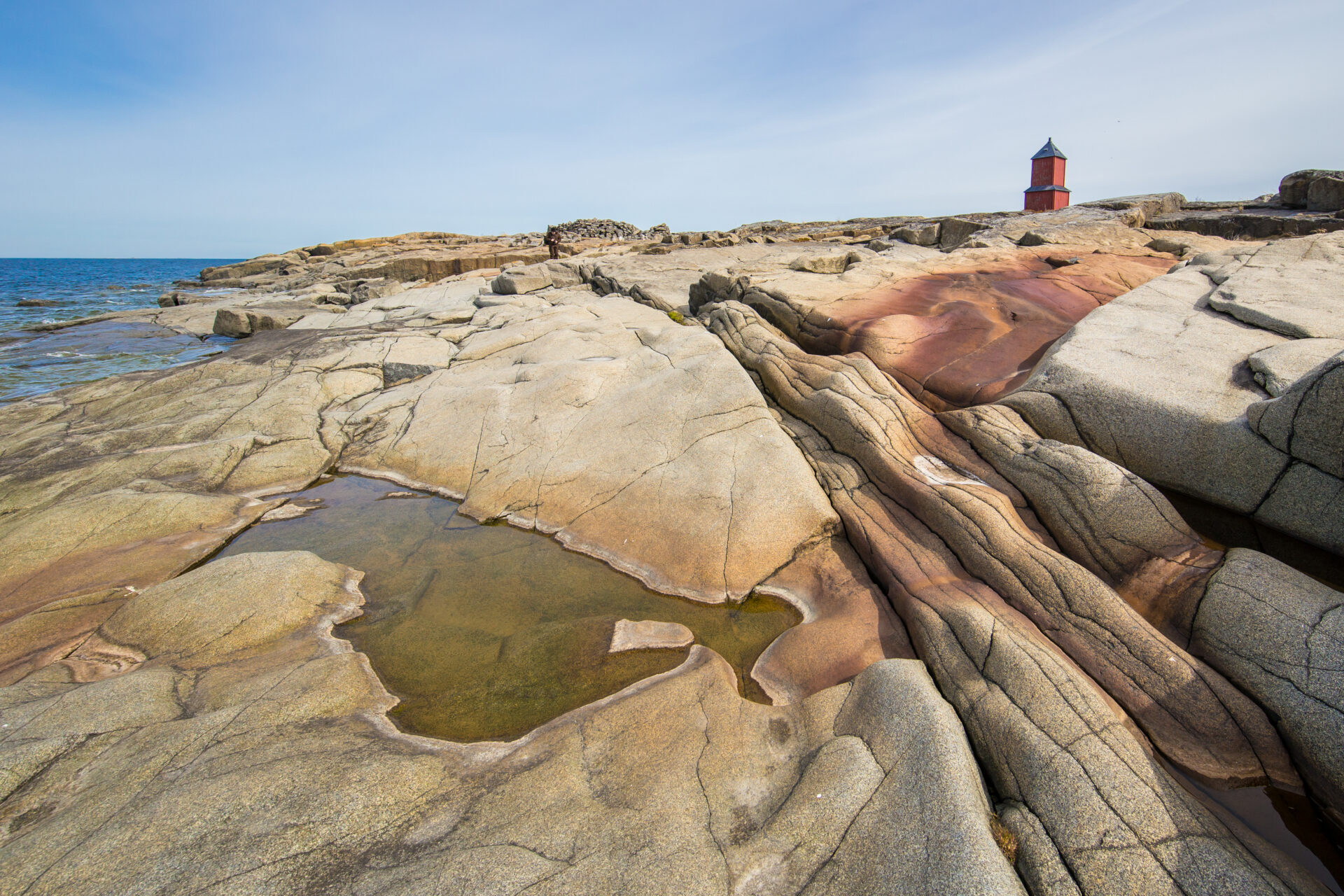
The Kvarken’s rocky waters have been also treacherous but not only because of the land uplift. Thus, there are many wrecks lying in the waters surrounding the Rönnskären islands. One of the islands, Fäliskäret island has been a centre for maritime pilots. Before the modern sea charts and acoustic detection were invented, sea pilots helped the boats to the harbours and out to the sea. Fäliskäret’s large red fixed beacon is Finland’s oldest wooden day mark from year 1784.
The sea pilots and seamen lived in Fäliskäret for 200 years but nowadays the island is under Metsähallitus, State Forest Enterprise. Fäliskäret is popular among sailors and boaters and it is good place to continue boating over the Bothnian Sea to the High Coast in Sweden which is the other side of the transboundary World Heritage Site High Coast/Kvarken Archipelago. At Fäliskäret, there is a guest harbour.
Like other islands in the Kvarken Archipelago, birds like to nest in Rönnskären. Razorbills, black guillemots and arctic terns like the barren and treeless islets, whereas velvet scoters, red-breasted mergansers, tufted ducks and quite rare greater scaups prefer the more sheltered areas.
About mid 17th century, the land uplift revealed four islets on the southern part of the Kvarken Archipelago. Finland’s first wooden day mark was built in 1668 on one of the islets. With the day mark, the light house keeper could heave up a basket with burning wood, a sign for boaters to watch out in the dangerous waters.
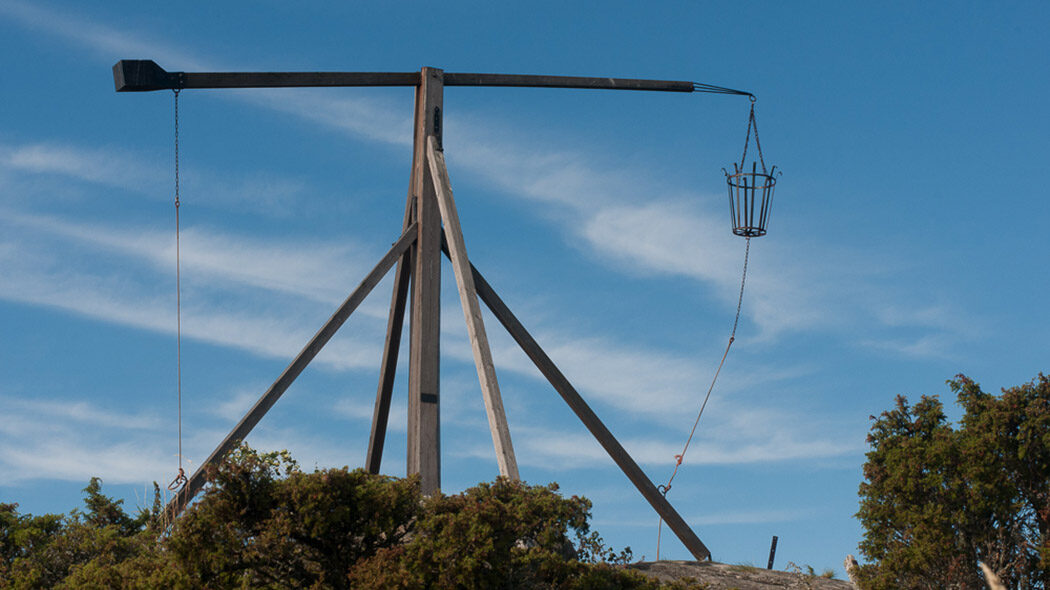
Eventually, the four islets grew together and formed Molpehällorna island. The island was important for the archipelago’s coast guard operations during a few decades in 1900’s. Nowadays mainly birds visit the island but for them the island is a paradise. Besides the boulders and junipers, there are lush land uplift forests and shallow flad and glo lagoons that offer nutrition and shelter for example for the birds.