
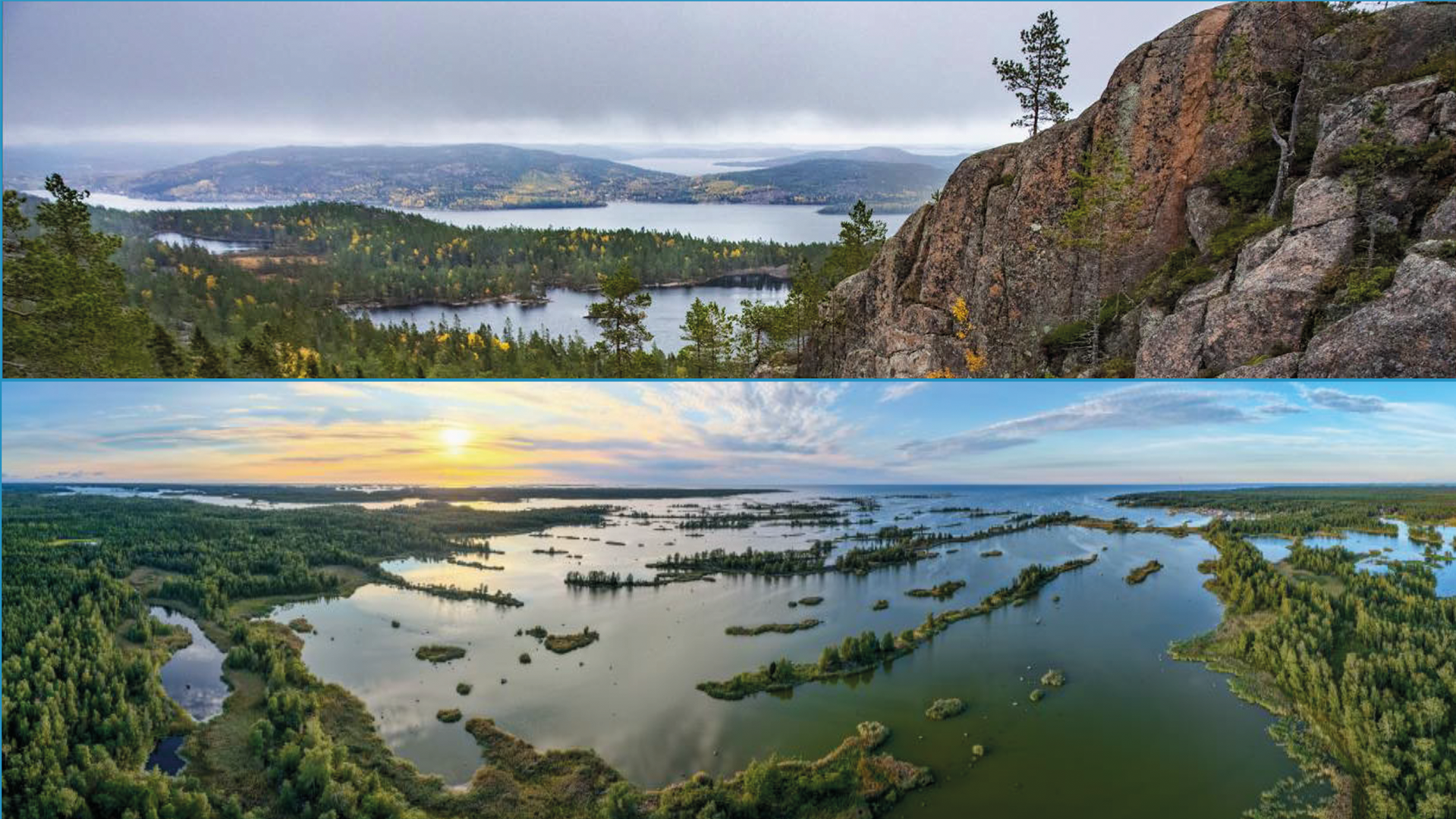
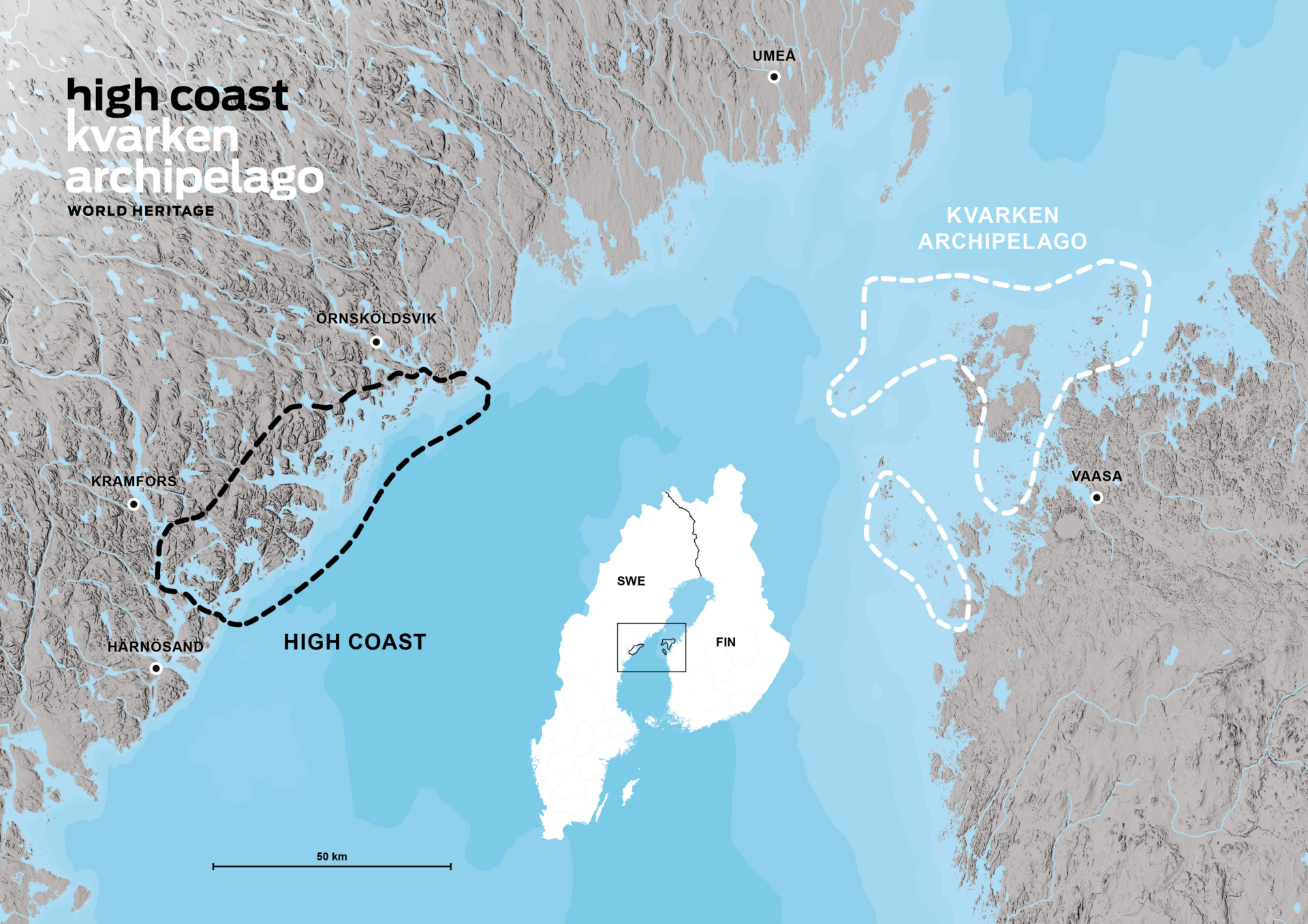
The rocky Kvarken Archipelago with its shallow waters is a complete opposite of Sweden’s High Coast with its high shorelines and hilly scenery. Together these two areas are the two sides of the same coin and form a joint World Heritage Site.
Why did the Kvarken Archipelago and the High Coast get the respected UNESCO World Heritage status? The answer is found in the last Ice Age and geology. In this area, you can see in a unique way the effects of the land uplift caused by the Ice Age. The heavy, up to 3 kilometers thick ice sheet pressed the Earth’s crust down so that the land still rises today, reaching for its former position.
The High Coast reveals the past of the land uplift phenomenon, whereas the Kvarken Archipelago displays its present and future. The land uplift makes the Kvarken Archipelago the world’s youngest landscape as the rocky islets and islands rise from the sea with the speed of 8-9 millimeters per year.
What’s so special about the Kvarken World Heritage?
The Kvarken archipelago can indeed be called an open-air museum of the ice age. You can see with your own eyes traces of the ice age in the landscape and how old harbours have been left far from the shore.
The charm of archipelago nature
Land uplift continuously reveals new habitat awaiting colonisation, and the labyrinthine archipelago of 5,600 islands provides a home for many different species. On the skerries that have risen from the sea, will the first coloniser be the thorny sea-buckthorn bush or a bird?
The unique nature and resourceful islanders live side by side in the Kvarken archipelago. Here, archipelago life is lived in its most authentic form, adapting to the changes caused by land uplift.
The Kvarken archipelago is Finland’s only natural World Heritage site on the UNESCO list.
The High Coast and the Kvarken archipelago form a joint transboundary World Heritage site across two countries.
Being inscribed on UNESCO’s World Heritage List is a high-level international recognition and honour. At the same time, the site becomes part of the large family of cultural and natural World Heritage sites.
The Kvarken archipelago is in the same company as Canada’s Rocky Mountain Parks, Ecuador’s Galapagos Islands, the United States’ Grand Canyon, or the Victoria Falls of Zimbabwe and Zambia