



Article categories: News
Children can also call 112: ‘If someone falls and gets hurt, for example’
Published: 3.12.2025
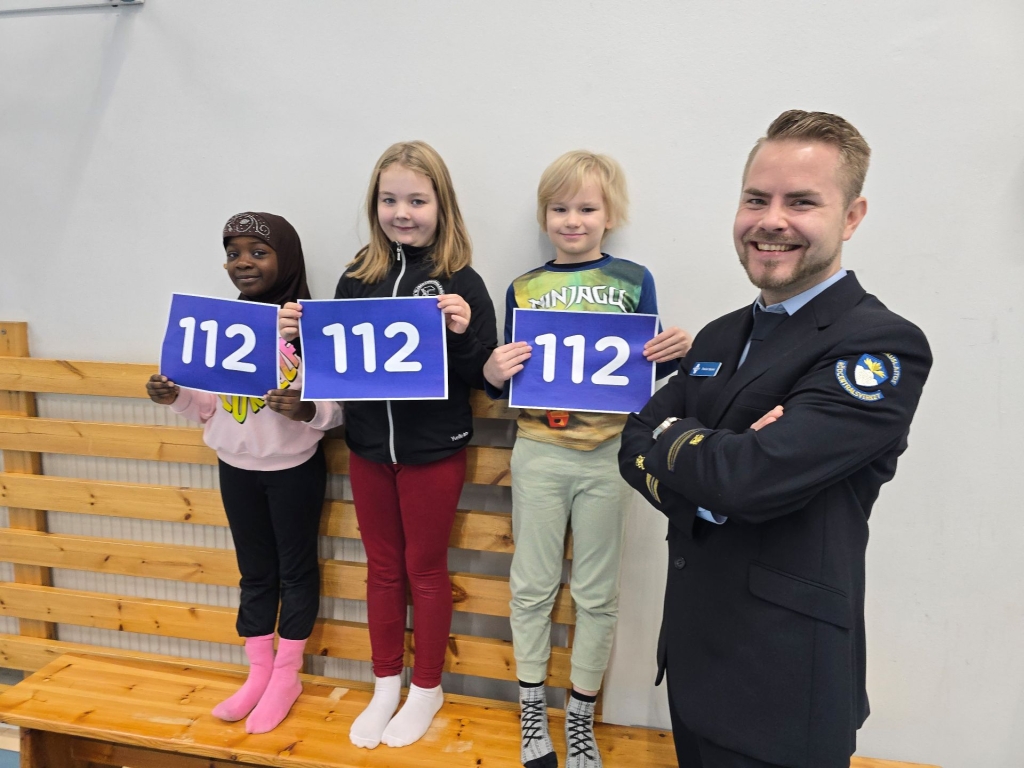
On 19 November first year pupils at Huutoniemi School had an important lesson on how to use the emergency number as part of Children’s Rights Week. Among other things, the children learned when they can – and should – call the emergency number 112.
Patrick Tiainen, a communications specialist from the Emergency Response Centre Agency, spoke to the first-year students at Huutoniemi School about the emergency number and safety instructions for children.
– It’s important for children to know that they, too, may call the emergency number if no adults are present. You can call the emergency number even if your phone has no credit or is locked, Tiainen reminds.
Everyday hazards and recognising emergencies
During the lesson, the children discussed everyday hazards and learned how to recognise emergencies.
You should call the emergency number when something serious happens, such as an injury, a fire, or an accident.
– For example, if a child is home alone, heats food in the microwave, and it starts to smoke, they should call the emergency number. The same applies if someone is seriously injured or if they see someone hurting another person. Or, for instance, if their little brother swallows a Lego piece and struggles to breathe, Tiainen explains.
Recognising emergencies and hazards – a checklist for children
- If you’re not sure whether it’s an emergency, it’s always best to call 112.
- If there are adults present, tell them about the situation first.
- Children can help, but an emergency is never their responsibility.
- It’s a good idea to memorise your home address.
Safety education is a fundamental right for children
In November, first- and second-year students at Sundom School also had a lesson on the emergency number and safety instructions.
During Children’s Rights Week, professionals working with children were also offered training on safety education for children.
Both events were organised as part of the EU-funded Keep Safe project, in collaboration with Children´s Fundamental Rights ry, the Emergency Response Centre Agency, and the City of Vaasa.
The lessons were also used to trial the teaching materials on children’s safety education produced as part of the project. The aim is for schools to be able to teach safety skills independently using the materials.
Keep Safe is a preventive project funded by the EU, aimed at preventing children from becoming victims of abuse and violent crimes by providing instructions for children, parents, and teachers.
The City of Vaasa has been involved in the project since 2024.
Learn more: Safety instructions for children