



Article categories: News
“We’re conquering the world one variable frequency drive at a time” – Vaasa is the Nordic Energy Capital
Published: 11.12.2025
Updated: 12.12.2025
The Ostrobothnian people are not modest, nor have they any reason to be in Vaasa, the self-proclaimed Nordic Energy Capital. The rise of the energy sector, which has its origins on the other side of the Atlantic, has taken expertise from Vaasa to every corner of the world. The world’s most environmentally friendly roll-on/roll-off passenger ferry was also developed in Vaasa. Today, the sharing of knowledge about the energy sector starts as early as in the day-care centre.
The atmosphere in Vaasa, a coastal city in Ostrobothnia, is literally electronic. More than 180 energy sector companies with a combined turnover of EUR 6 billion, one quarter of the Finnish energy sector workforce, the largest number of green patents in the Nordic countries… Hearing just a few figures describing the Vaasa energy cluster is enough to amaze you.
But as the saying goes: you have to know the past to understand the present. The story of the Nordic Energy Capital starts from the other side of the Atlantic.
In Henry Ford’s footsteps
Trade and shipping have always been a part of the bedrock of the City of Vaasa. Influences have come and have been taken from foreign countries. At the end of the 19th century, the Vaasa-based Wickström brothers left Vaasa for America. On one of their trips, they met a certain Mr Henry Ford, famous for his cars.
There were no cars in Finland at the time, but there were plenty of boats in Vaasa. Therefore, inspired by Mr Ford, the brothers founded Wickström-Veljesten Moottoritehdas Oy, which started manufacturing boat engines. Today, in its footprints and partly in the same place in Vaasa, operates one of Finland’s largest and internationally most successful companies, Wärtsilä. It manufactures engines for large ships and other energy solutions, among other things.
Another major actor in the city’s history is Strömberg, currently known as ABB. In the 1940s, it was transferred from Pitäjänmäki, Helsinki, to Vaasa to escape from the war. After the wars, Strömberg played a significant role in electrifying the whole of Finland. Currently, it is doing the same in a global scale.
“We’re doing unbelievably well”
Five years ago, there were 160 energy sector companies in Vaasa, and now there are twenty more. In total, the turnover of the companies in the sector has increased by EUR 1 billion over the same period. By the end of this decade, additional investments in the field are expected to amount to nearly EUR 2 billion.
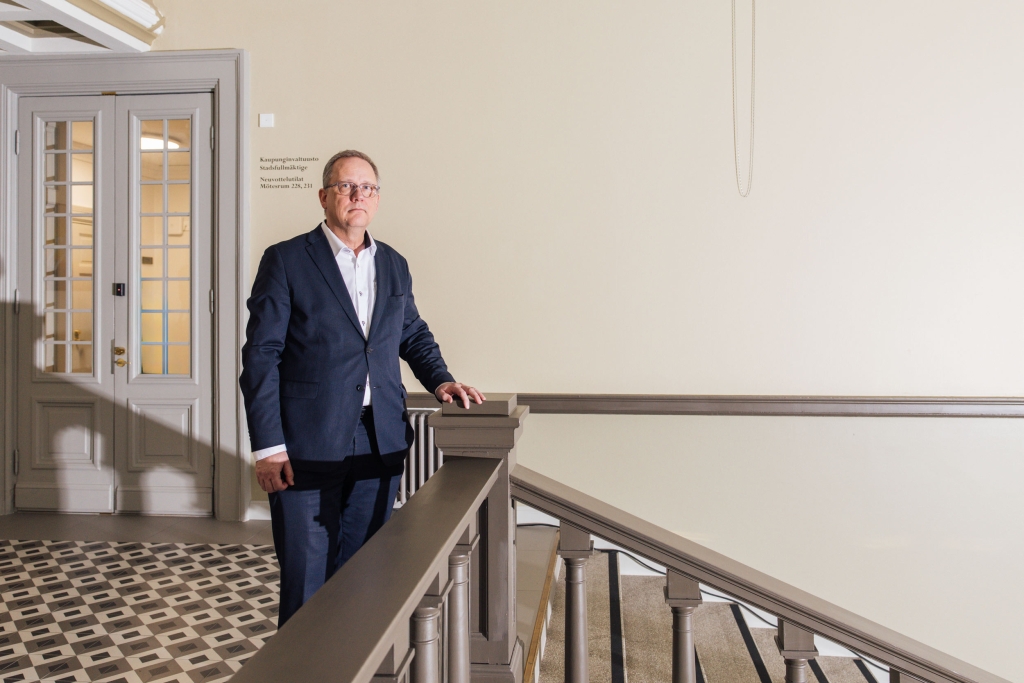
“When large actors invest, smaller ones also have the courage to do the same. We are well known for riding the crest of a wave of the energy transition,” says Tomas Häyry, Mayor of Vaasa.
Cooperation between higher education institutions and companies in the region is strong. Vaasa companies account for 90 per cent of all research and development activities in the Finnish energy sector. In practice, it means everything from sustainable energy production and smart grids to more energy-efficient solutions for the maritime industry. Wärtsilä is also in the process of expanding its R&D centre in Vaasa within the next few years.
Vaasa has created its own learning path in the energy sector all the way from day-care centres to higher education institutions. The aim is to awaken the interest of children in science and mathematics at an early age and to raise these future hopes to continue the present activities.
“If 10 years ago engineers at Wärtsilä gate had been asked what they were making, the answer would have been engines and power stations. Now, they would be talking about decarbonisation. You can see the young experts’ eyes shine with enthusiasm as they know that they are building a better tomorrow for future generations,” Häyry says
So far, Vaasa has not suffered from labour shortage. The energy sector currently employs 13,000 people. Most of the experts come from abroad, and this is reflected in the doubling of the share of the international population in the city.
“We are often post-cyclical in Vaasa. When things are going well elsewhere in Finland, it is difficult for us and vice versa. At the moment, we’re doing unbelievably well,” Häyry says.
However, the stagnant economic situation in the rest of society means that public investments are not made at the rate Vaasa and the companies operating there would wish.
“When the industry invests, it also requires public investments in infrastructure and ports, for example. In other words, the development of public finances does not currently support us, but so far it has not slowed down our growth,” Häyry says.
The port opens a low-emission corridor to the world
Speaking of ports: having an own port remains a lifeline for Vaasa and the companies operating there. The city has developed the port’s operations and invested around EUR 60 million in extending it in recent years. The piers have been expanded and the entrance fairways widened so that larger vessels can reach the port. A deeper channel is also being planned.
Vaasa’s pride is the roll-on/roll-off passenger ferry Aurora Botnia, operating between Vaasa and Umeå. The ferry crystallises the competence and cooperation of the entire energy capital. The ferry, introduced in 2021, is the lowest-emission vessel in the world and runs partly on electric batteries.
The vessel was commissioned by Wasaline, a shipping company founded jointly by the cities of Vaasa and Umeå. Wasaline has since been sold to the Swedish Stena Line, but Aurora Botnia remains the property of the two cities. Wärtsilä was naturally involved in developing its low-emission engines and still owns one of them.
“This is a unique situation for both us and Wärtsilä that they can develop their engines and activities on board a vessel operating 24/7. At the same time, it has given us an increasingly efficient ship that produces less emissions and consumes less fuel,” Häyry points out.
Danfoss, a manufacturer of variable frequency drives, was also involved in the development work. This gave them an opportunity to use the technology from its new iC7 frequency converter product family in a maritime environment for the first time.
Thanks to Danfoss’ variable frequency drives, the ferry became more energy efficient, and Danfoss gained a new selling point.
Variable frequency drives are needed in practically all electrical equipment, from lifts to fans and lights, to transform the current to suit the equipment and control motor output. At the same time, it saves energy when the engine is operated at the suitable power level for each situation. There’s a saying in Vaasa: “We’re conquering the world one variable frequency drive at a time”.
Aurora Botnia has more than 100 small electric motors. And all of them have a variable frequency drive.
“Energy expertise originating from Vaasa can be found from every corner of the world. No matter in which country of the world you are when switching on the lights, there’s always technology from Vaasa involved,” Häyry says.
More logistics and smart regulation
In other words, for the energy cluster to work, it requires good logistics connections to the world, both for people and products. It is therefore important for the Nordic Energy Capital to safeguard and develop all modes of transport.
“In the Vaasa region, we have excellent starting points for functional logistics both at the national and international level – on land, at sea and in the air,” says Logistics Expert Anna Måtts-Fransén from Vaasa Region Development Company VASEK.
In Vaasa, within a 10-kilometre radius you have a port with a daily shipping service to Umeå, an international airport, railway and important main arteries. The latter include Highway 8, which runs along the Finnish coast, and Highway 3/European route E12, which passes through Sweden to Norway.
“Logistics must always be considered in a large scale and across the borders. This is exactly what we have been doing for a long time, both in terms of modes of transport and land borders. The starting point is reaching the other Nordic countries, and from there we are heading further to other parts of the world. We want to support the main arteries running in south-north direction while also strengthening east-west connections from Finland all the way to Norwegian ports,” Måtts-Fransén continues.
Combining different modes of transport can also reduce emissions. A good example of this is the shipping route to Umeå and the further rail connections from there to Europe. The green and sustainable route is a strong asset for the entire Vaasa region and its logistics system.
The city leaders have ambitious greetings to send to the government. Häyry hopes, for example, the emissions trading scheme to be expanded from the current level and wise regulation to be imposed to promote the clean transition.
“When emission restrictions were set for shipping a while back, many people were horrified and suspected that the entire shipping industry would die. In Vaasa, on the other hand, we started considering different options and developed the ship with the lowest emissions in the world,” Häyry says.
If regulation increases in the future, the pig-headed people of Vaasa may come up with even more solutions to revolutionise energy efficiency.
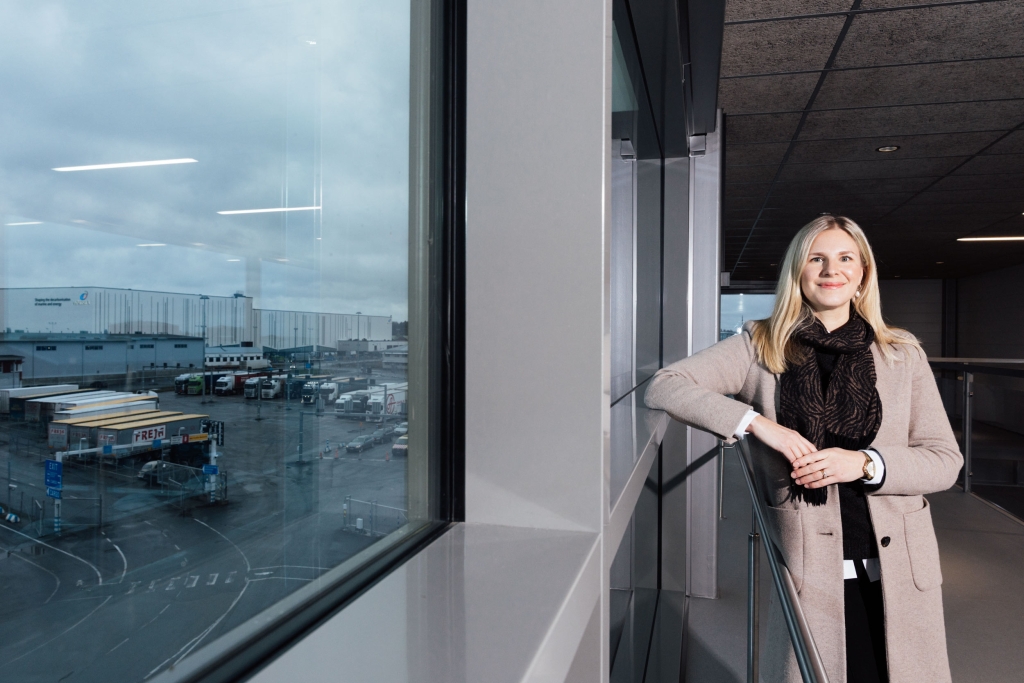 Logistics Expert Anna Måtts-Fransén.
Vaasa is part of the InnoCities network. The focus of development in the Vaasa ecosystem agreement is on smart and sustainable energy systems.