



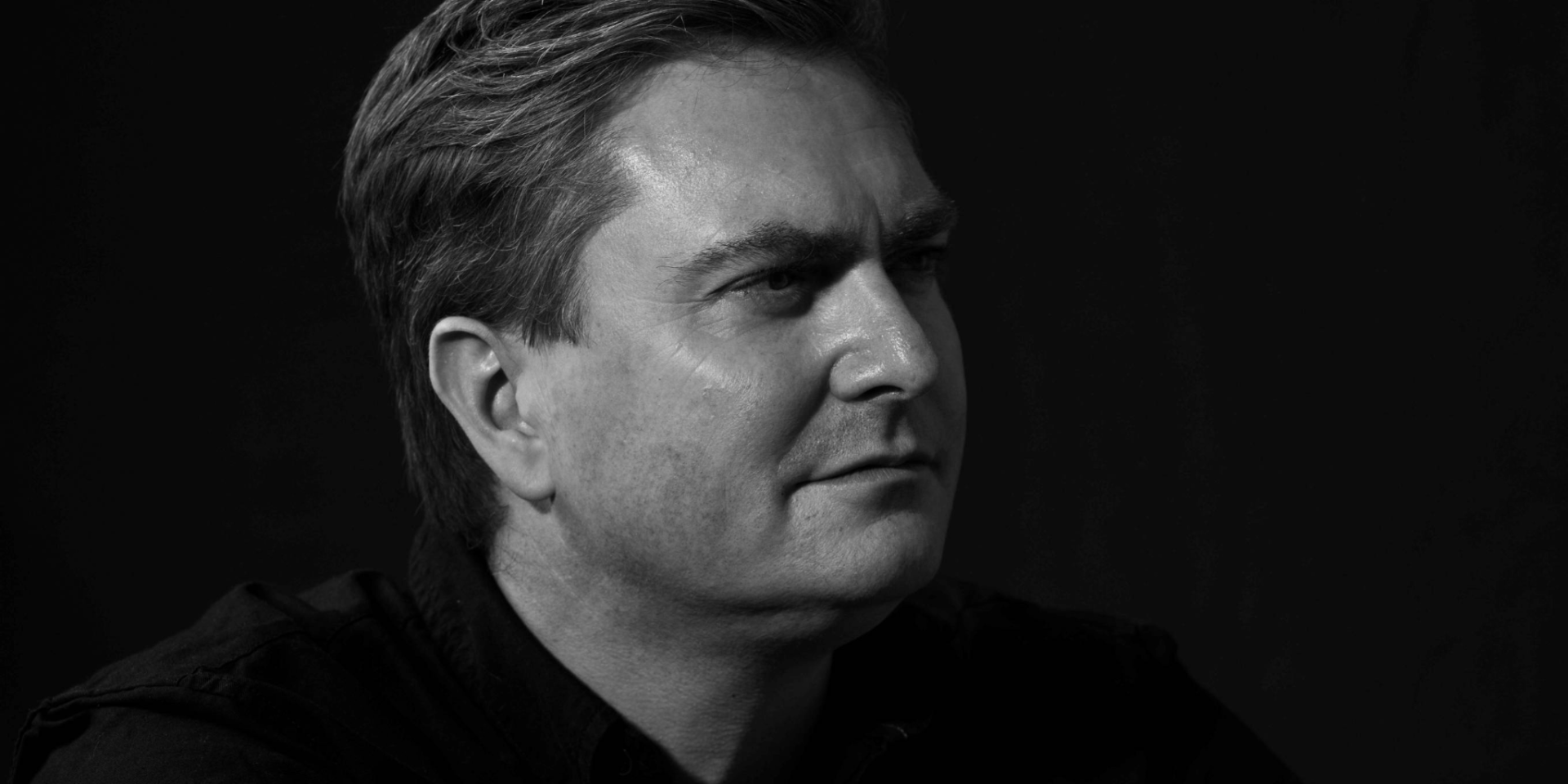
James Lowe - Comeback!
Vasa stadsorkester
cond. James Lowe
sol. Monika-Evelin Liiv
The British conductor James Lowe, who was chief conductor of the Vaasa City Orchestra from 2016 to 2020, is making a long-awaited comeback with the orchestra. The soloist in this southern-tinged, warming concert is the Estonian mezzo-soprano Monika-Evelin Liiv, a member of the singing ensemble at the Royal Opera House Covent Garden in London. In both Manuel de Falla’s Seven Spanish Folksongs and the Italian composer Ottorino Respighi’s Il Tramonto, she will have the opportunity to display both drama and her full technical artistry. We will also hear Juan Arriaga’s Symphony in D major—full of fire and temperament—as well as de Falla’s suite from the ballet El sombrero de tres picos. These works naturally belong to the canon of Spanish music.
Program
Juan Crisóstomo Arriaga (1806–1826):
Symphony in D Major (1820)
1. Adagio – Allergo vivace
2. Andante
3. Minuetto
4. Allegro con moto
Manuel de Falla (1876–1946):
Siete canciones populares españolas (1914–1915, arr. Ernesto Halffter)
1. El paño moruno
2. Seguidilla marciana
3. Asturiana
4. Jota
5. Nana
6. Canción
7. Polo
– Intermission –
Ottorino Respighi (1879–1936):
Il tramonto (1914)
Manuel de Falla:
El sombrero de tres picos, suite No 1 (1919)
1. Introduction
2. La tarde
3. Danza de la Molinera
4. El Corregidor
5. Las uvas
Artists
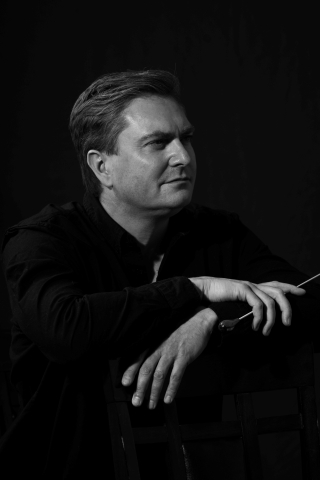 James Lowe, conductor
Former Chief Conductor of the Vaasa City Orchestra, James Lowe is the 8th Music Director of the Spokane Symphony USA, a position he has held since the 2019/20 season. Internationally recognized for his imaginative programming, and deep commitment to connecting music with communities, he has shaped a dynamic artistic vision in Spokane, championing underrepresented voices, creating programs that resonate across generations, and affirming his belief that classical music is for everyone. Alongside his work on the podium, he remains dedicated to engaging new audiences and to his long-standing commitment to youth music.
Lowe’s career has taken him to five continents, collaborating with leading orchestras in Europe, Asia, Africa, Australia, and the United States. As a guest conductor he has appeared with ensembles including the Indianapolis Symphony, Tokyo Philharmonic Orchestra, Osaka Philharmonic, BBC Philharmonic, BBC Scottish Symphony Orchestra, The Hallé Orchestra, Kristiansand Symphony Orchestra, KwaZulu-Natal Philharmonic, Luxembourg Philharmonic, Moscow Chamber Orchestra, Royal Liverpool Philharmonic Orchestra, Scottish Ballet, Scottish Chamber Orchestra, St. Petersburg Academic Symphony Orchestra, Trondheim Symphony, and the Orchestra of Welsh National Opera.
Previously, Lowe served as Chief Conductor Prueßisches Kammerorchester (Germany), as Associate Conductor of the Royal Scottish National Orchestra, and as Orchestras Advisor to the National Youth Orchestras of Scotland. His work as Artistic Director of the Hallé Harmony Youth Orchestra was featured in a four-part documentary broadcast on Channel 4 in the UK. A recipient of the Bernard Haitink Fund for Young Talent, he also worked as Assistant Conductor to Haitink in performances with the Royal Concertgebouw Orchestra in Amsterdam.
Educated at the University of Edinburgh, Lowe further developed his craft as Benjamin Zander Conducting Fellow with the Boston Philharmonic and in masterclasses with renowned teachers including Jorma Panula, Neeme Järvi, Bernard Haitink, and Valery Gergiev. In addition to his conducting work, Lowe is an active educator and conducting teacher. He is a regular guest teacher with the conducting class at the Royal Conservatoire of Scotland, has frequently taught alongside Professor Johannes Schlaefli in international workshops, and worked as a guest teacher of the conducting class at the Sibelius Academy in Helsinki and the Elder Conservatorium, Adelaide. His current research examines how orchestras can effectively engage with a broader public, building on his lifelong commitment to expanding access to classical music.
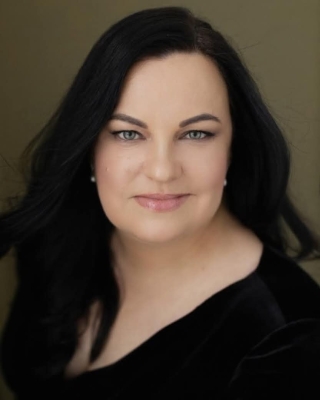 Monika-Evelin Liiv, mezzo soprano
Praised by Opera Now as a “world-class mezzo with scrupulous musicality and fine technique,” Estonian mezzo-soprano Monika-Evelin Liiv is a graduate of the Estonian Academy of Music and Theatre, the Lithuanian Music Academy, and a former member of the Royal Opera House’s prestigious Jette Parker Young Artist Programme.
Liiv made her Covent Garden debut as Flora in La traviata alongside Anna Netrebko, Jonas Kaufmann, and Dmitri Hvorostovsky. She has since returned to perform a wide range of roles at the Royal Opera House including Mercédès (Carmen), Zweite Dame (Die Zauberflöte), 2nd Maid (Elektra), Ines (Il trovatore), Popova (The Bear), Die Kunstgewerblerin (Lulu), and Flora in La traviata-the latter two released on DVD by Opus Arte. She has also covered key roles such as Mary (Der fliegende Holländer), Olga (Eugene Onegin), Maddalena (Rigoletto), Jocaste and Merope in Enescu’s Oedipe.
A recipient of the Estonian Cultural Endowment Award and two-time winner of the Estonian Theatre Award for Outstanding Performance, Liiv’s operatic highlights include Amneris (Aida), Polina (Pique Dame), Dritte Dame (Die Zauberflöte), and both Cornelia and the title roles in Giulio Cesare and Rinaldo at the Estonian National Opera. Other notable performances include Suzuki (Madama Butterfly) and Polina (Pique Dame) with Israeli Opera and several roles at the Finnish National Opera such as Cherubino (Le nozze di Figaro), Polina (Pique Dame), Voice from Above (Parsifal), and the Serving Maid/Voice of an Unborn Child (Die Frau ohne Schatten) as well as appearances in France as Ulrika (Un ballo in maschera), Eboli (Don Carlo), and Annina (Der Rosenkavalier).
Liiv is also an accomplished concert soloist, with repertoire including Verdi’s Messa da Requiem, Beethoven’s Symphony No. 9, Mozart’s Requiem, and Prokofiev’s Alexander Nevsky. She has performed internationally in France, Canada, Finland, Estonia, Israel, Lithuania, Sri Lanka, Costa Rica, and the USA, under the baton of conductors such as Sir Antonio Pappano, Daniel Oren, Sir Mark Elder, Carlo Rizzi, Keri-Lynn Wilson, Stefano Ranzani, Jan Latham-Koenig, Eri Klas, Arvo Volmer, Andres Mustonen, Leif Segerstam, Daniele Rustioni and Mikko Franck.
Recent highlights include appearances at the Edinburgh International Festival and the BBC Proms, as well as a return to the Royal Opera House for Azucena (Il Trovatore), Marthe (Faust), Grimgerde in Wagner’s Walküre, Azucena (Il Trovatore) at the Estonian National Opera and Verdi’s Requiem with both the Estonian National Symphony Orchestra and the West London Symphony Orchestra. Upcoming engagements include Erda (Das Rheingold) in Tartu, which will be the first performance of Wagner’s Ring Cycle in Estonia, as well as a reprise of Azucena (Il Trovatore) at the Estonian National Opera.
Introduction of the pieces
Southern European Delicacies
One of the greatest talents in Spanish music was Juan Crisóstomo Arriaga, who died just short of his twentieth birthday. He was born in Bilbao in the Basque Country in 1806, exactly 50 years after the birth of Wolfgang Amadeus Mozart, and already as a child he showed remarkable gifts as both a violinist and a composer, even though he apparently received very little musical instruction in his peripheral hometown.
He composed his only opera at the age of fifteen and then continued his studies at the Paris Conservatoire. His years in Paris were filled with music, and works were produced at a rapid pace. During his short lifetime, the young composer managed to publish a set of three string quartets, which remain his most ambitious works. In addition to these quartets, he composed several smaller pieces in Paris, as well as a Mass (now lost), a Stabat Mater, and the Symphony in D major that we hear today.
The symphony demonstrates the promise Arriaga inspired. His style of writing is consistently natural and—perhaps due to the conservatoire’s rather tradition-conscious teachers—close to the ideals of Classicism. It is therefore no wonder that Arriaga later came to be known as the “Spanish Mozart.” Despite its traditional musical language, the symphony shifts between D major and D minor. The first movement bustles with life like a small Basque village, while the slow movement is charming. In the trio of the minuet, attention is drawn to a lyrical flute solo, and the finale has a buoyancy reminiscent of Rossini and even Mendelssohn. After Arriaga’s death, nearly a hundred years would pass before another Spanish composer achieved comparable international recognition.
Such a composer was Manuel de Falla (1876–1946), born in Cádiz in southern Spain, who succeeded in combining the influences of Spanish folk music with the musical currents of the early twentieth century in a refined way. In France and Russia, attention had already turned toward Spain’s rich musical heritage, as evidenced in works by Rimsky-Korsakov, Debussy, and Ravel—who, incidentally, like Arriaga, was Basque on his mother’s side. None of them, however, took the use of folk material as far as de Falla did. Yet even he had to move to Paris in order to reach the core of Spanish expression.
Before relocating in 1907, de Falla had written zarzuelas—popular Spanish musical theatre works—in Madrid, though they met with only modest success. Paris, however, welcomed him with open arms. Shortly before the First World War, he returned to Spain, and the song cycle Seven Spanish Folk Songs, originally composed for soprano and piano, was premiered in Madrid in 1915. The songs originate from different regions of Spain, but they are unified both by de Falla’s free treatment of the accompaniment and by their thematic focus on different forms of love. The orchestration was prepared in 1951 by de Falla’s student Ernesto Halffter.
The ballet The Three-Cornered Hat (1919) is based on de Falla’s earlier pantomime The Corregidor and the Miller’s Wife, composed two years earlier. The Russian ballet impresario Sergei Diaghilev became interested in the work and asked de Falla to turn it into a ballet. Diaghilev’s company premiered it in London, where it was a great success and brought de Falla international fame. The stage designs were created by Pablo Picasso, reflecting Diaghilev’s prestige and his connections within avant-garde circles. The ballet’s plot is a love triangle involving a miller, his wife, and a pompous yet malicious mayor distinguished by his three-cornered hat. From the ballet, de Falla assembled two orchestral suites for concert performance; this time we hear Suite No. 1.
Between these works by de Falla, we make a brief detour to Italy. Ottorino Respighi, born in Bologna in 1879, studied not only in Italy but also briefly around the turn of the century with Nikolai Rimsky-Korsakov in Russia. Respighi’s first significant works date from around the 1910s, and soon afterward he was appointed professor of composition in Rome. Today he is best known for his magnificent symphonic poems with Roman themes (Fountains of Rome 1914–1916, Pines of Rome 1923–1924, Roman Festivals 1928), but particularly in the early part of his career he composed several works for voice and orchestra using texts by the English poet Percy Bysshe Shelley (1792–1822). Among these is Il tramonto (The Sunset) for mezzo-soprano and strings, composed in 1914 (according to some sources 1918). In the poem, the happiness of two lovers ends after a night of love with the man’s sudden death, and the conclusion depicts the woman’s longing and gradual fading as her joy in life is lost. Respighi writes for the strings a shimmering, chromatically rich texture influenced above all by the expressionist language of German late Romanticism.