



Soitinakatemioiden ilta
Vaasa City Orchestra
cond. Jan Söderblom
sol. Frank Sundqvist, cello, Ella Oksava, piano, Albert Sahlström, violin
Brassacademy:
Viggo Sundqvist, trumpet , Nelli Leppäniemi, trumpet,
Auri Hannus, horn, Anton Seppänen, trombone,
Myrsky Saraskari, tuba
During the past few years, several instrument academies focusing on different groups of instruments have been established in Finland. The teaching is led by the country’s foremost experts, and only truly outstanding young musical talents are admitted as students. Many people in Vaasa remember the violinist Albert Sahlström; he now studies in Vienna under Elina Vähälä, who founded the violin academy. He was awarded a prize this spring at the Kuopio Violin Competition. Alongside Albert, we will hear several future stars of their instruments as soloists with the city orchestra, offering interpretations in which youthful fire meets already impressive virtuosity. The evening is led by Jan Söderblom, who himself stepped forward as a soloist at a very young age and for whom supporting the next generation of musicians is a matter close to his heart.
Program
Wolfgang Amadeus Mozart (1756-1791)
Violin Concerto No 3 in G Major, K. 216 (1775)
1. Allegro
2. Adagio
3. Rondo: Allegro
Tielman Susato (1510/1515-1570)
Suite from La Dansereye (1551, arr. Niklas Hagmark)
1. La Mourisque
2. Entre du fol
3. Danse du roy
4. Rondo
5. Ronde – Mon Amy
6. Ronde et Saltarelle
7. Den hoboeckendans
8. Allemaigne & Recoupe
9. Pavane Battaille
— Intermission —
Edward Elgar (1857-1934)
Cello Concerto in E minor, op 85 (1919 orcherstration Iain Farrington)
1. Adagio – Moderato
Felix Mendelssohn (1809-1847)
Piano Concerto No 1 in G minor, op 25 (1830-1831)
1. Molto Allegro
Ludwig van Beethoven (1770-1827)
Piano Concerto No 5 in E-flat Major, op. 73 (1809)
1. Allegro
Artists
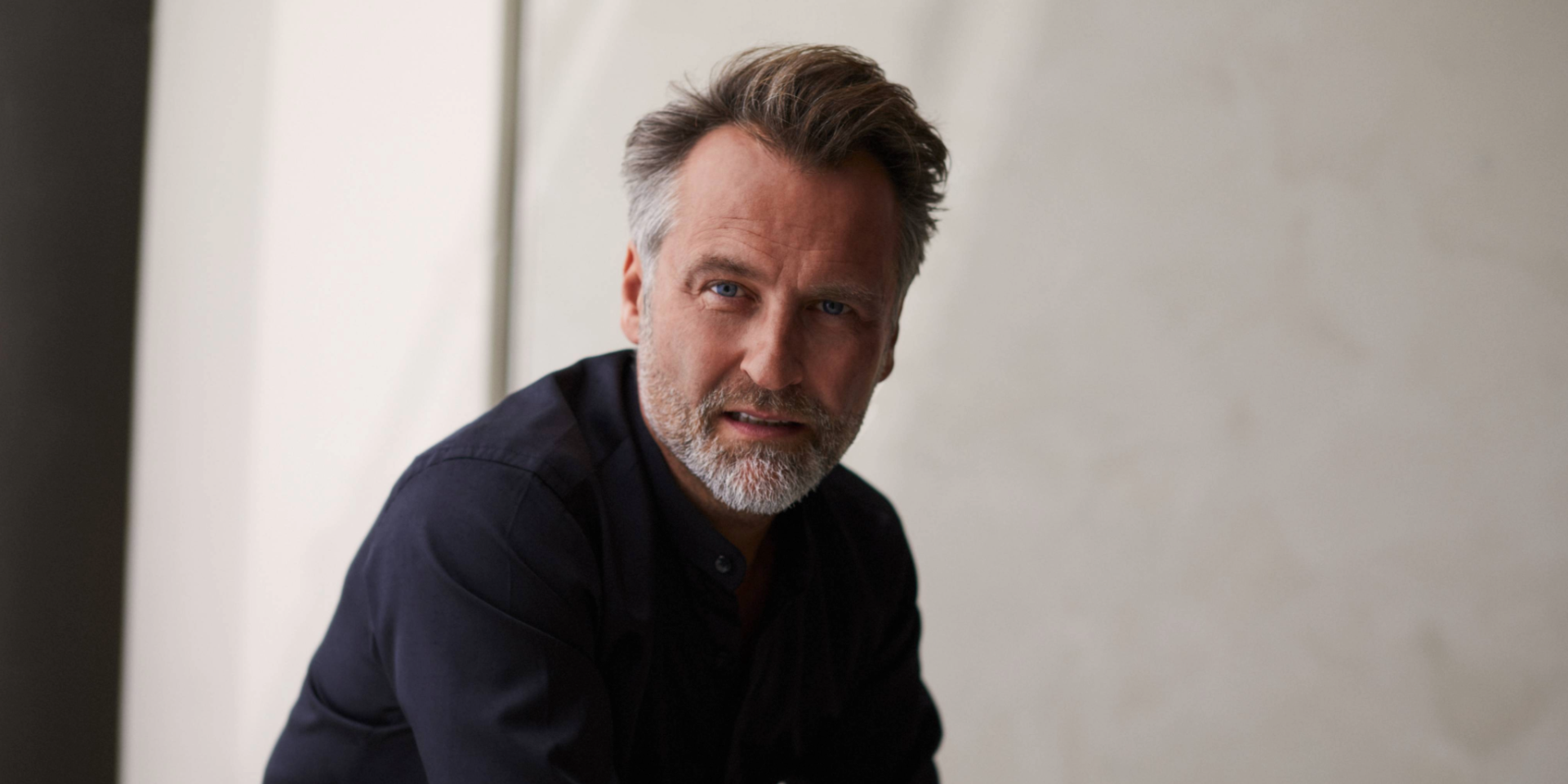
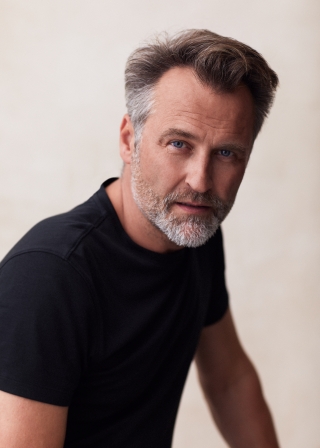 Jan Söderblom, conductor
With a dynamic background as a performer, including solo, chamber music and orchestral leading, exploration is the driving force behind Jan Söderblom’s path as a conductor. Currently Artistic Director of the Finnish Chamber Orchestra, he is also Artistic Director of two annual festivals and a frequent guest conductor with the major Finnish orchestras. He also held the position of 1st Concertmaster of the Helsinki Philharmonic Orchestra from 2016-2025, and frequently performs as play-director. Whether conducting, directing or playing, Söderblom’s artistic vision clearly communicates a personal narrative where history and the present, and culture and nature meet in a distinctive and compelling way.
Jan Söderblom was appointed Artistic Director of the Finnish Chamber Orchestra in 2021, continuing the vision of the ensemble’s founder, Jukka-Pekka Saraste; he is also the Artistic Director of the Tammisaari Summer Concerts and the Grankulla Musikfest. He was previously Chief Conductor of the Pori Sinfonietta (2012-2016), Artistic Director of the Lappeenranta City Orchestra (2002-2009) and Artistic Director of the ‘Music by the Sea’ Festival in Ingå, Finland until 2023.
Born into a musical environment immersed in the world of opera, Jan Söderblom started playing the violin at an early age. Growing up in a boom time in Finnish musical life, he studied with teachers such as Géza Szilvay, the creator of the internationally renowned ‘Colourstrings’ teaching method and Ari Angervo. A hunger for international exchange led to further studies with Endre Wolf, the Amadeus Quartet, Sandor Végh and David Takeno. He went on to perform as a soloist with, among others, the Swedish Radio Orchestra, Norwegian Radio Orchestra, Helsingborg Symphony Orchestra and Japan Philharmonic Orchestra. Having a fundamental passion for chamber music, he was a founding member of the New Helsinki Quartet with whom he won several competitions and performed in Europe’s most prestigious venues.
It was always evident that conducting would play a significant role in Jan Söderblom’s professional identity, having been an aspiration from early on; while forging a career as a soloist and chamber musician, he enrolled at the Sibelius Academy’s renowned conducting class with Jorma Panula and Leif Segerstam. Consequently, his dual career took a turn towards conducting, with engagements including all major Finnish orchestras and orchestras including the Scottish Chamber Orchestra, Orchestre de Chambre de Lausanne, Orquesta RTVE, Nordwestdeutsche Philharmonie, MDR Sinfonieorkester (Leipzig), Danish National Chamber Orchestra, Norwegian Radio Orchestra KORK, Norrköping and Helsingborg Symphony Orchestras and Orchestre National Bordeaux Aquitaine. The 2025-26 season includes return engagements with the Helsinki Philharmonic, Turku Philharmonic, Lahti Symphony Orchestra and Tapiola Sinfonietta, and further afield with the Iceland Symphony Orchestra and the Antwerp Symphony Orchestra.
In opera, Jan Söderblom has collaborated with Swedish Royal Opera, Norrlandsoperan and Finnish National Opera; he conducted the premieres of Thomas Jennefelt’s ‘Sport och fritid’, ‘Svall’ by Daniel Börtz and Veli-Matti Puumala’s ‘Anna Liisa’, the recording of which was also released on Ondine to critical acclaim, including Editor’s Choice in Gramophone magazine. In 2025-26, he will conduct a production of Prokofiev’s Cinderella by David Bintley at the Finnish National Ballet.
In addition to his conducting collaborations in Finland, Jan Söderblom was appointed concertmaster of the Helsinki Philharmonic in 2014, a post he will continue to hold until December 2025. Bringing together his vast experience as a chamber musician as well as his conductor’s perspective to leading an orchestra from the concert-master’s chair, he has developed his “conductorless” approach to symphonic directing; within this highly collaborative framework, he works closely with section principals to prepare large symphonic programmes performed without a conductor. He has successfully directed the Helsinki Philharmonic several times in this way in large-scale repertoire, such as the symphonies of Sibelius.
Away from the stage, Jan Söderblom enjoys nature equally by sailing or wandering in the woods. He currently resides with his family in the artisan and artist community of Fiskars in Southern Finland.
Instrument Academies
The Instrument Academies offer top-level musical training for talented and highly motivated young musicians. The students are aged 8–22 and come from all over Finland. The Instrument Academies support their goal-oriented instrumental studies through masterclasses held on weekends and during school holidays, led by leading Finnish and international teachers.
Among those who have emerged from the Instrument Academies are conductor and pianist Tarmo Peltokoski, violinist Tami Pohjola, pianist Ossi Tanner, and the internationally award-winning young violin talent Lilja Haatainen. Students of the Instrument Academies have already received dozens of competition prizes, including from international competitions. They regularly perform as soloists with orchestras and at the most significant festivals in Finland.
The Instrument Academies include the String Academy, the Youth Piano Academy, the Brass Academy, and most recently the Woodwind Academy, which will begin its activities in February. The academies have operated as separate entities since 2009, and in 2023 a joint umbrella organization, Instrument Academies Association (Soitinakatemiat ry), was established. The activities of the Instrument Academies are made possible by the Finnish Cultural Foundation and the Jane and Aatos Erkko Foundation.
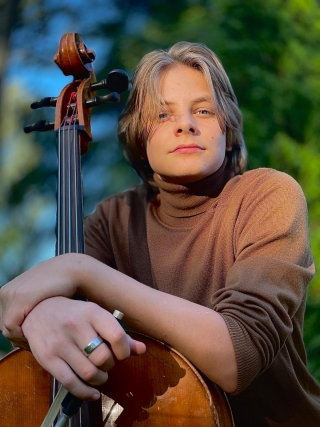 Frank Sundqvist, cello
Frank Sundqvist (b. 2011) began playing the cello at the age of five at the Espoo Music Institute, where he studied under Anne Silvennoinen and Petja Kainulainen. Since autumn 2024, his teacher has been Tuomas Lehto, and in 2025 he will begin his studies at the Sibelius Academy’s Youth Department.
Frank studies at the Cello Academy under the guidance of Tuomas Ylinen and Tuomas Lehto.
Frank was among the prize winners at the Porvoo Cello Competition in 2021 in the youngest age category, and in 2024 he was awarded second prize in the 13–15 age group.
As a soloist, Frank has appeared with an orchestra consisting of teachers from the East Helsinki Music Institute, with orchestras from the Vantaa and Porvoo Region music institutes, as well as with various ensembles of the Espoo Music Institute.
He was also selected as one of the few performers to appear at the Espoo Music Institute’s 60th anniversary concert in 2023.
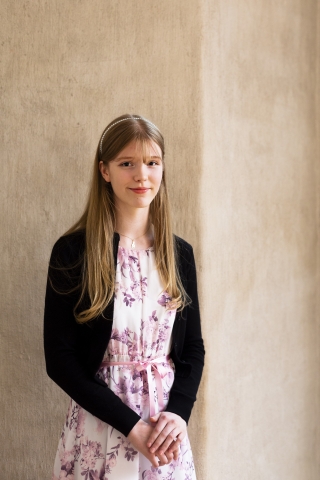 Julia Elomaa, piano
Julia Elomaa (b. 2007) began her piano studies at the Turku Conservatory in 2013 with Jaana Luuppala as her teacher. She completed the final certificate of advanced studies in spring 2021 and was admitted to the Youth Piano Academy in the summer of the same year. Her studies have been supported by the Finnish Cultural Foundation and the Pro Musica Foundation.
In masterclasses, Julia has studied with many distinguished pianists, including Jean-Efflam Bavouzet, Angela Hewitt, Henri Sigfridsson, Tony Yike Yang, Severin von Eckardstein, and Mackenzie Melemed. In addition to her studies at the Youth Piano Academy, she has participated in masterclasses organized by the Nurmes Summer Academy, Raudaskylä Soiva Kesä, and Palazzo Ricci, among others.
In spring 2025, Julia performed at the Turku Philharmonic Orchestra’s Young Soloists Concert. She has previously appeared as a soloist with Aura Sinfonia and Camerata Vihti. In summer 2024, she performed at the Riihimäki Summer Concerts and in the Festival Young Artists concert at the Mänttä Music Festival. In addition, Julia has performed at numerous events throughout Finland and abroad.
Julia has achieved success in several international and national piano competitions. Most recently, she won First Prize at the Nordic Junior Piano Competition in Sweden in the “Young Artists” category (2025). In the same spring, she also won the senior category of the London International Chopin Competition for Young Pianists. She has furthermore received prizes at the Pianoaura Competition in Turku (2016, 2019, and 2023), the Steinway Piano Competition in Helsinki (2016), the Stockholm International Music Competition (2017), the International Tapiola Piano Competition (2019), the Canadian Young Pianists Festival (2021), the Ilmari Hannikainen Chamber Music Competition (2023), the WPTA Finland Piano Competition (2024), the International Debussy Music Competition (2024), and the Leevi Madetoja Piano Competition (2025). She also received a special mention at the Nordic Junior Piano Competition (2023) for an outstanding interpretation of a contemporary work.
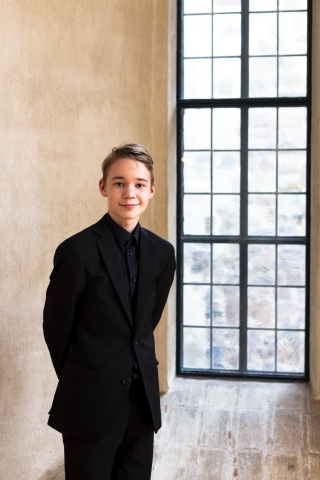 Sauli Aaltonen, piano
Sauli Aaltonen (b. 2009) began studying piano at the age of five. He currently studies at the Tampere Conservatory with Annika Hautamäki-Hänninen and also receives instruction from Teppo Koivisto.
Sauli has been awarded prizes in the following piano competitions: the International Tapiola Piano Competition (2023 and 2021), the Pianoaura Piano Competition (2023), the Leevi Madetoja Piano Competition (2025 and 2022), and the Pirkanmaa Piano Competition (2020 and 2018).
In 2022, Sauli received a grant from the Pro Musica Foundation intended to support talented students of classical music. He was admitted to the Youth Piano Academy in spring 2023.
Sauli has performed at the Riihimäki Summer Concerts festival and at the Mänttä Music Festival. He has also appeared with the Vivo Symphony Orchestra and the Tampere Philharmonic Orchestra.
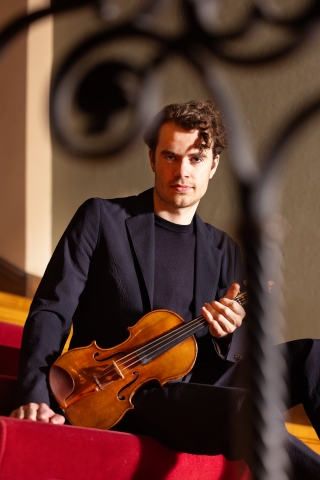 Albert Sahlström, violin
Albert Sahlström (b. 2003) studies violin with Elina Vähälä at the University of Music and Performing Arts Vienna (MDW) and is also a member of the Violin Academy.
He has appeared as a soloist in Finland, including performances with the Helsinki Philharmonic Orchestra and the Vaasa City Orchestra, and in Austria as a soloist with MDW’s Webern Symphony Orchestra in Vienna. As a chamber musician, he has been heard at several major festivals, including Kuhmo Chamber Music, the Naantali Music Festival, the Kauniainen and Korsholm Music Festivals, the Kamarikesä Festival, and the Hauho Music Festival, where he was named Young Artist in 2024.
Sahlström has achieved success in several competitions, most notably third prize at the Kuopio Violin Competition in 2025. His piano trio, the ISBU Trio, won the national category of the Ilmari Hannikainen Competition in 2023.
He plays a 1702 Stradivarius violin, the “Irish,” owned by the OP Group Art Foundation.
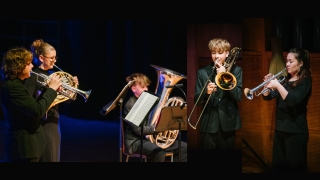 The Brass Academy Quintet
The Brass Academy Quintet features trumpeters Viggo Sundqvist (b. 2008) and Nelli Leppäniemi (b. 2007), horn player Auri Hannus (b. 2010), trombonist Anton Seppänen (b. 2010), and tubist Myrsky Saraskari (b. 2011). In addition to their studies at the Brass Academy, the musicians also study at the Sibelius Academy’s Youth Program, the East Helsinki Music Institute, the Espoo Music Institute, and the Lahti Conservatory.
The players have been involved in the goal-oriented activities of the Brass Academy since 2024 and have performed in several of the Academy’s own concerts as well as at the Lieksa Brass Week. For summer 2026, performances are planned at the Mikkeli Music Festival and the Lahti International Organ Week.
Introduction of pieces
Virtuosos Write Virtuosic Music
The composers featured in this concert—the British Edward Elgar; the masters of Viennese Classicism, Wolfgang Amadeus Mozart and Ludwig van Beethoven; the brilliant all-round talent of early German Romanticism, Felix Mendelssohn; and the Dutch Renaissance composer Tielman Susato—were all accomplished instrumentalists. Elgar, Mozart, and Susato mastered several instruments with ease, while Beethoven and Mendelssohn focused primarily on the piano and conducting. Perhaps it is this instrumental background that explains their natural ability to write demanding yet always playable parts in concertos and other solo works. Before his career as a composer took off, Edward Elgar earned his living as an organist, pianist, violinist, and even a bassoonist. He was equally at home as a conductor and choral director, and he himself conducted the premiere of the Cello Concerto in E minor, Op. 85, heard in today’s concert, in 1919—by which time he had long enjoyed great esteem as Britain’s leading composer.
That premiere was not a great success, but over time Elgar’s Cello Concerto has become one of the most beloved concertos of the twentieth century. Elgar began composing the work shortly after the end of the First World War. While many artists on both sides of the front experienced the outbreak of war in 1914 as an inspiring and “purifying” experience and hurried to enlist, Elgar was horrified by the war from the outset. As the conflict dragged on and brutality steadily increased, his fears proved well founded, and his compassion extended not only to the soldiers and the home front but also to the horses caught up in the fighting. On the final page of the concerto’s manuscript he wrote the memorial acronym RIP, and the concerto has therefore been described as Elgar’s war requiem. The re-orchestration for a smaller ensemble than the original was made by the British musician Iain Farrington.
Among Ludwig van Beethoven’s piano concertos, the last— the Concerto in E-flat major, Op. 73, completed in 1809—holds a special place. It is also known by the nickname the “Emperor” Concerto. Beethoven’s hearing had deteriorated dramatically in the early years of the nineteenth century, leading to a nervous breakdown in 1802. He emerged from this ordeal with renewed determination, but his lucrative career as a piano virtuoso soon had to be abandoned. Instead, he focused on composing new, increasingly surprising and above all larger-scale works, and this stylistic shift is clearly evident in the piano concertos as well. His first three piano concertos had been part of his project to establish himself as Vienna’s leading pianist-composer around the turn of the century. In the Fourth Piano Concerto, completed in 1806, he was still able to appear as soloist himself, but he never performed the Fifth Concerto publicly. Consequently, he devoted particular care to its details and also composed the cadenzas (that is, the unaccompanied, free sections usually placed near the ends of movements, but in this concerto also right at the beginning), forbidding pianists to invent their own. The origin of the concerto’s nickname, the “Emperor” Concerto, is unknown and probably not Beethoven’s own, as his attitude toward the Europe-conquering Emperor Napoleon was complex. Although the first movement contains lyrical moments, the overall character is nevertheless grand and heroic, which may explain why the nickname has become firmly established.
Felix Mendelssohn was a prodigy almost on a par with Mozart, and at the age of twelve he began corresponding with Germany’s most esteemed poet, Johann Wolfgang von Goethe, who was then over seventy years old. Although Mendelssohn was an excellent pianist from a young age, he wrote his first piano concerto in G minor, Op. 25, only at the mature age of twenty-one. The composer himself played the solo part at the premiere, even though he dedicated the work to his pianist colleague Delphine von Schauroth. While a significant portion of the concertos and symphonies of the Viennese Classical era are in major keys, composers of the Romantic period were at least equally inspired by the minor mode. At the very beginning of Mendelssohn’s concerto, the soloist immediately takes the lead, and the typical orchestral introduction has been almost entirely omitted (compare this, for example, with Mozart’s Violin Concerto heard after the interval). There is also no cadenza at the end of the first movement. In this way, the concerto form was gradually renewed and found new means of propelling the music forward.
If Beethoven composed a total of five piano concertos, Wolfgang Amadeus Mozart, in turn, wrote five violin concertos. At the age of fourteen Mozart had already risen to the position of concertmaster of the court orchestra in his hometown of Salzburg, which attests to his abilities as a violinist, even though his principal instrument was the piano and he later preferred to play the viola in chamber music. The violin concertos were composed in 1775, when Mozart was nineteen years old and spending his final years in Salzburg before moving to Vienna. From his correspondence we know that he performed the concertos himself. He most likely improvised the cadenzas, as they were left unwritten, and later many violinists and composers supplied these concertos with their own cadenzas. The G major Concerto, K. 216, follows the three-movement form typical of Viennese Classicism. Although the first movement has the customary weight and the slow movement floats with a grace only Mozart could achieve, attention ultimately turns to the playful, rondo-form finale.
Elgar, Beethoven, Mendelssohn, and Mozart are familiar names to most lovers of music, but the Dutch composer Tielman Susato is probably less well known, and there is no complete certainty about his birth and death dates. It is known, however, that Susato lived most of his life in the sixteenth century in the Renaissance Netherlands, in what is now Antwerp, Belgium. Thanks to its extensive trade connections, the region was exceptionally wealthy, which led to a flourishing of the arts and musical life. Tielman Susato worked as a wind player—especially as a flautist and trumpeter—as well as a composer, and he founded the first music publishing house in the Netherlands. His output includes much sacred vocal music and songs, but in 1551 he also published a collection of dance music entitled Danserye. The Dutch Renaissance is famous for its polyphonic music, but in Danserye the music is almost entirely homophonic, that is, based on a single melodic line.
The pieces in Danserye are well suited to performance by a wide variety of ensembles, as was customary at the time. The Lahti-based musician Niklas Hagmark has arranged a selection of pieces from the collection for soloistic brass quintet, strings, and percussion. Nearly 500 years old, this music still pulses with life and, even when played on modern instruments, transports us to the courts and taverns of the Renaissance era.