




Tyyntä myrskyn edellä
Vaasa & Seinäjoki City Orchestras
cond. Jukka Iisakkila
sol. Otto Antikainen, violin
“The eternal movement of the ice has its own song: slowly rolling, relentless, and all-encompassing,” writes composer Outi Tarkiainen. March brings us closer to the vernal equinox, making it a fitting moment to observe Finnish nature also through music. The combined orchestras of Vaasa and Seinäjoki will perform, in addition to Tarkiainen’s work, Jean Sibelius’s masterful incidental music to The Tempest and Jorma Panula’s orchestral piece L’heure bleue – The Blue Hour, which breathes the atmosphere of dusk. Otto Antikainen, an alumnus of the Violin Academy who impressively reached the finals of the most recent Sibelius Competition, displays his virtuosity as the soloist in Einar Englund’s Violin Concerto, a work that radiates clarity and light.
Program
Outi Tarkiainen
Jään lauluja
Einar Englund
Violin Concerto
I. Allegro moderato
II. Moderato
III. Finale: Allegro molto
Jean Sibelius
Music from William Shakespeare’s play The Tempest, Op. 109
Suite No 1:
1. The Oak Tree
2. Humoreske
4. The Harvesters
7. Intrada – Berceuse
Suite No 2:
1. Chorus of the Winds
2. Intermezzo
3. Dance of Nymphs
4. Prospero
5. Song I
6. Song II
7. Miranda
8. The Naiads
9. Dance Episode
Jorma Panula
L’heure blue
Artists
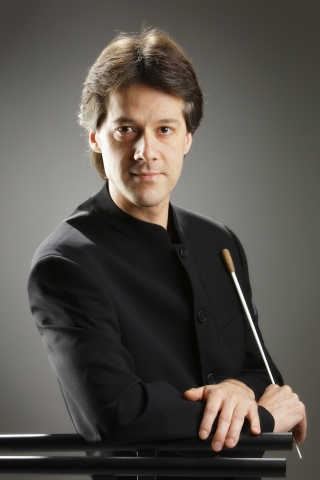 Jukka Iisakkila, conductor
The Finnish conductor Jukka Iisakkila versatility and broad repertoire have taken him to symphony orchestras, chamber orchestras, contemporary ensembles, rock arenas and innovative music clubs throughout Europe and overseas.
A regular guest with many of the leading Scandinavian orchestras, conductor Jukka Iisakkila was the Chief Conductor and Artistic Director of the Pori Sinfonietta from 2004 to 2012. He works regularly with the Turku Philharmonic, Oulu Symphony and Tapiola Sinfonietta in Finland and the Stavanger Symphony Orchestra in Norway and these fruitful guest conducting collaborations are ongoing. From 2010 he worked regularly as a guest conductor of the Danish Radio Chamber Orchestra and with the Nagoya Philharmonic in Japan.
Iisakkila conducts the Metropole Orchestra in Holland for contemporary and cross-over projects and their collaboration has been highly acclaimed. He has also hold the position of Professor of Conducting at the Stavanger University in Norway and is now finishing his PhD and is also teaching conducting at the Sibelius Academy. He is the Artistic Partner and leader of the SKOR Orchestra in Finland.
Jukka Iisakkila conducts all Finnish orchestras on a regular basis and enjoys frequent collaboration with the majority of Scandinavian orchestras. Other guest appearances for the upcoming season include orchestras and tours in the United States, Norway, Japan, Holland, Austria and Czech.
Iisakkila is known for his affinity with contemporary music and cross-over styles and has conducted numerous world premieres having close links with many of today’s foremost composers. He is also himself a notable composer and arranger and has performed as an instrumentalist in Europe and will tour in Scandinavia, Asia and United States in 2022-23.
His recording with the Metropole Orchestra and the Swiss metal band Triptycon “Requim” was the biggest selling album in Europe in 2020. He enjoys the ongoing fruitful and successful collaboration with composer/guitarist Steve Vai. Vai and Iisakkila will record a comprehensive catalogue of Steve Vai’s works for orchestra with the Metropole Orchestra and with the Tampere Philharmonic. They will do a world tour in different continents.
Notable cross-over productions include collaborations with jazz pianist/composer Iro Haarla, saxofonist Trygve Seim, edm-artists Indians and Rumpistol. Iisakkila has conducted opera performances throughout various Scandinavian opera houses. Highly successful productions span from Don Giovanni to Berg’s Wozzeck and from Zimmermann’s Soldaten to music by György Ligeti and Helmut Lachenmann.
Jukka Iisakkila is the recipient of many major awards including the Royal Music Academy Award in Sweden 2006 and Finnish Culture Foundation award for achievements the field of conducting. Jukka Iisakkila won the First Prize in the Helsingborg Nordic Conducting competition and the Third Prize in international Jorma Panula Conducting competition. Since 2003 he has been the Artistic Director and founder of one of the most innovative and artistically rich and praised music festival in Scandinavia, the Saaksmaki Sounds -music festival.
Jukka Iisakkila graduated from the orchestral conducting diploma class at Royal Academy of Music, Stockholm, after studies with the world renowned Professor Jorma Panula. Besides Professor Jorma Panula his most important teachers have been Martyn Brabbins, Esa-Pekka Salonen and Alan Gilbert. Jukka has fulfilled his studies in Italy and with composers as György Kúrtag and Peter Eötvös.
Jukka Iisakkila studied percussions, piano and jazz /electric guitar first at the Tampere Conservatory of Music. He then finished his performance diplomas, Masters degree, at the Royal Danish Academy of Music and at the Roayl Swedish Academy of Music. Still in his early age he also completed his studies at the University of Central Finland with a Master of Arts degree both in musicology and composition. He has recorded for various international labels such as Sony / Legacy Recordings, ECM, Dacapo, Favoured Nations, Century Media Records, Pilfink, Apart Records, Pilfink and Eclipse Music. His recording company for solo recordings is Eclipse Music.
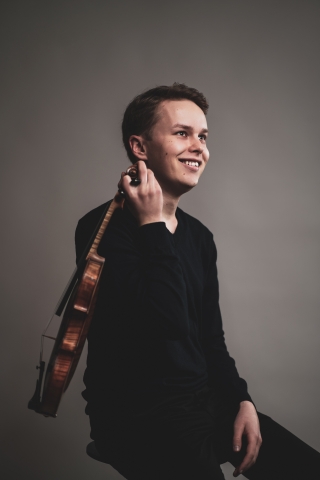 Otto Antikainen, violin
Violinist Otto Antikainen performs both as an orchestral soloist and as a chamber musician. He has appeared as a soloist with, among others, the Finnish Radio Symphony Orchestra, the Ostrobothnian Chamber Orchestra, Oulu Symphony, Joensuu City Orchestra and Kuopio City Orchestra. During the 2025–2026 season he will appear as a soloist with Sinfonia Lahti, Saimaa Sinfonietta and the Jyväskylä Sinfonia.
As a chamber musician he has performed at numerous festivals, including the Kuhmo Chamber Music Festival, the Gstaad New Year Music Festival and the Tampere Chamber Music Festival.
Antikainen won third prize at the Kuopio Violin Competition in 2020. In addition, he won first prize at the Juhani Heinonen Violin Competition in 2016 and received special prizes at the Menuhin Violin Competition in Geneva in 2018 and at the Carl Flesch Violin Competition in Hungary in 2023.
At last year’s International Jean Sibelius Violin Competition, Otto Antikainen reached the final round as the only Finnish violinist among the six finalists.
Otto Antikainen began studying the violin at the Käpylä Music Institute under Hannele Lehto and later studied at the Sibelius Academy Youth Department with Réka Szilvay. He subsequently continued his studies at the Hochschule für Musik Hanns Eisler in Berlin with Antje Weithaas and at the Sibelius Academy with Cecilia Zilliacus.
Antikainen performs on a Giovanni Battista Guadagnini violin from 1760, on loan from the Finnish Cultural Foundation.
Presentation of the pieces
O. Tarkiainen: Jään lauluja (Songs of Ice)
Jään lauluja (Songs of Ice) is an orchestral work about ice. In the Arctic, ice breathes with the seasons: it expands in winter and shrinks in summer. Its ancient movement sings its own song—slowly undulating, relentless and covering everything beneath it. It chimes and rumbles, creaks and laments as our ever-warming climate breaks the laws of nature long respected by time, forcing the ice to surrender.
The work begins with the rumble of ice: the orchestra attacks with ever stronger waves that eventually break and shatter into bright crystals. Through the empty space echo plaintive wind solos—the soul of the ice, the lament of a great being whose pain gradually compresses into warning cries from the piccolos. Finally the strings bring comfort: their warmth spreads a thick blanket over the landscape, which flows ever more relentlessly toward a new cycle in which everything begins again, yet never again in quite the same way as before.
The work was commissioned by the Finnish Radio Symphony Orchestra and the Iceland Symphony Orchestra. Songs of Ice is dedicated to the Okjökull glacier, declared dead in 2014 and the first victim of climate change in Iceland.
E. Englund: Violin Concerto
Einar Englund’s (1916–1999) Violin Concerto may be described as innocently lyrical. It consists of three movements. At the beginning of the first movement, Allegro moderato, the orchestra boldly proclaims the work’s motto—a five-note intervallic combination—to which the solo violin responds. After an orchestral interlude, the solo violin presents the movement’s principal theme, leading to the wide intervals of the middle section. These in turn provide the material for the closing section of the first movement.
Of the second and third movements the composer writes:
“The slow movement (Moderato) is in three parts. After a powerful opening introduction, the music softens and the solo violin weaves long melodic arcs. The rondo-form finale (Allegro molto) may perhaps be compared to a Mozartian allegro that moves feather-light in the same tempo from beginning to end. Only the cadenza provides the necessary contrast.”
Concerto per violino ed orchestra was composed in the summer of 1981 while the composer was on holiday in Gotland, Sweden. The work was commissioned by the Association of Finnish Symphony Orchestras.
J. Sibelius (1865–1957): Music for William Shakespeare’s play The Tempest, Op. 109
A mystery surrounds Sibelius’s late period. As the composer approached the age of sixty, he found work increasingly difficult: “self-criticism grows enormous.” Yet these difficulties leave no trace in the compositions of the early 1920s, including Music for Shakespeare’s play The Tempest (1925–26). The Tempest is his most magnificent work of incidental music.
The work seems to have arisen from an external stimulus. In May 1925 Sibelius’s Danish publisher Wilhelm Hansen asked whether the music had already been composed for a Danish theatre. Interestingly, Sibelius’s friend and patron Axel Carpelan, who died in 1919, had already suggested in 1901 that he compose music for this play. The theme had therefore likely occupied Sibelius for a long time, and he had little difficulty identifying with Prospero, another aging artist.
The score for the new stage work was written surprisingly quickly during the autumn of 1925, possibly partly in early 1926. The more than hour-long incidental music is written for vocal soloists, mixed choir, harmonium and large orchestra. In total the music comprises 36 numbers. Sibelius later assembled two orchestral suites from it.
The premiere of the original work took place in Copenhagen on March 15, 1926. The music in particular was considered a success:
“Shakespeare and Sibelius, these two geniuses, have found each other.”
In The Tempest, Sibelius’s orchestral genius is at its most spectacular. His inventiveness and ability to create new, previously unheard orchestral colours seem almost inexhaustible. In this work Sibelius created one of his most brilliant orchestral scores.
Jorma Panula: L’Heure bleue (The Blue Hour), mood picture for orchestra
Jorma Panula (1930) is known above all as a conductor and teacher of conductors. He is also a versatile and prolific composer and arranger. He has written several operas, musicals, theatre music, concertos and vocal works, and arranged a wide range of musical pieces for various ensembles.
The orchestral mood piece L’Heure bleue (The Blue Hour), composed in 1967, was inspired, according to the composer, by a distant day when sunlight scattered indirectly through the atmosphere and the phenomenon created a moment bluer than blue. Inspired, the composer hurried to his cottage in the quiet countryside and wrote the experience down in musical notation.
As a work, The Blue Hour is an impressionistically delicate and beautifully dreamlike mood piece that combines different musical styles.