



Attractions
Search for interesting attractions by type and / or area or by keyword, end by pressing "Show results"
103 Search results, page 2/6
Clear filters-
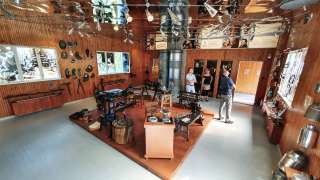
Dive into the tinplate craftsmanship tradition alive in the cultural area of Kirkonmäki in Vähäkyrö and experience the authentic atmosphere of the carefully renewed museum. The exhibition showcases a unique craft tradition from the 18th century to the present day and demonstrates how tin objects are made using traditional tools. The museum features nearly 200 different items as well as tools over a hundred years old. If you’re lucky, you may also see a real tinsmith at work on site.
+358 6 325 8400
yhteispalveluvahakyro@vaasa.fi
https://www.museiportalosterbotten.fi/museum-a-o-en/museum/68-fyrry-the-tinsmith-museum
-
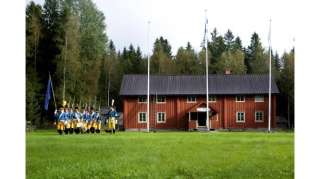
Fänrik Stål’s center includes the area at the historic site of the Battle of Oravais. Here, the war of 1808-1809 is highlighted through both objects, stories, the place and the buildings. The regiment’s exercises and displays bring history to life in period uniforms and weapons.
+358 50 343 2642
Kenny.sundqvist@adelbragd.fi
-
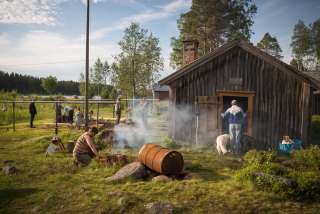
The Granösund Fiskeläge (Fishing Village Museum) provides a view of life in the coastal region of Ostrobothnia, in the days when the majority of the population still depended upon fishing, seal hunting, farming and handicraft for its livelyhood.
+358 44 726 5165
replot.hembygdsforening@korsholmsskargard.fi
-
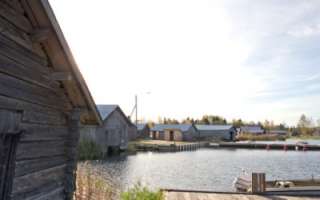
Harrström old fishing harbour, a Place full of life back in the days. Close to the harbour, there is a small museum about how fisherman’s families lived in the turn of the century 1800-1900 and the harbour offers a beautiful view to admire.
-
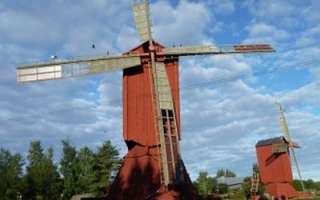
Two windmills stand on the Kvarnbacken hill as monuments to past centuries and bygone peasant community. Storkvarnen, the big mill, is one of the largest windmills in Finland.
Storkvarnen, the big mill, was built in the 1840s, and it still stands on its original site by the sea and its fresh winds. The mill was built by Isak, Karl and Johan Ingels. The wings of the mill are 19,5 metres long and the mill stretches up to 22 metres measured from the ground to the upper tip of the wing. Storkvarnen is the largest functioning mill in Finland. The smaller mill of Kvarnbacken was built at the end of the 19th century. The mills have been restored, and they both function. There were originally five mills on the hill and twelve minor mills in the whole village. The mills of Kvarnbacken are activated every year during the summer festivities, and they grind flour.
-
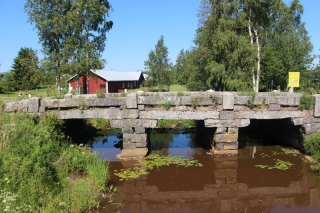
The Harrström stone bridge (known as Åback Bridge until 1983) is a stone museum bridge located in the village of Harrström in Korsnäs. The bridge was completed in 1898. It is a beam bridge constructed from granite blocks. The bridge has three spans and crosses the small river Harvungån. In 1982, the bridge was designated as a museum bridge.
The Harrström bridge is built using the so-called dry-stone technique. The rectangular hewn stones are fitted together without mortar. The bridge has no metal clamps or other structural elements binding the stones together. The length of the bridge deck is 14.6 metres and its total length is 26.4 metres. Its usable width is 4.7 metres and its total width is 5.7 metres. The largest opening of the bridge is 3.7 metres, its longest span is 4 metres, and the clearance under the bridge is 1.5 metres.
The bridge site is part of the historic Ostrobothnian coastal road. In 1983, a new Åback Bridge was built next to the old stone bridge, after which the old bridge received its current name and became a pedestrian and bicycle bridge.
-
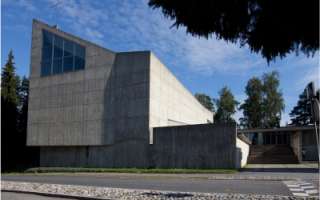 The church, completed in 1964, was designed by Professor Aarno Ruusuvuori. The materials used include concrete and Leca brick. The altar table and baptismal font are made of Sicilian marble, while the pews are made of Romanian oak. Behind the altar table stands a simple iron cross. The pulpit is cast in concrete. The organ, built by the Kangasala Organ Factory, has 20 stops. The three church bells were made in Germany.
https://www.vaasansuomalainenseurakunta.fi/kirkot-ja-tilat/kirkot/huutoniemen-kirkko
-
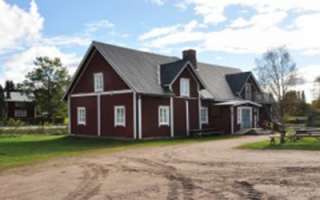
Hägglund’s Photography Museum was inaugurated in 2000, and it is founded upon photographer Erik Hägglund’s studio. The wide collection of cameras and the studio’s equipment illustrate the history of photography from the 1910s to the present day.
Erik Hägglund from Rökiö was interested in art already at an early age, and he travelled to Sweden to work as the apprentice of a painter. There he was employed in a studio and his interest in photography was aroused. When he returned to his home region, he established a modest studio in a stave shed in 1910. He constructed his first atelier camera himself and also painted the shooting background himself. Those are both displayed in the replica of the workshop built inside the museum.
kvarnstuga@outlook.com
http://www.museiportalosterbotten.fi/museum-a-o-en/museum/13-hagglund-s-photography-museum
-
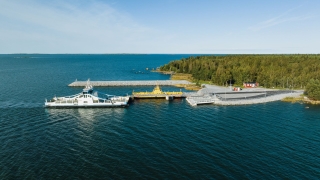
Welcome to a unique and scenic island in the Kvarken archipelago. On Bergö you get close to the nature, here you can swim, hike, bike, fish, and enjoy the magnificent scenery and the many picturesque boathouses. Everywhere you go, you are greeted by the large Gulf of Bothnia. The island’s total area is approximately 3.15 square kilometers and Bergö has about 480 inhabitants.
-
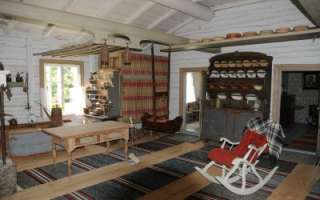
In the Isokyrö Museum can be seen peasant artefacts from the latter half of the 19th century. Everyday utensils are displayed as if the people of the house had just gone to their work outside and left the house for the day. The visitor rather steps into a genuine 19th century milieu than an exhibition.
The museum is characterized by two traditional 1½-storey Ostrobothnian houses. They are grouped with the outbuildings in a way typical for a traditional courtyard. The main building, the Piuhola house, dates back to 1768 and has been moved to the area from the Kuivila village. The buildings represent the building traditions of the 18th and 19th century. The artefacts in the museum also originate from that period.
http://www.museiportalosterbotten.fi/museum-a-o-en/museum/69-isokyro-museum-and-carolinian-centre
-
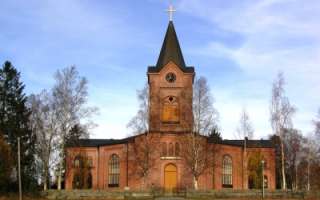
The red-brick main church of Isokyrö was completed in 1877 and can accommodate approximately one thousand people. The altarpiece is a copy of the painting “Christ on the Cross,” painted in Paris in 1878 by the artist Ida Silverberg after an original by the artist Van Dyck. The red-brick burial chapel, completed in 1878, is located next to the main church.
+358 44 769 7543
isonkyron.seurakunta@evl.fi
-
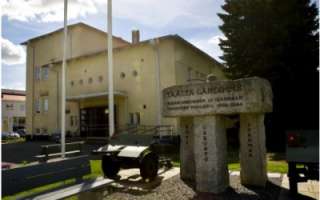
In the Isokyrö War Museum are displayed objects and stories from all the wars waged by Finland. The specialty of the museum is the cannon park, where there are nine different kinds of cannons on view.
In the War Museum one can with the help of items and guidance get acquainted with the Gudgel War (a peasant uprising in the kingdom of Sweden in the part that is now Finland), the Hakkapeliittas (Finnish light cavalryman), the Carolinians, the Finnish War in 1808-1809, the First World War, the Civil War in 1918, and the Second World War in 1939-1945. In the vitrines are exposed soldiers’ uniforms and helmets, rifles and other equipment. One can see in the museum men’s attires from the period of the Gudgel War, a file soldier with his wife, an ensign’s uniform from the year 1918, a festive uniform of a lieutenant colonel and the uniform belonging to a member of the Lotta Svärd organization during the Second World War.
One of the museum’s pearls is a park with nine different kinds of modern era cannons. Here you can see for example an infantry cannon dating back to 1936, a field cannon dating back to 1938 and other cannons from Russia, Finland, Switzerland and Sweden. A Russian horse-drawn field cannon from the year 1902 is one of the oldest weapons in the park. The cannons are no longer in working order, as they have been defused.
http://www.museiportalosterbotten.fi/museum-a-o-en/museum/70-isokyro-war-museum
-
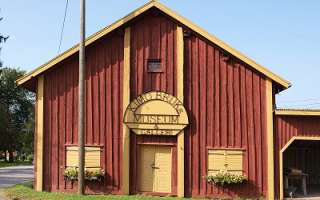
The Kimo Ironworks is the only ironworks museum in Ostrobothnia. The three hundred years old art of forgery is being taught here by one generation to the next with the help of courses and all-day presentations. In the beautiful leafy landscape of dams, rapids and bridges one can explore epochs in history among the 18th century buildings, such as an ironworks estate, a steeple and the ruins of a tilt smithy.
The museum is located in an iron magazine dating back to 1763. On display there are scale models of the 18th century Kimo ironworks and hammer smithy, atmospheric pictures depicting work on the ironworks, and diverse items and tools associated with processing of iron, such as a smith’s diploma from the Bergskollegiet school in Stockholm, and tomb crosses forged by smiths, including also their own ones.
+358 40 045 5080
-
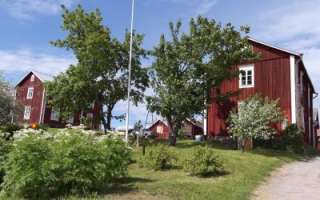
The idyllic courtyard milieu of the Klemets Houses is in many ways unique. No other group of houses built in a similar way has survived in the county. Here can as well be found a versatile selection of exhibitions, such as a textile exhibition, a harmonium museum, a motorcycle exhibition and everyday items associated with peasant life. The atmosphere of the early 20th century can also be sensed in the café, which has been elegantly furnished with 1940s functionalism style furniture.
The idyllic courtyard milieu of the Klemets Houses is unique in a number of ways. No other group of houses built in a similar way has survived in the country. Here can as well be found a versatile selection of exhibitions, such as a textile exhibition, a harmonium museum, a Sunday school museum and everyday items associated with peasant life. The atmosphere of the early 20th century can also be sensed in the café, which has been elegantly furnished with 1940s functionalism style furniture.
+358 40 667 9879
info@klemets.fi
-
Explore Korsholm Castel in the 1390s through AR
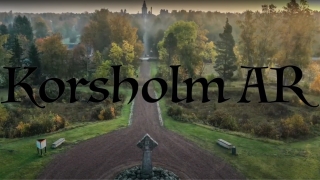
Explore Korsholm Castel, in Old Vaasa, in the 1390s through an Augmented Reality experience. Experience the place, as it is likely to have looked over 600 years ago.
The app takes you on a tour around the castle mound.
- You will be able to see several different scenes by activating the 12 Points of Interest in the app.
- When you get close enough to a marked point the scenes and stories are activated.
Download the app: KORSHOLM AR in Google Play or App Store
-
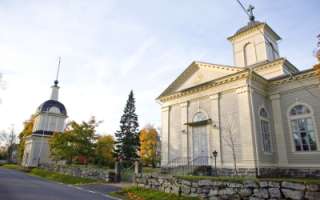
The present church of Korsnäs was built in 1831 and represents Neoclassical style. The bright and spacious church has harmonious proportions. The placement of the altar differs from the usual, as it is located almost in the center of the church.
+358 44 410 1800
https://www.korsnasforsamling.fi/kyrka-och-lokaler/korsnas-kyrka
-
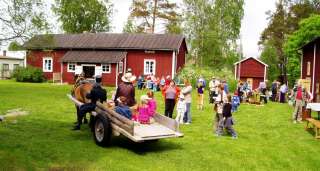
The Korsnäs Local Museum premises today include the old hired hand’s cottage, the windmill, the forge, three rooms in the loft building, and the parish granary across the road. The beautiful museum yard serves as a place for festivities, demonstrations of handicrafts, and games.
The Korsnäs sweater, a special kind of sweater made and used in Korsnäs during the late 19th and early 20th centuries, has experienced quite a renaissance in the last few decades. It is a unique piece of clothing, mainly because it has both crocheted and knitted sections in bright colors. The museum’s collection is comprised of several Korsnäs sweaters of earlier and later origin. The oldest is from 1864.+358 50 351 9488
christina.mannfolk@netikka.fi
-
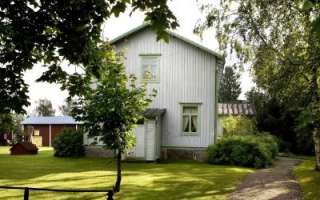
The vicarage dating back to the 1830s has been preserved in the style of the early 20th century. The elegant rooms have been furnished with furniture typical for the period and for vicarages, and the garden creates a park-like atmosphere.
In the Vicarage Museum the visitor gets to see, how an Ostrobothnian ministerial family lived at the end of the 19th century. The Vicarage Museum is one of the two of this kind of special museums in Finland. The interior represents a ministerial home of the period with its original tile stoves from the 1890s. The walls have been papered with newly printed wallpapers modeled on the old Korsnäs patterns.
http://www.museiportalosterbotten.fi/museum-a-o-en/museum/77-korsnas-vicarage-museum
-
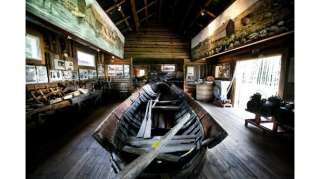
Kvarken Boat Museum is one of the largest boat museums in the Nordic countries. The collection contains 96 traditional (wooden) boats (1850-1993) of different types for varying uses. The boats originate from the province of Ostrobothnia. Besides the boats, exhibited are also tools and equipment used in the region for fishing and hunting. Fisherman’s cottage. Exhibitions.
The museum is situated in Åminne in a culture-historically valuable coastal surroundings in Malax.+358 6 365 1933
https://www.museiportalosterbotten.fi/museum-a-o-en/museum/75-kvarken-boat-museum
-
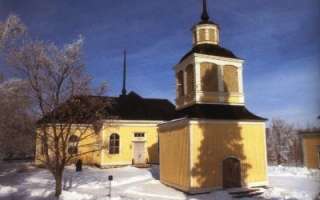
The church was built between 1691 and 1693, with the master builder being the farmer Hans Larsson Qweflander from Koivulahti. The main log construction work was likely carried out in 1692. The church was consecrated on the fourth day of Christmas that same year.
Koivulahti Church, with its octagonal nave, represents an art-historically unique type of church and is the oldest example of this building type in Finland. When the church was converted into a cruciform (cross-shaped) church during an expansion in 1794–1795, it almost completely lost its original appearance.
+358 44 546 2301
kvevlax.forsamling@evl.fi
https://www.kvevlaxforsamling.fi/kyrka-och-lokaler/kvevlax-kyrka