



Requiem
Vaasa City Orchestra
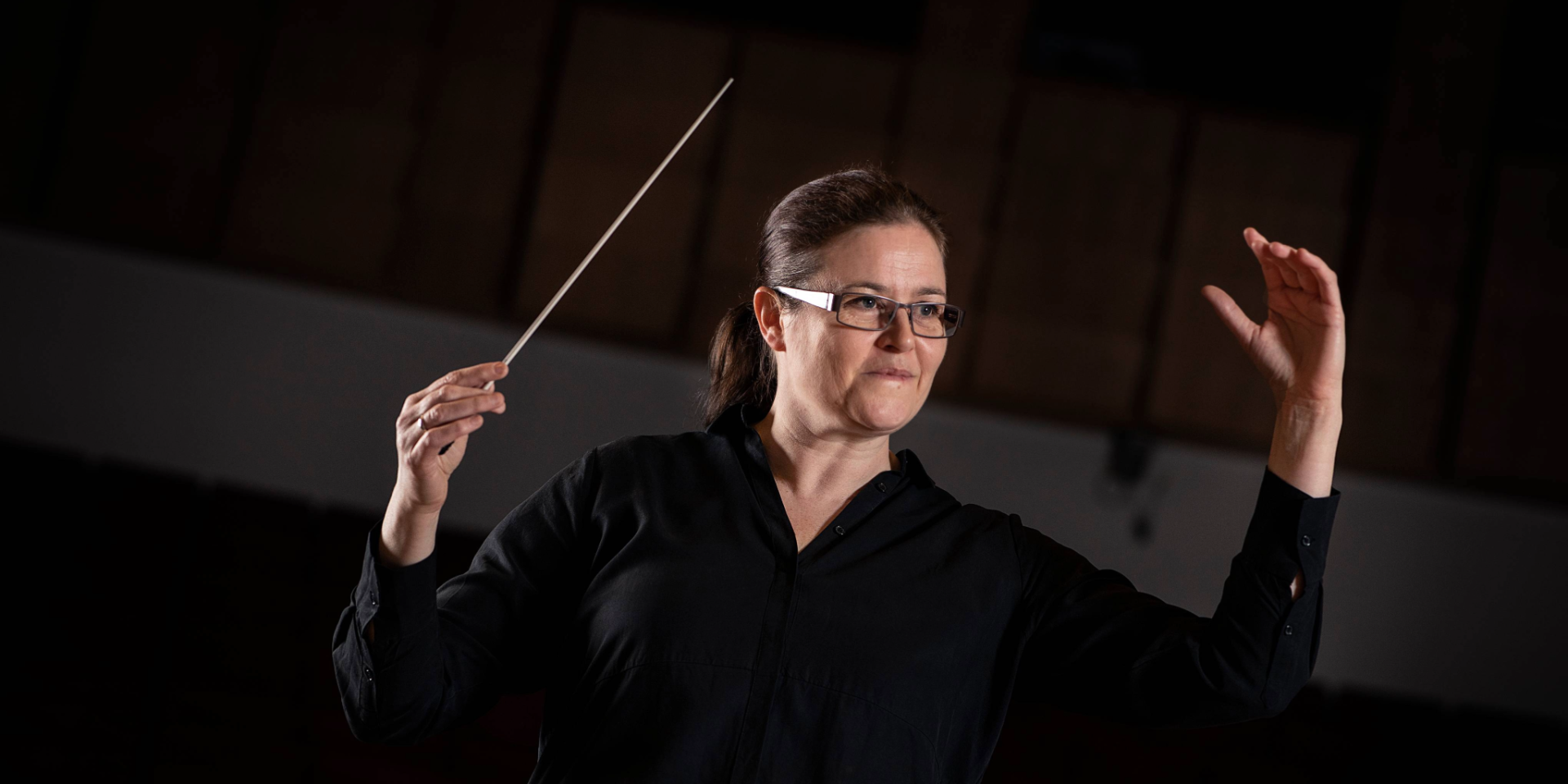
cond. Anna-Maria Helsing
sol. Wilhelmina Tómasdóttir, soprano & Tomi Punkeri, barytone
Chamber Choir Canticum Maris
At the Vaasa City Orchestra’s Easter concert on Good Friday, the audience will hear Gabriel Fauré’s Requiem as the evening’s main work—a piece that, within its genre, is strikingly bright and comforting in its view of eternal rest after death. In the concert, conducted by Chief Conductor Anna-Maria Helsing, the audience can enjoy distinguished vocal performances from both the orchestra’s long-standing collaborator, the chamber choir Canticum Maris, and from two fresh-sounding soloists: baritone Tomi Punkeri and the Finnish-Icelandic soprano Wilhelmina Tómasdóttir, who, despite her young age, has already attracted attention on concert and opera stages as well as in vocal competitions. The orchestral interludes in Arvo Pärt’s Cantus, written in memory of Benjamin Britten, and the “Good Friday Music” from Richard Wagner’s Parsifal, lead listeners into the mood of the requiem.
Program
Arvo Pärt (1935–):
Cantus in Memoriam Benjamin Britten (1980)
Richard Wagner (1813–1883):
Good Friday Music from the opera Parsifal (1877–1882, ork. Andreas N. Tarkmann)
Gabriel Fauré (1845–1924):
Requiem op. 48 (1877–1890)
1. Introit & Kyrie
2. Offertorium
3. Sanctus
4. Pie Jesu
5. Agnus Dei
6. Libera me
7. In Paradisum
Artists
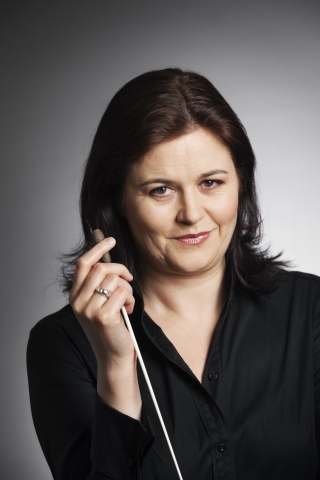 Anna-Maria Helsing, conductor
Anna-Maria Helsing has gained an outstanding reputation with leading Scandinavian orchestras and opera houses. 2023 she was appointed Chief Conductor of the BBC Concert Orchestra, where she held the position as its Principal Guest Conductor since 2020. Since January 2025 she is also the Chief Conductor of Vaasa City Orchestra. From 2010 to 2013 Anna-Maria Helsing was Chief Conductor of the Oulu Symphony – the first-ever female conductor at the head of a Finnish symphony orchestra. She currently holds the position as Artistic Director of the high-profile chamber music festival Rusk, in Jakobstad, Finland.
Within a short time the Finnish conductor has conducted all the major Finnish and Swedish orchestras including the Finnish Radio Symphony Orchestra, Helsinki Philharmonic Orchestra, Finnish National Opera Orchestra, Royal Stockholm Philharmonic Orchestra, Gothenburg Symphony and Royal Swedish Opera Orchestra. She also conducted the Philharmonia Orchestra (London), Royal Philharmonic Orchestra (London), Royal Danish Opera Orchestra, Norwegian Radio Orchestra, Barcelona Symphony, Iceland Symphony, Trondheim Symphony, Odense Symphony, Jena Philharmonic, Estonian National Symphony and Musikkollegium Winterthur (Switzerland). Anna-Maria Helsing gave her debut at the Finnish National Opera with Adriana Mater by Kaija Saariaho in 2008. She has led a number of world premieres, most recently Momo at the Royal Danish Opera and Magnus-Maria by Karólína Eiríksdóttir on tour in Scandinavia. She has also performed established operas by Mozart, Cimarosa, Puccini, Mascagni, Madetoja and Bernstein at the Tampere Opera and Savonlinna Opera Festival to name but a few.
Anna-Maria Helsing feels a special affinity with the sound and style of modernism and contemporary music. Upcoming highlights for this autumn: Helsing’s return to the Royal Swedish Opera in Stockholm for a new Sami Opera by Britta Byström and revisit in Brno, Czech Republic, with the BBC Concert Orchestra for the opening concert of the Moravian Autumn Festival. During this season Helsing makes her debut with the Vancouver Symphony Orchestra in Canada, South Denmark Philharmonic and Wiesbaden State Orchestra in Germany. She revisits the Swedish Radio Symphony Orchestra in Stockholm, Odense and Gothenburg Symphony Orchestras and the City Orchestras of Kuopio and Joensuu.
Anna-Maria Helsing began her career as a violinist (with diplomas from the Conservatory of Jakobstad and the Academy of Music in Bydgoszcz), leading chamber orchestras before serving as Artistic Director of the Pietarsaari Sinfonietta and conductor of the Wegelius Chamber Orchestra. She has attended masterclasses with Jorma Panula, Vladimir Jurowski and John Carewe. Just after finishing her studies in the class of Leif Segerstam at the Sibelius Academy, the Finnish conductor was chosen to take part in the International Conductor’s Academy of the Allianz Cultural Foundation under the guidance of among others Esa-Pekka Salonen and Gustavo Dudamel. In 2011 Anna-Maria Helsing became the first conductor to be awarded the Louis Spohr Medal in Seesen (Germany). In 1999 she won the First Prize in the International Competition for 20th Century Music for Young Artists in Warsaw.
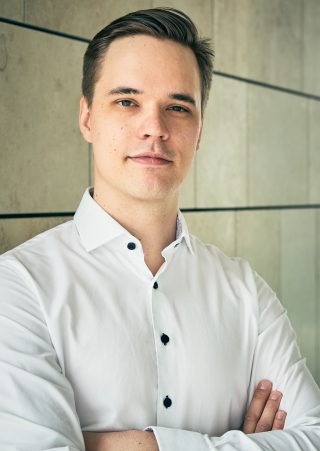 Tomi Punkeri, baritone
Baritone Tomi Punkeri graduated as a church musician from the Oulu University of Applied Sciences in 2018 and received his Master of Music from the Royal Danish Opera Academy in Copenhagen in 2020, where he studied with Jens Søndergaard. After his studies, Punkeri joined the Royal Danish Opera’s two-year Young Artist Programme for the seasons 2020–2022.
Punkeri’s operatic roles include Papageno (The Magic Flute), Dandini (La Cenerentola), Schaunard (La Bohème), Ned Keene (Peter Grimes), and Masetto (Don Giovanni). In August 2024 he appeared at the Helsinki Festival and at the Baltic Sea Festival in Stockholm under the baton of Esa-Pekka Salonen, performing the role of Shaklovity in Mussorgsky’s opera Khovanshchina.
Punkeri has appeared as a soloist with several orchestras, including the Finnish Radio Symphony Orchestra, the Royal Danish Orchestra, the Finnish Baroque Orchestra (FiBO), Oulu Symphony, Kymi Sinfonietta, the Ostrobothnian Chamber Orchestra and Tapiola Sinfonietta.
His oratorio and lied repertoire includes J. S. Bach’s St John Passion, St Matthew Passion, Christmas Oratorio, Magnificat and Mass in B minor, the Requiems by Mozart and Fauré, Haydn’s Missa in tempore belli, as well as song cycles such as Schubert’s Die schöne Müllerin and Winterreise, and Schumann’s Dichterliebe.
Punkeri has received recognition in several singing competitions both nationally and internationally. In 2023 he was awarded a special prize in the final of the Klaudia Taev Competition. Other recent international competitions include the International Hans Gabor Belvedere Singing Competition, the Wigmore Hall / Independent Opera International Song Competition and the Concours musical international de Montréal (CMIM), where he reached the semi-finals.
In Finland he received a special prize in the final of the Lappeenranta Singing Competition in 2016 and won second prize at the Helsinki Lied Competition in 2015. In 2022 he was nominated by CPHCulture as Opera Singer of the Year in Denmark. Punkeri has also been featured on radio and television broadcasts by Yle, BBC, Sveriges Radio and DR.
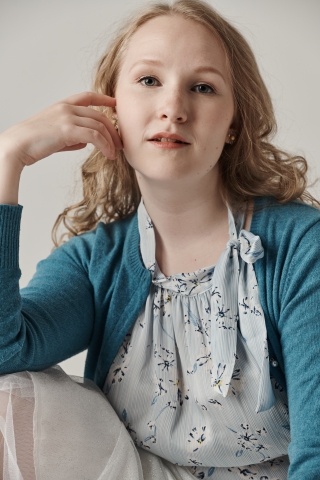 Wilhelmína Tómasdóttir, soprano
The Turku-Icelandic soprano Wilhelmína Tómasdóttir is a versatile singer who feels at home on stage. She is inspired by the stories in music and behind it, and has therefore been described as a “singing actress.” Opera is particularly close to her heart, and in 2025 she will make her debut at the Ilmajoki Music Festival in the title role of Katariina in Pulkkis’s opera Isoviha.
During the 2025–2026 season she will appear, among other engagements, in the Finnish National Opera’s children’s operas The Barber of Seville (Rossini, Koivisto) and Tähtiainesta (Nykänen). Tómasdóttir also enjoys contemporary music and has premiered several roles: in addition to Katariina, she created the roles of Maria (Viimeinen lautta, Räsänen, 2023), Lilaloo (Kuinka-Kum-Maa on kaikkialla, Ahola, 2021), and Grandmother (Logicomix, Autio, 2017).
Alongside opera, Tómasdóttir performs lied repertoire and major choral works. In addition to the standard oratorio repertoire, she has appeared as a soloist in works such as Pekka Kostiaisen Triduum Paschale (Matjeveff, 2024) and Camille Saint-Saëns’s Oratorio de Noël (Sorensen, 2023).
In the lied repertoire she is fascinated by the relationship between poetry and music and how they nourish and deepen one another, creating something new and remarkable. Her strong stage presence and ability to interpret texts have brought her success in competitions: in 2018 she won the Helsinki Lied Competition together with pianist Siiri Ylijoki. She has also reached the semi-finals of the Havets Röst singing competition in 2023 and the Lappeenranta Singing Competition in 2025.
Tómasdóttir began her musical studies as a flautist, and during upper secondary school she also discovered classical singing. She is currently completing her vocal studies at the Sibelius Academy of the University of the Arts Helsinki, studying with Annika Ollinkari. In her free time she enjoys reading, solving crosswords, and water aerobics.

Chamber Choir Canticum Maris
The chamber choir Canticum Maris operates within the Vaasa Finnish Parish. It was founded in 2020 by Dir. Mus. Tarja Viitanen, who still conducts the choir.
Despite its young age, Canticum Maris has quickly established itself as a skilled and ambitious contributor to Vaasa’s music scene. Challenging choral works and demanding a cappella repertoire help develop the choir, which aims, among other things, to perform large-scale sacred music works.
The choir has performed in numerous radio and TV broadcasts on Yle. In collaboration with the Vaasa City Orchestra, Canticum Maris has carried out several projects, such as Brahms’ Ein Deutsches Requiem, Handel’s Messiah, Bach’s Christmas Oratorio, and Haydn’s The Seasons. Future joint plans include, among others, Bach’s St Matthew Passion in spring 2027.
Presentation of pieces
Arvo Pärt: Cantus in Memory of Benjamin Britten (1980)
This year marks the 50th anniversary of the death of the British composer Benjamin Britten. Britten was a fairly close friend of Dmitri Shostakovich, and during the 1970s his music began to greatly interest the Estonian composer Arvo Pärt, who was then searching for his own style. Pärt has said that the news of Britten’s death in 1976 deeply affected him, especially as he had not yet had the chance to establish any personal contact with this older colleague living on the other side of Europe. Pärt compared Britten’s purity of musical language to that of the 14th-century French composer Guillaume de Machaut.
By 1980, Pärt had found his minimalist, spiritually inspired style, which he called tintinnabuli (“little bells”). At that time, he had moved from Soviet Estonia to West Berlin, where it would still take a few years before his major breakthrough into public awareness. Cantus in Memory of Benjamin Britten is scored for string orchestra and bell. Beneath the violins’ repeating, descending motif runs a slower underlying current in the bass and inner voices, as the intensity of the music grows throughout the piece. In the end, only a single bell remains, like a reminder of the transience of life—or its continuation in another form.
Richard Wagner: Good Friday Music from the opera Parsifal (1877–1882)
For Richard Wagner, the compositional process could take decades from the first ideas to the final opera—or Gesamtkunstwerk, as he called his works. Themes from different operas often intertwine, even if they are treated quite differently across works written at different times. Wagner’s final opera, Parsifal, which tells of the Knights of the Round Table, was sparked as early as 1845 when Wagner read Wolfram von Eschenbach’s 13th-century poem Parzival. A decade later, the poem merged in Wagner’s plans with the philosophies of Arthur Schopenhauer and Eastern thought into a more complex synthesis.
Wagner himself said he was inspired to compose the Good Friday Music in Parsifal by a powerful experience of nature in Zurich on Good Friday in 1857. This experience set the opera in motion, although its creation was first interrupted by the composition of Tristan und Isolde and Die Meistersinger von Nürnberg, and later by the Ring cycle. Parsifal was finally completed in 1882, the year before the composer’s death, with most of the work done after 1877 once the Ring had been finished.
The opera’s protagonist, Parsifal, is an innocent young man who joins the knights guarding the Holy Grail and, through his innocence, saves their leader Amfortas. The Good Friday Music appears in the third act. A weary Parsifal finds himself in a blooming meadow where “all creation—everything that blossoms and soon fades—gives thanks.” The old knight Gurnemanz reveals to him that it is the magic of Good Friday. One of the leitmotifs Wagner uses in this music is the so-called Dresden Amen, a six-note ascending figure heard in church bells in several cities in Saxony. Among Wagner’s operas, Parsifal deals most directly with Christianity, though its ultimate meaning is difficult to define, as the composer treats the theme in his typically multifaceted way. The arrangement for wind ensemble is by Andreas N. Tarkmann.
Gabriel Fauré: Requiem (1877–1890)
It is easy to forget that before Claude Debussy’s radical new style of Impressionism, Gabriel Fauré (1845–1924)—a master of the French art song—was in fact writing the most progressive music in France. Like Debussy, the young Fauré fell under Wagner’s spell, but ultimately did not imitate him, instead developing a highly personal style of his own. Fauré studied under Camille Saint-Saëns, who was well acquainted with new musical trends, and began his career as an organist and church musician in the Paris area. Later, he became a composition teacher at the Paris Conservatoire and eventually its director. Due to his busy professional life, he—like Gustav Mahler—was able to compose only during holidays.
Fauré said that he did not compose his Requiem for any particular person, but “for his own pleasure.” However, he lost both of his parents around the time he began working on the piece in the mid-1880s. The work was completed over several years, and in fact the Libera me dates back to 1877. Fauré treats the form of the Mass quite freely, so the work is perhaps intended more for concert performance than liturgical use. The orchestration is economical, with the foundation of the sound lying in the lower strings. In the earliest, significantly shorter versions, violins and woodwinds were entirely absent. Although the work was completed in 1890, its final orchestration was not finished until around the turn of the century, and the version most often heard in concerts today was first performed in 1900.
The work consists of seven movements (with the Introit and Kyrie counted as one). Fauré uses the tenor and especially the soprano soloists very sparingly, and most of the text is sung by the choir, often in unison. The central Pie Jesu soprano solo is perhaps the most famous movement, as it is often performed separately. The text of the Requiem is largely in Latin, though Fauré made several small modifications. The overall character of the music is exceptionally luminous for a Mass for the dead: rather than focusing on grief and loss, it emphasizes consolation and the eternal rest brought by death. This idea may have brought comfort to Fauré himself, who often suffered from depression in the 1880s.