



Oopperailta
Vaasa City Orchestra
cond. Anna-Maria Helsing
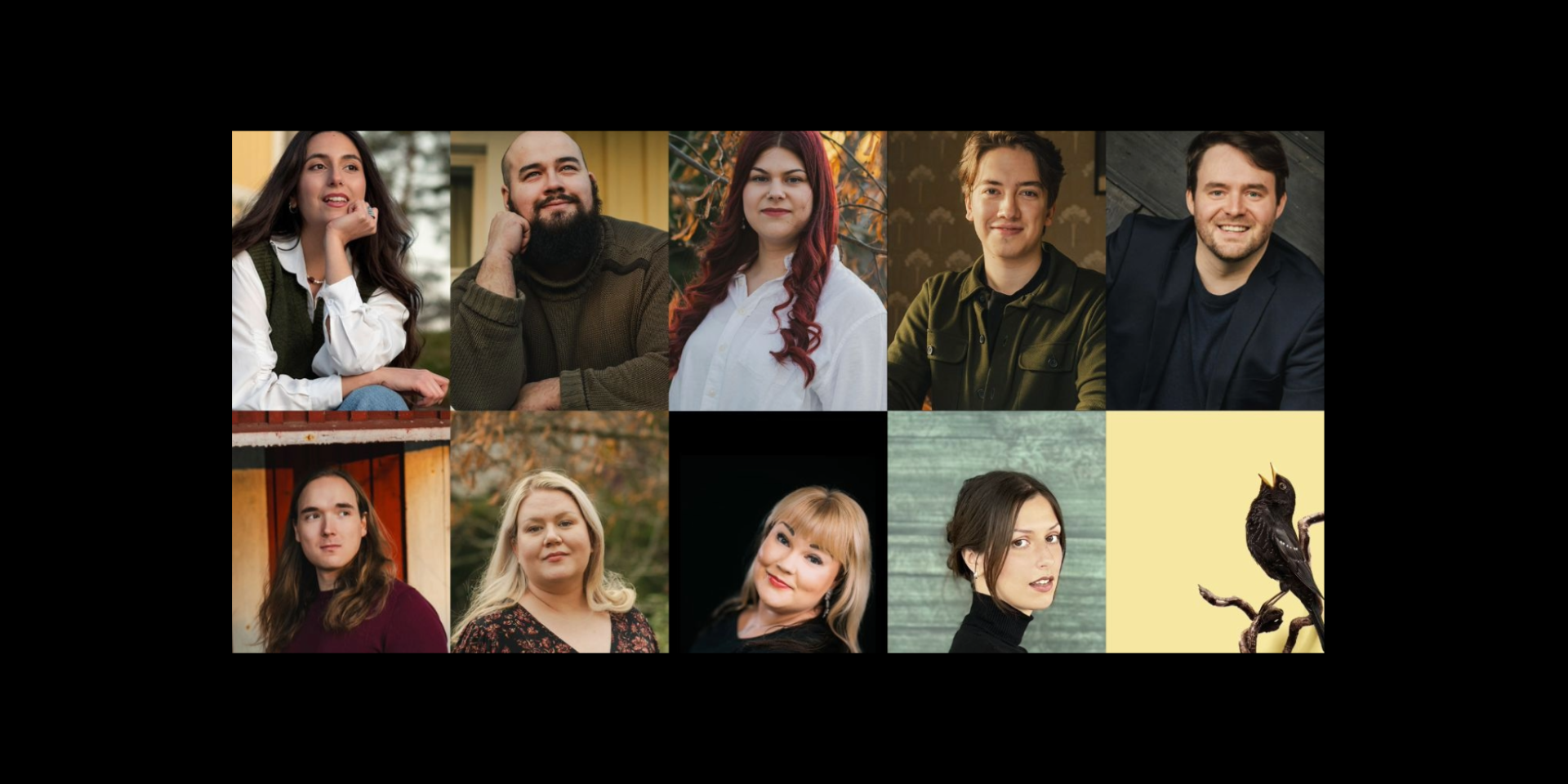
sol. Mirjam Helin Academys singers
Alongside the Mirjam Helin Competition the Finnish Cultural Foundation has also established a vocal academy that has quickly risen to prominence as a respected talent program guiding young singers toward international careers. Now the academy’s outstanding talents perform in a concert featuring classics of the operatic repertoire under the direction of Anna-Maria Helsing, whose passion for opera shines through the program. Throughout the evening, fresh interpretations of arias and ensemble scenes from operas by composers such as Wolfgang Amadeus Mozart, Gioachino Rossini, and Giuseppe Verdi will resonate through the hall. This group of singers is certain to be heard from again in the future, thanks to the excellent teaching and mentoring provided by the Mirjam Helin Academy.
Programme
Maria Theresia Paradis (1759–1824):
Overture from the opera Der Schulkandidat (1792) 4′
Wolfgang Amadeus Mozart (1756–1791):
Sola sola in buio loco (sextet from the opera Don Giovanni, 1787) 7′
Heta Sammalisto-Muhonen, Donna Anna; Melike Uludag, Zerlina; Marjaana Ritanen, Donna Elvira; Johannes Pessi, Don Ottavio; Gabriel Kivivuori, Leporello; Martin Iivarinen, Masetto
W. A. Mozart:
Soave sia il vento (trio from the opera Così fan tutte, 1790) 3′
Iiris Candelaria, Fiordiligi; Emma Karsten, Dorabella; Martin Iivarinen, Don Alfonso
W. A. Mozart:
Crudell perchè finora (duettino from the opera The Marriage of Figaro, 1786) 3′
Iiris Candelaria, Susanna; Gabriel Kivivuori, Il conte
W. A. Mozart:
Porgi amor (cavatina from the opera The Marriage of Figaro) 4′
Heta Sammalisto-Muhonen, Countess
W. A. Mozart:
Là ci darem la mano (duettino from the opera Don Giovanni) 3′
Melike Uludag, Zerlina; Tuomas Pääkkönen, Don Giovanni
W. A. Mozart:
Voi signor che giusto siete – Scena XI (Act II finale from the opera The Marriage of Figaro) 4′
Iiris Candelaria, Susanna; Marjaana Ritanen, La contessa; Emma Karsten, Marcellina; Johannes Pessi, Basilio; Gabriel Kivivuori, Il conte; Tuomas Pääkkönen, Antonio/Bartolo; Martin Iivarinen, Figaro
W. A. Mozart:
Gente all’armi! – Scena ultima (Act IV finale from the opera The Marriage of Figaro) 5′
Heta Sammalisto-Muhonen, Susanna; Marjaana Ritanen, La contessa; Iiris Candelaria, Barbarina; Melike Uludag, Cherubino; Emma Karsten, Marcellina; Johannes Pessi, Basilio; Gabriel Kivivuori, Il conte; Tuomas Pääkkönen, Antonio/Bartolo; Martin Iivarinen, Figaro
– Intermission –
Gioachino Rossini (1792–1868):
Overture from the opera The Barber of Seville (1816) 7′
G. Rossini:
Dunque io son… (duet from the opera The Barber of Seville) 5′
Emma Karsten, Rosina; Johannes Pessi, Figaro
Pietro Mascagni (1863–1945):
Intermezzo from the opera Cavalleria rusticana (1890) 3′
Giuseppe Verdi (1813–1901):
Studia il passo – Come dal ciel precipita (Banco’s recitative and aria from the opera Macbeth) 4′
Martin Iivarinen, Banco
G. Verdi:
Morrò, ma prima in grazia (Amelia’s aria from the opera Un ballo in maschera, 1859) 4:30′
Marjaana Ritanen, Amelia
G. Verdi:
Tutto nel mondo è buria (final fugue from the opera Falstaff, 1893) 3′
Iiris Candelaria, soprano (Coro); Heta Sammalisto-Muhonen, Alice; Marjaana Ritanen, Nannetta; Emma Karsten, Meg; Melike Uludag, Quickly; Johannes Pessi, Fenton; Gabriel Kivivuori, Ford; Tuomas Pääkkönen, Dottor Cajus/Pistola/Bardolfo; Martin Iivarinen, Falstaff
Artists
Program notes
Tastes of Masterpieces
A contemporary of Wolfgang Amadeus Mozart, Maria Theresia (von) Paradis (1759–1824) was born into the family of a Viennese court official. She became blind before reaching school age, but this did not prevent her from receiving a first-rate musical education. Paradis became known above all as a pianist, although she also worked as a singer and organist and, in time, as a composer. In the nineteenth century, she distinguished herself particularly as a teacher at the music school she founded. Paradis knew the Mozart family, and Wolfgang Amadeus apparently even wrote a piano concerto for her to perform in Paris in 1784. Around this time, Paradis also began to devote herself more seriously to composition, particularly songs and piano works. Her three stage works date from the 1790s and reflect the Viennese Singspiel tradition. The comic opera Der Schulkandidat received its premiere in Vienna in 1792. Unfortunately, the second and third acts of the opera have been lost, as has the libretto. The overture, however, demonstrates Paradis’s assured command of the Viennese style.
Wolfgang Amadeus Mozart’s (1756–1791) operatic legacy has been preserved considerably better. During the 1780s, together with librettist Lorenzo da Ponte, he wrote three of the most important comic operas of the Classical period. The first of these, The Marriage of Figaro, is based on Pierre Beaumarchais’s play about Figaro, which was swiftly banned in Vienna because of its social criticism. Mozart and da Ponte nevertheless received permission from Emperor Joseph II to adapt the play into an opera, and it became a success in Vienna. Porgi amor, from the second act of the opera, is an aria sung by Countess Almaviva, in which she laments her husband’s infidelity and their fading love. The Count is intent on exercising his supposed right to spend the first night with young women and has set his sights on the Countess’s beautiful maid Susanna, who is about to marry her beloved Figaro. The couple’s happiness is further complicated by a loan Figaro has taken from Marcellina, Dr Bartolo’s housekeeper. One of the conditions of the loan is that Figaro must marry Marcellina if he is unable to repay it. In the finale of Act II, Voi signor che giusto siete, Marcellina, accompanied by Bartolo and the music teacher Basilio as a witness, demands that the agreement be honoured, while the Countess, Susanna and Figaro are horrified by the situation. For the moment, everything seems to be working in the Count’s favour. In Act III, the Count and Susanna sing the duet Crudell perchè finora, in which Susanna promises to meet the Count in the garden that night. Susanna, however, has other plans. The final scene of Act IV, and of the entire opera, Gente all’armi!, brings events to a happy conclusion: the jealous Count finds Figaro in the garden and suspects him of having an affair with the Countess. When the Countess arrives, however, the Count finally understands what has really happened and begs forgiveness for his behaviour.
Mozart and da Ponte’s next opera, Don Giovanni, tells the story of the legendary womaniser Don Juan. The work received its premiere in Prague in 1787, where The Marriage of Figaro had enjoyed even greater success than in Vienna. Là ci darem la mano, from Act I, is a duet in which Don Giovanni attempts to seduce the peasant girl Zerlina, who is preparing to marry the peasant Masetto. From Act II we hear the ensemble scene Sola sola in buio loco, in which Don Ottavio, his fiancée Donna Anna, Zerlina and Masetto, all furious with Don Giovanni, mistake his servant Leporello for his master and attempt to kill him. Leporello’s only defender is Donna Elvira, the noblewoman abandoned by Don Giovanni, who also believes that Leporello is Don Giovanni returning to her.
Così fan tutte was the final collaboration between Mozart and da Ponte and has often been regarded as the most coherent of their operas, although Don Giovanni has certainly had its devoted admirers over the centuries. The trio Soave sia il vento comes from the first act of Così fan tutte. In it, the sisters Fiordiligi and Dorabella bid farewell to their fiancés Guglielmo and Ferrando as the men supposedly leave for war. The third member of the trio is the philosopher Don Alfonso, who has previously claimed that no woman is truly faithful. The departure for war is in fact merely a ruse, and Guglielmo and Ferrando soon return in disguise to put their fiancées’ fidelity to the test.
The Marriage of Figaro is the second part of Pierre Beaumarchais’s trilogy, the first part of which is The Barber of Seville. Beaumarchais wrote The Barber of Seville in the early 1770s, and by the turn of the century the story had already been adapted into at least three operas before the 23-year-old Gioachino Rossini (1792–1868) took up the subject in 1816. The libretto was written by Cesare Sterbini. Rossini was an extraordinarily prolific composer and is believed to have written the opera in only a few weeks. The overture, however, is an earlier composition, originally written for Rossini’s opera Aureliano in Palmira, composed a couple of years earlier.
The Marriage of Figaro and The Barber of Seville share several characters, including Figaro, Count Almaviva, Dr Bartolo and Rosina, who becomes Countess Almaviva in The Marriage of Figaro. Dunque io son is from Act I of The Barber of Seville. In it, Figaro, acting as the Count’s helper, persuades Rosina to meet the poor student Lindoro, who is actually Count Almaviva in disguise. Rosina hardly needs persuading, however, as she already has a letter for Lindoro prepared.
Pietro Mascagni’s (1863–1945) first opera, Cavalleria rusticana (1890), was such a tremendous success that none of his later operas came close to matching it. This one-act opera is a drama of jealousy set in Sicily on Easter morning. Its famous Intermezzo provides the final moment of tranquillity after the village square has emptied and the people have hurried to Mass, before the principal rivals, Turiddu and Alfio, face their final confrontation.
The great master of Italian opera, Giuseppe Verdi (1813–1901), by contrast, produced a remarkable succession of operatic triumphs. Particularly around the middle of the nineteenth century, Verdi worked at an astonishing pace, composing operas for different Italian cities. Macbeth, based on Shakespeare’s play, premiered in Florence in 1847. The libretto was written by Verdi’s regular collaborator Francesco Maria Piave. Banco’s aria Studia il passo – Come dal ciel precipita occurs in Act II of the opera. Banco has been an ally of Macbeth, now king, but since it has been prophesied that Banco’s descendants will inherit the crown, Macbeth plans to murder both Banco and his son. At the end of the aria, Banco is killed in an ambush, but his son manages to escape.
Morrò, ma prima in grazia is a soprano aria from Verdi’s 1859 opera Un ballo in maschera. The opera’s original subject was the assassination of King Gustav III of Sweden in 1792. Commissioned for Naples, the opera ran into difficulties with the censors, forcing Verdi and his librettist Antonio Somma to make extensive changes, since the assassination of a king was considered particularly unsuitable material for the stage. Eventually, the action was relocated to Boston under British rule, and the opera itself received its premiere in Rome. Morrò, ma prima in grazia is Amelia’s aria from the beginning of Act III. Amelia, who is in love with the governor, originally the king, pleads for mercy from her jealous husband and begs to be allowed to see their child one last time before he kills her.
Verdi wrote three operas based on plays by Shakespeare. He was nearly 80 years old when he composed the last of them, Falstaff, which was also to be his final opera. Falstaff is based on the comedy The Merry Wives of Windsor and stands apart from Verdi’s other operas because of its light-hearted subject. The libretto was written by Arrigo Boito, who also incorporated scenes from Shakespeare’s Henry IV into the story. Falstaff premiered at La Scala in Milan in 1893. Tutto nel mondo è buria is the celebrated ensemble scene that brings the opera to an end with a fugue in as many as ten voices. A magnificent conclusion to a concert showcasing outstanding young talent, to the opera Falstaff, and to the more than 50-year career of the foremost composer of Italian Romantic opera.